“A stodgy parent is no fun at all. What a child wants and deserves is a parent who is sparky.”
— Danny's father explaining his philosophy on parenting.

Roald Dahl (1975)
Genre
Fantasy / Children's / Young Adult
Reading Time
150 min
Key Themes
See below
Sign in to track this book
A young boy discovers his father's secret passion for poaching pheasants, leading them on a thrilling and hilarious adventure to outwit the local, greedy landowner.
Danny, a nine-year-old boy, lives an ideal life with his father, William, in an old Vardo caravan behind a petrol station and workshop they own. Danny thinks his father is the most marvelous man, a brilliant mechanic, and a wonderful storyteller. Their life is simple but full of love and adventure, including building and flying kites, and enjoying delicious meals. One night, Danny wakes to find his father missing from his bunk. He waits anxiously for hours, imagining terrible accidents, until his father returns at 2 AM, exhausted but unharmed. This absence becomes a regular occurrence, filling Danny with worry and curiosity about his father's activities.
Driven by concern, Danny asks his father about his late-night excursions. William, after some hesitation, reveals his secret: he is a poacher. He explains that poaching pheasants from the nearby woods belonging to the cruel and arrogant landowner, Mr. Victor Hazell, is a tradition passed down through generations of his family. William describes the thrill and challenge of outsmarting Hazell's gamekeepers and the satisfaction of providing a delicious meal. Danny is surprised but quickly becomes fascinated and proud of his father's daring hobby, understanding it as a form of justice against the pompous Hazell.
One evening, William goes poaching alone and does not return. Danny, terrified, eventually finds his father in a ditch, having fallen and broken his ankle while trying to escape Hazell's gamekeepers. William is in pain, and Danny, with difficulty, gets him back to the caravan. Confined to bed, William is unable to poach. This event sparks an idea in Danny's mind. He remembers his father's stories about pheasants' love for raisins and devises a plan to drug the birds using raisins laced with sleeping pills, making them easy to collect without arousing suspicion.
Danny excitedly presents his 'Sleeping Beauty' method to his father. He suggests hollowing out raisins, inserting a crushed sleeping pill into each, and then scattering them near the pheasants' roosting trees in Hazell's wood. The pheasants, upon eating the raisins, would fall asleep and simply drop out of the trees, making them easy to collect. William is astonished by his son's cleverness but also concerned about the ethics and potential dangers. After deliberation, and seeing the brilliance and simplicity of the plan, William agrees to let Danny help him execute this poaching scheme for the upcoming annual pheasant shoot hosted by Hazell.
The night before Hazell's grand pheasant shoot, Danny, armed with a bag of doctored raisins and a flashlight, embarks on his solo mission to Hazell's wood. His father gives him careful instructions and a pep talk, emphasizing stealth and caution. Danny navigates the dark, unfamiliar woods, feeling a mix of fear and excitement. He strategically places the raisins under the main roosting trees, careful not to be seen by the patrolling gamekeepers. He has a close call when a gamekeeper passes by, forcing him to hide silently. Danny successfully distributes all the raisins and returns to the caravan, proud of his contribution.
The next morning, before dawn, Danny and William (still with a bandaged ankle) head to Hazell's wood. They find the ground beneath the roosting trees littered with hundreds of pheasants, all sound asleep, having tumbled from their perches after eating the drugged raisins. The sight is incredible. They carefully collect the birds, placing them into an old baby carriage they brought for the purpose. The carriage quickly overflows, and they realize they have far more pheasants than anticipated. They manage to stuff the last few into William's pockets and their shirts, a haul that far exceeds any previous poaching attempt.
As they push the overloaded baby carriage back towards the road, Mr. Hazell himself spots them, driving his car. A tense chase ensues, with William and Danny desperately trying to evade him. They manage to hide the carriage just in time, pretending to be out for a stroll. Hazell, suspicious, drives past, but they narrowly escape detection. Once safe, they return to the caravan. The sheer number of pheasants is overwhelming, so William decides to distribute them among the local villagers, including Doctor Spencer, Reverend Todd, and Mrs. Clipstone, ensuring everyone enjoys a delicious, unexpected meal.
The sleeping pills begin to wear off. The pheasants, distributed in various places like Doctor Spencer's car, Mrs. Clipstone's oven, and the school bus, start to wake up. This leads to pandemonium across the village, with birds squawking and flapping everywhere. The sight of his prized pheasants being carted away and now causing havoc enrages Mr. Hazell, who witnesses the chaos firsthand. He is furious, realizing he has been outsmarted, and suspects William and Danny, though he has no concrete proof. The villagers, however, are secretly delighted by Hazell's misfortune and the unexpected bounty.
Mr. Hazell storms into the petrol station, accusing William of poaching, but without evidence, he can do nothing but threaten. William maintains his innocence, much to Hazell's frustration. The villagers, knowing the truth, rally around William and Danny, enjoying their pheasant dinners. The 'Sleeping Beauty' method becomes legendary. Danny and William, having pulled off the greatest poaching stunt in their family's history, look forward to more adventures. Danny feels immense pride in his father and in their shared secret, solidifying their bond and ensuring the tradition of clever, daring poaching continues, always with an eye on outsmarting the likes of Mr. Hazell.
The Protagonist
Danny transforms from a contented boy into a confident, active participant in his father's adventures, discovering his own courage and ingenuity along the way.
The Protagonist/Supporting
William's character remains largely consistent as a loving father and clever poacher, but he gains immense pride and admiration for his son's ingenuity.
The Antagonist
Hazell remains static, an embodiment of the 'villain' who is outsmarted and humiliated, but ultimately unchanged in his arrogance.
The Supporting
Doctor Spencer's character is static, serving as a benevolent figure in the community.
The Supporting
Her character is static, serving to illustrate the community's involvement and the humorous aftermath.
The Supporting
His character is static, serving to show the breadth of community involvement.
The Mentioned/Minor Antagonists
The gamekeepers are static, representing the obstacles to be overcome.
The main theme of the book is the loving relationship between Danny and his father, William. Their bond has mutual respect, deep affection, and shared adventure. William is Danny's hero, best friend, and confidant. Danny's ingenuity and loyalty are a source of pride for his father. Their shared 'secret' of poaching strengthens their connection, creating a unique world where they are partners against a perceived injustice. This theme shows the importance of family, trust, and shared experiences in building a strong relationship.
“My father was a most marvelous and exciting father a boy ever had.”
The story explores themes of justice and class disparity, particularly through the conflict between the working-class Danny and William and the wealthy, arrogant Victor Hazell. William views poaching not merely as theft but as a form of social justice, a way to 'get even' with a man who hoards wealth and treats others poorly. Hazell's pheasants are symbols of his excessive privilege. The villagers' delight in Hazell's misfortune and their willingness to accept the poached birds further shows a sense of collective satisfaction in outsmarting the 'upper class' bully.
“He was a most frightful snob, was Mr. Victor Hazell, and he was as rich as Croesus, and as greedy as a pig.”
The book celebrates cleverness and inventive problem-solving, particularly through Danny's development of the 'Sleeping Beauty' method. When William is injured, it is Danny's quick thinking and creative solution that not only saves their poaching plans but makes them far more successful than ever before. This theme shows the power of imagination and intelligence, especially when applied to challenging situations. It shows how a child's perspective can offer fresh, brilliant solutions, and that cleverness can triumph over brute force or unfair advantage.
“It was truly a stroke of genius, and my father was the first to admit it.”
The story has a sense of adventure and the wonder of childhood. Despite living a simple life, Danny experiences immense joy and excitement through his father's stories and their shared escapades. The poaching itself is framed as a thrilling game, a secret mission that adds excitement and meaning to their lives. The descriptions of the caravan, the workshop, and the nocturnal expeditions give the story a magical, adventurous quality, inviting the reader to share in Danny's unique and extraordinary childhood.
“I was nine years old. And to me, my father was the most handsome, the most brilliant, the most wonderful father a boy ever had.”
The story is told entirely from Danny's perspective.
The entire novel is narrated by Danny, a nine-year-old boy. This narrative choice allows the reader to experience the world through his eyes, sharing in his admiration for his father, his fears, and his excitement. It lends an intimate, personal, and often innocent tone to the story, despite the 'illegal' nature of poaching. Danny's voice is authentic and engaging, making his observations and feelings central to the reader's understanding and connection to the plot. It also allows for the gradual revelation of his father's secret from a child's perspective.
Symbol of freedom, simplicity, and the unique bond between father and son.
The old Vardo gypsy caravan serves as more than just a home; it's a symbolic setting that reinforces the themes of freedom, simplicity, and the unique, unconventional life Danny shares with his father. It represents their self-sufficiency and their detachment from the rigid social structures embodied by characters like Victor Hazell. The caravan is a cozy, nurturing space where stories are told and plans are hatched, symbolizing the warmth and security of their bond. It contrasts sharply with the grand, but presumably cold, estate of Hazell.
An ingenious and humorous plot device that drives the climax of the story.
Danny's 'Sleeping Beauty' method, involving raisins laced with sleeping pills, is a pivotal plot device. It is a testament to the power of ingenuity over brute force and transforms a traditional poaching activity into a comedic, almost magical, event. This method not only allows for the unprecedented haul of pheasants but also creates the chaotic, humorous climax when the birds wake up. It is a classic Dahlian device, combining a simple, clever idea with fantastical, exaggerated results, making the 'crime' seem harmless and even delightful.
A caricature-like villain who justifies the protagonists' actions.
Victor Hazell functions as a classic Roald Dahl antagonist: a one-dimensional, unsympathetic figure whose unpleasantness justifies the protagonists' 'naughty' actions. He is portrayed as arrogant, greedy, and a 'bully,' making it easy for the reader to root for Danny and William. His exaggerated negative traits serve to highlight the inherent 'goodness' and cleverness of the father-son duo, framing their poaching as a form of poetic justice rather than simple theft. His fury and humiliation at the end provide a satisfying resolution for both the characters and the reader.
“A stodgy parent is no fun at all. What a child wants and deserves is a parent who is sparky.”
— Danny's father explaining his philosophy on parenting.
“The most marvelous and exciting father a boy ever had.”
— Danny describing his father early in the story.
“All poaching is a kind of theft, but it's a very special kind of theft.”
— Danny's father discussing the ethics of poaching pheasants.
“A little nonsense now and then is relished by the wisest men.”
— Danny's father quoting a saying to justify their adventures.
“The keeper's name was Rabbetts, and he was a nasty piece of work.”
— Describing the antagonist, Mr. Rabbetts, the gamekeeper.
“It's not the poaching that's the crime, it's the getting caught.”
— Danny's father humorously explaining the risks of their activities.
“I could see the whole world from up there, and it was all mine.”
— Danny reflecting on the view from his gypsy caravan home.
“The sleeping pheasant is the easiest pheasant to poach.”
— Danny's father sharing a key poaching technique.
“We are not thieves, we are poachers, and there is a world of difference.”
— Danny's father distinguishing their actions from common theft.
“A man who doesn't spend time with his family can never be a real man.”
— Danny's father emphasizing the importance of family bonds.
“The great glass elevator was the most beautiful thing I had ever seen.”
— Danny describing the gypsy caravan they live in.
“You have to be clever to outwit a pheasant.”
— Danny's father teaching about the intelligence needed in poaching.
“It's not what you do, it's the way that you do it.”
— Danny's father on the artistry and skill involved in poaching.
“We are champions of the world, you and I.”
— Danny's father declaring their success after a poaching triumph.
Ready to see how well you understood this book? Take our interactive quiz with 10 questions.
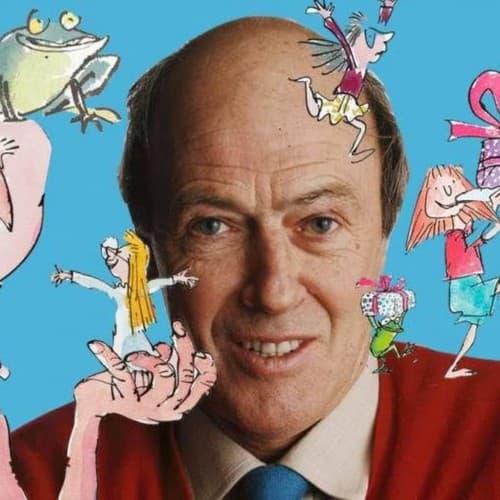
Roald Dahl was a British popular author of children's literature and short stories, a poet, and wartime fighter ace. His books have sold more than 300 million copies worldwide. Dahl has been called "one of the greatest storytellers for children of the 20th century".







