“The ball hung in the air, a perfect, beautiful thing, and I knew, I just knew, I had to hit it.”
— Matt describes his feeling right before a crucial baseball play.

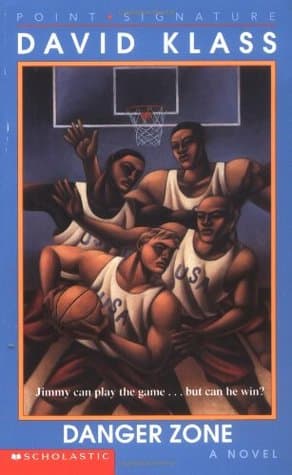
David Klass (1996)
Genre
Young Adult
Reading Time
240 min
Key Themes
See below
Sign in to track this book
On the Roman courts, a white basketball player's dreams of international glory collide with racial prejudice and political plots, making him face truths about himself and his teammates.
Jimmy Doyle, a star basketball player from a small town in Minnesota, is chosen to join the 'Teen Dream Team.' This is a group of high school players selected to represent the United States in an international tournament in Rome. Jimmy, who is white, is surprised to be the only white player among skilled Black athletes, most from cities. His coach, Mr. McClure, says the team represents the country. At first, Jimmy feels out of place and struggles to connect with his teammates, who are curious but also doubtful. He quickly sees that his life experience is very different from theirs, setting up cultural differences and personal growth.
The team gathers for a tough training camp. The players, including the outgoing Marcus and the quiet Willie, start to bond on the court but stay somewhat separate off it. Jimmy, despite his talent, finds it hard to join the existing social groups. He feels alone, like an outsider because of his race and background. Coach McClure pushes the team hard, always reminding them of what is at stake and their duty. Small tensions appear as players deal with their differences; some teammates make comments that show Jimmy is 'other.' Jimmy wants to prove himself, as a player and a person, but the first days are hard.
The Teen Dream Team arrives in Rome, excited but also aware of the pressure. They stay in a hotel and begin their first games. The team plays well at first, showing their talent. However, they soon face unexpected hostility from some European teams and their fans. Racist chants and gestures are aimed at the mostly Black American team, especially during games against Italian and German teams. Jimmy, for the first time, sees open racism directed at his teammates and, by extension, at himself. This experience is a wake-up call, making him face the reality of prejudice he had not known before. He starts to feel more connected to his teammates.
As the tournament continues, racial insults and unfair acts become more frequent and aggressive, both during and after games. Opposing players use dirty tactics, and the crowds become more hostile. Marcus, Willie, and other teammates share their experiences with racism, some of which are very personal and painful. Jimmy listens, understanding the deep prejudice they face daily. Coach McClure tries to protect the team, but the constant attacks wear them down. The team's performance starts to drop due to the emotional stress. However, this shared difficulty also begins to create a stronger bond among the players, including Jimmy, who now understands the need to stand together.
During a team trip to the Colosseum, the team experiences a particularly harsh and public display of racism. A group of local thugs verbally attacks them, using racial slurs and making threats. Marcus, always the most vocal, confronts them, leading to a tense situation that almost becomes a physical fight. Jimmy, seeing the raw hatred, feels a surge of anger and a need to protect his teammates. This event changes things for him; he no longer feels like an outsider but part of the group targeted by prejudice. The team returns to the hotel shaken but more united than ever, determined to use their anger in their court performance.
The Teen Dream Team reaches the semifinals, where they play a very competitive and openly hostile German team. The crowd is strongly against them, and the racial insults are at their peak. The game is very physical, with both teams playing aggressively. Coach McClure reminds the players to stay calm and focus on the game, but it is a huge challenge. Jimmy, now fully part of the team's spirit, plays with new intensity. He wants to win not just for the trophy, but as a statement against the prejudice they have faced. The game is close, showing the team's strength under extreme pressure.
The final game pits the Teen Dream Team against the host nation, Italy. This game is less about basketball and more about a fight for dignity. The Italian crowd is very nationalistic and openly racist, throwing objects onto the court and chanting hateful slurs. The Italian players play very roughly, seemingly encouraged by referees who ignore their fouls. The atmosphere is tense and dangerous. Jimmy, Marcus, Willie, and the rest of the team are pushed to their limits, physically and emotionally. They know this game is about more than a championship; it is about standing up for themselves and their race against overwhelming prejudice.
In the final minutes of the championship game, with the score close and tension high, an Italian player's deliberate foul seriously injures an American teammate. This act pushes the American team too far. Marcus, furious, is ready to fight back physically, and the whole team is about to leave the game in a violent protest. Jimmy, however, remembers Coach McClure's words about staying calm and representing their country with honor. He, with Willie, helps calm the situation, urging the team to use their anger to win the game through skill and fairness, not violence. This moment is the real test of their unity and character.
Despite the extreme challenges and biased officiating, the Teen Dream Team rallies. They play with great focus and resolve, united in their goal. In a thrilling final play, they win the championship against Italy. The win is mixed, shadowed by the racism they faced, but it is also a victory of spirit. After the game, the team celebrates, not just the basketball win, but the bond they formed. Jimmy, no longer an outsider, stands with his teammates. He has learned much about racial prejudice and the strength found in unity. He has truly become part of the 'Teen Dream Team,' on and off the court.
When he returns home, Jimmy is a changed person. The experiences in Rome have shown him the realities of racism and the importance of empathy and standing up for what is right. He thinks about his early innocence and the lessons he learned from his teammates, especially Marcus and Willie. The basketball championship is a big achievement, but his personal growth and the friendships made under pressure truly define his journey. Jimmy carries a new view on identity, prejudice, and unity, forever changed by his time with the Teen Dream Team. He understands that danger is not just on the court, but in the world's prejudices.
The Protagonist
Jimmy transforms from a sheltered, somewhat innocent athlete into a more aware, empathetic, and socially conscious individual who understands the complexities of racism and solidarity.
The Supporting
Marcus initially acts as a foil to Jimmy, representing the direct experience of racism, but evolves to accept Jimmy as a true ally and friend.
The Supporting
Willie remains a consistent voice of reason and strength, influencing Jimmy through his quiet wisdom and steadfast character.
The Supporting
Coach McClure's arc involves navigating the growing racial tensions while trying to maintain team cohesion and sportsmanship, ultimately reinforcing the values of integrity.
The Antagonist
Their role is to escalate the conflict to its most dangerous point, forcing the American team to make a stand against overwhelming prejudice.
The Supporting
Their role is to further escalate the racial and athletic challenges faced by the American team before the final showdown.
The Supporting
Tony moves from initial skepticism towards Jimmy to a place of acceptance and camaraderie as the team unites against external prejudice.
The Mentioned
Their role is static, serving as a reference point for Jimmy's origins and the innocence he leaves behind.
The main theme is the open and subtle forms of racism encountered by a mostly Black American basketball team in Europe. It shows how prejudice can appear in chants, dirty play, unfair officiating, and public aggression, forcing the characters, especially Jimmy, to face its harsh realities. The book compares Jimmy's protected experience with the daily prejudice his Black teammates face. It shows how widespread racial hatred is and how important it is to recognize and fight it. The incidents at the Colosseum and during the final game are clear examples of this theme.
“"He had never seen hatred like this, not directed at him, not at anyone he knew. It was a cold, ugly thing, and it made him sick to his stomach."”
This theme explores how people define themselves and find their place in a group, especially when facing outside opposition. Jimmy, as the only white player, at first struggles with his identity within the mostly Black team and feels like an outsider. However, as the team faces shared hardship and racism, he finds a new sense of belonging and unity. He realizes that shared experience can go beyond racial differences. The team's collective identity as 'Americans' and as Black athletes becomes a source of strength against European prejudice.
“"He was one of them now. Not just a basketball player, but a part of something bigger, something that stretched beyond the court and into the world."”
The novel looks at the conflict between keeping sportsmanship and giving in to the urge to retaliate when facing extreme challenges and unfairness. The team, especially Marcus, is constantly tested by racist insults and dirty play, pushing them to the edge of violent response. Coach McClure always preaches discipline, but the climax of the final game forces the players to make a choice: to fight back with violence or to win with fairness and dignity. This theme explores the moral difficulties of responding to aggression and prejudice.
“"We're here to play basketball, not to fight. We win this with our game, not with our fists."”
Jimmy's journey throughout the tournament is a powerful coming-of-age story. He starts as an innocent, protected teenager and must grow up quickly by facing the world's harsh realities. His experiences with racism, both seen and indirectly felt, break his innocent view of the world. They make him develop empathy, critical thinking, and a stronger moral sense. This change is not just about becoming a better basketball player, but about becoming a more aware and responsible person, understanding the complexities of social injustice.
“"Rome had changed him. Not just the sights, but the ugliness, the hatred, and the way his teammates had faced it all."”
A symbolic microcosm of American diversity confronting global prejudice.
The 'Teen Dream Team' functions as a critical plot device by bringing together a diverse group of American teenagers, particularly highlighting the racial dynamic between the predominantly Black players and the sole white player, Jimmy. This composition allows the novel to explore internal team dynamics and prejudices. More importantly, when this diverse team faces external, overt racism in Europe, it amplifies the themes of prejudice, unity, and identity. The team's collective experience becomes a symbol of America's ongoing struggle with race and its representation on a global stage, forcing both the characters and the reader to confront uncomfortable truths.
A foreign backdrop that externalizes and intensifies racial conflict.
The international setting of Rome and other European cities serves as a crucial plot device by displacing the American characters from their familiar environment. This allows for the externalization and intensification of racial prejudice, as the team encounters overt, uninhibited racism from crowds and opposing teams that might be less common or expressed differently in their home country. The 'otherness' of the setting highlights the universality of racism, while also making the characters feel more vulnerable and isolated, thus fostering a stronger sense of internal unity. It removes the comfort of home and forces a confrontation with a starker reality.
The game as a structured arena for confronting real-world social conflicts.
Basketball in 'Danger Zone' is more than just a sport; it acts as a powerful metaphor for the social and racial conflicts the characters face. The rules and boundaries of the court provide a structured environment where the team's ability to work together, overcome adversity, and maintain integrity is constantly tested. The physical nature of the game, with fouls and aggressive play, mirrors the real-world 'dirty play' of racism. Ultimately, winning the game becomes symbolic of overcoming prejudice and achieving dignity, while the 'danger zone' itself refers not just to a part of the court but to the dangerous realities of racial hatred in the world.
A narrative lens for exploring racial prejudice through an outsider's awakening.
Jimmy Doyle's perspective as the sole white player on a predominantly Black team is a deliberate and effective plot device. By experiencing the events through his eyes, the reader, particularly those who might share a similar background to Jimmy, is invited to witness and understand racial prejudice from an initially naive, outsider's viewpoint. This allows for a journey of discovery and empathy, as Jimmy's preconceptions are challenged and his understanding deepens. His internal monologue and observations make the theme of racial awareness more accessible and impactful, demonstrating how an individual can come to terms with uncomfortable social truths.
“The ball hung in the air, a perfect, beautiful thing, and I knew, I just knew, I had to hit it.”
— Matt describes his feeling right before a crucial baseball play.
“Sometimes you just have to swing, even if you don't know where it's going to land.”
— Matt's internal thought about taking a risk in life and baseball.
“The coach always said, 'It's not about how hard you hit it, it's about where you put it.'”
— Matt recalls his baseball coach's advice.
“Fear can be a good thing. It keeps you sharp. Keeps you alive.”
— Matt reflects on the role of fear in high-stakes situations.
“The weight of expectation can be heavier than any bat.”
— Matt feels the pressure of being a star player.
“You can't live your life in the dugout, waiting for someone else to call you in.”
— Matt's realization about taking initiative.
“Every game is a chance to prove yourself, not to anyone else, but to yourself.”
— Matt's internal monologue about the purpose of competition.
“The silence after a home run is almost as loud as the roar.”
— Matt describes the unique atmosphere of a baseball game.
“It's funny how one moment can change everything. One swing, one pitch, one decision.”
— Matt contemplates the pivotal nature of critical moments.
“Sometimes the biggest battles are fought inside your own head.”
— Matt struggles with his inner demons and self-doubt.
“You learn more from your failures than your successes, if you're willing to look.”
— Matt reflects on the lessons learned from losing a game.
“The game doesn't care about your feelings. It just is.”
— Matt grapples with the impartial nature of sports and competition.
“Being a hero isn't about hitting the home run. It's about showing up every day, ready to play.”
— Matt's evolving understanding of heroism and dedication.
“The weight of the world, or at least the weight of the baseball world, felt like it was on my shoulders.”
— Matt feels immense pressure during a critical game.
Ready to see how well you understood this book? Take our interactive quiz with 10 questions.

David Klass is an American author and screenwriter known for his young adult thrillers. His notable works include the "Danger Zone" series, which has been praised for its fast-paced plots and relatable teenage protagonists. Klass's writing often explores themes of suspense and adventure, appealing to a broad audience of young readers.