“"It was a summer of immense power and beauty, and the boys felt it in their bones."”
— Describing the overall feeling of the summer.

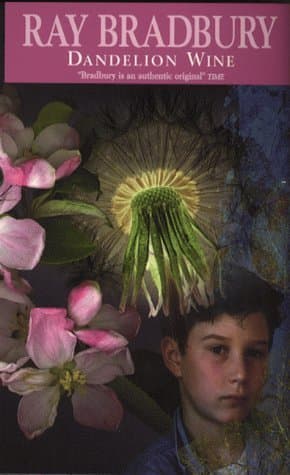
Ray Bradbury (1957)
Genre
Fantasy / Science Fiction / Young Adult
Reading Time
240 min
Key Themes
See below
Sign in to track this book
In the summer of 1928, twelve-year-old Douglas Spaulding learns about life, death, and the temporary beauty of existence amidst the sun-drenched lawns and dandelion-filled days of his small Illinois town.
The summer of 1928 begins in Green Town, Illinois, with twelve-year-old Douglas Spaulding realizing he is alive and aware of the world around him. He feels the pulse of the town, from the first cut of the lawnmowers to the scent of dandelions. His younger brother, Tom, sees these changes more practically. Meanwhile, their neighbor, Leo Auffmann, a tinkerer, is focused on building a 'Happiness Machine.' He believes he can create joy with a mechanical device, despite the initial doubts of his family and Douglas. Leo works hard, convinced such a machine will bring contentment to everyone.
The Spaulding family performs the annual ritual of making dandelion wine. Douglas, Tom, and their grandfather, John Spaulding, carefully collect dandelions, a task that symbolizes bottling the essence of summer. Grandfather Spaulding explains the importance of this tradition, noting how the wine will preserve the memories and feelings of the season for the cold winter months. Later, Douglas and Tom see a 'Green Machine' – a new electric streetcar that replaces the old, familiar trolley. This change brings both excitement and a sense of loss for the familiar past, a recurring theme for Douglas.
As night falls, Douglas feels an intense fear of the dark, a fear that seems to embody all the unknown dangers of the world. He struggles with this feeling, trying to understand and overcome it. At the same time, Green Town is stalked by a mysterious killer known as 'The Lonely One,' who preys on women walking alone at night. The town's women, including Douglas's mother and aunt, are afraid, changing their routines and social interactions. This fear casts a shadow over the otherwise pleasant summer, forcing Douglas to confront the darker parts of life and human nature.
Douglas and Tom visit Colonel Freeleigh, a ninety-year-old man who is a living record of history. Freeleigh tells vivid stories from his past, making distant eras and historical events real for the boys. He is, in essence, a human time machine, allowing them to experience the world through his many memories. Douglas is fascinated by the idea of such a long life and the wisdom it brings, while Tom is more interested in the practicalities of the stories. Freeleigh's tales highlight the temporary nature of time and the importance of remembering.
The old trolley, driven by Mr. Braling, makes its final, nostalgic run through Green Town. Douglas and Tom, along with other residents, ride it, enjoying the last moments of a beloved local institution before it is replaced by the modern electric car. This event shows the bittersweet nature of progress and change. At the same time, two mysterious figures arrive in town: Miss Fern, a woman of seemingly impossible speed, and Mr. Trask, a man who appears to move in slow motion. Their strange presence adds a touch of the fantastical and inexplicable to the summer, further blurring the lines between the ordinary and the magical.
Leo Auffmann finally finishes his Happiness Machine, but its grand reveal is a disaster. Instead of joy, it brings sorrow and despair to those who try it, including his own family, who are overwhelmed by memories of lost happiness. The machine eventually burns down. Through this failure, Leo realizes that true happiness cannot be made or contained; it is found in the simple, everyday experiences of life, in family, and in the natural world. Grandfather Spaulding reinforces this idea, explaining to Douglas that happiness is not a destination but a journey, found in the small moments of living.
The widespread fear of 'The Lonely One' finally ends when the killer is caught. The town breathes a collective sigh of relief, and the women, including Lavinia Nebbs, feel safe enough to walk alone at night again. This event marks a turning point, bringing a sense of peace back to Green Town. Later, Douglas and Tom encounter the tarot witch, Madame Croche, who runs an arcade fortune-telling machine. Douglas is both fascinated and bothered by her predictions, grappling with the idea of fate versus free will. The encounter adds another layer of mystery and the supernatural to his summer experiences.
Helen Loomis, an elderly woman, wants to experience love and beauty before she dies. Douglas, understanding her wish, helps arrange for a young man, Bill Forrester, to visit her. They share a conversation about life, love, and the beauty of the world, giving Helen a sense of peace and fulfillment. Meanwhile, Douglas observes Mrs. Bentley, an old woman who feels invisible and forgotten. She struggles to convince others of her past vitality. Douglas, through his unique perception, sees her true self, connecting with her in a way others cannot, showing his growing empathy.
The summer takes a sad turn with the death of Douglas's beloved grandmother, Clara Spaulding. Her passing is a deeply impactful event for the entire family, especially for Douglas, who struggles to understand such a profound loss. Grandma Spaulding was the heart of their home, providing comfort, wisdom, and delicious meals. Her death forces Douglas to confront the certainty of mortality and the pain of grief. He reflects on her life and her essential role in their family, a realization that marks a significant step in his emotional maturity and understanding of the cycle of life.
As summer ends, Douglas is struck by a sudden illness, a fever that drains his energy and makes him feel as though the summer itself is leaving his body. His grandfather and father try to comfort him, but an old junkman, Mr. Jonas, unexpectedly brings him relief. Mr. Jonas, a seemingly magical figure, gives Douglas a bottle of 'fresh air' from distant places, a symbolic cure that revives Douglas's spirit. This final, whimsical act of kindness helps Douglas accept the passing of summer, embracing the memories and lessons learned, and looking forward to the future.
The Protagonist
Douglas matures from a boy simply experiencing summer to one who understands the deeper currents of life, death, and the bittersweet nature of change.
The Supporting
Tom remains largely a constant, offering a steady, practical presence amidst Douglas's more profound epiphanies.
The Supporting
Grandfather Spaulding serves as a consistent source of wisdom, embodying the enduring spirit of the town.
The Supporting
Her death marks a significant point in Douglas's understanding of life and loss, though her character remains a symbol of enduring love.
The Supporting
Leo learns that true happiness is found in life's simple, unmanufactured moments, not through invention.
The Supporting
Lavinia transforms from a fearful resident to a symbol of courage, directly confronting the town's terror.
The Supporting
Colonel Freeleigh remains a constant source of historical knowledge and wonder, providing a link to the past.
The Supporting
Mr. Jonas appears as a magical helper, facilitating Douglas's recovery and acceptance of summer's end.
The Mentioned
Her struggle to be seen underscores the theme of aging and perception, though her personal arc is not central.
The novel shows the world through the heightened senses and imagination of a twelve-year-old boy. Douglas Spaulding's perception turns ordinary events—like new sneakers or the smell of cut grass—into important experiences. This theme emphasizes how childhood allows for a unique blend of wonder and growing understanding, where the mundane becomes magical. For instance, making dandelion wine becomes a ritual of bottling summer's essence, showing Douglas's imaginative interpretation of reality. His ability to truly 'see' Mrs. Bentley, when others ignore her, further highlights this theme.
“Dandelion wine. The words were summer on the tongue. The wine was summer caught and stoppered.”
Dandelion Wine explores the full range of life and death, often comparing it to the seasonal cycle of summer. Douglas experiences the joy of being alive, the fear of the unknown ('The Lonely One'), and the deep sorrow of loss (Grandma Spaulding's death). These events teach him about the certainty of change and the bittersweet nature of existence. Making dandelion wine itself is a metaphor for preserving life's temporary moments, acknowledging that everything, like summer, eventually passes, but its essence can be cherished and remembered. The change from the old trolley to the new electric car also symbolizes this natural cycle of change.
“Every summer is a different summer. You can never go home again.”
A central theme is the exploration of what true happiness is. Leo Auffmann's 'Happiness Machine' is a key plot device to examine this. Its failure shows that joy cannot be made or contained in a machine; it is found in simple, everyday experiences, human connections, and the appreciation of life's small wonders. Douglas's own moments of deep happiness are often tied to sensory details and his awareness of being alive, reinforced by Grandfather Spaulding's wisdom that happiness is not a destination but a way of living and seeing the world around you.
“Happiness is not a thing. It is a way.”
The novel is filled with a strong sense of nostalgia for a simpler, idealized past, specifically the summer of 1928. It reflects on how memories shape our understanding of the present and future. The replacement of the old trolley with the new electric car, the stories of Colonel Freeleigh, and the act of preserving summer in dandelion wine all speak to the passage of time and the desire to hold onto temporary moments. Douglas's realization of 'being alive' at the beginning of summer and his eventual acceptance of its end underscore the bittersweet nature of time's relentless march.
“You can never go home again, but the truth is you can never leave home, either.”
A potent symbol of bottled summer, memory, and the essence of life.
The dandelion wine is not just a beverage; it's a central metaphor and symbol throughout the novel. It represents the ability to capture and preserve the fleeting essence of summer, its warmth, joy, and specific memories. For Douglas and his grandfather, making the wine is a ritual that bottles time itself, allowing them to revisit the season's feelings during the cold winter months. It also symbolizes the cyclical nature of life and the importance of cherishing each moment.
An invention designed to create joy, which ultimately reveals its true nature.
Leo Auffmann's Happiness Machine serves as a significant plot device, acting as both a symbol and a foil. As a symbol, it represents humanity's desire to control and quantify happiness. As a foil, its spectacular failure highlights the novel's central message: true happiness cannot be manufactured or bought. Instead, it arises organically from human connection, simple pleasures, and the appreciation of life's imperfections. Its destruction paves the way for a deeper understanding of joy.
A serial killer who embodies the fear and darkness lurking beneath the idyllic surface.
'The Lonely One' functions as a tangible antagonist whose presence introduces fear and real danger into the otherwise nostalgic summer. However, he also symbolizes the darker, more unsettling aspects of life and human nature that Douglas begins to confront. His terror forces the town to acknowledge that even in an idyllic setting, evil can exist, challenging the perceived innocence of childhood and the safety of the community. His capture brings both relief and a deeper understanding of the world's complexities.
A symbol of tradition, community, and the bittersweet nature of progress.
The old trolley, which makes its final run early in the summer, symbolizes the passing of an era and the march of progress. It represents tradition, community, and the familiar rhythms of Green Town life. Its replacement by the modern electric car evokes a sense of nostalgia and loss for the past, while also acknowledging the inevitability of change. Douglas's ride on the last trolley signifies his understanding of how quickly things can disappear, fostering an appreciation for the present.
“"It was a summer of immense power and beauty, and the boys felt it in their bones."”
— Describing the overall feeling of the summer.
“"Every morning, he got up and went out and found something new, and it was a miracle."”
— Referring to Douglas Spaulding's daily discoveries and appreciation for life.
“"Dandelion wine. The words were summer on the tongue."”
— The first mention and evocative description of dandelion wine.
“"Sometimes you got to be a little crazy to be free."”
— Spoken by Colonel Freeleigh regarding his adventurous spirit.
“"The only thing that mattered was that it was summer and they were alive."”
— Highlighting the simple joy of existence during the summer.
“"What good is the future if you don't use it?"”
— A thought from Douglas reflecting on the importance of living in the present.
“"You want to know a secret? I'm not afraid of anything. I'm not afraid of dying. I'm afraid of not living."”
— Spoken by Lavinia Nebbs, reflecting on her fear of not fully experiencing life.
“"The world was a great big place, full of little things that were a joy to discover."”
— Douglas's perspective on the world and its small wonders.
“"Every summer, I get born again."”
— Grandfather Spaulding's reflection on the rejuvenating power of summer.
“"He was a collector of moments, of feelings, of summer."”
— Describing Douglas's unique way of experiencing and remembering the summer.
“"Happiness is a thing you lay down on yourself, like a blanket."”
— Spoken by Leo Auffmann about the nature of happiness and self-creation.
“"The first and greatest thing a man learns is that he is born to live, and not to prepare for life."”
— A profound thought from Douglas about the essence of existence.
“"It was a time of green and growing things, of sun and summer rain, of children's voices and the smell of cut grass."”
— Evocative imagery describing the sensory experience of the summer.
“"We are not meant to be afraid, but to be alive."”
— A reflection on overcoming fear and embracing life.
Ready to see how well you understood this book? Take our interactive quiz with 10 questions.

Ray Douglas Bradbury was an American author and screenwriter. One of the most celebrated 20th-century American writers, he worked in a variety of modes, including fantasy, science fiction, horror, mystery, and realistic fiction.







