“The world keeps ending for each of us, and the world keeps beginning.”
— A reflection on personal endings and new beginnings.

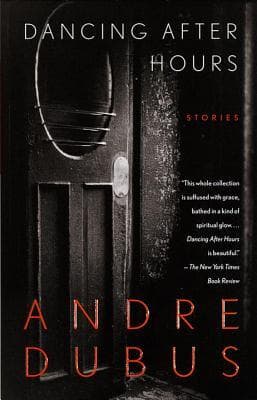
Andre Dubus (1996)
Genre
Literary Fiction
Reading Time
240 min
Key Themes
See below
Sign in to track this book
In "Dancing After Hours," Andre Dubus illuminates the tender parts of ordinary American lives, where characters struggle with loneliness, the fear of love, and unexpected moments of grace.
Paul Clement, a college professor, is driving home from a conference, dealing with his attraction to a student, Amy. He thinks about his marriage to Anne and a past affair he confessed to her, which she forgave. The story shows Paul's internal conflict between his intellectual life and his desires, and the guilt he carries. He remembers a time he almost left Anne for another woman, only to be pulled back by his love for his family. The story explores the cycle of temptation and the lasting impact of past mistakes on his present morality, as he considers acting on his feelings for Amy.
Father Jack is a Catholic priest who has lost faith in traditional beliefs but continues his duties, finding comfort in human connection. He is close to the family of his friend, Tommy, whose wife, Mary, has cancer. Jack spends time with them, sharing meals and offering support, even as he privately questions God's existence and prayer's effectiveness. He finds a different kind of spirituality in the world's everyday beauty and the love he sees among his parishioners, especially as Mary gets sicker and Tommy shows devotion.
Alice, a college student, starts a relationship with a graduate student named Peter. She is deeply in love, but her parents, especially her father, are wary of Peter, who comes from a different background. Alice struggles to balance her intense feelings for Peter with her family's unspoken disapproval and their desire for her to pursue a different path. The story captures the intensity of first love and the difficult process of becoming independent from parents, as Alice tries to build her own identity and future with Peter.
Eileen, a middle-aged woman, finds out her husband, a retired Marine colonel, has been having an affair. The story shows Eileen dealing with the betrayal, her anger, and the collapse of her assumptions about her marriage. She confronts her husband, leading to a tense discussion. Eileen begins to re-evaluate her life and her own desires, questioning the sacrifices she made and the identity she built as a military wife. The story explores her journey towards self-discovery and the difficult decisions she faces about her future.
Frank, a devout Catholic, goes to confession to Father Jack, the priest from 'A Love of the World.' Frank confesses a long-held secret: he once committed an act of violence in his youth, believing it was justified. He has carried this burden for decades, and it has shaped his life and his relationship with God. Father Jack listens empathetically, offering guidance and absolution, not through strict rules, but through understanding and human connection. The story explores themes of guilt, redemption, and the search for peace through confession.
Marie thinks about her marriage to Leo, a seemingly ordinary man who, to her, is the 'best husband in the world.' The story is a quiet reflection on the small acts of kindness, loyalty, and steady support that define their relationship. Marie remembers specific instances of Leo's thoughtfulness and his constant presence, especially during difficult times. The story highlights the beauty found in everyday domestic life and the deep, unspoken love that sustains a long-term marriage, contrasting it with more dramatic or idealized ideas of romance.
A middle-aged, divorced man named George, an English professor, is teaching a summer class with only one student, a young woman named Sarah. As the class progresses, George feels drawn to Sarah's intelligence and youthful energy. Their interactions, initially academic, slowly become more personal. George, feeling isolated and wanting connection, projects his hopes onto Sarah. The story explores loneliness, the desire for companionship, and the subtle lines between professional relationships and personal longing, showing the brief nature of their connection.
A family—father, mother, and their two young children—spends an evening at a drive-in movie theater. What starts as a nostalgic and seemingly perfect outing slowly reveals the subtle stresses and unspoken dissatisfactions within the marriage. The parents, Bill and Carol, exchange quiet criticisms and show their differing expectations and disappointments. The children's innocent joy contrasts with the adults' underlying weariness. The story uses the drive-in as a setting to explore the fading of dreams and the quiet struggles of keeping a family together.
Michael, a man in his late thirties, is driving through a snowstorm, remembering his youth and a passionate but ultimately failed relationship with a woman named Cathy. The harsh winter landscape reflects his inner sadness as he revisits the intensity of their love, the reasons for their breakup, and his lingering regret. The story is a melancholic reflection on lost chances, the lasting power of first love, and how past relationships continue to shape one's present emotional state, even decades later.
The title story follows a divorced, middle-aged man named Danny and a younger woman named Emily who meet at a bar. Both carry their own burdens of loneliness and past heartbreaks. They bond over their shared love of dancing, finding a temporary escape and a deep, unspoken connection on the dance floor. The story is an exploration of human desire for intimacy, the brief nature of happiness, and the courage it takes to open oneself to another, even for a short time, despite life's sadness. Their dance becomes a symbol of hope and shared vulnerability.
Theresa, a woman struggling with guilt and spiritual distress, seeks out Father Jack (from 'A Love of the World' and 'Bless Me, Father'). She tells him about a difficult decision she made regarding a family member, and her feelings of remorse and spiritual emptiness. Father Jack, true to his character, offers her a compassionate and understanding ear, providing comfort not through strict religious rules, but through empathy and the affirmation of her humanity. The story highlights the healing power of confession and the comfort found in genuine spiritual advice.
Tony, a man with a history of anger and violence, works as a bouncer. He constantly fights his inner demons, trying to control his impulses and avoid his aggressive nature. The story goes into his thoughts, showing his fear of himself and his desire to live a peaceful life. He observes the violence around him in the bar, seeing reflections of his own potential for harm. The story explores the constant effort required to overcome destructive patterns and the hope for self-redemption.
Mark visits his elderly, ailing father in a nursing home. Their conversation has long silences and unspoken emotions, revealing the history of their complex and sometimes strained relationship. Mark deals with feelings of duty, resentment, and a growing understanding of his father's life and limitations. The story is a tender but realistic portrayal of filial love, the passage of time, and the reality of aging and mortality, as Mark accepts his father's decline and their shared past.
A man becomes drawn to a woman he sees regularly at a local diner, especially by a tattoo on her arm. He watches her from afar, creating fantasies about her life and personality. His fascination with her, fueled by his own loneliness and longing, makes him think about his own life, his past relationships, and his unfulfilled desires. The story explores how we perceive things, the human tendency to project our own needs onto others, and the quiet desire for connection in everyday encounters.
The Protagonist
Paul's arc involves a continuous internal struggle with temptation, never fully resolving but always confronting his capacity for both love and infidelity.
The Supporting/Protagonist
Father Jack finds a new form of spirituality rooted in human connection and the mundane beauty of life, rather than traditional religious dogma.
The Protagonist
Eileen moves from a state of shock and betrayal to a path of self-re-evaluation and potential independence, questioning her past choices.
The Protagonist
Danny experiences a fleeting but profound connection that offers a momentary reprieve from his loneliness and a glimpse of hope.
The Protagonist
Emily finds a brief but meaningful connection that offers mutual solace and a sense of being understood.
The Protagonist
Tony's arc is an ongoing, daily struggle for self-control, demonstrating a continuous effort to overcome his violent past and nature.
The Protagonist
Mark moves towards a more nuanced understanding and acceptance of his father, finding a form of peace in their complex relationship.
The Protagonist
George experiences a fleeting, unfulfilled connection that highlights his enduring loneliness.
The Protagonist
Alice begins to assert her independence and make choices based on her own desires, despite family expectations.
Many characters in Dubus's stories are affected by past actions, choices, or relationships, and deal with guilt, regret, and the desire for forgiveness. Paul Clement's temptations and the memory of past infidelities ('The Timing of Sin') show this, as does Frank's decades-long burden of a violent act confessed to Father Jack ('Bless Me, Father'). The past is not easily left behind; it shapes the present and forces characters to confront their morality, often leading them to seek understanding or forgiveness, from others or themselves.
“He knew that his past was not a thing he had lived through and survived, but a living presence within him, shaping his every choice.”
A common theme is the deep loneliness experienced by individuals and their desperate, often quiet, desire for genuine human connection. Characters like Danny and Emily ('Dancing After Hours') find a temporary, deep comfort in shared vulnerability on the dance floor. George ('The Class of One') projects his loneliness onto his sole student, showing the ache for companionship. Even within marriages, characters like Eileen ('The Colonel's Wife') or the couple in 'The Last Great American Picture Show' experience a form of isolation, highlighting the universal human need to be seen, understood, and loved.
“They danced, and in their movements, they found a language for what they could not say: the quiet ache of solitude, the desperate hope for touch.”
Dubus explores love in its various forms: passionate, lasting, flawed, and sometimes eroded. He looks into the quiet devotion of a long-term marriage ('The Best Husband in the World'), the intensity of first love ('Falling in Love'), and the painful aftermath of betrayal ('The Colonel's Wife'). Marriages are often shown not as perfect unions, but as complex relationships sustained by small acts of kindness, enduring through challenges, or sometimes falling apart under unspoken resentments, revealing the fragility and strength of human bonds.
“Love was not a sudden storm, but the steady, quiet rain that nourished the earth, even when the sun was hidden.”
The collection often examines the complexities of faith, especially through Father Jack. His crisis of faith ('A Love of the World') does not lead to him abandoning his calling, but to a new definition of spirituality, finding grace and meaning in human empathy and the tangible world rather than strict rules. Characters seek spiritual guidance or confession not always for divine forgiveness, but for human understanding and comfort, highlighting the changing nature of belief in modern life and the lasting power of compassion.
“He had lost God in the heavens, but found Him in the flawed, loving faces of his parishioners, in the quiet dignity of their suffering.”
Several stories feature characters fighting their own darker impulses or ingrained destructive patterns. Tony in 'The Cage' shows this, battling daily with his violent tendencies and striving for a peaceful existence. Paul Clement's ongoing struggle with fidelity ('The Timing of Sin') also fits this theme, as he constantly tries to align his actions with his moral conscience. This theme explores the internal struggle required to overcome personal demons and the hope, however slight, for self-control and redemption.
“Every day was a fight, a quiet war waged inside his skull, to keep the beast caged.”
Deep dives into characters' thoughts and feelings.
Dubus frequently employs internal monologue to reveal the intricate workings of his characters' minds. This device allows readers direct access to their deepest fears, desires, regrets, and moral dilemmas. In 'The Timing of Sin,' Paul Clement's internal debate about fidelity is extensively explored, showcasing his complex guilt and temptation. This technique creates a strong sense of intimacy and psychological realism, making the characters' struggles profoundly relatable and multi-layered, often providing insight into their motivations and unresolved conflicts.
Past events shaping present character and conflict.
Many stories utilize flashbacks to illuminate the characters' present circumstances and emotional states. Memories of past relationships, mistakes, or significant life events constantly intrude upon the present narrative, revealing how the past continues to exert a powerful influence. In 'Out of the Snow,' Michael's journey is almost entirely a reflection on a lost love. This device emphasizes the enduring weight of history on individual lives, demonstrating how personal narratives are built upon layers of experience, regret, and longing, and how these memories shape current identity and decision-making.
Mundane locations revealing profound emotional truths.
Dubus masterfully uses ordinary settings—a drive-in theater, a bar, a diner, a college classroom, a nursing home—to serve as backdrops for profound emotional and psychological revelations. These commonplace locations often mirror or amplify the characters' internal states. The drive-in in 'The Last Great American Picture Show' highlights the quiet tensions within a family, while the dance floor in 'Dancing After Hours' becomes a sanctuary for connection. This device grounds the stories in realism while simultaneously elevating the mundane to a stage for deeply human drama.
Focusing on one character's perspective while allowing authorial insight.
The stories are predominantly told from a limited omniscient point of view, usually focusing closely on the inner life of one central character per story. While the narrator knows the thoughts and feelings of this main character, they do not have access to all characters' minds. This perspective allows for deep character exploration and empathy, drawing the reader intimately into the protagonist's emotional landscape, while still maintaining an authorial voice that can offer broader observations or contextual details. This creates a balanced narrative that is both personal and insightful.
“The world keeps ending for each of us, and the world keeps beginning.”
— A reflection on personal endings and new beginnings.
“He knew that the only way to heal was to feel, and he was learning to feel without drowning.”
— A character grappling with grief and emotional processing.
“Love was not a thing to be earned, but a gift to be given, and sometimes, simply received.”
— A character's evolving understanding of love and relationships.
“The quiet moments, the ones you didn't think were important, those were the ones that made up a life.”
— A realization about the significance of everyday experiences.
“He had always believed that courage was a loud thing, but now he saw it was often a quiet, stubborn refusal to give up.”
— A character's redefinition of courage in the face of adversity.
“Sometimes the only way to find your way home was to get lost first.”
— A character experiencing a period of disorientation before finding clarity.
“The past was not a burden to be carried, but a foundation to be built upon, even if some of the stones were broken.”
— A reflection on how past experiences shape the present and future.
“There was a grace in accepting what you could not change, and a strength in changing what you could.”
— A character's internal struggle with acceptance and agency.
“He learned that forgiveness was not about forgetting, but about letting go of the anger that bound him to the hurt.”
— A character's journey towards forgiveness after being wronged.
“The silence between words often spoke louder than the words themselves.”
— A commentary on unspoken communication and underlying emotions.
“Every person carried a secret landscape within them, a place where their true self resided.”
— A reflection on the inner world and hidden complexities of individuals.
“He had spent years trying to outrun his loneliness, only to find it was a shadow he had to learn to walk with.”
— A character's confrontation with and eventual acceptance of his loneliness.
“The dance was not just steps, but a conversation, a story told without words.”
— A character's appreciation for the expressive power of dance.
“To truly see another person, you had to look beyond their surface, into the messy, beautiful depths.”
— A character's realization about empathy and understanding others.
Ready to see how well you understood this book? Take our interactive quiz with 10 questions.

Andre Dubus was an American author celebrated for his profound and often melancholic fiction. His short story collections, including the acclaimed "Dancing After Hours," explored themes of faith, loss, and redemption with unflinching realism. Dubus's work earned him numerous accolades and a reputation as a master storyteller of the human condition.







