“There’s no law against being a fool.”
— Leaphorn contemplating human nature and motivations.


Tony Hillerman (1973)
Genre
Thriller / Mystery
Reading Time
255 min
Key Themes
See below
Sign in to track this book
Lieutenant Joe Leaphorn must navigate the Zuñi people's sacred world, an ancient archaeological dig, and a modern drug operation to solve the disappearance of two boys and a pool of blood in the New Mexico desert.
Lieutenant Joe Leaphorn of the Navajo Tribal Police is called to a remote area near the Zuñi Pueblo. Two boys, Ernesto Cata (Zuñi) and George Bowlegs (Navajo), have vanished. A large pool of blood is found, identified as Ernesto's. The initial investigation shows the boys had been running a footrace, a common activity for them. Leaphorn, a careful and culturally aware investigator, immediately suspects foul play. The amount of blood suggests severe injury or death, and the boys' sudden disappearance is unusual, especially for Ernesto, who was preparing for an important Zuñi religious ceremony.
Leaphorn's investigation is difficult due to the Zuñi people's traditional reluctance toward outsiders and their strong religious beliefs. He learns that Ernesto was a novitiate in the Zuñi Kiva, deeply committed to his spiritual path, making his disappearance even more puzzling. Initial suspects include Ernesto's older brother, who expresses concern but offers little information, and a group of hippies living nearby, viewed with suspicion by the local community. Leaphorn must carefully navigate Zuñi cultural sensitivities, which often involve secrecy, to make progress in the case.
A key piece of evidence appears: a hypodermic needle found near the scene, suggesting a drug connection. This discovery leads Leaphorn to an archaeological dig site led by Professor Chester Reynolds, who is excavating ancient Zuñi ruins. Reynolds, an eccentric academic, is initially uncooperative, more focused on his research than the missing boys. However, the needle and the dig's closeness to the disappearance site suggest a link between the drug trade, the missing boys, and people at the excavation, including Reynolds' assistant, Susanne. Leaphorn begins to suspect the boys stumbled upon something illegal.
Days later, George Bowlegs is found alive but disoriented, having escaped his captors. He describes being held captive and seeing strange rituals. George's story, though fragmented and affected by trauma, points to a peyote cult in the area. This cult, different from traditional Zuñi practices, uses hallucinogenic peyote in its ceremonies. Leaphorn recognizes the importance of this lead, as it introduces a new, potentially dangerous element to the investigation, moving away from initial assumptions about traditional Zuñi motives or simple criminal acts. The search for Ernesto becomes more intense, with a clearer, though more complex, direction.
Leaphorn, understanding Ernesto's deep spiritual commitment, realizes that Ernesto's disappearance might be linked to his novitiate status in the Zuñi Kiva. He learns more about the Zuñi Shalako ceremony, a sacred ritual Ernesto was preparing for, which involves elaborate costumes and a spiritual journey. Leaphorn suspects Ernesto might have been abducted or killed because of his knowledge of, or involvement in, these sacred practices, possibly due to a conflict between traditional Zuñi beliefs and the peyote cult or other illegal activities. The Kiva's secrecy makes getting information difficult, but Leaphorn continues, respecting their customs.
As Leaphorn continues his investigation, he uncovers evidence linking Susanne, Professor Reynolds' assistant, to the drug trade and possibly to stolen artifacts from the dig site. Susanne, who first seemed like a dedicated academic, is revealed to have a hidden agenda. Her involvement suggests the archaeological dig might be a cover for other illegal activities, such as drug distribution or the illicit sale of ancient Zuñi relics. This discovery broadens the scope of the crime, moving beyond a simple abduction to a more organized criminal enterprise the boys might have accidentally found.
Leaphorn, following clues and insights into Zuñi mythology, particularly the figure of the Coyote, eventually finds Ernesto Cata's body. The discovery confirms his worst fears. Ernesto's death appears ritualistic, linking it to the peyote cult and their distorted interpretation of spiritual practices. The manner of death suggests a sacrifice or a violent attempt to silence him. This gruesome discovery strengthens Leaphorn's resolve and his understanding that the perpetrators are not merely common criminals but individuals operating under a warped spiritual framework, making them even more dangerous.
Through diligent police work and a deep understanding of the local landscape and culture, Leaphorn identifies the primary suspect: a charismatic but manipulative leader of the peyote cult. This individual, acting under the guise of spiritual guidance, is responsible for Ernesto's murder and George's abduction. The killer's motive is to keep his illegal operations secret and prevent Ernesto, with his deep knowledge of traditional Zuñi ways, from exposing their corrupted practices. Leaphorn begins a focused pursuit, knowing he must apprehend this dangerous individual before more harm occurs.
The story's climax happens during the sacred Zuñi Shalako ceremony, a time of spiritual significance. The killer uses this as a cover for escape or further illegal activities. Leaphorn, understanding the killer's psychology and desire to blend into the spiritual chaos, tracks him to the ceremony's heart — the 'Dance Hall of the Dead.' A tense confrontation occurs amidst the elaborate dances and costumed figures. Leaphorn must navigate the event's spiritual sanctity while trying to apprehend a dangerous murderer, all without disrupting the revered Zuñi traditions.
In a climactic struggle, Leaphorn successfully apprehends the killer, ending the twisted spiritual practices. Justice is served for Ernesto Cata, and Leaphorn carefully ensures that the integrity and sacredness of the Zuñi Shalako ceremony are preserved as much as possible. His actions show his unique ability to enforce the law while maintaining deep respect for the complex cultural and religious beliefs of the Native American communities he serves. The case closes, leaving a lasting sense of the delicate balance between tradition, crime, and justice.
The Protagonist
Leaphorn deepens his understanding of Zuñi spiritual practices, broadening his cultural empathy and reinforcing his unique approach to law enforcement.
The Victim
Ernesto's arc is cut tragically short, but his devout nature and involvement in Zuñi rituals become central to understanding the killer's motive.
The Supporting
George survives a traumatic abduction, providing critical insights that propel Leaphorn's investigation forward.
The Supporting
Reynolds remains largely static, his academic detachment serving as a foil to Leaphorn's community-focused approach, eventually becoming a minor suspect by association.
The Supporting
Susanne's true criminal nature is exposed, showing her as a manipulator using a legitimate front for illicit gains.
The Antagonist
The cult leader's criminal enterprise is exposed and brought down by Leaphorn, demonstrating the destructive power of corrupted spirituality.
The Mentioned
Not a character in the traditional sense, but the mythological concept of Coyote helps Leaphorn's deductive reasoning.
The novel explores the friction between traditional Native American spiritual practices (Zuñi and Navajo) and outside influences, including modern criminal enterprises (drug trade) and distorted spiritual cults (peyote cult). Leaphorn constantly navigates these cultural boundaries, respecting traditional secrecy while pursuing justice. The Zuñi's reluctance toward outsiders and their sacred ceremonies (like Shalako) are central to the plot, creating both obstacles and unique paths for Leaphorn's investigation. The peyote cult's corruption of spiritual practices highlights this clash.
““There were two kinds of law, Leaphorn knew. The white man’s law. And the Navajo law. And sometimes they were the same.””
The book examines the deep spirituality of the Zuñi people, especially through Ernesto Cata's devotion to the Kiva and the Shalako ceremony. This contrasts sharply with the corrupted spirituality of the peyote cult, which uses hallucinogens and ritualistic violence for illegal gains. The killer manipulates spiritual symbols and practices, twisting them to serve his criminal agenda. Leaphorn must distinguish between genuine spiritual devotion and its perversion, understanding how faith can be both a source of strength and a vulnerability.
““The Zuñi were a people who lived in their own time, their own place, with their own gods.””
A main theme is Leaphorn's unique approach to justice, rooted in cultural empathy and respect. He does not just apply Western legal principles; he understands and uses the nuances of Native American customs, oral traditions, and spiritual beliefs in his detective work. This allows him to gain trust where others would fail and to interpret clues invisible to an outsider. His ability to bridge the gap between two worlds is essential to solving the crime and bringing peace to the community.
““Leaphorn thought about the Zuñi and their secret world, and how much he still didn’t understand.””
The story highlights the mysterious and often dangerous aspects of the unknown, whether it is the hidden practices of the Zuñi Kiva, the secret operations of a drug cult, or the vast, isolating landscape of the New Mexico desert. The boys' disappearance into this unknown territory starts the plot. The archaeological dig itself represents the appeal of uncovering ancient secrets, yet it also provides a cover for modern-day illegal activities, showing how the 'unknown' can be both historically fascinating and criminally exploited.
““The desert held its secrets close, but sometimes, if you listened, it would whisper.””
Leaphorn navigates the case as both an insider (Native American) and an outsider (Navajo investigating Zuñi).
This device is central to the novel. Leaphorn, as a Navajo, is an 'insider' compared to white law enforcement, granting him a degree of trust and understanding within Native communities. However, he is still an 'outsider' to the specific Zuñi traditions and secrets, requiring him to carefully navigate their cultural barriers. This dual perspective allows Hillerman to explore the complexities of inter-tribal relations and the challenges of law enforcement across distinct cultural lines, enriching the mystery with layers of cultural nuance.
References to Native American mythology, particularly Coyote, guide Leaphorn's deductions.
Hillerman frequently uses allusions to Native American mythology, most notably the trickster figure Coyote, to provide insight into the killer's methods and Leaphorn's thought process. Coyote represents deception, chaos, and the overturning of norms. By recognizing the 'Coyote-like' aspects of the killer's actions – their manipulation, their attempts to create confusion, and their blending into a sacred ceremony – Leaphorn is able to anticipate their moves and understand their psychological profile, adding a unique cultural lens to the detective work.
The Zuñi Shalako ceremony serves as both a backdrop and a critical plot element.
The elaborate and sacred Zuñi Shalako ceremony is not just a cultural backdrop but a crucial plot device. It provides a highly evocative setting for the climax, with its masked dancers and spiritual intensity. More importantly, the killer uses the chaos and spiritual significance of the ceremony as a cover for their actions and a potential escape. Leaphorn's understanding of its importance allows him to predict the killer's movements and to conduct his investigation with utmost respect, highlighting the conflict between profane crime and sacred tradition.
A legitimate academic endeavor used to conceal illicit activities.
The archaeological dig, led by Professor Reynolds, serves as a classic plot device: a seemingly legitimate operation that acts as a front for criminal activity. It provides a convenient cover for the drug trade and potentially the illicit sale of artifacts, drawing suspicion away from the true nature of the operations. This device introduces an element of deception and highlights how even respected institutions can be compromised, adding layers of intrigue and misdirection to the investigation.
“There’s no law against being a fool.”
— Leaphorn contemplating human nature and motivations.
“The wind was a constant, almost visible presence, shaping the land and the people.”
— Description of the landscape and its influence.
“He had learned that the most dangerous lies were often those spoken with the deepest conviction.”
— Leaphorn reflecting on deception and belief.
“The past, Leaphorn knew, was never truly past out here.”
— Considering the enduring legacy of history in the Southwest.
“Sometimes the best way to hide something is to put it in plain sight.”
— Leaphorn's thought process during an investigation.
“The desert taught patience, or it killed you.”
— Observing the harsh realities of the desert environment.
“Fear was a cold, lonely companion.”
— A character's internal experience of fear.
“Every man carried his own wilderness inside him.”
— Leaphorn's philosophical musings on internal struggles.
“The truth was often a tangled thing, not a straight line.”
— Leaphorn grappling with complex evidence.
“Silence here was not an absence of sound, but a presence.”
— Describing the unique atmosphere of the quiet landscape.
“He had seen enough men driven by obsessions to know they rarely ended well.”
— Leaphorn's experience with destructive human drives.
“Culture was a river, constantly flowing, constantly changing, but always carrying its essential current.”
— Reflecting on the nature of cultural identity.
“The most important things were often the ones not said.”
— Leaphorn's understanding of communication and unspoken truths.
Ready to see how well you understood this book? Take our interactive quiz with 10 questions.
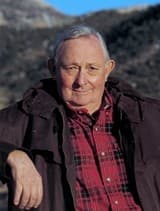
Biography coming soon.







