“A great nose indicates a man genial, courteous, intellectual, brave, -such as I am- and all my other qualities as well, and all on a grand scale.”
— Cyrano describes the significance of his nose to Le Bret.

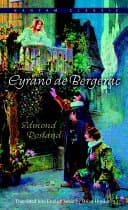
Edmond Rostand (2006)
Genre
Historical Fiction / Romance
Reading Time
220 min
Key Themes
See below
Sign in to track this book
A brilliant but insecure poet with a prodigious nose secretly pours his soul into eloquent love letters for the woman he adores, only to have them delivered by a handsome but inarticulate rival.
The play opens in the Hôtel de Bourgogne, where a play starring Montfleury is about to begin. Cyrano de Bergerac, a poet and soldier, enters and declares that Montfleury is a terrible actor, forbidding him from performing. He throws the actor off the stage, to the crowd's delight. When a meddling Viscount de Valvert insults Cyrano's large nose, Cyrano improvises a lengthy, witty poem about it before challenging Valvert to a duel. During the fight, Cyrano composes a ballade while he fences, wounding Valvert on the last line. This scene establishes Cyrano's intellect, his skill with a sword, and his sensitivity about his physical appearance, especially his nose.
After the duel, Cyrano meets his friend Le Bret and confesses his secret love for his cousin, Roxane. Le Bret encourages him to tell her, but Cyrano's self-consciousness about his nose prevents him. Soon after, Roxane's duenna arranges a meeting for Cyrano with Roxane. Cyrano, hopeful, prepares to declare his feelings. However, Roxane reveals she loves Christian de Neuvillette, a handsome new cadet in Cyrano's company, the Gascony Cadets. She asks Cyrano, as her friend, to look after Christian and ensure he writes to her. Crushed but devoted, Cyrano agrees, promising to protect Christian from the other cadets.
Cyrano confronts Christian, learning that Christian also loves Roxane but lacks the words to express his feelings. Christian admits he fears speaking to Roxane, worried his lack of wit will disappoint her. Seeing a chance to express his own feelings through another, Cyrano proposes a plan: he will write the passionate, poetic love letters to Roxane, and Christian will sign them. Christian, desperate to win Roxane's heart, readily agrees. This arrangement lets Cyrano pour out his soul to Roxane, though under another man's name, creating a complex emotional triangle built on deception.
Roxane, enchanted by Christian's (Cyrano's) letters, arranges to meet him under her balcony. Christian, left to speak for himself, quickly falters, resorting to simple declarations that disappoint Roxane. Cyrano, hidden, intervenes. He prompts Christian, then eventually takes over, speaking directly to Roxane in the darkness, pretending to be Christian. His impassioned, eloquent words, full of poetic imagery and emotion, completely captivate Roxane. Under the cover of night, Roxane falls deeply in love with the 'soul' she believes is Christian's, unaware it is Cyrano's voice and heart she truly hears.
Roxane, completely won over by the 'letters' and the 'balcony serenade,' decides she wants to marry Christian immediately. To thwart the advances of the powerful Comte de Guiche, who also desires Roxane, she tricks a Capuchin friar into marrying her and Christian on the spot. De Guiche, enraged by the marriage, orders Christian's regiment, including Christian and Cyrano, to the siege of Arras, a dangerous front in the war against the Spanish. This forces the two rivals for Roxane's affection to face war side-by-side, further complicating their shared secret.
At the siege of Arras, the Gascony Cadets face starvation and constant danger. Despite the perilous conditions, Cyrano secretly crosses enemy lines every day to deliver letters, still written by him, to Roxane, signed by Christian. Roxane, receiving these increasingly fervent and beautiful letters, believes Christian is growing in eloquence and love. Christian, aware of Cyrano's sacrifice and the depth of the deception, feels guilty and conflicted. The letters become a lifeline for Roxane and a heavy burden for both men.
Driven by the passionate letters, Roxane secretly travels to the siege of Arras, bringing food and wine for the starving cadets. She tells Christian that his letters have changed her love; she no longer loves him merely for his handsome face but for his beautiful soul, his wit, and his poetry. She declares that even if he were ugly, she would still love him. This declaration deeply affects both Christian and Cyrano. Christian, realizing Roxane truly loves Cyrano's words, becomes desperate for Cyrano to reveal the truth to her.
Overwhelmed by Roxane's declaration and the weight of the deception, Christian confronts Cyrano, urging him to tell Roxane the truth. He believes Roxane would choose Cyrano if she knew. Before Cyrano can act, Christian is fatally wounded by a Spanish bullet during a skirmish. In his dying moments, Christian sees one last 'letter' from Roxane, which Cyrano quickly smears with Christian's blood to make it appear as if Christian wrote it. Christian dies believing Roxane loves him, and Cyrano, heartbroken, chooses to let the lie stand, preserving Roxane's idealized memory of her husband.
Fifteen years pass. Roxane has retired to a convent, still mourning Christian, wearing his blood-stained letter over her heart. Cyrano visits her every Saturday, bringing news and acting as her devoted friend. He has continued to live a life of poverty and danger, making enemies with his sharp tongue and integrity. He is a respected figure, known for his wit and independent spirit, but also for his tragic loneliness. The secret of the letters remains unrevealed, a silent sign of Cyrano's enduring love and sacrifice.
Le Bret and Ragueneau arrive at the convent, telling Roxane that Cyrano has been mortally wounded by a falling log, an apparent ambush by his many enemies. Despite his injury, Cyrano insists on making his weekly visit to Roxane. He arrives, pale and weak, but refuses to admit the seriousness of his condition. As darkness falls, he asks Roxane if he can read Christian's last letter to her, the one she wears over her heart. He reads it aloud, and as he does, Roxane realizes he is reading it from memory, in the dark, and that the voice she hears is the same one from the balcony years ago.
As Cyrano reads Christian's final letter, Roxane recognizes the voice and the passion, realizing with sudden clarity that it was Cyrano's soul, Cyrano's words, she had fallen in love with all along. She confronts him, heartbroken by the years of deception and his unspoken love. Cyrano, even in his dying moments, denies nothing directly, instead choosing to fight one last, imaginary duel against his lifelong enemies: falsehood, prejudice, and compromise. He succumbs to his wounds, dying with his honor and his panache intact, leaving Roxane to grieve the man she truly loved.
The Protagonist
Cyrano's arc is one of tragic self-sacrifice; he never overcomes his physical insecurity enough to declare his love directly, choosing to live through Christian's persona.
The Love Interest
Roxane evolves from a woman initially swayed by physical beauty to one who values the 'soul' and intellect above all else, ultimately recognizing Cyrano's true worth.
The Supporting
Christian's arc is brief and tragic; he attempts to win love through deception but ultimately feels unworthy and dies before the truth is fully revealed.
The Antagonist
De Guiche begins as a clear antagonist but shows subtle development, gaining a grudging respect for Cyrano's integrity, though remaining largely unchanged in his ambition.
The Supporting
Le Bret remains a steadfast, loyal friend throughout, consistently advocating for Cyrano's happiness and well-being, though unable to change Cyrano's self-sacrificing nature.
The Supporting
Ragueneau's arc is minor; he remains a devoted admirer of poetry and Cyrano, moving from baking to play-acting, always drawn to the artistic life.
The Mentioned
Montfleury has no significant arc; he is a plot device to showcase Cyrano's character.
The Mentioned
Valvert has no significant arc; he serves as a foil for Cyrano's initial display of prowess.
This is the play's main theme. Cyrano, with his beautiful soul and poetic mind, is confined by his perceived ugliness (his large nose). Christian, with outer beauty, lacks inner depth. Roxane first values physical attractiveness but ultimately falls for the eloquence and passion of Cyrano's words, believing them to be Christian's. The play explores how society, and even love, can be deceived by appearances, showing the disconnect between outward presentation and true character. Roxane's declaration at the siege that she loves Christian for his 'soul' (Cyrano's words) perfectly captures this theme.
“What is a kiss, when all is done? A promise given, a seal of love, a heart's avowal, a blush on the lips.”
Cyrano's life shows self-sacrifice, especially in his love for Roxane. He consistently puts her happiness above his own, even writing love letters for another man and risking his life to deliver them. His love remains unrequited in the traditional sense, as Roxane never fully recognizes his true feelings until his dying moments. This theme highlights the nobility and tragedy of loving so deeply that one is willing to endure personal agony for the beloved's joy, even if it means remaining in the shadows. His refusal to reveal the truth after Christian's death further emphasizes this sacrifice.
“I have loved but one woman in the world, and I have lost her twice.”
Cyrano masters language, using it as both a weapon (in his duels of wit) and a tool of expression (in his letters to Roxane). The play shows how words can shape perception, evoke emotion, and build or destroy relationships. Roxane falls in love with the poetry and passion of the letters, showing language's ability to transcend physical barriers and reveal the soul. Cyrano's ability to improvise a ballade while dueling or to craft exquisite romantic prose highlights the power of an articulate mind. Ultimately, Cyrano's words, not Christian's face, win Roxane's heart.
“A great nose indicates a great man—genial, courteous, intellectual, virile, courageous—such as I am.”
Cyrano lives by an uncompromising code of honor, refusing to flatter patrons, join influential circles, or compromise his artistic integrity for worldly success. He consistently chooses the difficult, honorable path, even if it leads to poverty and enmity. This contrasts with characters like De Guiche, who compromise their principles for power. Cyrano's insistence on 'panache' – his flamboyant, defiant spirit – embodies this theme, representing a commitment to living authentically and with dignity, even when facing adversity and death.
“What would you have me do? Seek for the patronage of some great man, and like a creeping vine on a tall tree, crawl upward, clinging to his knees, and not fall till I've reached the top? No, thank you!”
This theme explores how characters present themselves versus who they truly are. Cyrano's large nose is his literal and metaphorical mask, hiding his tender heart and insecurity. Christian uses his handsome face as a mask for his lack of wit, while Cyrano uses Christian's face as a mask for his own words. Roxane, initially, is masked by her superficiality, unable to see beyond physical appearance. The play constantly questions identity and how much of ourselves we hide or reveal, intentionally or unintentionally, through our physical attributes and chosen personas.
“I carry my adornments on my soul. I do not dress like a fop, but I wear my independence as a jewel.”
A physical trait that symbolizes Cyrano's insecurity and his unique identity.
Cyrano's enormous nose is more than just a physical feature; it is a central plot device. It is the visible manifestation of his insecurity, the barrier he believes prevents him from being loved, and the catalyst for his witty verbal sparring. It forces him to live a life of self-imposed isolation and drives his decision to woo Roxane through Christian. It symbolizes his 'ugliness' in contrast to his inner beauty and highlights the play's theme of inner versus outer appearance. It is both his curse and the source of his fierce independence and unique character.
A series of love letters written by Cyrano but signed by Christian, forming the core of the deception.
The love letters are the primary vehicle for Cyrano's unrequited love and the central deception of the play. They allow Cyrano to pour out his soul to Roxane, expressing his deepest feelings and poetic genius, while Roxane believes she is falling in love with Christian's intellect and passion. The letters represent the power of language to create intimacy and connection, even under false pretenses. They are also a constant source of guilt for Christian and a symbol of Cyrano's profound sacrifice, ultimately leading to Roxane's devastating realization at the end.
A pivotal scene where Cyrano verbally woos Roxane from the shadows, pretending to be Christian.
The balcony scene is a dramatic and symbolic turning point. It is where Cyrano, hidden in the darkness, truly wins Roxane's heart with his impassioned words, demonstrating the overwhelming power of his poetic soul. The darkness allows Roxane to 'see' Christian's (Cyrano's) soul without the distraction of his physical appearance. It solidifies Roxane's love for the 'mind' she believes is Christian's and reinforces Cyrano's role as the hidden, eloquent lover, creating a powerful moment of both romantic intensity and tragic irony.
Cyrano's flamboyant, defiant spirit and his commitment to living with honor and style.
Panache is a recurring motif and a defining characteristic of Cyrano. It refers to his plume, his flamboyant style, and his unwavering commitment to his ideals, even in the face of death. It is his refusal to compromise, to bow to mediocrity, or to surrender his independence. 'Panache' is Cyrano's personal philosophy, representing his integrity, courage, and wit. It is the last thing he holds onto as he dies, a symbol of his enduring spirit and his triumph over the mundane and the false, even in defeat.
“A great nose indicates a man genial, courteous, intellectual, brave, -such as I am- and all my other qualities as well, and all on a grand scale.”
— Cyrano describes the significance of his nose to Le Bret.
“What does it matter if I am not loved, so long as I love, and know that I am worthy of love?”
— Cyrano reflects on his unrequited love for Roxane.
“I carry my adornments on my soul. I do not dress up like a popinjay; but I array my spirit with independence, and I polish my wit.”
— Cyrano explains his disdain for superficiality and his focus on inner qualities.
“A kiss, when all is said, what is it? An apostrophe between two words, a secret told from mouth to ear.”
— Cyrano, speaking as Christian, describes a kiss to Roxane.
“I have my own kind of courage, which is to be always a little mad.”
— Cyrano explains his unconventional approach to life and challenges.
“To please others, I must betray myself. No, thank you!”
— Cyrano refuses to compromise his integrity for social acceptance or gain.
“My soul, alas! is like a forest in autumn, where the last leaves are falling.”
— Cyrano expresses his weariness and melancholy towards the end of his life.
“A poet is a man who can say in a few words what others say in many.”
— Cyrano defines the essence of poetry and a poet's skill.
“It is not the eye, but the soul, that sees.”
— Cyrano, through Christian, tries to convey to Roxane that true love goes beyond superficial appearance.
“I have been everything, and am nothing.”
— Cyrano reflects on his life's achievements and ultimate lack of fulfillment.
“What is life? A dream, a shadow, a tale that is told.”
— Cyrano muses on the transient nature of existence.
“I want to be admired, not for my beauty, but for my mind.”
— Roxane expresses her desire for intellectual connection over physical attraction.
“There is a glory in not being happy.”
— Cyrano, in a moment of stoicism, suggests dignity in accepting one's fate.
“My white plume is my honor.”
— Cyrano, in his final moments, refers to his unwavering integrity and principles.
Ready to see how well you understood this book? Take our interactive quiz with 10 questions.
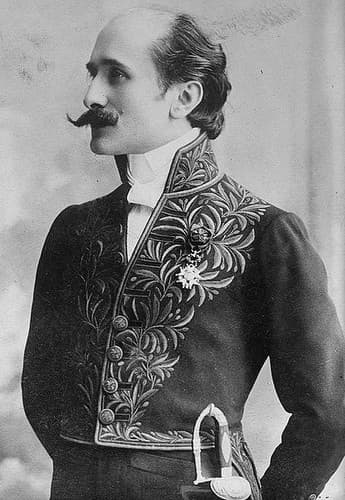
Edmond Eugène Alexis Rostand was a French poet and dramatist. He is associated with neo-romanticism and is known best for his 1897 play Cyrano de Bergerac. Rostand's romantic plays contrasted with the naturalistic theatre popular during the late nineteenth century. Another of Rostand's works, Les Romanesques (1894), was adapted to the 1960 musical comedy The Fantasticks.







