“We come unbidden into this life, and if we are lucky we find a purpose beyond starvation, misery, and early death which, lest we forget, is the common lot.”
— Marion Stone reflecting on life's purpose and the struggles faced by many.


Abraham Verghese (2010)
Genre
Literary Fiction / Historical Fiction
Reading Time
1200 min
Key Themes
See below
Sign in to track this book
Orphaned twin brothers, born from a secret affair between a nun and a surgeon, deal with love, betrayal, and the medical world during a revolution in Ethiopia and in New York City.
The story starts at Missing, a mission hospital in Addis Ababa, Ethiopia, in 1954. Sister Mary Joseph Praise, a young Indian nun, gives birth to conjoined twin boys, Marion and Shiva Stone. Their father is Dr. Thomas Stone, an English surgeon at the hospital. The birth is difficult; Sister Mary Joseph Praise dies soon after the twins are separated. Dr. Stone is devastated and feels guilty. Overwhelmed, Dr. Stone leaves the boys and the hospital, disappearing. Dr. Hema Chaudhury, an obstetrician, and Dr. Ghosh, a general surgeon, two Indian doctors, become the twins' adoptive parents.
Marion and Shiva grow up in the busy environment of Missing hospital. Dr. Hema and Dr. Ghosh give them a loving home. The boys do well among the medical staff. They have a strong, almost telepathic bond. They both love medicine, often watching surgeries and helping in small ways. Marion is more sensitive and expressive and does well in school. Shiva is quiet and very observant, with a natural surgical talent. Their early lives are full of the hospital's sights and sounds, shaping their future goals and their commitment to healing, even with the mystery of their unknown parents.
Years pass, and the twins are teenagers. Dr. Thomas Stone, their biological father, returns to Ethiopia. He lives as an isolated, alcoholic surgeon in a remote clinic. Marion and Shiva meet him during a medical emergency. Dr. Stone, still affected by his past, is cold and distant. He offers no explanation or recognition of their relationship. This meeting leaves Marion deeply hurt and confused. Shiva seems to handle it with his usual quiet intensity. The experience highlights the emptiness left by their biological parents. It makes Marion want answers about their origins more, while Shiva focuses on his surgical skills in secret.
As the twins get older, political unrest in Ethiopia increases. Emperor Haile Selassie is overthrown, and the Derg regime begins. Their childhood friend, Genet, a spirited and smart girl, becomes involved in revolutionary activities. Both Marion and Shiva are attracted to her, but in different ways. Shiva secretly helps with Genet's political work. Marion, more openly in love, struggles with her radical ideas and the dangers they bring. Genet's choices and their shared past create a complex love triangle, made more difficult by the growing violence and uncertainty in their country.
A turning point happens when Genet becomes pregnant. Marion thinks the child is his, and they plan to marry. However, it is revealed that Shiva is the father. This betrayal devastates Marion. It adds to his feelings of abandonment and creates a lasting break between the brothers. During this personal trouble, Marion is wrongly accused of anti-government activities planned by Genet and Shiva. He is arrested. To save him from prison or worse, Dr. Hema and Dr. Ghosh arrange for Marion to leave Ethiopia. They send him to New York City to study medicine, effectively sending him away from his home and his brother.
In New York City, Marion focuses on his medical studies and becomes a successful surgeon. He deals with cultural differences, the loneliness of being away from home, and the pain of his past, especially the betrayal by Shiva and Genet. He works hard, finding comfort and purpose in his job. But the memories of Ethiopia, his family, and the unanswered questions about his origins still affect him. He forms new relationships, including a romantic one with a fellow doctor. However, his heart remains tied to his birthplace and the brother he left behind. He constantly seeks a sense of belonging and resolution.
Years later, Marion learns that his biological father, Dr. Thomas Stone, is in New York, dying of cancer. Marion confronts him, wanting answers about his mother, Sister Mary Joseph Praise, and his father's leaving them. Thomas, now weak, finally tells the full, tragic story: his love for the nun, the difficult birth, his overwhelming guilt over her death, and his inability to cope with the twins, who reminded him of his loss. This painful confession helps Marion understand his father's actions, though it does not completely remove the hurt. It provides some closure.
After Thomas Stone's death, Marion gets an urgent letter from Dr. Hema. It says Shiva is very ill in Ethiopia, with a severe liver problem. The letter describes Shiva's declining health and the urgent need for a liver transplant, which is not possible in war-torn Ethiopia. This news makes Marion return to his homeland. He puts aside his lingering anger and fear for his own safety amid the political chaos. The need to save his brother rekindles their strong, complex bond, overcoming years of separation and unresolved conflict. It pulls Marion back into the life he thought he had left behind.
Marion returns to a very different and dangerous Ethiopia, now under the harsh Derg regime. He navigates checkpoints, political violence, and the run-down Missing hospital. He finds Shiva gravely ill but still showing glimpses of his old self. The reunion is full of unspoken emotions, guilt, and the weight of their shared history. Marion learns about Shiva's continued involvement in underground medical work, treating the poor and politically targeted. Through their talks, Marion starts to understand Shiva's reasons and the depth of his brother's quiet sacrifices, leading to a fragile but deep reconciliation.
Marion realizes that Shiva's only chance of survival is a liver transplant, and he is the only compatible donor. He makes the difficult decision to donate part of his own liver. The surgery happens in basic conditions at Missing, with Dr. Hema and Dr. Ghosh assisting. During the operation, Marion feels a deep connection with Shiva. He understands the strength of their bond and forgives his brother for the past. Shiva recovers at first, but then dies from complications. Marion is heartbroken but at peace. This final act of sacrifice and forgiveness completes Marion's journey, letting him finally accept his identity and his connection to his family and homeland.
The Protagonist
Marion evolves from a confused, heartbroken exile into a self-aware surgeon who finds peace through understanding, forgiveness, and ultimately, sacrifice for his brother.
The Protagonist/Antagonist
Shiva remains steadfast in his commitment to Ethiopia and medicine, ultimately making sacrifices for his community, despite his personal flaws, and finding a measure of reconciliation with Marion.
The Supporting
Thomas Stone lives a life of self-imposed exile and suffering, ultimately finding a measure of peace by confessing his past to Marion before his death.
The Supporting
Her life, though short and tragic, serves as the foundational mystery and emotional core for the entire narrative.
The Supporting
Hema remains a steadfast maternal figure, dedicating her life to medicine and family, and guiding Marion towards understanding and forgiveness.
The Supporting
Ghosh provides unwavering paternal love and mentorship, embodying the spirit of humanitarian medicine and family.
The Supporting
Genet transforms from a playful child into a committed revolutionary whose choices profoundly affect the Stone brothers.
The Supporting
Rosina serves as an early caretaker, embodying the supportive community of Missing hospital.
The novel explores Marion's search for identity, which comes from being an orphan and the mystery of his birth. His journey from Ethiopia to New York and back is a continuous search for who he is, as an individual and in relation to his family and background. The absence of his biological parents, his brother's betrayal, and his exile all make him consider questions of belonging, purpose, and self-worth. When he finally understands his parents' story and reconciles with Shiva, he can bring together the broken parts of his identity.
“How can you blame a man for what he has done, when you understand the terrible things that have been done to him?”
At its heart, 'Cutting for Stone' is a family story. It looks at the complexities of family love—between twin brothers, adoptive parents and their sons, and the tragic love between biological parents. The strong bond between Marion and Shiva is a main focus, marked by both connection and betrayal. The novel examines how love can heal and hurt, how secrets can break families, and how forgiveness is needed for reconciliation. The adoptive family of Hema and Ghosh contrasts with the biological family, showing different kinds of love and commitment.
“To be an Ethiopian, to be a doctor, to be a brother, to be a son, to be a lover, to be a human being, it was all of a piece.”
Medicine is a central part of the novel, not just a background. Missing hospital is a small example of Ethiopia, showing both its difficulties and its strength. Practicing medicine is shown as a sacred calling, a way to serve, and a path to understanding humanity. Both Marion and Shiva are drawn to healing, though they approach it differently. The story has detailed descriptions of surgeries, showing the precision, dedication, and emotional cost of a doctor's life. Medicine also helps with personal healing, as Marion uses his skills to find purpose and to save his brother.
“The world, even the smallest parts of it, is filled with things you don't know.”
The novel constantly looks at the connection between destiny and choice. The twins' conjoined birth and separation suggest an intertwined fate. Their lives are shaped by their birth, their parents' choices, and the political unrest in Ethiopia. However, both Marion and Shiva also make important choices that define their paths, from Marion's decision to leave Ethiopia to his choice to save Shiva. The story often asks if certain events were set in stone or if individual actions could have changed them, showing the fine line between what is given and what is chosen.
“We are all of us, always, the products of our choices. And the choices of others.”
The history and politics of Ethiopia, from the last days of Emperor Haile Selassie to the harsh Derg regime, are important to the story. The presence of foreign doctors (Indian, British) in a mission hospital relates to the legacy of colonialism and humanitarian aid. The political instability, revolution, and violence directly affect the characters' lives, causing exile, separation, and difficult choices. The novel shows the beauty and complexity of Ethiopian culture along with its struggles, showing how national history shapes individual lives and feelings of belonging.
“The Ethiopia we knew was a country of smiles and sunshine, of ancient churches and proud warriors. The Ethiopia we returned to was a country of shadows and fear, of starvation and summary executions.”
The story is primarily told from Marion's first-person perspective, but often incorporates Shiva's experiences.
While the novel is narrated by Marion Stone, there are instances where he recounts events he could not have witnessed directly, particularly those involving Shiva alone or the early lives of his biological parents. This creates an 'implied dual narration' or an omniscient quality within Marion's voice, suggesting his deep intuitive connection to his twin and his comprehensive understanding of their shared history. It allows the reader access to Shiva's motivations and the full scope of the family's saga, enriching the emotional depth and narrative breadth.
The physical reality of the twins' birth symbolizes their profound, often conflicted, lifelong connection.
The fact that Marion and Shiva were born conjoined is a powerful, overarching metaphor for their inseparable bond. Even after physical separation, their lives remain intertwined, marked by an almost telepathic understanding, shared experiences, and a destiny that continually pulls them back together. This device symbolizes the deep, sometimes burdensome, nature of sibling relationships, the idea of two halves making a whole, and the lasting impact of their shared origin on their individual identities and choices, even when they are physically apart and emotionally estranged.
The mission hospital serves as a symbolic representation of Ethiopia itself, reflecting its struggles and resilience.
Missing hospital is more than just a setting; it is a character in itself and a microcosm of Ethiopia. It embodies hope, healing, and humanitarian spirit amidst poverty and political turmoil. Its decline and eventual resurgence mirror the fate of the nation. The diverse staff and patients represent the multicultural fabric of Ethiopian society and the colonial influences. The hospital's ability to survive and continue its work, despite immense challenges, reflects the resilience of the Ethiopian people and the enduring power of medicine and compassion.
Dr. Thomas Stone's abandonment creates a central void and driving force for Marion's quest.
The absence of Dr. Thomas Stone, both physically and emotionally, serves as a classic 'missing father' archetype. His abandonment creates a profound void in Marion's life, fueling his lifelong search for identity, answers, and a sense of belonging. This device generates much of the narrative tension, as Marion grapples with feelings of rejection and a desperate need to understand his origins. The eventual confrontation and confession provide a crucial turning point, allowing Marion to achieve a measure of closure and understanding, even if full reconciliation is impossible.
Detailed descriptions of surgical procedures and medical conditions immerse the reader in the world of medicine.
Verghese, himself a physician, uses extensive and accurate medical terminology and vivid descriptions of surgical procedures throughout the novel. This device not only adds authenticity and realism to the hospital setting but also serves to highlight the characters' dedication to their profession, their skill, and the high stakes of their work. It immerses the reader in the world of medicine, making the triumphs and tragedies of the operating room palpable. The medical details also metaphorically reflect the 'cutting' and 'healing' that occur in the characters' emotional lives.
“We come unbidden into this life, and if we are lucky we find a purpose beyond starvation, misery, and early death which, lest we forget, is the common lot.”
— Marion Stone reflecting on life's purpose and the struggles faced by many.
“The key to your happiness is to own your slippers, own who you are, own how you look, own your family, own the talents you have, and own the ones you don't.”
— Sister Mary Joseph Praise advising Marion on self-acceptance and contentment.
“We are all fixing what is broken. It is the task of a lifetime.”
— Marion contemplating the ongoing nature of healing and repair in life.
“The world turns on our every action, and our every omission, whether we know it or not.”
— Reflection on the impact of individual choices and inactions.
“A good surgeon has the eyes of a hawk, the heart of a lion, and the hands of a woman.”
— Describing the ideal qualities of a surgeon, blending observation, courage, and dexterity.
“What is the hardest thing you can do? To look at your own trouble and call it by its name.”
— Marion reflecting on the difficulty of confronting personal pain directly.
“The difference between a good surgeon and a great one is that the great surgeon knows when not to cut.”
— Highlighting the wisdom and restraint required in surgical practice.
“We are all patchwork, and so shapeless and diverse in composition that each bit, each moment, plays its own game.”
— Marion musing on the fragmented and complex nature of human identity.
“The human body is a universe unto itself, a landscape of mystery and wonder.”
— Describing the awe and complexity of human anatomy and physiology.
“Love and duty are like oil and water; they don't mix.”
— Reflecting on the tension between personal emotions and professional or moral obligations.
“The past is a ghost, the future a dream, and all we ever have is now.”
— Marion contemplating the fleeting nature of time and the importance of the present moment.
“In medicine, as in life, we are all apprentices in a craft where no one ever becomes a master.”
— Acknowledging the continuous learning and humility required in medicine and life.
“The heart is not a stone; it is a living, beating thing, and it can be broken.”
— Metaphorical reflection on emotional vulnerability and resilience.
“We are born with a wound, and our whole life is a search for the salve.”
— Philosophical observation on the inherent suffering and healing journey of life.
Ready to see how well you understood this book? Take our interactive quiz with 10 questions.
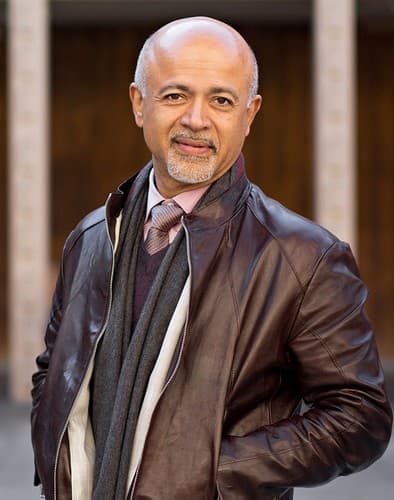
Abraham Verghese is an American physician, author, Professor of the Theory and Practice of Medicine and Vice Chair of Education at Stanford University Medical School. He is also the author of four best-selling books: two memoirs and two novels. In 2011, he was elected to be a member of the Institute of Medicine. He received the National Humanities Medal from President Barack Obama in 2015. He is the co-host with Eric Topol of the podcast Medscape Medicine and the Machine.







