“For five years I have known the truth. I have carried it about with me. What a burden it has been.”
— Hastings reflects on his knowledge of Poirot's secret.

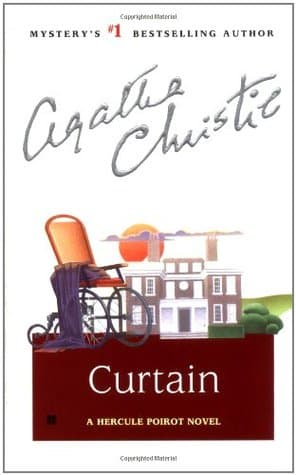
Agatha Christie (1975)
Genre
Thriller / Mystery
Reading Time
215 min
Key Themes
See below
Sign in to track this book
A dying Hercule Poirot and Captain Hastings reunite at Styles to catch a murderer, 'X,' before they kill again, in a final case that costs the detective his life.
Captain Arthur Hastings returns from Africa and gets an urgent call from Hercule Poirot. Poirot is at Styles Court, the estate where they solved their first murder. Hastings finds Poirot badly crippled by arthritis, in a wheelchair, and needing a nurse, but his mind is sharp. Styles, now a guesthouse run by Colonel and Mrs. Luttrell, has many guests. Poirot tells Hastings that a murderer, 'X', is among them and will kill again. Poirot cannot act and needs Hastings to be his 'eyes and ears'.
Poirot explains that 'X' does not kill directly but makes others kill, making their crimes look like accidents or acts by other people. This makes 'X' almost impossible to catch. Poirot knows who 'X' is but won't say, fearing for Hastings's safety. He tells Hastings to watch everyone at Styles for clues about 'X's' influence or their next victim. Hastings is confused by Poirot's secrecy but trusts him and starts watching.
Hastings watches the guests and residents. They include Stephen Norton, a shy young man; Nurse Craven, Poirot's stern nurse; Elizabeth Cole, a beautiful woman with a troubled past; Colonel Luttrell, the kind owner; his younger wife, Daisy Luttrell; Sir William Boyd Carrington, a respected gossiper; Barbara Franklin, a cold woman; her quiet husband, Dr. Franklin; and Judith Hastings, Arthur's daughter, who works for Dr. Franklin. Tensions and romances are clear, especially between Judith and Stephen, and Dr. Franklin and Elizabeth Cole. Hastings feels overwhelmed by the task of finding a killer among so many people.
The first 'incident' happens during a rabbit shoot. Colonel Luttrell, who has bad eyesight, 'accidentally' shoots his wife, Daisy Luttrell, in the head. Daisy dies. The event is called an accident because of Luttrell's eyesight. But Hastings, remembering Poirot's warning, suspects 'X'. He notes that Colonel Luttrell had money problems and that Daisy was having an affair with Stephen Norton. The death makes Styles sad, but no one else suspects murder.
Poirot gets more upset, telling Hastings to watch more closely and understand the subtle things happening. Hastings, however, thinks Elizabeth Cole is 'X' because of her past and what he sees as her manipulative nature. He also suspects Stephen Norton, especially after the affair with Daisy Luttrell. Hastings believes Elizabeth is trying to poison Stephen, but his attempts to find proof fail. Poirot, in his wheelchair, can only listen and make unclear remarks, growing more desperate as Hastings keeps misreading events.
Sir William Boyd Carrington, a gossipy man with past connections, is found dead. He died of cyanide poisoning, with a glass of his drink next to him. The death is called a suicide, as Sir William had a terminal illness. But Hastings is suspicious. He remembers Sir William talking with Elizabeth Cole before his death and Elizabeth acting strangely. Poirot's warnings about 'X' causing deaths that look accidental or self-inflicted make Hastings sure Elizabeth is the killer.
Believing Elizabeth Cole is 'X' and will kill again, Hastings makes a desperate choice. He gets a pistol and, thinking he is stopping a crime, tries to shoot Elizabeth. He misses. The event is chaotic and quickly covered up by the other residents, who think Hastings was upset or momentarily lost his mind. Hastings is shaken by his failure and how close he came to being a murderer. He feels he has failed Poirot.
Soon after Hastings's failed attempt, Hercule Poirot is found dead. The official cause is a heart attack. Hastings is crushed. Days later, a letter from Poirot, to be opened after his death, arrives. In it, Poirot confesses to giving himself a fatal dose of hyoscine. He reveals that 'X' is Stephen Norton, the shy young man. Poirot explains 'X's' manipulation and why he took his own life.
Poirot's letter details how Stephen Norton works. Norton, seemingly harmless, is an expert at psychological manipulation. He finds people with hidden violent tendencies or those under stress and subtly makes them kill. He plants ideas, creates chances, and sets up situations where violence seems like the 'obvious' answer, all while appearing innocent. Poirot explains that Norton kills for the thrill of power, seeing it as an intellectual game. He is the ultimate puppet master.
Poirot's letter explains how Stephen Norton planned the deaths at Styles. He encouraged Colonel Luttrell's existing jealousy of his wife, Daisy, knowing Luttrell's poor eyesight would make a 'hunting accident' believable. For Sir William Boyd Carrington's death, Stephen used Sir William's knowledge of Elizabeth Cole's past (she killed her abusive husband) and his terminal illness. Stephen subtly suggested suicide to Sir William, knowing the old man was despairing. He made sure cyanide was available and presented in a way Sir William would take it, making it look like suicide. Stephen's skill was making others think these were their own ideas.
The most shocking part of Poirot's letter is his confession: he killed Stephen Norton. Poirot explains that his illness meant he could not stop Norton directly, and Norton's crimes were impossible to prove in court. Poirot realized the only way to stop Norton was to kill him. He lured Norton to his room, offered him cocoa, and gave him a fatal dose of hyoscine, making it look like Norton drank it by accident. After Norton's death, Poirot took his own life to avoid being caught for murder and, more importantly, to protect Hastings from the burden of knowing the truth without being able to act.
Hastings is overwhelmed by Poirot's letter, struggling to accept his moral friend as a murderer. But as he rereads it, he understands Poirot's immense burden and sacrifice. He sees Poirot's deep commitment to justice and humanity. Hastings also finds peace about his daughter, Judith, who marries Dr. Franklin and moves to Africa, fulfilling a wish Poirot had expressed. Hastings accepts that Poirot, in his last act, chose the hardest path to ensure justice, making the ultimate sacrifice for good.
The Protagonist
Poirot, facing his own mortality, makes the ultimate sacrifice, taking a life to save others, and then his own, to ensure justice and prevent further suffering.
The Narrator and Supporting
Hastings evolves from a confused, emotionally driven observer to someone who ultimately understands and accepts the profound moral complexities of Poirot's final actions.
The Antagonist
Stephen Norton is revealed as the unrepentant, cold-blooded puppet master, ultimately stopped only by Poirot's extreme intervention.
The Supporting
Judith, initially somewhat aloof, finds love and purpose by marrying Dr. Franklin and moving to Africa, fulfilling Poirot's quiet hope for her happiness.
The Supporting
Dr. Franklin finds love and a new life with Judith Hastings, moving to Africa and pursuing his research there.
The Supporting
Elizabeth's past trauma is revealed, and she is ultimately cleared of Hastings's suspicions, finding some peace after the truth about 'X' emerges.
The Supporting
Colonel Luttrell is manipulated into killing his wife, becoming a tragic victim of 'X's' machinations.
The Supporting/Victim
Daisy Luttrell becomes 'X's' first victim at Styles, her death appearing as a tragic accident.
The Supporting/Victim
Sir William, despairing due to illness, is manipulated into taking his own life, becoming 'X's' second victim at Styles.
The book explores a terrifying evil in 'X'. Unlike typical murderers driven by emotion or money, 'X' kills for the intellectual thrill of control. This makes 'X' almost impossible to find or convict. Poirot's final case suggests that pure, motiveless evil, existing only to control and destroy, is the most dangerous kind, needing extreme measures to fight. Stephen Norton's ability to subtly make others kill, making their acts seem their own, shows the power of psychological manipulation.
“He is a murderer, yes, but a special kind of murderer. He does not kill with his own hand. He makes other people kill.”
A main theme is the clash between legal justice and a higher moral justice. Poirot, facing death and unable to prove 'X's' guilt in court, acts outside the law to ensure justice. His decision to murder Stephen Norton, then kill himself, shows his belief that some evils are so deep and unprovable that they demand a personal, ultimate sacrifice to protect people. This challenges the usual detective story and makes Hastings, and the reader, think about the moral side of such an act.
“When a man is a public menace, then he must be removed. And if the law cannot remove him, then others must.”
The book is filled with the theme of death, as it is Poirot's last case and he is very ill. Poirot's failing body contrasts with his sharp mind, showing the mind's power even as the body weakens. His concern for his legacy and justice drives his actions. He makes sure Hastings, his friend, will understand and carry on the truth, giving meaning beyond his own death. Returning to Styles, where they started, frames his final journey.
“I am dying, Hastings. But before I go, I have one last duty to perform.”
The book often plays with the idea that things are not as they seem. Stephen Norton, the shy young man, is the deadliest character. Hastings often misreads events and suspects the wrong people (Elizabeth Cole), showing how easily one can be fooled by first impressions and biases. Poirot, despite his immobility, sees past these appearances, recognizing the subtle psychological currents. 'X's' crimes rely on changing perception, making murders look like accidents or suicides, hiding the real truth.
“It is not what one sees, Hastings. It is what one deduces.”
A traditional mystery trope inverted to focus on psychological manipulation within a confined setting.
While not a literal locked room where bodies are found, Styles Court functions as a psychological 'locked room'. The limited cast of characters within the isolated guesthouse creates an intense environment where everyone is under scrutiny. The 'mystery' isn't how someone entered or exited, but how a killer could operate without physically committing the acts. This twist on the classic trope elevates the psychological tension, forcing Hastings (and the reader) to look beyond physical evidence and into the subtle dynamics of human interaction within the confined space.
Captain Hastings's observations and deductions are consistently flawed, leading the reader astray.
Captain Hastings, as the primary narrator, provides a biased and often incorrect interpretation of events. His emotional responses, traditional mindset, and tendency to jump to conclusions lead him to suspect the wrong characters and misread crucial interactions. This device effectively misdirects the reader, allowing the true identity and methods of 'X' to remain hidden until Poirot's posthumous revelation. It also highlights the cunning of 'X' and the difficulty of identifying a purely psychological murderer, as even a seasoned observer like Hastings is repeatedly fooled.
A letter from Poirot, delivered after his death, reveals the complete truth and his final actions.
This letter serves as the ultimate reveal, providing Poirot's full explanation of 'X's' identity, methods, and his own confession to murder. It allows Poirot, despite his physical incapacitation and death, to deliver his final, meticulously reasoned solution. This device creates a powerful emotional impact, as Hastings (and the reader) receives the truth directly from the deceased detective, making his sacrifice all the more poignant and his brilliance undeniable even in death. It's a classic Christie device, but given a profound twist in this final novel.
Elizabeth Cole's mysterious past and guarded demeanor are used to mislead Hastings and the reader.
Elizabeth Cole serves as a major red herring. Her history of having killed her abusive husband (albeit in self-defense) and her subsequent name changes make her an ideal candidate for Hastings's suspicion. Her somewhat aloof and intense personality further fuels his belief that she is 'X'. This misdirection is crucial in obscuring the true killer, Stephen Norton, who is presented as far less threatening. The red herring works by exploiting Hastings's emotional biases and the reader's expectation of a more conventional villain.
“For five years I have known the truth. I have carried it about with me. What a burden it has been.”
— Hastings reflects on his knowledge of Poirot's secret.
“It is not the big things that matter, mon ami. It is the little things. The tiny, insignificant details.”
— Poirot often emphasizes the importance of small details in his investigations.
“The end, mon ami. The end has come.”
— Poirot's final words to Hastings.
“I have been called a genius. I have been called a monster. I am neither. I am just a man who has done what had to be done.”
— Poirot's self-reflection on his actions in the final letter.
“There are some people who are better out of the world than in it.”
— A sentiment expressed by Poirot, reflecting his view on certain individuals.
“It is not what a man says, but what he does, that is the true test.”
— Poirot's philosophy on judging character.
“My mind, it is still working. Even now, when the body fails, the little grey cells, they do not desert me.”
— Poirot's pride in his intellectual faculties, even in his final days.
“You see, mon cher Hastings, it is not always the obvious solution that is the correct one.”
— Poirot guiding Hastings away from superficial conclusions.
“To kill is one thing. To escape justice, that is another.”
— Poirot's commitment to ensuring justice is served.
“The greatest enemy of truth is often not the lie, but the myth.”
— A deeper philosophical observation by Poirot.
“It is a strange thing, life. So easily snuffed out.”
— Hastings's reflection on the fragility of life.
“And now, mon ami, I am tired. Very, very tired.”
— Poirot expressing his profound weariness near the end.
“There are crimes of passion, and there are crimes of calculation. The latter are the more dangerous.”
— Poirot distinguishing between types of criminal acts.
“I have always hated injustice. And I have always tried to put it right.”
— Poirot's lifelong motivation for his work.
Ready to see how well you understood this book? Take our interactive quiz with 10 questions.
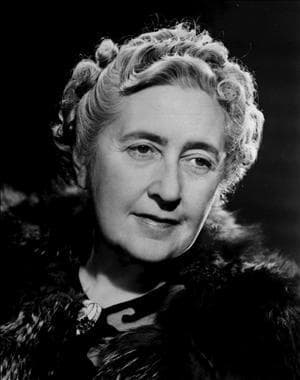
Dame Agatha Mary Clarissa Christie, Lady Mallowan, was an English writer known for her 66 detective novels and 14 short story collections, particularly those revolving around fictional detectives Hercule Poirot and Miss Marple. She also wrote the world's longest-running play, the murder mystery The Mousetrap, which has been performed in the West End since 1952. A writer during the "Golden Age of Detective Fiction", Christie has been called the "Queen of Crime". She also wrote six novels under the pseudonym Mary Westmacott. In 1971, she was made a Dame (DBE) by Queen Elizabeth II for her contributions to literature. Guinness World Records lists Christie as the best-selling fiction writer of all time, her novels having sold more than two billion copies.







