“The gods are not always kind, but they are always just. We must trust in their wisdom, even when we do not understand their ways.”
— Spoken by a priestess explaining divine will during a difficult time.

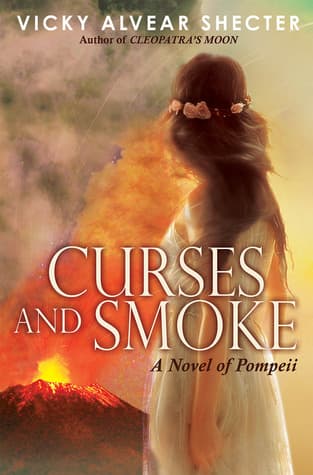
Vicky Alvear Shecter (2014)
Genre
Fantasy / Historical Fiction / Young Adult / Romance
Reading Time
336 min
Key Themes
See below
Sign in to track this book
Amidst Pompeii's political passions and forbidden romance, a medical slave and a senator's daughter fight for freedom and love as Vesuvius awakens to bury their world in ash and fire.
The story begins with Tag, a medical slave owned by Lucius, a wealthy Pompeian. Tag's job is to care for Lucius's gladiators, a task he resents because he wants to fight in the arena to earn his freedom. Meanwhile, Lucius's daughter, Lucia, faces an arranged marriage to an older, influential Roman senator, Quintus. Lucia dislikes this plan, preferring to study nature. She has also noticed unsettling environmental changes around Pompeii, such as shrinking lakes and a strange sulfurous smell, which she attributes to natural phenomena rather than local superstitions.
Tag and Lucia, who were close friends in childhood, start spending time together again. Their conversations revive their old bond, revealing shared dreams and frustrations. Tag confides his desire for freedom and a gladiator's life, while Lucia expresses her unhappiness about the coming marriage to Quintus and her interest in the region's strange natural events. As they deal with their individual struggles, their friendship grows into a passionate, forbidden love. They find comfort and understanding in each other, realizing their shared desire for a life beyond their predetermined destinies in Pompeii.
Driven by their love and desperation for freedom, Tag and Lucia begin to plan their escape from Pompeii. They imagine a life where Tag can fight for his liberty and Lucia can pursue her scientific interests without Roman society's limits. However, their secret romance and escape plans do not go unnoticed. Rhaskos, a gladiator owned by Lucius, also has feelings for Lucia. Jealous of Tag, Rhaskos discovers their secret meetings and, seeing a chance to remove his rival and gain favor with Lucius, betrays Tag and Lucia to Lucius. This treachery shatters their hopes for a quiet escape.
Upon learning of his daughter's forbidden relationship with his slave, Lucius becomes enraged. His anger comes not only from the social transgression but also from the perceived dishonor and threat to his financial and social standing, especially concerning Lucia's arranged marriage to Senator Quintus. As punishment, Lucius orders Tag to be severely beaten and then imprisoned in the gladiatorial barracks. This act is meant to crush Tag's spirit and warn Lucia, reinforcing her father's control over her life and choices. Lucia is devastated, feeling helpless as her lover is taken from her.
As Tag remains in his cell and Lucia deals with despair, a powerful earthquake suddenly shakes Pompeii. Buildings tremble, walls crack, and unease spreads through the city. This earthquake, though destructive, is initially seen as the gods' wrath or a natural event, rather than a sign of something far worse. Lucia, with her scientific curiosity, observes the tremors with fear and fascination, connecting them to the other unusual natural phenomena she has been tracking. The earthquake acts as a dramatic turning point, disrupting the established order and foreshadowing the coming catastrophic events.
The ominous signs Lucia had noted and the earlier earthquake turn out to be just the beginning. Mount Vesuvius, dormant for a long time, finally erupts with terrifying force. A massive plume of ash, pumice, and gas explodes into the sky, covering Pompeii. Panic breaks out in the city as residents realize the true danger. Ash begins to fall, covering the streets and blocking visibility. The air becomes thick and hard to breathe. This catastrophe immediately shifts the story from personal struggles to a desperate fight for survival against nature's overwhelming power, trapping Tag and Lucia in a city rapidly falling to destruction.
The eruption's force and subsequent tremors cause significant damage to the gladiatorial barracks where Tag is imprisoned. Sensing an opportunity amid the chaos, Tag manages to break free from his cell. Despite the danger and the suffocating ash, his main thought is of Lucia. Driven by a strong desire to find her and ensure her safety, he navigates the crumbling, ash-filled streets of Pompeii. His medical knowledge and gladiator training, though meant for different purposes, now help him cross the treacherous, collapsing city. He faces falling debris, panicked crowds, and the growing threat of the volcano's fury.
Meanwhile, Lucia is trapped in her family's villa, which is quickly being covered in ash and pumice. Her father, Lucius, initially prioritizes his possessions and status, but as the situation worsens, he tries to secure his family's escape. Lucia, however, is not only concerned for her own survival but also desperate to find Tag. She faces the terrifying reality of the eruption, witnessing the destruction and the fear of her fellow citizens. She encounters obstacles like collapsing structures, stampeding crowds, and the increasing difficulty of breathing in the ash-laden air, making her journey out of the villa and into the wider, chaotic city very dangerous.
As Tag searches for Lucia, he unexpectedly meets Rhaskos amid the volcanic chaos. Rhaskos, having survived the initial eruption, still holds animosity towards Tag. Instead of focusing on escape, Rhaskos's jealousy and competitive nature lead him to confront Tag. A brief, desperate struggle or verbal exchange happens, showing the lingering personal conflict even as their world crumbles around them. This encounter emphasizes Rhaskos's character and the intensity of their rivalry, even in the face of imminent death. The details of their interaction are overshadowed by the larger disaster, but it marks a final, desperate act of personal vendetta.
Against all odds, and through sheer determination, Tag and Lucia manage to find each other in the collapsing, ash-filled city. Their reunion is a moment of great relief and renewed hope amid the overwhelming despair. They cling to each other, their love a beacon in the darkness and destruction. They realize that their individual struggles for freedom and love have merged into a collective fight for survival. With the city quickly becoming uninhabitable, they know their only chance lies in escaping Pompeii together, their love giving them the strength to face the escalating horrors of the eruption.
As Tag and Lucia try to leave the city, the eruption enters its most devastating phase: the pyroclastic flow. Superheated clouds of ash, gas, and rock surge down Vesuvius's slopes, incinerating everything in their path. This is the ultimate, inescapable threat, moving with incredible speed and heat. The air becomes unbreathable, and visibility drops to zero. The flow is the final, merciless blow to Pompeii and its inhabitants, leaving no time for escape for those caught in its path. The lovers must now confront the immediate and deadly reality of the volcano's full power.
With the pyroclastic flow coming down on them, Tag and Lucia engage in a desperate, frantic race for their lives. They push through the suffocating ash and debris, guided by instinct and their shared will to survive. Every step is a struggle against the elements and rapidly approaching death. They see others succumbing to the flow, highlighting the futility of resistance. Their love and determination become their only guide in the face of absolute annihilation, as they try to find any possible path to escape the inferno consuming their world. The scene is one of ultimate danger and a testament to their bond.
The Protagonist
Tag transforms from a resigned slave to a determined fighter for freedom and love, ultimately proving his worth not just in the arena but in his will to survive.
The Protagonist
Lucia evolves from a constrained noblewoman to a courageous survivor who defies societal norms for love and truth, proving her strength in the face of catastrophe.
The Antagonist/Supporting
Lucius remains largely static, his pride and ambition ultimately proving futile in the face of natural disaster.
The Antagonist
Rhaskos remains consumed by jealousy and rivalry, even in the face of the eruption, highlighting the destructive nature of his character.
The Supporting
Quintus's role is primarily to represent the societal pressures Lucia faces, and he does not undergo significant personal development.
This theme is central to both Tag and Lucia's stories. Tag, a slave, is literally captive, wanting freedom through gladiatorial success. Lucia, though a noblewoman, is captive to societal expectations, her father's ambitions, and an unwanted arranged marriage. Their shared desire for freedom—from physical chains, social limits, and predetermined destinies—drives their romance and their desperate attempt to escape Pompeii. The eruption of Vesuvius ultimately offers a strange form of 'freedom' by destroying the structures that held them captive, forcing them to find a new path or die.
““For a slave, freedom was not a gift, but a prize to be earned with blood and sweat.””
The passionate love between Tag and Lucia defies Pompeii's strict Roman social hierarchy. Their romance is forbidden, crossing the barrier between slave and noblewoman. Their love gives them strength and hope, helping them endure punishment, betrayal, and the volcanic eruption. Their shared bond and commitment to each other fuel their desperate fight for survival, even as their world collapses around them. This theme shows the power of human connection when facing overwhelming external forces.
““Their love was a secret garden, carefully tended, yet vulnerable to the harsh Roman sun.””
Lucia's scientific observations of the environment—shrinking lakes, sulfurous smells, the initial earthquake—foreshadow nature's ultimate power, shown by Mount Vesuvius. Humanity, represented by Lucius's focus on wealth and social status, and the city's general complacency, believes itself to be in control. However, the Vesuvius eruption brutally shows nature's indifference to human ambition and social constructs. The volcano's destructive force obliterates societal divisions, wealth, and power struggles, reducing everyone to the same desperate fight for survival.
““The mountain had merely been sleeping. Now, it had woken to reclaim its due.””
Both Tag and Lucia seem destined for specific paths: Tag for a life of slavery, Lucia for an advantageous but loveless marriage. Their individual desires to break free from these predetermined fates show their struggle for free will. Their escape plan is a direct act of defiance against their perceived destinies. The Vesuvius eruption introduces an element of external, uncontrollable fate, forcing them to confront whether they can still make their own path amid total chaos. The story explores whether their choices or the catastrophic event ultimately determine their survival and future.
““We can choose our own lives, Tag, even if the gods try to choose for us.””
Subtle natural phenomena hint at the impending volcanic eruption.
Lucia's scientific observations of the environment—shrinking lakes, sulfurous smells, and the initial earthquake—serve as crucial plot devices. These seemingly minor details, often dismissed by others as superstition or unimportant, build suspense and provide a sense of impending doom. They highlight Lucia's unique perspective and intelligence, while also subtly preparing the reader for the catastrophic eruption of Mount Vesuvius, making the eventual disaster feel earned rather than sudden.
The romance between a slave and a noblewoman drives much of the conflict.
The passionate and forbidden love between Tag, a slave, and Lucia, a noblewoman, is a central plot device. It creates significant internal and external conflict, fueling their desire for freedom and their escape plans. This social transgression directly leads to their betrayal by Rhaskos and Tag's imprisonment, raising the stakes and making their personal struggles intertwined with the larger narrative of societal injustice. Their love provides the emotional core and motivation for their actions throughout the story, especially during the eruption.
Rhaskos's actions lead to Tag's punishment and complicate the lovers' escape.
Rhaskos's betrayal of Tag and Lucia's secret romance to Lucius is a pivotal plot device. It dramatically escalates the conflict, leading to Tag's brutal punishment and imprisonment. This act of treachery shatters their initial hopes for a quiet escape and forces them into a more desperate situation, making their eventual reunion and flight from Pompeii even more challenging and perilous. The betrayal highlights the internal dangers within human relationships, even before the external threat of the volcano emerges.
The catastrophic natural disaster serves as the ultimate antagonist and catalyst.
The eruption of Mount Vesuvius is the overarching plot device, functioning as the ultimate antagonist and a cataclysmic catalyst. It abruptly shifts the narrative from personal romantic and social conflicts to a desperate fight for survival. The eruption forces all characters to confront their mortality, stripping away social distinctions and revealing true character. It provides the dramatic backdrop against which Tag and Lucia's love and determination are truly tested, and ultimately determines their fate and the resolution of their individual struggles for freedom.
“The gods are not always kind, but they are always just. We must trust in their wisdom, even when we do not understand their ways.”
— Spoken by a priestess explaining divine will during a difficult time.
“Love is a fire, my child. It can warm you, or it can consume you. Be careful where you let it burn.”
— A mother's advice to her daughter about a budding romance.
“Some curses are not spoken by witches, but by the choices we make.”
— A character reflecting on the consequences of their actions.
“Even in the shadow of Vesuvius, life finds a way to bloom.”
— Describing the resilience of the people of Pompeii amidst impending doom.
“The past is a heavy chain, but only if you choose to drag it with you.”
— A mentor encouraging a young protagonist to move on from a past trauma.
“Truth, like a volcano, can lie dormant for years, only to erupt when you least expect it.”
— A character realizing a hidden secret is about to be revealed.
“Fear can make us do terrible things, but courage can make us do extraordinary ones.”
— During a moment of crisis, inspiring action.
“Not all battles are fought with swords. Some are fought with words, and some with silence.”
— A character observing the subtle power dynamics within a family.
“The strongest walls are not made of stone, but of loyalty and trust.”
— Emphasizing the importance of relationships in times of hardship.
“A whisper in the marketplace can be louder than a shout in the forum.”
— Discussing the spread of rumors and gossip.
“Sometimes, the greatest freedom is found in accepting your destiny, not fighting it.”
— A character coming to terms with their predetermined path.
“The gods may weave the tapestry of our lives, but we hold the needle.”
— A philosophical discussion about free will versus fate.
“Even ashes can hold the warmth of memory.”
— Reflecting on the enduring impact of what has been lost.
Ready to see how well you understood this book? Take our interactive quiz with 10 questions.







