“In the beginning was the Word, and the Word was with God, and the Word was God. And the Word was a .COM.”
— A modern twist on a biblical quote, reflecting the digital age.

Neal Stephenson (1999)
Genre
Thriller / Fantasy / Historical Fiction / Science Fiction
Reading Time
25-35 hours
Key Themes
See below
Sign in to track this book
From the code-breaking battlefields of World War II to a modern-day quest for a data haven and Nazi gold, brilliant mathematicians and their descendants navigate a maze of deception, cryptography, and shadowy conspiracies orchestrated by an enigmatic immortal.
In 1942, Lawrence Waterhouse, a brilliant but socially awkward mathematician, is recruited to Bletchley Park, the secret British codebreaking center. He quickly becomes important in Detachment 2702, a top-secret Allied unit tasked with breaking Axis codes and managing the resulting intelligence without revealing that the codes have been compromised. Lawrence works alongside figures like Alan Turing, dealing with the ethical and practical issues of their work, which includes allowing some Allied losses to maintain the deception. At the same time, Corporal Bobby Shaftoe, a tough U.S. Marine, is involved in brutal jungle warfare in the Pacific, experiencing combat and developing a morphine addiction, all while participating in covert operations that often connect with Detachment 2702's broader strategic deceptions.
In the late 1990s, Randy Waterhouse, Lawrence's grandson and a skilled programmer, is part of a startup aiming to create an offshore data haven called 'Cabal' in the fictional Southeast Asian sultanate of Kinakuta. His partners include Avi Halaby, a shrewd businessman, and John Comstock, a former military cryptographer. Their goal is to establish a secure, anonymous digital sanctuary, free from government interference, using advanced encryption and fiber optic infrastructure. Randy's expertise in cryptography and digital security is essential to the project, which faces many logistical, political, and financial problems. The project also attracts the attention of various shadowy figures and organizations, suggesting deeper, more complex motivations than just profit.
During WWII, Bobby Shaftoe, now a sergeant, is assigned to a secret operation in the Philippines. His mission, organized by Detachment 2702, involves locating and securing a sunken German U-boat, the U-2359, which is believed to be carrying a large quantity of Nazi gold. This gold is not just treasure; it is part of a larger plan to fund post-war Nazi resistance or influence. Bobby's team faces dangerous conditions, Japanese patrols, and the psychological toll of their secret mission. Recovering the gold is complicated by the need for secrecy and the dangers of underwater salvage, adding another layer of deception to the war effort.
Lawrence Waterhouse continues his work at Bletchley Park, often interacting with Alan Turing. Their discussions explore the philosophical basis of computation, artificial intelligence, and the nature of intelligence itself, anticipating Turing's later work on the Turing Test. Lawrence is tasked with developing a system for securely transmitting sensitive information, often involving elaborate physical and cryptographic key exchanges. He experiences intense intellectual and emotional pressure, dealing with the moral ambiguities of his work—knowing that his mathematical breakthroughs have direct, often fatal, consequences for soldiers on both sides. These intellectual pursuits are closely tied to the practical demands of wartime cryptography.
In the present day, Randy Waterhouse's data haven project becomes connected with the search for the legendary WWII gold. He reconnects with Amy Shaftoe, Bobby Shaftoe's granddaughter, who is also interested in the historical gold, potentially linked to her grandfather's wartime experiences. Their quest takes them to the Philippines, specifically Mindanao, a region rumored to hold large quantities of Japanese and Nazi gold. They work with various eccentric and dangerous characters, including aging ex-pats and local guides, all while navigating the complexities of modern-day treasure hunting, which involves deciphering old maps, historical records, and cryptic clues left behind by their ancestors. The search for the gold is a significant financial and personal risk for both of them.
Enoch Root, a mysterious and seemingly ageless figure, plays an important role in both timelines. In WWII, he is a member of Detachment 2702, often appearing at critical moments to offer cryptic advice or facilitate strange, almost magical solutions to cryptographic problems. His true origins and loyalties remain unclear, though he is associated with the ancient Societas Eruditorum. In the present day, Enoch reappears, seemingly unchanged, and presents Randy Waterhouse with a practically unbreakable encryption scheme known as the 'Solitaire' cipher, which he claims was developed during WWII. His presence consistently adds an element of the fantastical and the conspiratorial to the narrative, connecting the two timelines through his lasting influence and enigmatic knowledge.
Bobby Shaftoe's wartime actions in the Philippines also involve the pursuit of Japanese gold, separate from the Nazi U-boat gold. He is part of a unit tasked with disrupting Japanese operations and preventing them from moving or consolidating their vast wartime loot, much of which was plundered from occupied territories. These missions are dangerous, involving intense combat and close encounters with the enemy. Bobby experiences firsthand the realities of the Pacific theater, witnessing the atrocities of war and the desperate measures taken by all sides to secure resources and intelligence. His involvement with the gold further highlights the hidden economic and strategic dimensions of the conflict, beyond the conventional battlefields.
The 'Cabal' data haven project in Kinakuta faces a series of challenges. Technically, Randy and his team must design and implement a strong, secure, and truly anonymous infrastructure, fighting against potential surveillance and hacking attempts from various actors, including governments and rival corporations. Financially, they struggle to secure enough funding and manage the complex logistics of building a digital utopia in a developing nation. Politically, they must navigate the wishes of the Kinakutan Sultan and the interests of powerful global players who view their project with suspicion. These pressures force Randy to confront not only cryptographic puzzles but also the realities of business and geopolitics, testing the integrity of his vision.
Randy Waterhouse becomes deeply interested in understanding the 'Solitaire' cipher presented by Enoch Root. He recognizes its extraordinary complexity and potential for truly unbreakable encryption, a goal for the data haven. His research into its origins leads him to uncover more about his grandfather Lawrence's work during WWII and the secret operations of Detachment 2702. The Solitaire cipher is not just a technical marvel; it is a key that begins to unlock the deeper historical conspiracies surrounding the Nazi gold, the U-boat, and the true purpose of some of the Allied deceptions. Randy realizes the cipher is a direct link between the past and present, holding secrets that could impact his current endeavors.
The search for the WWII gold ends in a complex series of events involving Randy, Amy, Avi, and various other parties, including descendants of WWII figures and shadowy organizations. The discovery of the U-boat and its cargo, along with the deciphering of old records, reveals the full extent of the Nazi gold conspiracy and the intricate Allied deceptions designed to counter it. The gold's recovery in the present day becomes a high-stakes effort, with everyone vying for a piece of the pie or to control its story. The characters must confront the moral ambiguities of their ancestors' actions and decide how to manage the immense wealth and historical significance of the treasure, ultimately shaping the future of the 'Cabal' project.
After the war, Lawrence Waterhouse finds it difficult to adjust to civilian life. The intense intellectual demands and moral compromises of his wartime work at Bletchley Park leave a lasting impact. He continues his academic career, exploring mathematics and the early field of computer science, but struggles with social interactions and the everyday aspects of existence. His experiences during Detachment 2702, particularly the constant need for deception and the knowledge of lives lost due to strategic choices, weigh heavily on him. His legacy, however, extends through his intellectual contributions and, unknowingly to him, through the cryptographic secrets he helped to develop and conceal, which resurface decades later through his grandson, Randy.
Bobby Shaftoe returns from WWII a decorated but deeply traumatized veteran. His experiences in the brutal Pacific theater, including his morphine addiction and the horrors he witnessed, leave him with severe PTSD. He struggles to reintegrate into society, haunted by memories of combat and the secret operations he participated in. Despite his internal battles, Bobby eventually marries and builds a family, though the shadow of his wartime past continues to affect him and, indirectly, his descendants. His legacy is not only his military service but also the hidden stories of the gold and the deceptions he was part of, which his granddaughter, Amy, later uncovers, seeking to understand her family's history.
The Protagonist
Lawrence evolves from a naive genius into a man burdened by the weight of his knowledge and actions, forever marked by the war's demands.
The Protagonist
Bobby transforms from a brave but naive soldier into a scarred veteran, haunted by his experiences but determined to build a family life.
The Protagonist
Randy evolves from an idealistic hacker to a pragmatic entrepreneur, learning to navigate the complexities of business, history, and human connection.
The Protagonist
Amy grows from a somewhat detached observer into an active participant, taking charge of her destiny and confronting her family's past.
The Supporting
Enoch's arc is less about personal development and more about his function as a timeless, omniscient force guiding the narrative, revealing secrets when necessary.
The Supporting
Turing's arc is largely historical, serving as a mentor and intellectual inspiration for Lawrence, embodying the genius and social challenges of his era.
The Supporting
Avi maintains his pragmatic business acumen throughout the story, adapting to new challenges and opportunities presented by the historical gold.
The Supporting
John provides a consistent, experienced voice in the 'Cabal' project, adapting his military knowledge to the digital frontier.
The Supporting
The Duke largely remains a static, influential figure, whose decisions significantly impact the 'Cabal' project's trajectory.
The novel explores information as a fundamental force, its power to shape reality, and the human desire to control or free it. In WWII, Lawrence Waterhouse and Detachment 2702's mission is to control the flow of information—breaking enemy codes while maintaining the illusion that they are unbroken. This involves elaborate deceptions, like allowing convoys to be sunk to protect the larger secret. In the present, Randy Waterhouse's 'Cabal' project aims to create a zone of absolute information freedom and privacy, a direct response to the increasing surveillance and control of data in the digital age. The Solitaire cipher, an 'unbreakable' encryption scheme, symbolizes the ultimate goal of perfect secrecy, while the search for the Nazi gold represents information that has been deliberately hidden and manipulated for decades.
“When we want to sink a convoy, we send out an observation plane first... Of course, to observe is not its real duty—we already know exactly where the convoy is. Its real duty is to be observed... Then, when we come round and sink them, the Germans will not find it suspicious.”
Cryptonomicon connects two time periods, showing how historical events, decisions, and even personal relationships impact the present. The actions of Lawrence Waterhouse and Bobby Shaftoe in WWII, especially their involvement with Detachment 2702 and the hidden Nazi gold, directly influence the motivations and challenges faced by their grandchildren, Randy Waterhouse and Amy Shaftoe, in the late 1990s. The discovery of the Solitaire cipher, a relic from WWII, serves as a literal cryptographic key that unlocks the secrets of the past, making the historical narrative essential to understanding the contemporary plot. The characters' family legacies, both intellectual and material, are linked across generations, suggesting that history is not merely a backdrop but an active force.
“It is not the business of the gods to be just. It is the business of the gods to be gods, and to be just is a matter for people.”
The novel deals with the moral and ethical dilemmas in technological advancement and intelligence gathering. Lawrence Waterhouse constantly confronts the paradox of his work: his mathematical brilliance helps win the war, but it also requires calculated decisions that lead to the deaths of Allied soldiers to protect the larger secret of codebreaking. This raises questions about the cost of strategic advantage and the dehumanizing aspects of war. In the present, Randy Waterhouse's pursuit of a data haven, while driven by ideals of freedom, also forces him to consider the potential for abuse of true anonymity and the challenges of creating a 'perfect' system in an imperfect world. The widespread paranoia surrounding information control in both eras highlights the double-edged sword of powerful technologies.
“The price of absolute freedom is absolute insecurity.”
Cryptonomicon celebrates and examines the nature of genius, often showing it as linked with eccentricity and social awkwardness. Lawrence Waterhouse and Alan Turing, both mathematical savants, are brilliant but struggle with conventional social norms and emotional expression. Their minds operate on a different plane, allowing them to see patterns and solutions others miss, but isolating them in a world not designed for their unique intellects. Randy Waterhouse, Lawrence's grandson, embodies a similar type of digital genius, finding comfort and mastery in code while often fumbling in social situations. The novel suggests that intellectual breakthroughs often come from those who operate outside the mainstream, challenging conventional thought and behavior.
“He was a genius, but a genius is merely a man who can do things that everyone else can do, only better and faster.”
The hunt for hidden gold, both Nazi and Japanese, is a metaphor for the pursuit of legacy and the hidden truths of history. Bobby Shaftoe's wartime missions to secure or prevent the movement of this gold are driven by military strategy, but for his granddaughter Amy, the gold represents a tangible link to her family's past and a key to understanding her grandfather's experiences. Similarly, Randy Waterhouse's involvement initially stems from the financial needs of his data haven, but it quickly becomes a deeper quest to uncover the full scope of the WWII conspiracy, connecting him to his grandfather's intellectual legacy. The gold is not just wealth; it is a historical artifact, a symbol of power, and a catalyst for uncovering long-buried secrets.
“The greatest treasure is not the gold itself, but the story it tells.”
Alternating chapters between WWII and the late 1990s.
The novel employs a dual narrative structure, switching between chapters set in WWII (primarily following Lawrence Waterhouse and Bobby Shaftoe) and chapters set in the late 1990s (following Randy Waterhouse and Amy Shaftoe). This structure allows for the gradual revelation of connections between the two timelines, building suspense and demonstrating the long-term impact of historical events. The parallel narratives highlight thematic echoes and character parallels across generations, creating a rich tapestry of interwoven stories that eventually converge.
A theoretically unbreakable encryption algorithm created by Enoch Root.
The Solitaire cipher is a fictional, practically unbreakable encryption scheme, presented by Enoch Root to Randy Waterhouse in the present day. It serves as a crucial plot device, connecting the two timelines and embodying the novel's central theme of information security. Randy's efforts to understand and implement it reveal its WWII origins and its connection to his grandfather's work. It also acts as a MacGuffin, driving much of the present-day plot and providing the foundation for the 'Cabal' data haven, while simultaneously unlocking historical secrets.
A vast hoard of gold hidden by the Nazis during WWII, sought in both timelines.
The Nazi gold conspiracy is a central plot device that links the WWII and present-day narratives. In WWII, Bobby Shaftoe is involved in clandestine missions to recover or prevent the movement of this gold, hidden in a sunken U-boat. In the present, Randy Waterhouse and Amy Shaftoe embark on a quest to locate this same legendary gold, which provides financial backing for the 'Cabal' project and unlocks deeper historical truths. The gold serves as a tangible link to the past, a source of conflict, and a symbol of the novel's overarching themes of secrecy, legacy, and the hidden economic dimensions of war.
A top-secret Allied intelligence unit in WWII focused on deception and codebreaking.
Detachment 2702 is a fictional, highly secretive Allied intelligence unit during WWII, comprising individuals like Lawrence Waterhouse, Alan Turing, and Enoch Root. Its primary function is not just to break Axis codes but to manage the intelligence derived from those breaks through elaborate deception operations, ensuring the enemy never realizes their codes are compromised. This unit serves as the historical engine for the novel's exploration of information control, ethical dilemmas in wartime, and the strategic use of lies. Its operations lay the groundwork for many of the mysteries and discoveries in the present-day narrative.
An ancient, secretive society with members like Enoch Root, influencing events across millennia.
The Societas Eruditorum is a mysterious, ancient society, to which Enoch Root belongs. While its full scope is never explicitly detailed, its existence hints at a deeper, long-standing conspiracy and a hidden network of knowledge and influence throughout history. It functions as a device to introduce elements of the fantastical and the conspiratorial, suggesting that some forces operate beyond conventional understanding. Its connection to Enoch Root provides a timeless, almost supernatural dimension to the narrative, implying that certain secrets and individuals transcend ordinary temporal bounds.
“In the beginning was the Word, and the Word was with God, and the Word was God. And the Word was a .COM.”
— A modern twist on a biblical quote, reflecting the digital age.
“If you are a member of a small, exclusive, and highly secretive club, and you find a note on your door that says 'the jig is up', then you have a pretty good idea what it means.”
— Randy Waterhouse considering the implications of a cryptic message.
“The price of metaphor is eternal vigilance.”
— Lawrence Waterhouse reflecting on the dangers of over-interpreting or misinterpreting patterns.
“You can't have a good cryptosystem without a good random number generator.”
— Early discussions about the fundamentals of cryptography.
“Information wants to be free. Information also wants to be expensive. ... That's the tension.”
— Randy Waterhouse discussing the conflicting desires for information access and monetization.
“It's always the guy who's not supposed to be there who's the most important.”
— A general observation about the role of unexpected individuals in major events.
“Most people spend their lives in a fog, not knowing what's really going on, not knowing who's really pulling the strings. They're just content to walk around in the dark.”
— Randy Waterhouse's cynical view of the general populace's awareness.
“The only difference between a madman and a genius is success.”
— Characters discussing the fine line between brilliance and insanity, especially in fields like mathematics.
“A lot of what we know about the universe is what we know about the universe after we've fucked with it.”
— Lawrence Waterhouse's perspective on the observer effect in scientific discovery.
“You can't prove a negative. You can only prove a positive.”
— A logical principle often invoked in discussions about evidence and truth.
“The greatest trick the Devil ever pulled was convincing the world he didn't exist. The second greatest trick was convincing the world that random numbers are easy to generate.”
— A humorous but insightful take on the difficulty of true randomness, echoing a famous line.
“The whole point of the internet is that it's a giant, distributed, redundant, self-healing network.”
— Randy Waterhouse explaining the fundamental design principles of the internet.
“It's a strange thing, but the more you know about something, the more you realize how much you don't know.”
— A common theme of intellectual humility and the vastness of knowledge.
“The world is full of things that can kill you. Most of them are invisible.”
— A general observation about hidden dangers, both physical and metaphorical.
“History is a set of lies agreed upon.”
— A cynical view on the nature of historical records and interpretation.
Ready to see how well you understood this book? Take our interactive quiz with 10 questions.
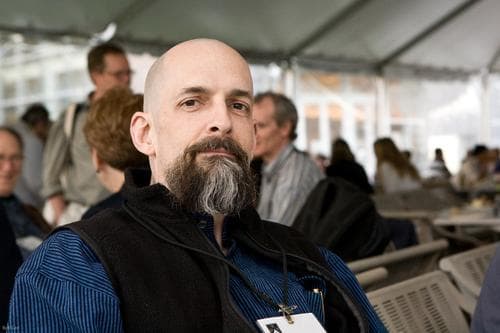
Neal Town Stephenson is an American writer known for his works of speculative fiction. His novels have been categorized as science fiction, historical fiction, cyberpunk, postcyberpunk, and baroque.







