“When you've lived as long as I have, you realise that the only thing that matters is not to be afraid.”
— Spoken by Edith de Haviland, reflecting on life and fear.

Agatha Christie (1949)
Genre
Thriller / Mystery
Reading Time
276 min
Key Themes
See below
Sign in to track this book
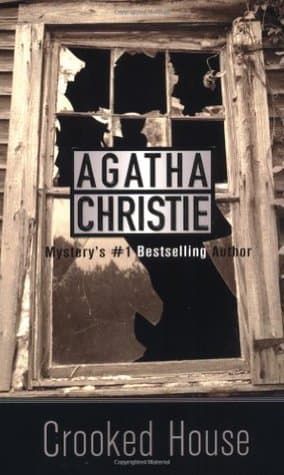
When a wealthy man is poisoned in his sprawling, eccentric mansion, a criminologist must navigate family secrets, illicit affairs, and simmering resentments to unmask the killer hiding within the seemingly 'crooked' Leonides household.
Charles Hayward, an intelligence agent, returns to England from Egypt, eager to reunite with his fiancée, Sophia Leonides. However, their reunion is overshadowed by the sudden death of Sophia's wealthy grandfather, Aristide Leonides, at his large, eccentric mansion, 'Three Gables.' While initially thought to be natural, an autopsy reveals he was poisoned with physostigmine, a drug found in his eye medicine, which had been switched. The family doctor, Dr. Brenda de Haviland, had prescribed the eye drops. Initial suspicion falls on Aristide's much younger second wife, Brenda Leonides, because of her rumored affair with the children's tutor, Laurence Brown, and her clear motive to inherit.
Chief Inspector Taverner, a friend of Charles's father, is assigned to the case. Charles, deeply involved due to his engagement to Sophia, decides to stay at Three Gables to help with the investigation and protect Sophia. He quickly observes the dysfunctional family dynamics. The house is 'crooked' both physically and metaphorically, housing three generations: Aristide's children, Roger and Philip Leonides, their wives Clemency and Magda, and Philip's children, Sophia, Eustace, and Josephine. Each family member has a potential motive and a peculiar relationship with the deceased, making Brenda, the 'outsider,' an easy scapegoat. Charles, however, feels uneasy about this simple conclusion.
The affair between Brenda Leonides and Laurence Brown is an open secret in the household. Josephine, Sophia's perceptive younger sister, talks about it often, creating a detailed 'notebook' of family secrets. The police investigation focuses heavily on Brenda and Laurence, questioning their movements and access to Aristide's medication. Their attempts to deny or downplay their relationship fail, and their secretive behavior only strengthens the police's belief in their guilt. The family, especially Magda, seems eager to blame Brenda, seeing her as an outsider who corrupted their patriarch and threatened their inheritance.
Josephine, a keen observer with an interest in detective work, boasts about knowing who the killer is and keeping her findings in a secret notebook. Her constant eavesdropping and blunt statements make her a nuisance but also a potential witness. Her claims are at first dismissed as childish fantasy, but her growing confidence and the unsettling nature of her 'notebook' begin to worry Charles and the family. One evening, she is found unconscious near a chicken run, having been hit on the head with a marble garden urn. She survives but is shaken, confirming that someone is trying to silence her.
While Josephine recovers, a second attempt on her life occurs. Someone poisons her cocoa with a strong sedative, but her governess, Miss de Haviland, saves her by tasting it first. This incident confirms that the killer is still active in the house and determined to silence Josephine. The family and police frantically search for Josephine's 'notebook,' believing it holds the key to the murderer's identity. However, the notebook is nowhere to be found, and Josephine, traumatized, cannot clearly recall its contents or the killer's identity.
As the investigation continues, Charles looks deeper into the complex relationships and hidden resentments within the Leonides family. Roger Leonides, Aristide's elder son, is a kind but ineffective man, always failing in business. Philip, the younger son, is a scholarly recluse. Magda, Philip's wife, is a flamboyant actress, obsessed with drama and the idea of solving the murder herself. Clemency, Roger's wife, is a detached scientist, seemingly indifferent to the family's problems. Each member had some form of resentment or financial dependence on Aristide, creating a web of potential motives that complicates the easy conclusion of Brenda's guilt.
Despite Charles's lingering doubts, the overwhelming circumstantial evidence against Brenda Leonides and Laurence Brown leads to their arrest. Their affair, their access to the poison, and their generally suspicious behavior are enough for Chief Inspector Taverner to proceed. The family, largely relieved, believes the case is closed, though Charles and Sophia remain unconvinced. The arrests bring a temporary sense of calm to Three Gables, but the underlying tension and the fear that the true killer might still be at large persist, especially for those who still question the official story.
Just as the family believes the nightmare is over, Miss de Haviland, Josephine's governess, is found dead, also poisoned. This third murder shatters the illusion of safety and proves that Brenda and Laurence are innocent. The killer is still within Three Gables. Charles is forced to re-examine everything, realizing the murderer must be someone completely unexpected, someone who could act unnoticed while suspicion focused elsewhere. The killer's sheer audacity and cold-bloodedness begin to become clear to him, pointing to a truly sinister presence within the 'crooked house'.
Driven by the latest murder, Charles confronts Sophia, revealing his terrifying realization. The killer is Josephine Leonides. He explains that Josephine, a seemingly innocent child, was a psychopathic murderer, jealous of the attention given to Brenda and resentful that her grandfather's wealth was not entirely hers. She murdered Aristide, then tried to frame Brenda. She also attempted to kill herself for attention and then murdered Miss de Haviland to keep her secret safe and to provide a 'clue' by placing her own 'notebook' on the governess, which contained childish scribbles, not evidence.
Sophia, horrified but understanding, confirms Charles's theory. She reveals that she had suspected Josephine all along, having found a small diary of Josephine's detailing her plans and twisted motives. Sophia had hidden it to protect her sister, creating a tragic moral dilemma. With the truth revealed, the family faces the agonizing decision of how to handle Josephine. Ultimately, to protect the family's reputation and Josephine from institutionalization, Sophia and Charles, with the family's silent agreement, arrange for Josephine to have a fatal 'accident,' a fall from a ladder, ensuring she can never harm anyone again.
The Protagonist
Charles evolves from a detached observer to an active participant, forced to make a profound moral compromise that tests his perception of justice and family.
The Supporting
Sophia grapples with her family's dark secret and makes a devastating choice to protect her sister and the family name.
The Mentioned
His death is the catalyst for the entire plot, revealing the deep-seated resentments and secrets within his family.
The Supporting
Brenda goes from being the prime suspect to being exonerated, revealing the true killer's cunning.
The Supporting
Laurence is falsely accused and arrested, only to be cleared when the true killer is revealed.
The Antagonist
Josephine's seemingly innocent facade crumbles to reveal a cold-blooded child murderer, ultimately leading to her own tragic demise.
The Supporting
Magda remains largely static, her theatrical nature preventing her from seeing the truth until it's unavoidable.
The Supporting
Philip remains largely unchanged, a quiet observer of the family's unraveling.
The Supporting
Miss de Haviland's loyalty to Josephine ultimately leads to her tragic demise, becoming a victim of the very child she cared for.
Aristide Leonides's immense wealth is the main cause of much of the family's dysfunction and the motive for murder. The family members, used to luxury and dependence, are trapped in the 'crooked house' by their financial reliance on Aristide. This dependence creates resentment, jealousy, and a sense of entitlement, leading to a desire to control or inherit the fortune, even through violence. The wealth creates an environment where moral boundaries blur, and the family prioritizes inheritance over genuine affection or honesty, as seen in the quickness to accuse Brenda.
“It's a crooked house, Charles. It's twisted, and there are twisted things in it.”
A central theme is how appearances can be misleading. The 'crooked house' itself is a grand, eccentric mansion that outwardly suggests stability, yet harbors deep-seated rot. Brenda Leonides and Laurence Brown appear to be the obvious culprits due to their affair and motives, fitting the 'murder mystery' stereotype. However, their apparent guilt is a carefully constructed misdirection. The most striking example is Josephine Leonides, a seemingly innocent and vulnerable child, who is actually the cold-blooded murderer. The novel constantly challenges the reader and characters to look beyond surface impressions to find the unsettling truth.
“One always thinks of a child as being innocent and helpless. One doesn't think of a child as having the mind of a devil.”
The novel explores the terrifying concept of inherent evil, especially in a child. Josephine Leonides embodies psychopathy, showing a complete lack of empathy, a manipulative nature, and a chilling capacity for violence. Her motives come from a desire for attention and control, rather than rational gain. Christie portrays her not as a product of abuse or neglect, but as having an innate 'crookedness' of mind. This theme forces characters, especially Charles and Sophia, to confront the uncomfortable truth that evil can exist in its purest form, hidden behind the most innocent facade, and that traditional notions of justice may not apply.
“I like killing people. I like it better than anything else.”
The Leonides family is a small example of extreme dysfunction. Living under one roof, they are bound by financial dependence and blood, yet filled with resentments, jealousies, and hidden agendas. Each member harbors secrets and frustrations about Aristide's control and their own unfulfilled lives. The 'crooked house' symbolizes their twisted relationships and the secrets they keep from each other and the outside world. The investigation peels back layers of polite society to reveal the bitterness, infidelities, and moral compromises that fill the family, ending with the ultimate secret of a child murderer among them.
“Families are odd things, aren't they? All living together, yet knowing nothing about each other.”
Misleading clues or suspects designed to divert attention.
The most prominent red herring in 'Crooked House' is the initial focus on Brenda Leonides and Laurence Brown. Their affair, their clear motive (inheritance), and their suspicious behavior are meticulously presented to convince both the police and the reader that they are the culprits. This elaborate misdirection serves to make the true killer, Josephine, seem utterly improbable, thus enhancing the shock value of the reveal. The existence of the poison in Aristide's eye drops and Brenda's access to them further cements this red herring.
A narrator whose credibility is compromised, often through their limited perspective.
While Charles Hayward is generally reliable, his perspective is subtly influenced by his emotional involvement with Sophia and his preconceived notions about who a murderer 'should' be. He struggles to accept the possibility of a child killer, and this internal bias, though not overtly stated as unreliability, leads him down false paths. The narrative also relies on the perspectives of other family members, many of whom have their own biases and blind spots, further contributing to the difficulty of discerning the truth, especially regarding Josephine's true nature.
A murder mystery where all suspects are confined to a limited setting.
The 'crooked house' itself serves as the perfect setting for a closed circle mystery. All primary suspects and victims live within the confines of Three Gables, limiting the pool of potential murderers and intensifying the psychological pressure. This device highlights the claustrophobic nature of the family's relationships and ensures that the killer must be one of the seemingly familiar faces, making the ultimate reveal even more personal and shocking. The repeated attempts on Josephine's life within the house underscore this confinement.
A shocking twist where a seemingly innocent child is revealed as the murderer.
This is the central and most impactful plot device in 'Crooked House.' By establishing Josephine Leonides, an eleven-year-old girl, as the murderer, Christie subverts traditional expectations of the killer's identity. Children are typically perceived as innocent and incapable of such evil, making Josephine's reveal profoundly shocking and disturbing. This device challenges the reader's assumptions about human nature and highlights the terrifying potential for psychopathy regardless of age, making the resolution particularly dark and morally ambiguous.
“When you've lived as long as I have, you realise that the only thing that matters is not to be afraid.”
— Spoken by Edith de Haviland, reflecting on life and fear.
“It's odd, isn't it, how one can be surrounded by people and still feel utterly alone?”
— Sophia Leonides musing on her feelings amidst her family.
“Everything is crooked in a crooked house.”
— A recurring sentiment about the house and the events within it.
“One never knows, does one? The quiet ones are often the most dangerous.”
— Chief Inspector Taverner speculating on the nature of suspects.
“Love can be a very powerful motive, for good or for evil.”
— Charles Hayward reflecting on the various motives for murder.
“It's always the innocent who suffer most, isn't it?”
— Brenda Leonides lamenting the collateral damage of the crime.
“People are not always what they seem, even to those who think they know them best.”
— Charles Hayward observing the complexities of the Leonides family.
“The truth is often much simpler than we imagine, and therefore harder to believe.”
— Chief Inspector Taverner discussing the nature of truth in investigations.
“Children, especially, have a way of seeing things clearly that adults often miss.”
— Charles Hayward considering the observations of Josephine.
“There are some things that even money can't buy, like peace of mind.”
— Sophia Leonides contemplating her grandfather's wealth and its limitations.
“A house is like a person; it has its own character, its own secrets.”
— Charles Hayward's initial impressions of the Crooked House.
“It's a strange thing, memory. It plays tricks on you.”
— Various characters struggling with their recollections of events.
“Sometimes the most obvious solution is the one we refuse to see.”
— Chief Inspector Taverner during his investigation.
“One can live with a great deal if one has hope.”
— Edith de Haviland offering a piece of her philosophy.
Ready to see how well you understood this book? Take our interactive quiz with 10 questions.
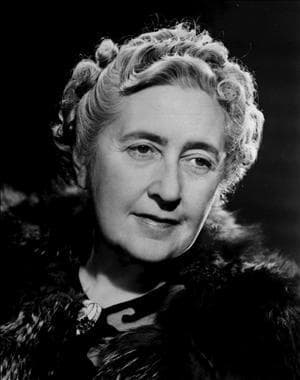
Dame Agatha Mary Clarissa Christie, Lady Mallowan, was an English writer known for her 66 detective novels and 14 short story collections, particularly those revolving around fictional detectives Hercule Poirot and Miss Marple. She also wrote the world's longest-running play, the murder mystery The Mousetrap, which has been performed in the West End since 1952. A writer during the "Golden Age of Detective Fiction", Christie has been called the "Queen of Crime". She also wrote six novels under the pseudonym Mary Westmacott. In 1971, she was made a Dame (DBE) by Queen Elizabeth II for her contributions to literature. Guinness World Records lists Christie as the best-selling fiction writer of all time, her novels having sold more than two billion copies.







