“There are some things that cannot be changed, and some that should not.”
— Rachelle reflecting on her transformation and the nature of the forest.

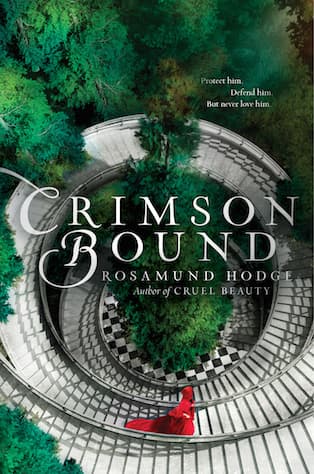
Rosamund Hodge (2015)
Genre
Fantasy / Young Adult / Romance
Reading Time
9-12 hours
Key Themes
See below
Sign in to track this book
Haunted by a reckless choice that bound her to darkness, a warrior akin to Red Riding Hood must guard the prince she despises to find a legendary sword and avert an eternal night, all while navigating treacherous palace secrets and an unexpected, dangerous love.
At fifteen, Rachelle, a woodswoman's apprentice, lives in a village constantly threatened by the forestborn, creatures born from the ancient, corrupt forest. Driven by a desire to protect her people, she secretly seeks out a powerful forestborn, believing she can strike a deal to end the perpetual darkness. However, the encounter goes wrong. The forestborn, a creature of immense power, outsmarts her, tricking her into a blood oath. This oath transforms Rachelle into a forestborn herself, binding her to the very darkness she sought to eradicate. She gains immense strength and regenerative abilities but is cursed with an insatiable hunger for human blood, forever altering her nature and forcing her into a life of secrecy and self-loathing.
Three years after her transformation, Rachelle lives a solitary life, using her new abilities to hunt and kill other forestborn creatures, driven by a desperate need for atonement. She operates in the shadows, her existence a secret from most, including her aunt and former village. Her immense guilt over her past actions and her cursed nature isolates her. She frequently battles the monstrous inhabitants of the forest, honing her combat skills and becoming a formidable warrior. Despite her successes, the internal struggle with her hunger and the memory of her transformation constantly plague her, making her a grim and hardened individual who believes she is beyond redemption.
King Matthias summons Rachelle to the capital, ordering her to protect his son, Prince Armand. Rachelle despises Armand, blaming him for the death of her childhood friend, Giselle, who was killed by forestborn during one of his reckless hunts years ago. The prince, known for his arrogance and irresponsible behavior, is a constant source of frustration for her. Their reunion is full of tension and animosity. Rachelle, bound by the king's decree, reluctantly accepts the assignment, seeing it as another unwelcome burden in her already difficult life. This forced proximity reignites old wounds and deep-seated resentment between them.
Convinced that the legendary Crimson Sword is the only way to truly defeat the forestborn and perhaps even break her own curse, Rachelle coerces Prince Armand into helping her find it. She reveals glimpses of the true threat of the forest and her unique connection to it, enough to pique his interest and sense of duty. Their journey takes them through dangerous territories and ancient ruins, forcing them to rely on each other despite their mutual distrust. This quest becomes a reluctant partnership, with Rachelle driven by desperation and Armand slowly beginning to understand the grave danger facing their realm, a danger far greater than he ever imagined.
As Rachelle and Armand continue their search, both within the palace archives and through clandestine investigations, they begin to uncover a sinister conspiracy. They discover that the escalating forestborn attacks are not random, but orchestrated, and that powerful figures within the court are involved. The court is full of corruption, betrayal, and hidden agendas. They realize that the threat is not just external but deeply embedded within the kingdom's leadership. This revelation forces them to look beyond their personal animosity and work together to expose the traitors who seek to undermine the realm from within, making them targets themselves.
Through her investigations and encounters, Rachelle learns the terrifying truth about the forestborn. She discovers that they are not mere monsters but a complex society with a hierarchy, led by the ancient and powerful Great Forestborn, the very entity that cursed her. She realizes that her own transformation was part of a larger, insidious plan. This knowledge provides a deeper understanding of her own nature and the immense power she wields, but also the daunting challenge she faces. The Great Forestborn is manipulating events to plunge the world into eternal darkness, and Rachelle's connection to it makes her both a pawn and a potential key to its defeat.
As they face increasing dangers and betrayals, Prince Armand undergoes a significant transformation. He sheds his carefree, arrogant persona, becoming more responsible, courageous, and genuinely concerned for Rachelle and their world. Witnessing Rachelle's strength, sacrifice, and the burden she carries, his initial contempt turns into respect, then admiration, and eventually, deep affection. He sees past her hardened exterior to the vulnerable, self-sacrificing woman beneath. Their shared peril and intimate moments forge a powerful bond between them, challenging Rachelle's own carefully guarded emotions and forcing her to confront her long-held hatred.
The conspiracy culminates in a shocking revelation: King Matthias himself is deeply involved with the Great Forestborn. It is revealed that the King made a pact with the Great Forestborn years ago, trading human lives for power and stability, believing he was protecting his kingdom. This pact allowed the forestborn to gain such influence and led to the escalating darkness. The King's motivations, though perhaps initially well-intentioned, became twisted, sacrificing his people for a false sense of security. This betrayal shatters Armand's perception of his father and plunges Rachelle into a deeper sense of despair, realizing the corruption reached the highest authority.
Armed with the Crimson Sword and united in their purpose, Rachelle and Armand confront the Great Forestborn. The battle is fierce and devastating, pushing Rachelle to the limits of her forestborn abilities while trying to maintain her humanity. The Great Forestborn is an ancient, cunning, and powerful entity, capable of manipulating its surroundings and preying on their fears. Armand fights valiantly by her side, proving his loyalty and courage. Rachelle must embrace her cursed nature to stand a chance, risking losing herself entirely to the darkness within. The fate of their world hangs in the balance as they face their ultimate enemy.
In the climactic moments of the battle, Rachelle realizes that defeating the Great Forestborn requires an ultimate sacrifice. She understands that her unique connection to the forestborn, being one herself, is both her greatest weapon and her greatest weakness. She uses the Crimson Sword, not just as a weapon, but as a conduit, channeling her own cursed blood and power to sever the Great Forestborn's connection to the world and its influence over the forest. This act comes at a great personal cost, leaving her profoundly changed but finally free from the direct control of the Great Forestborn. Her sacrifice ensures the realm's survival, though the scars of the battle and her past remain.
With the Great Forestborn defeated, the eternal darkness begins to recede, and the forest's corruption slowly starts to heal. King Matthias is either deposed or faces severe consequences for his actions, and Armand steps up to lead, demonstrating the maturity and wisdom he gained through his trials. Rachelle, though still bearing the mark of her transformation, finds a measure of peace and acceptance. Her relationship with Armand has deepened into a profound love, forged in fire and sacrifice. Together, they face the daunting task of rebuilding their realm, committed to creating a better future, one where the balance between humanity and the forest is respected, and where Rachelle can find a purpose beyond atonement.
The Protagonist
Rachelle transforms from a guilt-ridden, self-loathing hunter into a self-accepting hero who embraces her unique nature to save her world.
The Supporting/Love Interest
Armand evolves from a self-absorbed prince into a responsible, courageous, and compassionate leader and a loyal partner to Rachelle.
The Antagonist
Revealed from a seemingly benevolent ruler to a desperate and corrupt king, ultimately exposed and likely deposed.
The Antagonist
The primary antagonist whose plan for eternal darkness is ultimately thwarted by Rachelle's sacrifice.
The Mentioned
Her death serves as a catalyst for Rachelle's character development and central conflict.
The Supporting
Remains a steady, guiding presence, representing Rachelle's human roots and the home she longs to protect.
The Mentioned
Serves as a symbol of the kingdom's conventional defenses, which prove insufficient against the true enemy.
Rachelle's entire journey is driven by her desperate need for redemption after her transformation into a forestborn. She believes she is a monster and seeks to atone for her existence by tirelessly hunting other forestborn. This theme is evident in her self-sacrificing actions, her willingness to face death, and her constant internal battle against her cursed nature. Her growth involves realizing that atonement isn't just about punishment, but about using her unique abilities for good, ultimately accepting herself rather than just fighting what she is. This culminates in her final sacrifice, a true act of redemption.
““I was a monster. I was a murderer. I was not meant to live, but to die, and take as many of them with me as I could.””
The novel explores the blurred lines between good and evil. Rachelle, despite being cursed with a monstrous nature, fights for humanity, while King Matthias, a human ruler, makes a pact with evil for what he perceives as good. The forestborn are not simply mindless monsters but have a hierarchy and motivations, however twisted. This theme challenges the notion that evil is solely external, showing how it can reside within, and how good can emerge from unexpected places. It forces characters, especially Rachelle, to confront their own definitions of what it means to be good or evil.
““There was no such thing as good or evil, only powerful and powerless, and the powerful did what they wished.””
The developing romance between Rachelle and Armand is deeply intertwined with sacrifice. Their love blossoms amidst danger and betrayal, requiring them to constantly put each other's lives before their own. Armand sacrifices his princely arrogance and safety, while Rachelle sacrifices her emotional walls and ultimately, a part of herself, for the greater good and for him. Their love is a source of strength, enabling them to make the ultimate sacrifices necessary to save their world. It demonstrates that true love often demands profound personal cost.
““He was the light that had pierced her darkness, and she would burn for him if she had to.””
A central theme for Rachelle is her struggle to accept her identity as a forestborn. For years, she views her cursed nature as a source of shame and a barrier to her humanity. Her journey involves not just fighting the evil, but also coming to terms with who she has become. Ultimately, she realizes that her strength is in embracing, rather than denying, her unique abilities, using them as a tool for good. Her acceptance of her dual nature allows her to become the hero she was meant to be, proving that identity is not solely defined by one's origins or a curse.
““I was not just a girl. I was a weapon. And I would use myself to tear this darkness down.””
A legendary weapon capable of harming the Great Forestborn and severing its power.
The Crimson Sword is a mythical artifact, believed to be the only weapon capable of truly harming and defeating the Great Forestborn. It serves as a MacGuffin for much of the early plot, driving Rachelle and Armand's quest. Its significance goes beyond mere combat; it is ultimately revealed to be a conduit, able to channel Rachelle's own forestborn blood and power to effectively sever the Great Forestborn's connection to the world, making it crucial for the climax and Rachelle's sacrifice. It represents the hope for a definitive end to the encroaching darkness.
The magical bond that transforms Rachelle into a forestborn and gives her unique abilities.
The blood oath is the central magical plot device that sets Rachelle's journey in motion. It is the moment she is cursed by the Great Forestborn, transforming her into one of its kind. This curse grants her immense strength, speed, and regenerative abilities, but also an insatiable hunger for human blood, making her an outcast and a monster in her own eyes. It serves as a constant source of internal conflict, a powerful weapon, and a direct link to the antagonist, making her both a victim and a potential key to its defeat. Her struggle to control it is a core element of her character arc.
A corrupt, sentient forest that births monsters and encroaches upon the human world.
The enchanted forest is more than just a setting; it is a living, malevolent entity, a primary antagonist in itself. It is the source of the forestborn creatures and the physical manifestation of the encroaching 'darkness' that threatens to consume the world. It actively expands, corrupting the land and sowing fear. Rachelle's connection to it, as a forestborn, gives her a unique understanding and vulnerability to its influence. It serves as a constant, pervasive threat that shapes the atmosphere and drives the characters' desperate struggle for survival, highlighting the battle between nature's wild power and human civilization.
A web of conspiracies within the royal court that aid the Great Forestborn.
The political intrigue serves as a major plot device, revealing that the threat to the kingdom is not solely external. The conspiracy within the royal court, culminating in King Matthias's pact with the Great Forestborn, adds layers of betrayal and corruption to the narrative. This device heightens the stakes, showing that even those sworn to protect the realm can be its greatest betrayers. It forces Rachelle and Armand to navigate a dangerous landscape of human treachery as well as monstrous threats, making their quest more complex and perilous, and ultimately exposing the deep rot within the kingdom's foundations.
“There are some things that cannot be changed, and some that should not.”
— Rachelle reflecting on her transformation and the nature of the forest.
“Every monster was once a human. That is why they are monsters.”
— Gauvain speaking about the creatures of the forest and their origins.
“Love is not a cage, it is a key.”
— Armand speaking to Rachelle about the true nature of love, contrasting it with control.
“The forest changes you. It takes what you are and twists it into something else.”
— Rachelle's internal monologue about the corrupting influence of the forest.
“Sometimes the only way to save something is to destroy it.”
— Rachelle contemplating difficult choices she must make to protect those she cares about.
“Fear is a funny thing. It can make you run, or it can make you fight.”
— Rachelle facing a dangerous situation, deciding how to react.
“To be truly free, you must be willing to lose everything.”
— Licorne's philosophical musings on the nature of freedom and its cost.
“There is no evil that cannot be redeemed, only evil that chooses not to be.”
— A conversation about the possibility of redemption, even for the most monstrous.
“Promises are like chains. They bind you, even when you want to break free.”
— Rachelle feeling trapped by a promise she made early in the story.
“The world is not black and white, Rachelle. It is crimson.”
— Armand explaining the complex, often bloody, reality of their world to Rachelle.
“You cannot outrun your true self, no matter how fast you run.”
— Rachelle struggling with her new identity and the changes she has undergone.
“Sometimes the greatest strength is not to fight, but to endure.”
— A lesson learned by Rachelle during a moment of profound struggle.
“A secret is only safe when no one knows it.”
— Rachelle reflecting on the dangers of her own hidden truths.
“The only way to truly defeat a monster is to understand it.”
— Gauvain sharing his perspective on dealing with the forest's creatures.
Ready to see how well you understood this book? Take our interactive quiz with 10 questions.

Biography coming soon.







