““I’m not a monster, but I’ve seen things that would make a monster weep.””
— A character reflecting on the dark experiences they've endured.

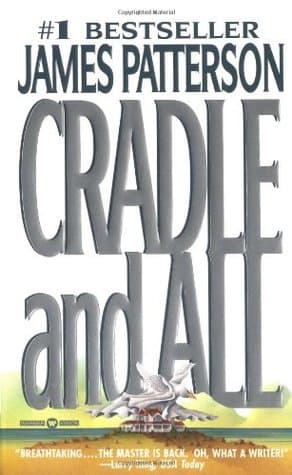
James Patterson (2002)
Genre
Thriller / Spirituality / Mystery
Reading Time
360 min
Key Themes
See below
Sign in to track this book
As immaculate conceptions herald a global apocalypse, a former nun turned PI must unravel a divine conspiracy to save two virgin mothers and humanity's future from an unholy war between light and darkness.
Mariah Burke, an ordinary young woman in Boston, is pregnant despite being a virgin. This impossible situation throws her life into turmoil and brings her to the attention of the Archdiocese of Boston. At the same time, in a remote village in Ireland, another young woman, Katherine O'Brien, is in the same inexplicable condition. Both women are devout, and their pregnancies are medically unexplainable, leading to wonder and fear. News of these immaculate conceptions spreads, causing a stir in religious and scientific communities, hinting at something beyond human understanding and sparking both hope and apprehension about what these births might mean for the world.
The Archdiocese of Boston, concerned and intrigued by Mariah Burke's immaculate conception, hires Anne Fitzgerald, a former nun who became a private investigator. Anne is tasked with discreetly investigating Mariah's background, verifying her virginity, and understanding her miraculous pregnancy. Initially skeptical but thorough, Anne approaches the case with a blend of her spiritual past and her analytical present. Her investigation is meant to determine the claim's authenticity and to protect the Church from potential scandal or exploitation, but she soon finds herself drawn into a deeper mystery, sensing a powerful, unseen force at play.
As Mariah and Katherine's pregnancies continue, the world experiences an alarming surge in natural disasters: devastating floods, severe droughts, famines, and widespread epidemics. These catastrophic events are not isolated incidents but occur globally, increasing in frequency and intensity. News reports and ancient prophecies begin to intertwine, with many interpreting these events as signs of an impending apocalypse or a significant biblical event. The growing chaos and fear in the world create a backdrop of urgency and dread, suggesting that the immaculate conceptions are not merely isolated miracles but are directly connected to a larger, more ominous unfolding prophecy, hinting at a divine or demonic intervention.
The unusual nature of the immaculate conceptions and the accompanying global crises quickly capture the attention of the highest levels of the Catholic Church. The Vatican dispatches Sister Mary Joseph, a powerful and enigmatic figure known for her unwavering faith and strict adherence to doctrine, to take charge of the investigation. Her arrival shows the immense importance and potential danger the Church sees in these events. Sister Mary Joseph's primary objective is to maintain control, protect the Church's interests, and determine the divine or diabolical origin of the pregnancies, often clashing with Anne's more empathetic and investigative approach, creating tension and suspicion within the nascent team.
Through her investigation, Anne Fitzgerald uncovers the truth: Mariah Burke in Boston and Katherine O'Brien in Ireland are not isolated cases. They are both experiencing the same immaculate conception, and their pregnancies are progressing identically. This revelation confirms Anne's belief that a powerful, coordinated force is behind these events. More disturbingly, Anne begins to perceive a growing threat to both women and their unborn children. She realizes that their unique condition makes them targets for unseen forces, both spiritual and possibly human, who seek to control or destroy what is growing within them, heightening the stakes of her mission.
As Anne investigates, a charismatic and enigmatic priest named Father Michael enters the scene. He appears to offer spiritual guidance and protection to the pregnant women, particularly Mariah. Father Michael has an unusual knowledge of ancient prophecies and the forces at play, suggesting a deeper understanding of the unfolding events than he initially lets on. While he seems to be on the side of good, Anne senses a subtle manipulation and a hidden agenda in his actions. His presence adds another layer of complexity to the investigation, making Anne question his true allegiances and the purpose of his involvement.
As the pregnancies near term, the true nature of the conflict becomes clear. The unborn children within Mariah and Katherine are not ordinary babies; they are central to an ancient prophecy, destined to be either saviors or destroyers. Powerful forces, representing both divine good and demonic evil, begin to converge around the two women. These forces manifest through various agents, some seemingly benevolent, others overtly malicious, all seeking to influence or claim the children for their own purposes. Anne, along with Sister Mary Joseph and Father Michael, is caught in the middle of a cosmic struggle, realizing humanity's fate hinges on the outcome of this spiritual battle.
Mariah Burke, particularly vulnerable, begins to suffer intense spiritual attacks and horrifying visions as her pregnancy progresses. She experiences nightmares, unsettling premonitions, and a pervasive sense of dread. These manifestations strongly suggest a demonic entity is attempting to corrupt or claim her unborn child. Anne and Father Michael work to protect her, using prayers and spiritual rituals, but the demonic influence is potent and relentless. Mariah's ordeal highlights the immediate and personal danger posed by the malevolent forces, making it clear that the battle is not just abstract but directly impacts the mothers and their innocent children, testing their faith and resilience.
A shocking revelation comes to light: both Mariah and Katherine are pregnant with twins. Even more profoundly, each woman is carrying one child destined for good and one for evil, fulfilling an ancient and terrifying prophecy. This twist raises the stakes dramatically, as the outcome is not just about one savior or one destroyer, but a complex interplay of opposing forces born simultaneously. The realization that twins of such divergent natures are gestating within the same womb intensifies the spiritual warfare, making the protection of the mothers and the guidance of these nascent beings the ultimate challenge for Anne and her allies.
The climax arrives as Mariah and Katherine go into labor. The births are not peaceful events but are accompanied by a dramatic and terrifying confrontation between divine and demonic forces. Angels and demons, or their human agents, clash in a desperate struggle for the souls of the newborn twins. Anne Fitzgerald, Sister Mary Joseph, and Father Michael are at the heart of this spiritual battlefield, fighting to protect the mothers and ensure the good children are safeguarded from the forces of darkness. The chaotic and supernatural nature of the births shows the immense power and significance of these children, marking a moment in the cosmic battle for humanity's future.
Following the tumultuous births and the intense spiritual confrontation, the immediate danger subsides, but the future remains uncertain. While the good children are protected, the evil ones also exist, and their potential for destruction looms large. Anne Fitzgerald reflects on the profound events she has witnessed and her role in protecting humanity. The world is changed by the global catastrophes and the miraculous, yet terrifying, births. The story concludes with a sense that the battle is far from over, and the lives of the twins, now separated and growing, will continue to shape mankind's destiny, leaving Anne with a lingering sense of responsibility and vigilance.
The Protagonist
Anne evolves from a skeptical investigator into a key defender of humanity, embracing her spiritual intuition and courage in the face of cosmic conflict.
The Supporting
Mariah transforms from a frightened young woman into a resilient mother, enduring immense spiritual and physical trials.
The Supporting
Katherine endures the same miraculous pregnancy as Mariah, becoming a mother to children of immense spiritual significance.
The Supporting
Sister Mary Joseph grudgingly accepts the supernatural reality, becoming a reluctant but vital ally in the spiritual battle.
The Antagonist/Supporting
Father Michael's true malevolent nature is gradually revealed, exposing him as a key agent of the demonic forces.
The Mentioned
Born amidst conflict, their future represents humanity's hope.
The Mentioned
Born amidst conflict, their future represents humanity's potential downfall.
This theme explores the tension between unwavering religious belief and rational doubt in the face of the miraculous. Anne Fitzgerald, a former nun now a private investigator, embodies this conflict, using her analytical skills to investigate events that defy scientific explanation. Her journey forces her to confront the limits of skepticism and embrace the possibility of the supernatural. The reactions of characters like Sister Mary Joseph (representing rigid faith) and the medical community (representing pure skepticism) further highlight this divide, especially when confronted with the immaculate conceptions and the escalating global catastrophes, which challenge all conventional understandings.
““There are more things in heaven and earth, Horatio, than are dreamt of in your philosophy.””
The struggle between good and evil is the novel's central pillar. This theme appears not only in the literal battle between divine and demonic forces but also in the moral choices characters make. The immaculate conceptions are not simply miracles but the focal point of a cosmic war, with the unborn twins representing the ultimate stakes. Father Michael's deception highlights how evil can masquerade as good, while Anne's commitment to protecting the innocent embodies the fight for righteousness. The global catastrophes are a physical manifestation of this spiritual battle, threatening to overwhelm humanity.
““The devil's greatest trick was convincing the world he didn't exist.””
The novel relies on ancient prophecies concerning the birth of children who will either save or destroy humanity. The immaculate conceptions of Mariah and Katherine directly fulfill these prophecies. This theme explores the idea of predetermined fate versus free will, as characters like Anne and Sister Mary Joseph actively try to influence the prophecy's outcome, despite its seemingly inevitable nature. The global disasters are also seen as signs foretold in these prophecies, creating a sense of urgency and predestination. The revelation of the good and evil twins shows the profound and ancient destiny awaiting these children.
““The signs are everywhere, if you only choose to see them. The time of reckoning is at hand.””
At its heart, the story is about the vulnerability of motherhood and the instinct to protect one's children, even in extraordinary circumstances. Mariah and Katherine, despite their fear and confusion, embody the maternal bond. Anne Fitzgerald, though not a mother herself, develops a deep protective instinct towards them and their unborn children, driven by her humanity and her past as a nun. This theme extends to the broader idea of protecting humanity's future, as the children represent the ultimate hope or despair for the world. The attempts by demonic forces to corrupt the children highlight the sanctity of this bond.
““A mother's love is the most powerful shield against the darkness.””
The miraculous and inexplicable pregnancies of virgin women.
This device is the central catalyst for the entire plot. The immaculate conceptions of Mariah Burke and Katherine O'Brien defy all scientific and medical explanation, immediately thrusting the narrative into the realm of the supernatural and spiritual. It forces characters, especially Anne Fitzgerald, to confront the limits of their understanding and opens the door for divine and demonic intervention. It serves as the primary mystery to be solved and the focal point around which all other conflicts revolve, directly leading to the unfolding of ancient prophecies and the global crisis, making the stakes immediate and immense.
A series of escalating natural disasters and epidemics worldwide.
The widespread and intensifying global catastrophes (floods, droughts, famines, epidemics) serve as a powerful plot device to underscore the apocalyptic stakes of the story. They act as outward manifestations of the spiritual battle, signaling that something profound and terrifying is occurring on a cosmic scale. These disasters create a sense of urgency and dread, pressuring the characters to act quickly and confirm the connection between the immaculate conceptions and ancient prophecies. They also generate a sense of helplessness and fear among the general populace, making the world ripe for either salvation or destruction.
An ancient prophecy foretelling the birth of both a savior and a destroyer.
The revelation that Mariah and Katherine are carrying twins – one destined for good and one for evil – is a crucial plot device. It elevates the conflict from a simple good vs. evil scenario to a more complex struggle for balance and choice. This prophecy deepens the mystery and raises the stakes, as the outcome is not just about one child but the interplay of two opposing forces born simultaneously. It dictates the actions of both divine and demonic agents, who seek to influence and claim these children, solidifying the idea that the fate of humanity hangs in the balance, creating a sense of predestination and urgency.
A character who initially appears benevolent but is later revealed to be an antagonist.
Father Michael embodies the 'deceptive ally' plot device. His initial appearance as a wise and spiritual guide for Mariah Burke creates a false sense of security and trust. This deception serves to mislead both the characters and the reader, highlighting how evil can operate under the guise of piety and good intentions. His eventual reveal as an agent of the demonic forces intensifies the danger and raises the stakes, showing that threats can come from unexpected places. This device adds suspense and complexity, forcing Anne Fitzgerald to rely on her intuition and discernment rather than outward appearances, making her investigation more perilous.
““I’m not a monster, but I’ve seen things that would make a monster weep.””
— A character reflecting on the dark experiences they've endured.
““Faith is a powerful thing, Sister. It can move mountains, or it can blind you.””
— Sister Anne discussing the dual nature of faith with another character.
““Sometimes the greatest evil wears the most innocent face.””
— A detective contemplating the nature of the antagonist.
““The truth, like a scalpel, can cut deep, but it’s the only way to heal.””
— A character insisting on confronting difficult realities.
““Miracles, Sister Anne, are often just a matter of perspective.””
— A skeptical character challenging Sister Anne's interpretation of events.
““Fear is a choice. You can let it consume you, or you can use it.””
— A character offering advice on overcoming a terrifying situation.
““The devil doesn’t always come with horns and a pitchfork. Sometimes, he comes with promises.””
— A warning about the insidious nature of temptation.
““History repeats itself, not because we don’t learn from it, but because we forget too easily.””
— A character reflecting on recurring patterns of human behavior.
““What is sacred to one is heresy to another. The line is often drawn in blood.””
— Exploring the conflict between different belief systems.
““Sometimes, to save the world, you have to break a few rules.””
— A character justifying morally ambiguous actions for a greater good.
““The greatest mysteries aren't in the heavens, but in the human heart.””
— A reflection on the complexity and enigma of human emotions and motives.
““In the silence, the loudest truths are often heard.””
— A character finding clarity during moments of quiet contemplation.
““Every life is a story, and some stories are just beginning to be written, even at the end.””
— A poignant thought about the ongoing nature of existence and destiny.
Ready to see how well you understood this book? Take our interactive quiz with 10 questions.
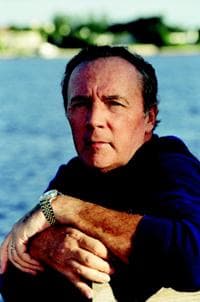
Biography coming soon.







