“The wind was picking up now, blowing dust from the mesa tops, bringing with it the smell of rain that wouldn’t come.”
— Describing the setting and atmosphere early in the novel.

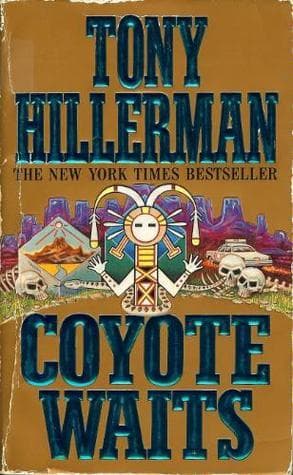
Tony Hillerman (1990)
Genre
Thriller / Mystery
Reading Time
7-8 hours
Key Themes
See below
Sign in to track this book
When a bullet, not fire, kills a Navajo policeman, Officers Chee and Leaphorn must untangle ancient greed, a silent shaman, and the shadow of the trickster Coyote to find the real killer before the truth becomes another lost fortune.
Navajo Tribal Policeman Jim Chee is devastated by the news that his friend and fellow officer, Delbert Nez, has been found dead inside his patrol car, which was set ablaze. Autopsy reveals Delbert was shot before the fire. The murder weapon, a .30-30 rifle, is found with Ashie Pinto, a respected but often drunken Hataalii (shaman), who is discovered near the scene. Pinto, known for his eccentricities and spiritual power, refuses to speak or offer any explanation for his involvement. This silence deepens the mystery, suggesting there is more to the story than a simple drunken act of violence.
Lieutenant Joe Leaphorn, though officially retired, is drawn into the case due to his long-standing relationship with the tribal police and his keen investigative mind. He is skeptical of Ashie Pinto's guilt, finding the situation too neat. Leaphorn learns that Delbert Nez had been investigating a claim related to the 'Lost Canyon of Gold,' a historical site believed to hold a fortune in artifacts or minerals. This connection immediately interests Leaphorn, as such legends often attract unscrupulous individuals. He suspects Delbert's death might be tied to something more complex than a random act of violence by a shaman.
Jim Chee, still reeling from Delbert's death, feels personally invested in uncovering the truth. He visits Ashie Pinto in jail, attempting to communicate with the silent shaman, but without success. Chee respects Pinto's spiritual standing and finds it hard to believe he would commit such a crime without provocation. His grief is compounded by the frustration of Pinto's silence, which blocks any easy path to justice. Chee's investigation becomes a deeply personal quest, driven by loyalty to his fallen friend and a growing suspicion that the official explanation is not enough.
A Japanese anthropologist, Dr. Billy Tuve, arrives on the reservation, claiming to research ancient Navajo burial practices. He is particularly interested in a specific site and is found with an ancient human skull, which he claims is a valuable anthropological find. His presence and his interest in historical sites align with Leaphorn's suspicions about the 'Lost Canyon of Gold.' Tuve's evasiveness and his unusual interest in the specific geography of the reservation raise red flags for both Chee and Leaphorn, suggesting a deeper, possibly illicit, motive behind his research.
Ashie Pinto, still in custody, begins to perform strange rituals and makes cryptic references to the Coyote, the mythical Navajo trickster figure. These actions further confuse the authorities but intrigue Chee, who understands the significance of Coyote in Navajo cosmology. Pinto's behavior suggests he is not simply a murderer but possibly a protector or an unwilling participant in a larger, more mystical conflict. His allusions to Coyote imply that deception and misdirection are at play, hinting at a hidden truth that defies conventional police work.
Leaphorn's investigation into Delbert Nez's activities before his death reveals that Delbert had been looking into old land claims and historical records related to the 'Lost Canyon of Gold.' Leaphorn discovers that Dr. Billy Tuve's research is not purely academic but focuses on locating this mythical site, rumored to contain a vast hidden treasure, possibly gold or valuable artifacts. The presence of Tuve, combined with Delbert's prior investigation, confirms Leaphorn's theory that the murder is linked to the pursuit of this legendary fortune.
As Chee and Leaphorn combine their efforts, they discover that Dr. Billy Tuve is not the mastermind but a naive pawn in a larger scheme. The actual killer is someone within the local community, or closely connected to it, who has manipulated Tuve and used the legend of the Lost Canyon of Gold as a cover for their own greed. This individual, seeking to exploit the land for its hidden riches, murdered Delbert Nez when he got too close to uncovering their illicit activities, then framed Ashie Pinto to divert suspicion.
The truth behind Ashie Pinto's silence finally comes to light. He wasn't silent out of guilt, but out of a complex blend of traditional Navajo belief and a desire to protect someone, or to prevent further harm. His cryptic references to Coyote and his rituals were a form of communication, a warning, and a way to manipulate events according to his spiritual understanding. Pinto had witnessed aspects of the crime or its aftermath and, in his own unique way, was trying to guide Chee towards the truth without directly breaking a taboo or endangering himself or others.
Jim Chee and Joe Leaphorn, using their combined knowledge of modern police work and Navajo culture, piece together the final clues. They confront the true killer, who is a desperate and opportunistic individual driven by greed. The confrontation exposes the elaborate deception and the motives behind Delbert Nez's murder. Justice is ultimately served, not through a simple confession, but through the careful unraveling of a conspiracy that intertwined ancient legends, modern ambition, and the spiritual world of the Navajo.
With the killer apprehended and Ashie Pinto cleared, the immediate crisis is resolved. However, the experience leaves a lasting impression on Jim Chee. He gains a deeper appreciation for the complexities of Navajo justice and the power of traditional beliefs. The influence of Coyote, the trickster, lingers, reminding him that appearances can be deceiving and that truth often hides behind layers of misdirection. Chee reflects on the personal cost of the investigation and the enduring mysteries that exist between the physical and spiritual worlds on the reservation.
The Protagonist
Chee deepens his understanding of Navajo cultural nuances and the complexities of justice, learning to integrate his spiritual beliefs with his police work.
The Supporting
Leaphorn's wisdom and experience are reaffirmed as he successfully navigates a complex case, demonstrating his invaluable insight.
The Supporting
Pinto's role shifts from a silent suspect to a cryptic guide, revealing the deeper cultural context of the crime.
The Mentioned
His death serves as the inciting incident, driving the narrative and revealing his prior investigations.
The Supporting
Tuve moves from an academic observer to an unwitting participant and eventual victim of manipulation.
The Mentioned
Coyote's symbolism guides the interpretation of events, moving from an abstract concept to a crucial lens for understanding the plot.
The novel shows the tension between modern American law enforcement and traditional Navajo justice and beliefs. Jim Chee, a product of both worlds, constantly navigates this divide. Ashie Pinto's silence, for instance, is not a simple refusal to cooperate but a culturally significant act, interpreted differently by Chee (who understands the Navajo context) and by external authorities. Leaphorn, while more assimilated, still acknowledges the power and importance of these traditions. The pursuit of justice requires understanding both the legal framework and the underlying cultural truths, often leading to a more nuanced resolution than a simple arrest.
““There was the white man’s way of justice, and there was the Navajo way. And sometimes they were not the same.””
Greed is a central motivator for the criminal acts in the story. The legend of the 'Lost Canyon of Gold' attracts individuals willing to commit murder and deception to acquire wealth. This theme shows how the allure of a lost fortune can corrupt human nature, leading characters to betray trust, manipulate others, and ultimately take a life. The murder of Delbert Nez is a direct consequence of someone's desperate desire for this hidden treasure, showing how material avarice can override moral boundaries and lead to destructive outcomes, impacting an entire community.
““The hunger for gold, like the hunger for power, was a thing that could twist a man’s soul.””
Navajo myths and traditions, particularly the figure of Coyote, play a role in shaping the story and understanding the characters' motivations. Ashie Pinto's actions, his silence, and his rituals are rooted in his role as a Hataalii and his understanding of the spiritual world. The legend of the 'Lost Canyon of Gold' itself is a powerful myth that drives the plot. These traditional elements are not just background but active forces that influence the characters' decisions, provide clues, and ultimately help unravel the mystery, demonstrating the enduring power of cultural heritage.
““Coyote was always there, waiting in the shadows, ready to twist things around.””
Throughout the novel, what seems true is often a carefully constructed illusion. Ashie Pinto's guilt, Dr. Tuve's academic intentions, and the true nature of the 'Lost Canyon of Gold' are all initially presented in one light, only to be revealed as something entirely different. This theme shows that truth is rarely simple and often hidden beneath layers of deception and misdirection, much like the trickster Coyote. Both Chee and Leaphorn must constantly question initial assumptions and look beyond the obvious to uncover the underlying reality of the crime.
““Things are seldom what they seem, especially out here, where the old ways still hold sway.””
A key suspect who refuses to speak, creating a central mystery and forcing alternative investigative methods.
Ashie Pinto's deliberate silence is a powerful plot device. It immediately creates a profound mystery for Chee, who struggles to reconcile the shaman's respected status with his apparent guilt and baffling refusal to communicate. This silence forces Chee to look beyond conventional police interrogation and delve into Navajo cultural and spiritual interpretations. It also serves to protect the true killer initially, as the authorities are fixated on Pinto, allowing the real perpetrator to operate in the background. Pinto's eventual 'communication' through ritual and cryptic references guides Chee towards the truth in a non-linear, culturally specific way.
A historical myth that serves as the MacGuffin, driving the greed and conflict.
The legend of the 'Lost Canyon of Gold' functions as a classic MacGuffin, a plot device that drives the characters' motivations and the overall narrative, though its exact nature or existence is less important than its effect on the plot. It provides a powerful incentive for greed, drawing various characters into the story, including the victim, Delbert Nez, and the manipulative killer. This legend connects historical aspirations with present-day criminal activity, highlighting how the pursuit of mythical wealth can lead to very real and deadly consequences. Its ambiguity also allows for misdirection, as characters interpret its meaning differently.
The mythical trickster figure whose presence foreshadows deception and complexity.
The frequent invocation of Coyote, the Navajo trickster god, serves as a powerful symbolic plot device. It foreshadows the convoluted nature of the mystery, where deception, misdirection, and unexpected twists are paramount. Ashie Pinto's references to Coyote are not merely cultural embellishments but direct clues that the truth is obscured by trickery. This symbolism prepares the reader and Chee for a non-linear investigation, one where appearances are deceiving and the true culprit operates through cunning and manipulation, echoing Coyote's legendary ability to sow chaos and confusion.
The collaborative yet distinct investigative approaches of Jim Chee and Joe Leaphorn.
The use of Jim Chee and Joe Leaphorn as dual protagonists, each with distinct investigative styles and cultural perspectives, is a crucial plot device. Chee's emotional involvement and traditional Navajo worldview provide one lens, while Leaphorn's pragmatic, analytical, and experienced approach offers another. Their collaboration allows for a more comprehensive and nuanced investigation, as they complement each other's strengths and fill in each other's blind spots. This dual perspective enables the story to explore both the modern and traditional aspects of the Navajo Nation, ultimately leading to a more complete understanding of the crime and its resolution.
“The wind was picking up now, blowing dust from the mesa tops, bringing with it the smell of rain that wouldn’t come.”
— Describing the setting and atmosphere early in the novel.
“The past was a road, long and winding, and sometimes you had to look back to see where you were going.”
— Joe Leaphorn reflecting on history and its impact on the present investigation.
“He’d learned long ago that the truth often had more than one face, especially when people were involved.”
— Jim Chee considering the complexities of human testimony and motives.
“There was a different kind of silence in the desert at night, a silence that wasn't empty but full of unseen life.”
— Describing the unique environment of the Navajo Nation after dark.
“Sometimes the cleverest thing a man could do was nothing at all.”
— Leaphorn contemplating strategy and patience in an investigation.
“The land itself seemed to hold secrets, ancient and unyielding, waiting for someone to listen.”
— Chee's perception of the spiritual connection between the Navajo people and their land.
“Fear was a powerful thing, and it could make good people do bad things, and bad people do worse.”
— Reflecting on the motivations behind the crimes being investigated.
“He knew that sometimes the solution to a mystery lay not in finding new facts, but in seeing old ones differently.”
— Leaphorn's approach to re-evaluating evidence.
“The desert taught you humility, showed you how small you were against the vastness.”
— A character's internal reflection on the impact of the landscape.
“Tradition wasn't just old ways; it was the accumulated wisdom of generations.”
— Chee's thoughts on the importance and value of Navajo culture.
“Every lie, no matter how small, created a ripple that could spread and distort the truth.”
— Considering the consequences of deception in the investigation.
“Sometimes the biggest dangers weren’t the ones you could see coming, but the ones hiding in plain sight.”
— Leaphorn's insight into the nature of threats.
“The wind carried stories, if you knew how to listen, stories of the people and the land.”
— A poetic observation about the connection between nature and history.
“He understood that healing wasn't always about curing a sickness, but about restoring balance.”
— Chee's perspective as a Navajo shaman-in-training on well-being.
Ready to see how well you understood this book? Take our interactive quiz with 10 questions.
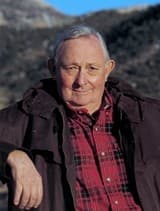
Biography coming soon.







