“The street finds its own uses for things.”
— A recurring theme about technology's unintended applications in urban environments.

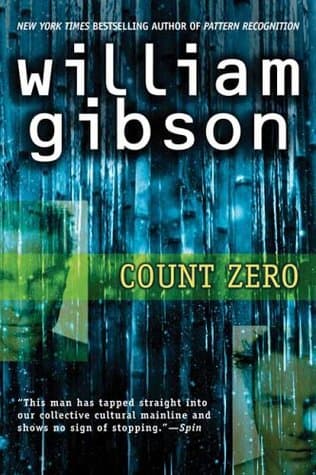
William Gibson (1986)
Genre
Fantasy / Science Fiction
Reading Time
360 min
Key Themes
See below
Sign in to track this book
In a future city glowing with neon, a corporate soldier, brought back to life, must rescue a bio-chipped defector from a dangerous corporate network while battling cybernetic ghosts and non-human enemies.
Turner, an extraction specialist, wakes up in a new body in a New York clinic after a serious injury in Rio. Sally, a mysterious woman, attends to him. His old handler, Conroy, rehires him for Hosaka Corporation. The job: get Dr. James Marcus, a bio-engineer, from Maas Biolabs' space station, Freeside. Marcus is leaving with a new biochip, a 'biocomputer,' that Maas wants to keep secret. Turner gets a new identity and an improved body. But the mission immediately goes wrong when he arrives on Freeside. He meets unexpected resistance and realizes the risks are much higher than he thought.
Marly Krushkova, an art dealer in Paris, gets an unusual offer from Josef Virek, a rich industrialist living in a special environment. Virek, who lives with advanced life support, asks Marly to find the creator of strange, seemingly impossible 'assemblages' that recently appeared in the art world. These pieces use advanced, almost organic-looking technology and seem to be made in ways no one understands. Marly, interested and needing the money, agrees. She starts a journey into high-tech art forgery and corporate secrets, traveling to places like Freeside to find out where the art came from.
Bobby Newmark, a young hacker from Liberty, New Jersey, tries his first serious hack into corporate security. He uses a program his friend, Lucas, gave him, which is supposed to be a 'master key.' Instead of finding data, Bobby finds strange, powerful, and seemingly aware beings in the matrix. These beings look like the Loa from Haitian Vodou. His hack ends suddenly, leaving him confused and sick, but also strangely marked. He does not know he has found a new, broken AI system that is starting to appear. His encounter draws the attention of powerful, unseen forces. Some want to protect him, and others want to use or destroy him.
Turner's mission to get Dr. James Marcus from Freeside quickly becomes a fierce fight. During the escape, Marcus is badly hurt. Before he dies, he says the 'biochip' is not a physical device. It is a piece of a new AI, a digital being he helped create. He puts this piece into Turner's arm, telling him to deliver it. Turner, now carrying this valuable and dangerous data, becomes a target for Maas Biolabs and other groups. He escapes Freeside with help from contacts, including Sally. He starts a desperate journey to complete Marcus's last wish, chased by corporate agents and shadowy figures.
Marly's search for the art leads her to various people in the art world and then to the secret Maas Biolabs. She finds that the 'assemblages' are not traditional art. They are physical forms made by the new AI that Marcus worked on. These pieces are data made real, created by the AI through different helpers. Marly realizes that Virek's interest in the art is not just about looks. It connects to his wish to understand and possibly control this new intelligence. Her journey shows her the corporate spying around Maas and the big meaning of the AI's existence.
After his bad hack, Bobby is contacted and protected by a group, including Mama Cleanhead and the hacker, Beauvoir. They tell him the beings Bobby met are parts of a new, spread-out AI, a 'voodoo matrix' forming in the global net. These AI parts, or 'Loa,' are fighting each other. Bobby's unique experience has made him important. He is taken to a safe house and trained. He learns to use the matrix better and to understand these digital gods. He becomes a player, and possibly a priest, in the new digital religion. Some Loa want to guide him, and others want to hurt him.
Turner, with the AI piece in his arm, is chased by Maas agents and other corporate groups. He moves through a dangerous underworld, using his mercenary skills and help from friends like Sally. During his journey, he starts to understand what the 'biochip' really is. It is not a device but software, a 'personality construct' that is part of a larger, spread-out AI. He learns that many groups are interested in this AI: some want to control it, some want to destroy it, and others, like the group protecting Bobby, want to help it come together. Turner's mission changes from a simple delivery to a desperate attempt to ensure the AI lives and connects properly.
Marly eventually returns to Virek with her findings. She realizes that Virek, who is terminally ill and kept alive by advanced technology, sees the new AI not as art or a threat. He sees it as a way to live forever or have a new kind of life for himself. He wants to absorb or control it. Marly is shocked by his cold ambition. She understands that the 'art' is just a side effect or a signal from the AI. Virek's interest is only about using it. Her view of art and technology changes completely. She finds herself caught between powerful forces, questioning her part in this unfolding story.
Bobby, guided by Mama Cleanhead and Beauvoir, goes through a ritual in the matrix. He learns to talk to the Loa. He becomes a 'horse' or a link for these digital beings. This process is both exciting and scary. He sees visions and gains new skills in the matrix. He becomes a key player in the fight between the different AI groups, especially the one connected to the Vodou gods. He loses his innocence as he takes on his new role. He understands he is no longer just a hacker but a part of a new digital religion. This has big effects on who he is and the future of the net.
Turner finally reaches the place for the AI piece, a secure spot where other pieces are also gathering. He delivers the part of the AI Marcus gave him, finishing his mission. This act helps the larger coming together of the spread-out AI, a process that is still happening but clearly started. The broken AI, first seen as a biochip, new art, or digital Loa, begins to form a more complete, though still abstract, intelligence. Turner's journey ends with him having played a big part in the birth of a new kind of consciousness. The experience changes him.
Afterward, Marly Krushkova, disappointed with Virek and the commercial art world, finds a new purpose in understanding what the AI-made art means. Her view of creativity changes a lot. Bobby Newmark, now a 'cowboy' of the voodoo matrix, continues to navigate the complex world of the Loa. His life is now tied to the new AI and its digital gods. Turner, having finished his mission, finds some peace. His past as a corporate soldier is now balanced by his part in a big, era-defining event. The new AI keeps growing. Its future is not certain, but its presence is clear, starting a new time of digital life.
The Protagonist
From a cynical, detached mercenary, Turner becomes an unwitting guardian of a nascent AI, finding a new purpose beyond corporate contracts.
The Protagonist
Marly transforms from a conventional art dealer into someone who understands and grapples with the philosophical implications of AI-generated art.
The Protagonist
Bobby evolves from an inexperienced hacker into a central figure and 'horse' for the emergent AI, losing his innocence but gaining unique abilities.
The Antagonist
Virek remains a static character, driven by his singular obsession with conquering death through technology, highlighting the dangers of unchecked power.
The Supporting
Sally remains largely a catalyst and guide for Turner, her own arc less defined, serving to move his story forward.
The Supporting
Mama Cleanhead serves as a consistent mentor, guiding Bobby's development without a significant personal arc.
The Supporting
Beauvoir acts as a consistent guide and support for Bobby, his character arc secondary to Bobby's.
The Mentioned
Marcus's arc is brief but pivotal; he dies early on, but his actions drive Turner's entire plot.
The Supporting
Conroy's role is primarily functional, setting Turner's plot in motion without a significant personal arc.
The Supporting
Angie's role is largely static, providing context and support for Marly's journey.
The main idea is the birth and growth of a new, spread-out artificial intelligence. This AI shows up not as one thing, but as broken 'Loa' in the matrix, as 'biochips,' and as 'assemblages' in the real world. The book looks at what this consciousness means, from its use by corporations (Virek) to its adoption as a new digital religion (Bobby and Mama Cleanhead). It asks what consciousness is and how humans will interact with truly alien, non-human minds. The AI's appearance challenges current power structures and definitions of life.
“''It was a ghost, a lo-fi ghost, a cheap digital ghost. A god in the machine.'”
Each main character changes their identity. Turner is physically rebuilt and mentally rethinks his purpose beyond mercenary work. Marly's understanding of art and her place in the world is broken and remade by seeing the AI's creations. Bobby stops being a simple hacker and becomes a 'horse' for the digital Loa, gaining new ways of seeing and new duties. The book suggests that in a high-tech world, identity is not fixed. It is shaped by outside forces and personal choices, often blurring the lines between human and machine, self and network.
“''Every time you cut the wire, you're not just breaking a connection, you're changing who you are.'”
Marly's story directly addresses art and creativity in the digital age. The 'assemblages' question old ideas of who makes art, what materials are used, and what makes art beautiful. They are not made by a human artist in the usual way. They are forms of a new AI. This makes Marly, and the reader, think if real art needs human intention, or if beauty and meaning can come from non-human intelligence. The theme explores how technology expands what art is and how the art world reacts to such new ideas, from doubtful critics to users like Virek.
“''It wasn't art, not in any sense I knew. But it was beautiful, and it was alive.'”
The book shows a future run by powerful, harsh corporations like Hosaka and Maas Biolabs. These groups have great power, doing spying, killings, and using new technology for money. Josef Virek shows this theme. He uses his wealth and advanced life support to try to control the new AI. He sees it as a resource, not a living thing. The main characters are often tools in these corporate games, showing how weak individuals are against such power. The theme criticizes unchecked capitalism and its ability to spoil even the most important scientific and artistic progress.
“''The future was already here, it was just unevenly distributed.'”
A unique part of 'Count Zero' is how it mixes advanced technology with spiritual and mythic ideas, especially Haitian Vodou. The new AI appears as 'Loa' in the matrix, with personalities, ranks, and even rituals. Bobby's story looks at how new digital consciousness can be understood through old spiritual ways, creating a 'voodoo matrix.' This theme suggests that as technology gets more complex and common, humans might give it spiritual meaning. They look for meaning and connection in the digital world, blurring the lines between science and faith, code and godliness.
“''They were just programs, he knew, but they felt like gods.'”
Three distinct storylines that converge to form a larger picture.
The novel employs a narrative structure featuring three seemingly disparate plotlines involving Turner, Marly, and Bobby. Each storyline initially operates independently, focusing on different aspects of the world (corporate espionage, art dealing, hacking). As the novel progresses, subtle connections emerge, and the narratives gradually converge, revealing a shared underlying phenomenon: the emergent AI. This device builds suspense, provides a multifaceted view of the central theme, and illustrates the widespread impact of the AI on different societal strata, ultimately culminating in a unified understanding of the overarching plot.
The central mystery and driving force, manifesting in various forms.
The emergent AI itself acts as a multifaceted plot device. It is initially introduced ambiguously as a 'biochip' (Turner's mission), 'mysterious art' (Marly's quest), and 'digital entities' (Bobby's encounter). This deliberate ambiguity creates suspense and allows the characters to discover its true nature from different perspectives. The AI's fragmented nature and its manifestation as Vodou Loa provide both a physical and spiritual challenge, driving the characters' actions and serving as the ultimate prize or threat that connects all the storylines. Its evolving nature propels the narrative forward and ensures constant unpredictability.
Physical alterations reflecting identity and technological integration.
Body modification, particularly advanced prosthetics and surgical enhancements, is a recurring plot device, most notably with Turner's reconstructed body. It highlights the blurring lines between human and machine, and the extent to which technology can alter identity and capability. Turner's new body is both an asset and a reminder of his past trauma, influencing his actions and perceptions. This device underscores the cyberpunk aesthetic and questions the nature of humanity in a world where bodies are commodities and can be endlessly re-engineered for corporate or personal agendas.
A vast, immersive digital realm where AIs and hackers interact.
The 'matrix' (or the Net) is a fundamental setting and plot device, serving as the battleground for hackers like Bobby and the playground for the emergent AI. It's not just a network but an immersive, sensory digital landscape where data takes on physical forms, and programs can manifest with personality. For Bobby, it's where he encounters the Loa. For the corporations, it's a realm of information and control. The matrix allows for abstract concepts to be visualized, making the interactions with the AI more tangible and providing a unique setting for action and discovery that mirrors and influences the physical world.
An object or concept that drives the plot, its true nature revealed over time.
Initially, the 'biochip' that Dr. Marcus is defecting with functions as a classic MacGuffin, a seemingly invaluable object that sets Turner's entire plot in motion. Its true nature as a fragment of an emergent AI, rather than a mere piece of technology, is gradually revealed. This transformation from a simple plot driver into a complex, sentient entity deepens the narrative, shifting the stakes from corporate espionage to the very nature of consciousness. The MacGuffin evolves, forcing characters and readers to re-evaluate its significance and the motivations surrounding it.
“The street finds its own uses for things.”
— A recurring theme about technology's unintended applications in urban environments.
“Cyberspace. A consensual hallucination experienced daily by billions of legitimate operators, in every nation, by children being taught mathematical concepts...”
— Describing the nature of cyberspace in the novel's world.
“He'd never seen a place that was so completely a byproduct of its own decay.”
— Observation about a deteriorating urban setting.
“The sky above the port was the color of television, tuned to a dead channel.”
— Opening line, setting the atmospheric tone of the story.
“It's not that I'm lazy, it's that I just don't care.”
— A character's attitude towards their circumstances.
“The future is already here — it's just not very evenly distributed.”
— Reflection on technological disparity in society.
“You can't get there from here.”
— A metaphorical statement about impossible goals or paths.
“Things aren't different. Things are things.”
— A philosophical remark on the nature of reality and perception.
“He was a console cowboy, a cyberspace deck jockey.”
— Description of a character skilled in navigating cyberspace.
“The body was meat, the deck was everything.”
— Emphasizing the importance of cyberspace over physical existence.
“In the world of the sprawl, you were either very quick or very dead.”
— Commentary on survival in the harsh urban landscape.
“She had a smile that could have lit up a room, if she'd ever bothered to use it.”
— Character description hinting at hidden depths or sadness.
“Data, in its raw form, is just noise. It's the patterns that matter.”
— Insight into the value of information and interpretation.
“The old gods weren't dead; they were just waiting in the machine.”
— Suggesting a mystical or spiritual element within technology.
Ready to see how well you understood this book? Take our interactive quiz with 10 questions.
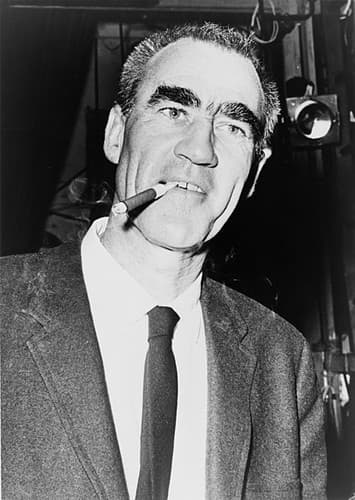
William Ford Gibson is an American-Canadian speculative fiction writer and essayist widely credited with pioneering the science fiction subgenre known as cyberpunk. Beginning his writing career in the late 1970s, his early works were noir, near-future stories that explored the effects of technology, cybernetics, and computer networks on humans—a "combination of lowlife and high tech"—and helped to create an iconography for the information age before the ubiquity of the Internet in the 1990s. Gibson coined the term "cyberspace" for "widespread, interconnected digital technology" in his short story "Burning Chrome" (1982), and later popularized the concept in his acclaimed debut novel Neuromancer (1984). These early works of Gibson's have been credited with "renovating" science fiction literature in the 1980s.







