“I hate him as I do hell-pains, with all his degenerate 'ciples.”
— Volumnia expresses her intense hatred for Coriolanus's enemies.

William Shakespeare (1734)
Genre
Historical Fiction
Reading Time
208 min
Key Themes
See below
Sign in to track this book
In the early Roman Republic, a proud warrior's contempt for common people and his mother's ambition drive him from battlefield glory to bitter exile and a devastating alliance with his deadliest enemy.
The play begins with a violent uprising of starving Roman citizens against the patrician class, whom they blame for hoarding grain. Their anger targets Caius Marcius, a renowned but arrogant general, accused of being an enemy of the people. Menenius Agrippa, an elderly patrician, tries to calm them with a fable about the body's parts, but his efforts fail. Marcius enters, openly showing his contempt for common people, calling them 'dissentious rogues' and 'mutable, rank-scented many.' He dismisses their complaints and mocks their demand for tribunes, revealing his disdain for democratic principles and the plebeians' ability to govern. The tribunes, Sicinius Velutus and Junius Brutus, are introduced, already aware of Marcius's dangerous pride.
News arrives that the Volscians, led by their general Tullus Aufidius, are marching against Rome. Marcius, eager for battle, is appointed to lead a large part of the Roman army. He expresses admiration for Aufidius, seeing him as a worthy opponent. During the siege of the Volscian city of Corioles, Roman forces initially falter. Marcius, angered by their retreat, rallies the soldiers with a fierce speech and single-handedly storms the gates, entering the city. Wounded, he continues to fight, securing a decisive victory for Rome. For his bravery and capture of Corioles, he receives the title 'Coriolanus'.
Coriolanus returns to Rome as a hero. His mother, Volumnia, a strong and ambitious woman, is proud of his military achievements and pushes him to seek the consulship, the highest political office. She believes it is his right and that he must overcome his disdain for the plebeians long enough to win their votes. Coriolanus, uncomfortable with political maneuvering and the custom of soliciting votes by showing his battle wounds, reluctantly agrees to run. He finds the process demeaning and struggles to act humble, seeing it as an insult to his honor and a concession to the 'common cry of curs.'
Following tradition, Coriolanus presents himself to the citizens in the Forum, seeking their 'voices' (votes). He struggles to appear humble, barely asking for their support without open scorn. Initially, the citizens, impressed by his military record, give him their votes. However, the tribunes, Sicinius and Brutus, use Coriolanus's obvious disdain. They manipulate the citizens, reminding them of Coriolanus's past insults and arguing he is unfit to rule due to his arrogance and contempt for their rights. They incite the plebeians to revoke their votes, turning the tide against him and blocking his path to consulship.
Angered by the plebeians' inconsistency and the tribunes' schemes, Coriolanus unleashes a torrent of abuse, openly declaring his hatred for common people and their perceived inability to govern themselves. He argues that giving them power is like giving a wolf a lamb. The tribunes, seeing their chance, accuse him of treason and tyranny, stirring the crowd into a frenzy. Despite Menenius's attempts to mediate, the situation escalates. The tribunes, with the support of the inflamed mob, exile Coriolanus permanently. Coriolanus, defiant even in banishment, declares that he banishes Rome, not the other way around, and leaves the city with his family and a few loyal friends.
Driven by a desire for revenge against Rome, Coriolanus travels disguised to Antium, the Volscian capital. He presents himself to his enemy, Tullus Aufidius, in his home. He reveals his identity and offers his services to Aufidius, proposing to lead the Volscian army against Rome, the city that wronged him. Aufidius, initially stunned, feels joy and admiration for Coriolanus's boldness and military skill. He embraces Coriolanus, saying he is happier to see him than his own wife, and eagerly accepts the alliance, seeing it as a chance to conquer Rome with Coriolanus's help. The Volscian lords, though cautious, agree to the partnership.
Coriolanus, now a general for the Volscians, leads their army with great effectiveness, conquering Roman towns and laying waste to the countryside. Panic spreads in Rome as Volscian forces approach the city gates. The Roman Senate, desperate, sends Menenius and Cominius, Coriolanus's former mentor and general, to plead with him. Coriolanus, however, remains unyielding, refusing to show mercy to the city that exiled him. He dismisses their pleas, stating he is no longer Roman and will not be swayed by personal ties or past loyalties, to the dismay of his former comrades.
As a last resort, Rome sends a delegation consisting of Coriolanus's mother Volumnia, his wife Virgilia, and his young son Marcius, along with other Roman matrons. Volumnia, using maternal love, Roman honor, and emotional blackmail, pleads with her son to spare Rome. She argues his victory would be a dishonor, making him a destroyer of his own country and family. Coriolanus is deeply torn; his desire for revenge clashes with his respect and love for his mother. After a long, internal struggle, he relents, agreeing to negotiate a peace treaty between Rome and the Volscians, sacrificing his personal vendetta for his mother's honor and Rome's survival.
Coriolanus, having agreed to his mother's pleas, negotiates a peace treaty between Rome and the Volscians, to the relief of the Romans. However, his decision angers Aufidius. Aufidius feels betrayed and humiliated, as Coriolanus's actions have robbed him of the glory of conquering Rome. He also resents Coriolanus's continued dominance and the admiration Coriolanus still commands among Volscian soldiers. Aufidius, his jealousy and ambition now fully ignited, begins to plot Coriolanus's demise, seeing him as a rival who must be eliminated for Aufidius to secure his own power and reputation among the Volscians.
Coriolanus returns to Antium, expecting to be hailed for securing a favorable peace treaty. However, Aufidius has already spread rumors and turned the Volscian lords against him. In a public assembly, Aufidius dramatically accuses Coriolanus of treachery, calling him a 'traitor' and a 'boy of tears' for sparing Rome at his mother's bidding. He highlights Coriolanus's previous contempt for the Volscians and twists his actions into a betrayal of their cause. Coriolanus, his pride wounded and his honor challenged, reacts with his characteristic indignation, defending his actions and denouncing Aufidius's accusations.
The Volscian lords, swayed by Aufidius's accusations and their own resentment of Coriolanus's overbearing nature, turn against him. Coriolanus, in his fury, again lashes out with his customary arrogance, further alienating his audience. Aufidius, seizing the moment, signals his conspirators, a group of Volscian soldiers. They rush forward and, despite Coriolanus's valiant but futile resistance, stab him to death. Coriolanus falls, a victim of his uncompromising pride and Aufidius's calculated revenge. The Volscian lords express shock and regret, acknowledging his greatness even as they condone his death.
After the assassination, Aufidius stands over Coriolanus's body, initially triumphant but quickly showing mixed emotions. He laments the loss of such a great warrior, acknowledging Coriolanus's military genius even as he justifies his murder as necessary to secure Volscian interests and his own position. He orders that Coriolanus's body be carried out with honor, recognizing the fallen general's stature. The play ends with Aufidius reflecting on the tragedy and the cost of ambition, leaving a sense of moral ambiguity about the true victor in this story of pride, betrayal, and political maneuvering.
The Protagonist
From celebrated Roman hero, Coriolanus is exiled due to his hubris, becomes an enemy of Rome, and is ultimately murdered after his compassion for his family overrides his desire for revenge.
The Supporting
Volumnia maintains her strong, influential character throughout, successfully swaying her son from destroying Rome, a victory that ironically leads to his demise.
The Antagonist
Aufidius begins as Coriolanus's military rival, becomes his ally out of necessity, and ultimately orchestrates his murder driven by jealousy and a desire for sole glory.
The Supporting
Menenius remains consistently loyal and attempts to mediate throughout the play, ultimately failing to prevent Coriolanus's tragic fate or the civil strife.
The Antagonists
The tribunes consistently work to diminish Coriolanus's power, successfully orchestrating his exile and maintaining their political influence.
The Supporting
Virgilia remains a consistently gentle and devoted wife, serving as a symbol of domesticity and ultimately contributing to Coriolanus's moment of mercy.
The Supporting
Cominius remains a consistently loyal friend and general, witnessing Coriolanus's rise and fall with sorrow.
The Mentioned
Young Marcius's presence is primarily symbolic, contributing to his father's final, pivotal decision.
Coriolanus's overwhelming pride is the central theme and his tragic flaw. His inability to humble himself, even for political reasons, and his disdain for common people come directly from his hubris. This pride, encouraged by his mother, makes him incapable of compromise or flattery, leading to his exile. Even in exile, his pride drives him to seek revenge, and only when confronted by his mother's plea is his pride momentarily broken. Ultimately, his proud defiance in Antium seals his fate, as he refuses to back down from Aufidius's accusations, leading to his murder. His pride makes him a great warrior but a poor politician.
“''I banish you!''”
The play explores different leadership models and the challenges of governance in a republic. Coriolanus embodies a militaristic, aristocratic ideal, believing only the elite are fit to rule and that the populace is too inconsistent and ignorant. The tribunes, Sicinius and Brutus, represent a more democratic, though manipulative, form of leadership, able to sway the masses. The constant tension between patricians and plebeians shows the fragility of Roman society and the difficulty of balancing power. The play questions if a society can function when its leaders hold such contempt for those they govern, and if the 'voice of the people' is truly wise or easily manipulated. Menenius's attempts at mediation show the need for a balanced approach.
“''What's the matter, you dissentious rogues, / That, rubbing the poor itch of your opinion, / Make yourselves scabs?''”
Volumnia's powerful and often destructive influence on Coriolanus is a key theme. She shapes his martial identity and his uncompromising pride, pushing him toward military glory and political ambition. Her Roman ideals are instilled deeply in him, making him a formidable warrior but an inflexible politician. Her ability to sway him from destroying Rome is the play's emotional high point, showing her deep power over him. However, this act of persuasion, while saving Rome, ultimately leads to Coriolanus's death, making her 'most mortal' to her own son. Her ambition for him, and for Rome, ultimately costs him his life.
“''O, my son, my son! Thou art too absolute; / Though therein thou art just, thou art too dear.''”
Betrayal is a recurring element that drives much of the plot. Coriolanus feels betrayed by Rome, especially by the inconsistent plebeians and manipulative tribunes, leading to his desire for revenge. This feeling of betrayal prompts him to ally with his enemy, Aufidius. However, Aufidius, in turn, feels betrayed when Coriolanus spares Rome, seeing it as a personal humiliation and a threat to his own ambition. This cycle of perceived betrayal fuels Aufidius's vengeful plot against Coriolanus, leading to his assassination. The play explores how personal slights can escalate into devastating conflicts, blurring the lines between honor and vengeance.
“''I am that he that makes thy wars. / And false to Rome.''”
Coriolanus struggles with his identity throughout the play. He defines himself almost entirely by his military prowess and his Roman patrician status. When exiled, he tries to shed his Roman identity, declaring 'I banish you!' and offering himself to the Volscians. However, he cannot truly escape who he is. His encounter with his mother forces him to confront his deepest loyalties and the human bonds he has tried to deny, revealing a conflict between his public, warrior persona and his private, filial self. Ultimately, his inability to compromise his core identity – his pride and disdain for common people – leads to his destruction. He knows who he is, but this knowledge is rigid and ultimately fatal.
“''My name is Caius Marcius, who hath done / To thee particularly and to all the Volsces / Great hurt and mischief; thereto have I added / A dearer action, performed to the heart / Of your great city, Corioles: these marks / Of what I did to them, for you, and for myself / (Which was to make me a name and a power / In my own land) I do not now repent.''”
Menenius Agrippa's fable comparing the state to a human body.
Menenius uses the fable of the belly and the other body parts to explain the interdependence of the patrician and plebeian classes. The belly (patricians) receives all the food, but it processes it to nourish all other parts (plebeians). This metaphor attempts to illustrate the necessity of each part for the functioning of the whole, and to persuade the rebellious citizens that the patricians, though seemingly privileged, serve a vital role. While it temporarily calms the citizens, its failure to fundamentally change their perception or Coriolanus's attitude highlights the deep-seated divisions and the limits of rhetoric in the face of extreme class conflict.
The audience's awareness of consequences unknown to the characters.
Dramatic irony is prevalent, particularly concerning Coriolanus's fate. The audience understands that his unyielding pride and contempt for the plebeians will inevitably lead to his downfall, even as he triumphs militarily. His declaration 'I banish you!' when exiled is ironically fulfilled as his actions lead to his death among those he embraced. The audience also perceives Aufidius's underlying jealousy and ambition even when he welcomes Coriolanus as an ally, foreshadowing the eventual betrayal. This device heightens the tragic tension, as the audience foresees the disaster that Coriolanus, blinded by his hubris, cannot.
The fickle and easily manipulated Roman citizenry.
The plebeian mob serves as a crucial plot device, representing the volatile 'voice of the people.' They are depicted as easily swayed by hunger, rhetoric, and fear. Initially demanding grain, then cheering Coriolanus, then revoking their votes, and finally demanding his exile, their changing allegiances drive the political conflict. The tribunes skillfully manipulate their emotions and opinions, using them as a tool against Coriolanus. This device highlights the dangers of direct democracy when public opinion is easily influenced, and serves as a direct catalyst for Coriolanus's banishment and the subsequent war with the Volscians.
Characters revealing their inner thoughts and intentions directly to the audience.
While less frequent for Coriolanus himself, soliloquies are effectively used by characters like Aufidius to reveal their true motivations and plans. Aufidius's soliloquies expose his deep-seated jealousy and ambition regarding Coriolanus, laying bare his eventual plot for revenge even as he outwardly embraces Coriolanus as an ally. These moments provide crucial insight into the characters' psychological states, often foreshadowing future events and adding layers of complexity to their actions, particularly Aufidius's duplicity, which is not always apparent to other characters in the play.
“I hate him as I do hell-pains, with all his degenerate 'ciples.”
— Volumnia expresses her intense hatred for Coriolanus's enemies.
“What's the matter, you dissentious rogues, that rubbing the poor itch of your opinion make yourselves scabs?”
— Coriolanus confronts the rebellious citizens.
“He that depends upon your favours swims with fins of lead and hews down oaks with rushes.”
— Coriolanus expresses his disdain for popular approval.
“Had I a dozen sons, each in my love alike, and none less dear than thine and my good Marcius, I had rather had eleven die nobly for their country than one voluptuously surfeit out of action.”
— Volumnia expresses her fierce martial values.
“The common file, a crew of patches, rude mechanicals, that work for bread.”
— Coriolanus describes the common people with disdain.
“There is a world elsewhere.”
— Coriolanus, after being banished, declares he will find a new place.
“O, my mother, mother! O! You have won a happy victory to Rome; but for your son, believe it, O believe it, most dangerously you have with him prevailed, if not most mortal to him.”
— Coriolanus's lament after being persuaded by his mother not to attack Rome.
“Nature teaches beasts to know their friends.”
— Volumnia appeals to Coriolanus's humanity and family ties.
“He bears himself more proudly than when he was consul.”
— A citizen comments on Coriolanus's continued arrogance.
“Let me have war, say I; it exceeds peace as far as day does night; it's spritely, waking, audible, and full of vent. Peace is a very apoplexy, lethargy, palpable as sleep, an untreaded dulness.”
— Coriolanus expresses his preference for war over peace.
“Anger's my meat; I sup upon myself, and so shall starve with feeding.”
— Coriolanus, consumed by his rage, acknowledges its self-destructive nature.
“Better to starve than crave.”
— Coriolanus's proud refusal to beg for anything.
“The tartness of his face sours ripe grapes.”
— A citizen's humorous description of Coriolanus's sour demeanor.
“I'll run from 's company till I can tell how to rail him with a piece of a drum.”
— Menenius expresses his frustration and anger towards Coriolanus.
Ready to see how well you understood this book? Take our interactive quiz with 10 questions.
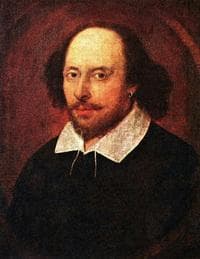
William Shakespeare was an English playwright, poet and actor. He is widely regarded as the greatest writer in the English language and the world's pre-eminent dramatist. He is often called England's national poet and the "Bard of Avon". His extant works, including collaborations, consist of some 39 plays, 154 sonnets, three long narrative poems, and a few other verses, some of uncertain authorship. His plays have been translated into every major living language and are performed more often than those of any other playwright. Shakespeare remains arguably the most influential writer in the English language, and his works continue to be studied and reinterpreted.







