“There was a smell of stale beer and cheap perfume and a lingering aura of desperation.”
— Describing a dive bar the detectives visit.

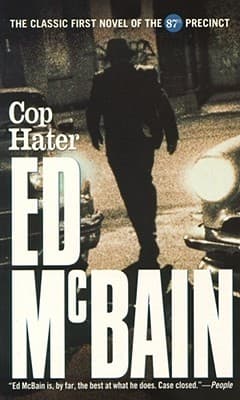
Ed McBain (1980)
Genre
Thriller / Mystery
Reading Time
270 min
Key Themes
See below
Sign in to track this book
An unknown assassin targets detectives of the 87th Precinct, forcing Detective Steve Carella through underworld secrets and danger to unmask the killer.
The novel starts with the murder of Detective Arthur Reardon of the 87th Precinct. He is shot three times with a .45 caliber handgun in an alley. Detectives Steve Carella, Meyer Meyer, and Bert Kling arrive at the scene. The immediate question is why: Reardon was generally well-liked. The precinct, led by Lieutenant Byrnes, deals with the fact that one of their own was targeted. Carella feels a personal need to solve the case, which quickly affects the entire force.
Days after Reardon's murder, the killer strikes again. Detective Dave Foster, Reardon's partner, is found dead in the same way — three .45 shots. This second killing shocks the 87th Precinct, increasing fear and pressure. The pattern suggests a personal vendetta against the two partners. Carella and Meyer start looking into Reardon and Foster's recent cases for anyone with a grudge. The killings are clearly professional, leading detectives to suspect a highly organized or deeply motivated person.
The precinct's theory of a targeted vendetta against Reardon and Foster breaks when a third detective, Roger Havilland, is murdered. Havilland had no direct link to Reardon or Foster, other than being part of the 87th Precinct. This third killing changes the investigation from a specific grudge to a general attack on the force. The 'cop hater' is now clearly targeting any officer from the 87th. Fear among the detectives grows, and the pressure on Carella and his colleagues to catch the killer becomes immense. The city's media starts to sensationalize the murders, adding to public scrutiny.
As the investigation continues, Detective Steve Carella's personal life becomes more involved with the case. His fiancée, Teddy Franklin, who is deaf, fears for his safety. She worries he could be the next victim, and her vulnerability highlights his danger. Carella, in love with Teddy, feels the weight of her concern, which strengthens his resolve to find the killer. Her fears remind him of the real danger facing every detective in the 87th Precinct, including himself.
The only clear clue detectives have is the .45 caliber weapon used in all three murders. Detective Carella and Meyer Meyer look into past cases involving .45s, connecting a specific weapon to an old robbery case handled by Reardon and Foster. This lead takes them to a pawn shop and then to a known fence in the city's criminal world. The investigation is difficult, with many interviews and dead ends, but the detectives remain determined. They start to trace the weapon's ownership, hoping it will lead them to the killer.
Carella's search for the .45's history leads him to a brothel, a place frequented by criminals and a source of information. There, he hears about Mary Barton, a beautiful and mysterious widow with ties to the criminal underworld and, more importantly, to the type of weapon used in the killings. Carella visits Mary Barton, a femme fatale, in her apartment. She is alluring and avoids direct answers, giving just enough information to keep Carella interested but also raising his suspicions. He senses she knows more than she reveals, and her charm complicates his professional distance.
Through careful investigation, Carella discovers that Mary Barton was involved with a small-time criminal named Danny Gimp, who was connected to the old robbery case Reardon and Foster had worked on. Gimp was thought to have been killed during that robbery, but details were always unclear. Carella realizes Mary Barton has a significant, hidden past and that her current mysterious behavior is a cover. He suspects her involvement is deeper than she admits, and that the reason for the cop killings might come from this unresolved past.
Carella puts the facts together: Mary Barton is not just linked to the past crime; she is the leader, if not the direct killer, of the cop murders. He realizes Danny Gimp, believed dead, is alive and in hiding. The 'cop hater' is a team, with Mary in charge. The motive is revenge for a perceived betrayal or injustice from the original robbery and Gimp's 'death.' The realization is chilling: the killer is not alone but a calculated and ruthless duo, driven by a deep desire for vengeance against the police.
With his new understanding, Carella returns to Mary Barton's apartment and confronts her. He finds Danny Gimp there, alive and the man behind the .45. The apartment becomes a tense standoff. Gimp, a hardened criminal, is ready to kill again to protect himself and Mary. Carella, alone and facing two dangerous people, remains steady, trying to reason with them while preparing for a deadly fight. The stakes are very high, with Carella's life now in the 'cop hater's' direct aim.
The confrontation turns into a violent struggle. Danny Gimp tries to shoot Carella with the .45. Carella is wounded, taking a bullet, but he manages to shoot back, critically injuring Gimp. In the chaos, Mary Barton also tries to intervene, but Carella, despite his injury, subdues her. The 'cop hater's' attacks end, but not without more bloodshed. Carella, though hurt, survives, having avenged his fallen comrades and protected the precinct. The precinct can finally relax, though the scars of the murders will remain.
The Protagonist
Carella transforms from a focused detective into a hero who personally confronts and defeats the 'cop hater', demonstrating his courage and dedication.
The Supporting
Meyer remains a steadfast and reliable partner, embodying the steadying presence of the police force.
The Antagonist
Mary Barton is revealed as the cunning architect of the murders, driven by a personal vendetta that culminates in her downfall.
The Antagonist
Danny Gimp's hidden identity is uncovered, leading to his final violent confrontation and ultimate defeat.
The Supporting
Teddy's unwavering love and concern for Carella deepen his character and underscore the personal cost of his dedication.
The Supporting
Byrnes maintains his role as a strong leader, guiding his precinct through a crisis.
The Mentioned
Reardon's death serves as the inciting incident, driving the plot forward.
The Mentioned
Foster's death escalates the crisis and refines the initial theories of the investigation.
The Mentioned
Havilland's death solidifies the threat against the entire precinct, changing the direction of the investigation.
The main theme is a twisted idea of justice driving a brutal revenge plot. Mary Barton and Danny Gimp believe the police wronged them in the past, leading them to seek violent payback against the 87th Precinct. This contrasts with the formal justice Carella and his colleagues pursue. The story explores how personal vengeance destroys, showing that such a quest only leads to more violence and tragedy.
“Someone out there hates cops enough to kill them, one by one.”
The novel clearly shows the fear that fills the 87th Precinct as detectives are murdered. This theme highlights how vulnerable police officers are, showing that even those meant to protect can become targets. The fear is not just work-related; it extends to the detectives' personal lives, seen in Teddy Franklin's worries for Carella. This constant threat creates an atmosphere of paranoia and high tension, making every dark alley and new lead potentially deadly.
“Every cop in the precinct looked over his shoulder. Every cop wondered if he was next.”
The story explores the calculated and cold nature of evil, shown by Mary Barton and Danny Gimp. Their actions are not sudden but carefully planned, driven by deep malice. Mary's manipulation and Gimp's brutality show different sides of criminal evil. The 'cop hater' is not a faceless enemy but a human one, making the evil more chilling. The story explores how past wrongs can grow into an all-consuming desire to harm, regardless of the victims' innocence.
“There was a cold, deliberate quality to the killings that chilled even the most hardened men.”
Amidst the fear and violence, the loyalty among the detectives of the 87th Precinct is clear. The murders of Reardon, Foster, and Havilland unite the remaining officers, strengthening their resolve and their bonds. Carella's personal dedication to avenging his fallen comrades shows this brotherhood. The precinct acts as a close unit, united against a common enemy, demonstrating the deep trust and support within the police force during extreme danger.
“An attack on one of them was an attack on all of them.”
Misleading clues used to divert the investigation.
Initially, the murders of Reardon and Foster, who were partners, suggest a personal grudge against the pair. This acts as a significant red herring, leading the detectives down a path focused on their specific past cases. The subsequent murder of Detective Havilland, who had no direct connection to the first two, shatters this theory, revealing that the killer is targeting any officer from the 87th Precinct. This device effectively ratchets up the tension and broadens the scope of the mystery.
A mysterious and alluring woman who ensnares the protagonist.
Mary Barton embodies the classic femme fatale. Her beauty, enigmatic demeanor, and carefully doled-out information initially intrigue Carella, drawing him into her web. She uses her allure to manipulate and mislead, making her a dangerous adversary. Her role adds a layer of psychological complexity to the investigation, as Carella must navigate her charm while uncovering her sinister true nature. Her presence complicates the detective's professional distance with personal temptation and danger.
A plot device that drives the story forward without being the main focus.
The .45 caliber handgun used in all the murders serves as a crucial MacGuffin. While the weapon itself isn't the story's ultimate focus, the investigation into its history and ownership is the primary driver of Carella's detective work. Tracing the gun's path from an old robbery to a pawn shop and eventually to Mary Barton and Danny Gimp provides the concrete clues needed to unravel the mystery and identify the killers. It's the tangible thread that connects disparate events and characters.
The killer's anonymity creates widespread fear and psychological tension.
For much of the novel, the 'cop hater' is an unseen, unknown entity, striking from the shadows. This anonymity creates a pervasive sense of fear and psychological tension throughout the 87th Precinct. Every detective feels vulnerable, and the killer's identity remains a terrifying mystery. This device effectively builds suspense, as the audience and characters alike are left to wonder who is behind the attacks and when and where they will strike next. The reveal of the killer's identity is delayed, maximizing the impact.
“There was a smell of stale beer and cheap perfume and a lingering aura of desperation.”
— Describing a dive bar the detectives visit.
“The city was a million separate lives, all bumping and grinding against each other, sometimes in harmony, more often in discord.”
— A reflection on the nature of New York City.
“A cop's life was a series of choices, most of them bad, all of them necessary.”
— Detective Steve Carella's internal thoughts about police work.
“The rain was coming down in sheets, washing the grime off the streets, but doing nothing for the grime in men's souls.”
— Setting a somber tone during a rainy night.
“Fear was a cold, hard knot in the stomach, and it never really went away, not when you wore the badge.”
— Reflecting on the constant danger faced by police officers.
“Every time a cop went down, it chipped away at all of them, a little piece of their own mortality staring back.”
— The impact of a fellow officer's death on the precinct.
“The silence in the room was louder than any scream, filled with unspoken accusations and a terrible understanding.”
— During a tense interrogation or confrontation.
“Justice, he thought, was a blind woman with a very blunt instrument.”
— Detective Carella's cynical view of the justice system.
“You learned to live with the ugly, because the ugly was always there, lurking just beneath the surface.”
— A detective's perspective on the darker side of society.
“There were no easy answers in this city, only harder questions.”
— Carella contemplating the complexities of a case.
“He carried the weight of the city on his shoulders, and sometimes it felt like it would crush him.”
— A detective feeling overwhelmed by his responsibilities.
“The truth was a slippery thing, always changing shape, always just out of reach.”
— Reflecting on the difficulty of uncovering facts in a criminal investigation.
“Every face told a story, if you knew how to read the lines, the shadows, the unspoken words.”
— A detective's observation skills while looking at people.
“The night had a thousand eyes, and none of them were friendly.”
— Describing the hostile atmosphere of the city at night.
Ready to see how well you understood this book? Take our interactive quiz with 10 questions.
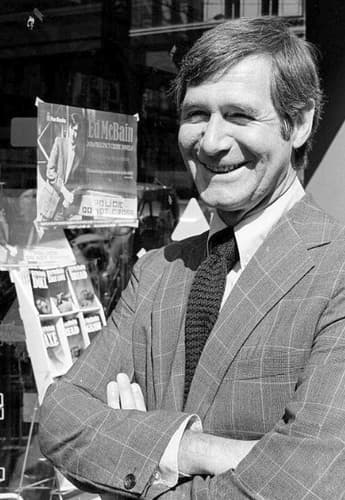
Ed McBain was the pen name of Evan Hunter, a prolific American author best known for his innovative "87th Precinct" series, which revolutionized the police procedural genre. He also wrote the screenplay for Alfred Hitchcock's 'The Birds' and penned numerous crime novels, including the acclaimed 'Cop Hater.' McBain's sharp dialogue and gritty realism profoundly influenced crime fiction.







