“Art is not a thing, it is a way.”
— A philosophical musing on the nature of art.

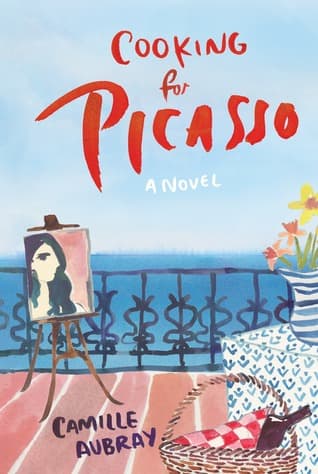
Camille Aubray (2016)
Genre
Historical Fiction / Creativity / Mystery / Romance
Reading Time
500 min
Key Themes
See below
Sign in to track this book
In 1936, a young chef on the French Riviera cooks for a disguised Pablo Picasso, starting a mystery and a legacy that connects art, love, and family secrets across generations, from the Côte d'Azur to present-day New York.
In the spring of 1936, seventeen-year-old Ondine, a talented cook in her family's Café Paradis in Juan-les-Pins, France, is recovering from a heartbreak. Her family struggles financially, and the off-season brings few customers. A mysterious new patron, known only as 'Monsieur P,' rents a villa nearby and asks for his lunch delivered daily, cooked by Ondine, and served discreetly, as he wants to remain anonymous. Ondine's mother, Madame Faurie, at first unsure, agrees because of the generous payment. Ondine begins her daily deliveries, curious and slightly intimidated by the reclusive artist, who she soon realizes is Pablo Picasso, seeking peace and ideas.
Ondine’s daily interactions with Picasso, often through another person, greatly affect her. She carefully plans and makes his meals, trying to surprise and please him, finding her own creative voice through cooking. Picasso, watching her from his villa window, sometimes leaves her small drawings or notes, recognizing her talent. Their relationship, though never romantic, becomes a deep artistic exchange. Ondine feels a growing bond with the artist, who sees her not just as a cook but as an artist, encouraging her to trust her instincts and move past old rules, like his own artistic beliefs.
During his stay in Juan-les-Pins, Picasso is at a turning point. He struggles with his art, feeling stuck, and dealing with his complex personal life, including his estranged wife Olga Khokhlova, his mistress Marie-Thérèse Walter (who is pregnant with their daughter Maya), and Dora Maar. The growing tensions in Europe, especially the Spanish Civil War, also worry him. He uses his time in the quiet villa to think, sketch, and find new ideas, often drawing and painting the local area and the people he sees, including subtle images of Ondine and her food.
As Picasso prepares to leave Juan-les-Pins, he invites Ondine to his villa for a final meal, where he shows a large painting inspired by his time there. The painting, though abstract, has parts Ondine recognizes from her cooking and the local area, strengthening her feeling of connection to his art. He gives her a small, unsigned sketch. This meeting changes Ondine, helping her pursue her cooking goals with new confidence. Picasso leaves, giving Ondine a deep experience and a secret memory that will shape her future.
In present-day New York, Hollywood makeup artist Céline is home for the holidays with her mother, Julie. Julie says that Grandmother Ondine, who recently passed away, once cooked for Picasso. Julie's mysterious stories and the hint of more family secrets lead Céline to travel to Juan-les-Pins to take a cooking class at a hotel, following a hidden instruction from her mother. Céline, feeling lost in her own life and career, starts this journey, hoping to connect with her grandmother’s past and perhaps find direction for herself.
When she arrives in Juan-les-Pins, Céline checks into the Hotel du Cap-Eden-Roc, where she joins a cooking class taught by Chef Antoine. Her classmates include an American art dealer, David, and a wealthy Frenchwoman, Madame Dupont. As Céline learns classic Provençal cuisine, she starts to put together parts of her grandmother's story, finding similarities between Ondine's cooking journey and her own growing artistic interests, all while dealing with her own work and personal uncertainties.
Céline learns from her mother that Ondine might have had a valuable Picasso painting, perhaps the one Picasso painted during his 1936 stay. David, an art expert, becomes interested in this and offers to help Céline investigate. Together, they look into Ondine's past, visiting local archives, interviewing old friends, and exploring the villa Picasso rented. Their search is made harder by Ondine's secretive nature and the time that has passed, but they find clues suggesting that a significant artwork, possibly given to Ondine, might exist, leading them on a search.
News of a possible Picasso painting connected to Ondine's family starts to spread, attracting the attention of various people, including an art collector and a representative from the Picasso estate. It is revealed that Ondine's family had always known about the painting but kept it hidden because of its controversial nature and its potential to change their lives. An unexpected auction is arranged for a painting found among Ondine's belongings. Céline, with David's help, deals with the art world, trying to understand the painting's true history and its importance to her family.
At the auction, the painting is shown to be a magnificent work, but its authenticity as a Picasso is questioned. Through dramatic discoveries, including a letter from Ondine and expert analysis, it is found that while Picasso influenced the painting, a large part, especially the food elements, was painted by Ondine herself, showing her own artistic talent. The painting is a collaboration, a sign of their unique artistic exchange. This discovery shifts the focus from money to Ondine's artistic and emotional legacy.
With the truth about the painting known, Céline feels a deep connection to her grandmother. She realizes that Ondine’s journey was not just about cooking for a genius, but about finding her own voice and passion. Inspired by Ondine's courage and creativity, Céline decides to pursue her own artistic goals beyond makeup artistry. Her relationship with David grows into romance. Céline chooses to stay in Juan-les-Pins for a while, embracing the beauty and inspiration of the Côte d'Azur, ready to make her own path, continuing her grandmother's legacy of art, love, and joy.
The Protagonist (past timeline)
From a heartbroken young woman feeling trapped, Ondine evolves into a confident artist who recognizes and embraces her unique culinary and artistic talents.
The Protagonist (present timeline)
Initially feeling lost and uninspired, Céline finds purpose and direction by connecting with her family's artistic legacy and embracing her own creativity.
The Supporting/Historical Figure
Picasso uses his time in Juan-les-Pins to overcome a creative block and find new inspiration, solidifying his artistic direction during a turbulent period.
The Supporting
Julie moves from keeping family secrets to gradually revealing them, enabling her daughter to understand their shared history and find her own future.
The Supporting
David evolves from a curious acquaintance to a trusted partner and romantic interest, supporting Céline's personal and artistic growth.
The Supporting
Madame Faurie's initial practicality gives way to a quiet appreciation for her daughter's unique talent and the opportunities it brings.
The Supporting
Chef Antoine guides Céline through a culinary education, helping her unlock her own potential and connect with the artistic spirit of cooking.
The Supporting
Madame Dupont remains a colorful and static character, providing comic relief and cultural context for Céline's journey.
Both Ondine and Céline start journeys of self-discovery, finding their true selves through their artistic expressions. Ondine, at first defined by her family's café, finds her unique cooking style and artistic talent while cooking for Picasso, which helps her follow her own path. Céline, feeling unfulfilled in her makeup artistry career, finds inspiration and direction by looking into her grandmother's past and using her own creative potential, finding her passion beyond her first job. The book shows how creative work can lead to personal growth and self-awareness.
““She was no longer just a cook; she was an artist, creating edible masterpieces for a genius who saw the art in everything.””
The novel clearly shows how art, in all its forms, is deeply connected with personal experience, relationships, and society. Picasso's art directly shows his turbulent personal life and the coming political worries of 1936. Similarly, Ondine's cooking changes from just food to an expressive art form, influenced by her feelings and her connection with Picasso. In the present day, Céline's understanding of art, both fine art and cooking, helps her understand her family's history and her place in it, showing that art is not separate from life but a part of human experience.
““For him, art and women were always entwined. For her, food was her language, her canvas, her solace.””
The story is driven by the discovery of a family secret – the true story of Ondine's connection to Picasso and the existence of a mysterious painting. This secret, passed down through generations, greatly affects Céline's present-day journey. The novel explores how family histories, both celebrated and hidden, shape later generations. Céline's search to understand her grandmother's past is not just about a painting, but about understanding her own background and finding a sense of belonging. The legacy is not just about a famous artist, but about Ondine's own unrecognized talent and courage.
““Some stories, like some paintings, were meant to be discovered slowly, layer by layer, revealing truths only when the time was right.””
The French Riviera, especially Juan-les-Pins, inspires both Picasso and Ondine, and later Céline. In 1936, the calm beauty of the Côte d'Azur gives Picasso the quiet and visual ideas he needs to overcome his creative block. For Ondine, the local ingredients and the lively atmosphere fuel her cooking imagination. In the present day, Céline's return to this beautiful place allows her to connect with her heritage, restart her own creativity, and find peace and direction. The setting is not just a background but an active force in the characters' artistic and personal changes.
““The light, the sea, the scent of pine and jasmine – it seeped into your soul here, demanding to be painted, to be tasted, to be lived.””
Both Ondine and Céline deal with what society and family expect. Ondine, as a young woman in 1936, is expected to marry and run the family café, but her meeting with Picasso awakens a desire for artistic freedom and a life beyond traditional roles. She secretly develops her talent and leaves her hometown to pursue her cooking goals. Céline, in the present, feels the pressure of a successful but unfulfilling career in Hollywood. Her journey to uncover Ondine's story helps her challenge her own expectations and those placed upon her, allowing her to make a new, more authentic path in her life and career.
““She had learned from him that to be an artist, you had to break the rules, even if they were your own.””
Alternating chapters between 1936 and the present day.
The novel employs a dual timeline structure, weaving together Ondine's story in 1936 Juan-les-Pins with Céline's present-day journey to the same location. This device allows for a slow reveal of the central mystery surrounding Ondine and Picasso, building suspense. It also creates thematic parallels between the two women's lives, highlighting their shared struggles with identity, creativity, and love across generations. The past informs the present, and Céline's discoveries shed new light on Ondine's experiences, enriching the overall narrative and demonstrating the enduring impact of legacy.
A rumored Picasso painting serves as the central mystery and catalyst for the plot.
The idea of a 'lost' or hidden Picasso painting, possibly gifted to Ondine, acts as the primary plot driver for Céline's present-day investigation. This device creates a compelling mystery that propels Céline's journey to France and her interactions with various characters. The painting symbolizes the unacknowledged artistic legacy of Ondine, the complex relationship between art and value, and the secrets held within families. Its eventual revelation as a collaborative work between Picasso and Ondine provides a satisfying resolution to the mystery and a profound thematic statement about shared creativity.
Cooking is used to symbolize creativity, passion, and personal expression.
Throughout the novel, cooking is elevated beyond mere sustenance to a form of high art and personal expression. Ondine's meticulous meal preparation for Picasso is treated as a creative act, mirroring his painting. Her culinary skills are a metaphor for her artistic talent and her burgeoning identity. In the present, Céline's participation in a cooking class helps her reconnect with her own creative impulses and understand her grandmother's artistic spirit. The specific ingredients, techniques, and dishes described serve to ground the narrative in sensory detail while also illustrating deeper themes of passion, dedication, and the joy of creation.
Integration of real historical figures (Picasso) with fictional characters (Ondine, Céline).
The novel skillfully blends historical fact with fiction by placing the fictional character Ondine in an intimate, albeit brief, relationship with the real-life Pablo Picasso during a documented period of his life. This allows the author to explore the artist's personal side and the impact he might have had on an ordinary individual, while also lending authenticity to the historical setting. The interaction between the known historical figure and the imagined character creates a compelling narrative, blurring the lines between what is known and what could have been, and inviting readers to imagine the untold stories behind famous lives.
“Art is not a thing, it is a way.”
— A philosophical musing on the nature of art.
“Every secret comes with a cost. The trick is knowing if the truth is worth the price.”
— A reflection on the burden of secrets and the value of truth.
“Love, like a good recipe, requires the right ingredients and a touch of magic.”
— A culinary metaphor for the complexities of love.
“The greatest masterpieces are often born from the simplest of inspirations.”
— Considering the origins of artistic genius.
“To truly see, one must look beyond the surface.”
— An observation about perception and understanding.
“Sometimes the most extraordinary things happen in the most ordinary places.”
— A comment on finding wonder in everyday life.
“Food is more than sustenance; it is a language of love, memory, and culture.”
— Emphasizing the emotional and cultural significance of food.
“Creativity is not about perfection, but about passion.”
— Defining the essence of the creative process.
“History is not just dates and names; it's the stories of people, their desires, and their secrets.”
— A perspective on the human element within historical narratives.
“The past is never truly gone; it echoes in the present, shaping who we are.”
— A reflection on the lasting impact of history and personal pasts.
“A good meal, like a good painting, should nourish the soul as well as the body.”
— Connecting the sensory pleasures of food and art.
“Even the most celebrated artists have their insecurities, their doubts, their human moments.”
— Revealing the vulnerability behind artistic genius.
“Sometimes, the most profound revelations come from the quietest observations.”
— Highlighting the power of subtle details and attentiveness.
“To truly live is to embrace the unexpected, to let life surprise you.”
— An encouragement to openness and spontaneity.
Ready to see how well you understood this book? Take our interactive quiz with 10 questions.







