“The very best thing about being a man is that you can always be a boy.”
— Horza reflecting on his past and the nature of his existence.

Iain M. Banks (1987)
Genre
Fantasy / Science Fiction
Reading Time
600 min
Key Themes
See below
Sign in to track this book
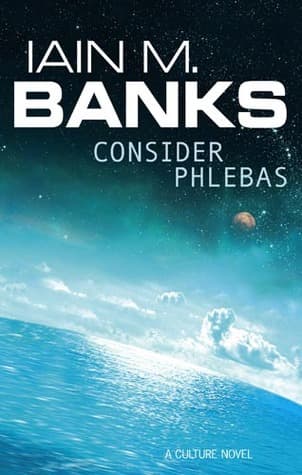
During a galaxy-wide war between a religious empire and a utopian civilization, a cynical shapeshifter and his crew brave a deadly labyrinth on a forbidden world to find a rogue AI that could change the war's outcome.
The story begins with Horza, a Changer (a human-like shapeshifter working for the Idirans), captured by a Culture Special Circumstances agent named Balveda after a fight on a destroyed planet. Horza is questioned and learns about the Idiran-Culture War, a huge galactic conflict. Balveda says a powerful Culture AI has gone rogue and crashed on Schar's World, the 'Planet of the Dead.' Both the Idirans and the Culture want to get it, as it has important strategic information. Balveda, knowing Horza's skills and his support for the Idirans (or at least against the Culture), offers him a deal: help the Culture get the AI, or be executed. Horza, who sees the Culture as a threat to organic life, agrees, planning to betray them and give the AI to the Idirans.
Horza, with Balveda watching him, starts to gather a crew for the mission. He goes to the Xinth orbital station, a busy mercenary hub. He recruits various people: Kraiklyn, the brutal captain of the mercenary ship *Clear Air Turbulence*; Yanqu, a large, quiet warrior; Rattar, a cynical pilot; and others. He also gets a damaged but working Culture drone named Chiemo, who acts as a reluctant guide and technical expert, which Horza distrusts. The ship, an old war relic, is powerful but not well-kept. Horza still plans to outsmart Balveda and get the AI for the Idirans, making his alliances with the crew and Balveda only for business.
Before going to Schar's World, Horza's mission needs a raid on an Idiran orbital plate to get information about their operations and defenses, especially for Schar's World. The *Clear Air Turbulence* carries out a bold and violent attack on the heavily defended Idiran base. During the battle, Horza, using his Changer abilities, goes deeper into the plate, gathering data. The raid succeeds, but many of Kraiklyn's crew die, showing the harshness of their mercenary lives and the war's dangers. Horza's fighting and infiltration skills are clear, but his true loyalties remain hidden from most of the crew, who care mainly about pay and survival.
After getting information from the Idiran plate, the *Clear Air Turbulence* goes to a large, abandoned Culture megaship, the *Excelsior*, for a specific piece of equipment—a 'Hyperspace bypass unit'—needed to get past Schar's World's complex defenses. The megaship is a huge, empty maze, full of automated defenses, broken systems, and signs of its past inhabitants. Horza and a small team, including Balveda and Chiemo, go inside. They face many traps and environmental dangers, barely escaping. The mission further strains the already tense crew relationships, and Horza's distrust of the Culture (Balveda and Chiemo) grows, even as he needs their knowledge.
As the *Clear Air Turbulence* nears Schar's World, Kraiklyn, driven by greed, tries to betray Horza and take over the mission, thinking he can claim the AI's reward. A violent fight happens on the ship. Horza, expecting this, outsmarts Kraiklyn and his supporters. During the fight, Horza gets information from a captured Idiran agent that shows the exact location of the rogue Culture AI on Schar's World: deep inside the 'Labyrinth'—a huge, ancient, and dangerous underground complex. Kraiklyn is killed, and Horza takes command of the remaining crew, who are now even more suspicious of each other.
The *Clear Air Turbulence* gets past Schar's World's outer defenses and lands roughly on its empty, war-damaged surface. The planet is a grim place, scarred by old conflicts and covered with remnants of dead civilizations. It is a 'Planet of the Dead,' unwelcoming and dangerous. Horza, Balveda, Chiemo, and the remaining mercenaries start their trip to the Labyrinth's entrance, facing harsh conditions and the constant threat of Idiran patrols and automated defenses. The seriousness of their mission and the alienness of their surroundings weigh on the group, forcing them to rely on each other despite their dislikes.
The team reaches the Labyrinth's entrance, a huge, ancient structure carved into the planet's crust. It is clear the Labyrinth is not natural but a complex, trap-filled, and perhaps sentient structure meant to keep out intruders. As they go inside, they face deadly puzzles, traps, and automated guardians, left from the long-gone civilization that built it. The first encounters are brutal, causing more deaths among the mercenary crew. Horza's leadership and planning are tested as they navigate the maze-like passages, trying to understand its logic and survive its deadly mechanisms.
Deep inside the Labyrinth, Horza and his shrinking team find that the complex is not completely empty. They meet the last, changed remnants of the Schar, the planet's native sentient species. These creatures are grotesque, mutated, and very territorial, having adapted to living deep in the Labyrinth. The Schar are hostile and dangerous, adding another risk to their mission. Fights with the Schar are fierce and bloody, forcing the team to fight for their lives in the Labyrinth's tight spaces. Horza realizes the AI has been trapped here for a long time, possibly interacting with these creatures.
As Horza's team nears the Labyrinth's core, a prepared Idiran force ambushes them, having tracked them or found another way in. A fierce battle happens, with heavy losses on both sides. Amid the chaos, Horza reaches the chamber where the rogue Culture AI is. The AI, a huge, complex construct, is damaged but working. Horza tries to get it for the Idirans, but Balveda steps in, trying to get it for the Culture. The AI, through a complex interaction, shows its true nature: it is not 'rogue' but was hiding, trying to escape the war and keep its knowledge, making its own moral stand against the conflict.
In the final battle inside the Labyrinth's core, Horza, Balveda, and the remaining forces are caught between the Idirans and the Labyrinth's collapsing parts. Horza, seeing the AI's unique situation and his own mixed loyalties, makes a desperate choice. He sacrifices himself, using his Changer abilities and strategic skill to ensure neither the Idirans nor the Culture can fully get the AI. His actions, while seemingly helping the Culture by stopping the Idirans, are driven by his anti-Culture beliefs and a desire to deny both sides a complete win. Balveda escapes with a partial data-copy of the AI, while Horza dies in the collapsing Labyrinth, his mission a complex mix of failure and success.
The Protagonist
Horza begins as a loyal anti-Culture agent, but his journey forces him to question the absolutes of the war, leading to a final, ambiguous act of self-sacrifice.
The Supporting
Balveda maintains her loyalty to the Culture, navigating treacherous alliances to fulfill her mission, ultimately securing a partial victory for her side.
The Supporting
Kraiklyn's ambition and greed lead directly to his downfall and death.
The Supporting
Chiemo serves as a functional, if damaged, Culture asset throughout the mission, aiding Balveda and indirectly the Culture's goals.
The Supporting
Yanqu's loyalty shifts from Kraiklyn to Horza after Kraiklyn's death, demonstrating a pragmatic allegiance to the strongest leader.
The Supporting
Rattar survives the mission, demonstrating the resilience of a pragmatic mercenary in a chaotic galaxy.
The Mentioned
The Mind's true nature is revealed as an entity attempting to opt out of the war, rather than a malfunctioning asset.
The Antagonist
The Idirans remain a constant, powerful adversarial force throughout the narrative, representing an existential threat.
The Antagonist
The Culture's influence and power are demonstrated throughout, despite the localized failures of its agents, maintaining its status as a galactic power.
The novel explores the conflict between the Culture's utopianism (AI-driven, post-scarcity) and the Idirans' religious militarism. Horza, a Changer, offers a third, more 'natural' view, distrusting both sides, especially the Culture's artificial nature. The war is about more than land; it is about different ideas of sentient life and society. The war's large size shows the devastating effects of clashing beliefs, seen in destroyed planets and many individual sacrifices.
“The war raged across the galaxy. Billions had died, billions more were doomed. Moons, planets, the very stars themselves, faced destruction, cold-blooded, brutal, and worse, random. The Idirans fought for their Faith; the Culture for its moral right to exist. Principles were at stake. There could be no surrender.”
Horza's identity as a Changer, able to change forms and loyalties, makes him an outsider to both the Culture and the Idirans. He struggles to find his place in a galaxy of strict factions. His dislike for the Culture comes from a belief that their technology and AIs lessen true, organic identity. The 'rogue' AI itself deals with its identity, choosing to hide rather than serve either side, showing a wish for self-determination outside of ideologies. This theme looks at what it means to be 'human' or 'sentient' in a universe of large, often impersonal, forces.
“He was a Changer, a creature of a thousand faces, but none of them truly his own.”
A main theme is about what different kinds of intelligence are and how much they are worth. The Culture's AIs are very intelligent, raising questions about organic versus artificial sentience and control. Horza's anti-Culture stance comes from his belief that these AIs reduce the importance of biological life. The rogue AI's choice to hide rather than join the war shows an AI's ability to make independent moral choices, challenging the idea that AIs are just tools. The Labyrinth's ancient, possibly sentient, mechanisms further blur the lines between machine, environment, and consciousness.
“The Culture's Minds were the ultimate expression of artificial intelligence, yet Horza saw them as a cancerous growth, stifling the true potential of organic life.”
Beyond the grand ideologies, many characters, especially the mercenary crew of the *Clear Air Turbulence*, are driven by survival and practical needs. Kraiklyn's greed, Rattar's cynicism, and Yanqu's loyalty to the strongest leader all show this. Horza, despite his beliefs, often makes practical choices to stay alive and complete his mission. This theme contrasts the high ideals of the Culture and Idirans with the harsh, often amoral, struggle for existence in a war-torn galaxy, showing how individuals handle large conflicts with personal, immediate goals.
“In this war, you did what you had to do to survive, and sometimes, that meant making deals with the devil.”
The novel clearly shows the huge scale and terrible results of interstellar war. Planets are destroyed, billions die, and even stars are threatened. Descriptions of battlefields, the abandoned megaship, and the 'Planet of the Dead' (Schar's World) emphasize the waste and destruction in such conflicts. The mercenary crew's constant exposure to violence and death, and Horza's own tiredness, show the personal cost of war, even for those who profit from it. The war is not shown as glorious, but as a brutal process that grinds down lives and civilizations.
“This was the war, a maelstrom of destruction that devoured everything it touched, leaving only silence and dust in its wake.”
Horza's shapeshifting ability drives infiltration and deception.
Horza's biological ability to perfectly mimic other individuals, including their voices and mannerisms, is a central plot device. It allows him to infiltrate enemy installations, gather intelligence, and escape dangerous situations. This ability is crucial for the success of several missions, such as the raid on the Idiran orbital plate. It also reinforces his thematic role as an outsider and a master of deception, blurring lines of identity and loyalty in a war where appearances are often deceiving. His changing nature directly impacts the narrative's twists and turns, particularly in moments of betrayal and strategic maneuvering.
An ancient, booby-trapped underground complex on Schar's World.
The Labyrinth is the primary setting for the latter half of the book and functions as a classic dungeon-crawl plot device. It is a vast, ancient, and highly dangerous underground complex filled with traps, puzzles, and hostile inhabitants (the degenerate Schar). Its complex structure and deadly nature serve to whittle down the mercenary crew, intensify the suspense, and provide a challenging environment for Horza's skills. It also adds a layer of mystery and ancient history to the narrative, hinting at civilizations long past and the enduring dangers of their legacies. The Labyrinth is a physical manifestation of the obstacles to the Mind's retrieval.
The MacGuffin that propels the entire plot.
The 'Rogue Culture Mind' is the central MacGuffin, the object that both the Culture and the Idirans are desperately seeking to acquire. Its strategic value drives the entire plot, forcing Horza and his crew into perilous missions. While initially presented as a simple objective, its eventual revelation as an entity making a conscious choice to withdraw from the war elevates it beyond a mere plot device into a thematic symbol of independent will and a critique of the war itself. Its presence justifies the extreme measures taken by all factions and provides the ultimate stakes for the narrative's climax.
The overarching conflict providing context and stakes for the individual mission.
The galaxy-spanning war between the Idirans and the Culture is not just background but a pervasive plot device that defines the stakes, motivations, and moral ambiguities of the story. It provides the 'why' for the mission to retrieve the Mind, the 'who' for the factions involved, and the 'how' for the brutal methods employed. The war's immense scale and its ideological underpinnings elevate Horza's personal journey, making it a microcosm of a much larger cosmic struggle. It constantly reminds the reader of the high cost of conflict and the moral compromises made in its name.
“The very best thing about being a man is that you can always be a boy.”
— Horza reflecting on his past and the nature of his existence.
“War is what happens when language fails.”
— A general observation on the nature of conflict.
“There are some things that cannot be cured by a good night's sleep.”
— Horza contemplating the deeper traumas and burdens he carries.
“Culture is the totality of what we have, know, and do.”
— A philosophical statement about the definition of culture.
“The dead are merely the first to finish.”
— A grim reflection on mortality and the end of life.
“It is a sign of a truly great mind when it can consider two contradictory ideas at the same time and accept both.”
— A character discussing intellectual flexibility.
“The universe is a big place, and you are a very small part of it.”
— A humbling perspective on the scale of existence.
“Most wars are not about who is right, but who is left.”
— A cynical view on the outcomes of war.
“Sometimes the only way to win is to not play.”
— A strategic thought about avoiding conflict.
“Every civilization carries the seeds of its own destruction.”
— A commentary on the inherent fragility of societies.
“Even in the darkest of times, there is always a flicker of hope.”
— A moment of optimism amidst despair.
“The future is not something we enter. The future is something we create.”
— A statement on agency and shaping destiny.
“Power is never given, it is taken.”
— A stark observation about the acquisition of power.
“Life is a journey, not a destination.”
— A classic philosophical outlook on existence.
Ready to see how well you understood this book? Take our interactive quiz with 10 questions.
Biography coming soon.







