“Most people, when they thought about death, thought about the end. But death was also a beginning. A new chapter. A fresh start. A different way of being.”
— Eve reflects on death in the context of her work and personal experiences.

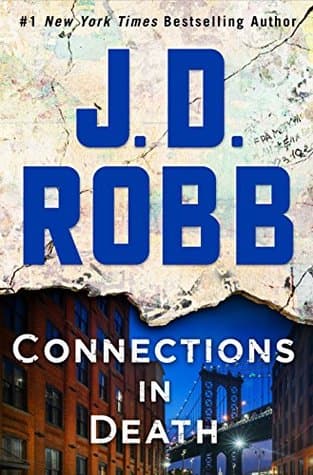
J.D. Robb (2019)
Genre
Thriller / Mystery / Science Fiction / Romance
Reading Time
450 min
Key Themes
See below
Sign in to track this book
In a city where second chances are rare, Lt. Eve Dallas and her husband Roarke investigate a murder disguised as an overdose, uncovering a criminal network preying on vulnerable youth.
Dr. Rochelle Pickering, a child psychologist hired by Eve Dallas and Roarke for their new youth shelter, returns home with her boyfriend, Dr. Ben Carter, to find her brother, Lyle Pickering, dead. He has a syringe in his lap, suggesting an overdose, but Rochelle insists Lyle had been clean for months. Detective Eve Dallas and her team arrive, and Dr. Charlotte Mira confirms Rochelle's suspicions: Lyle was injected with a lethal drug cocktail made to look like an accidental overdose. A neighbor, Mrs. Polonski, reports seeing a young woman with pink hair fleeing the scene, providing the first lead in a complex murder investigation.
Eve Dallas and Detective Delia Peabody investigate Lyle Pickering's past, focusing on his former life as a drug addict and gang associate in New York City. They learn he was part of the 'Skullbangers' street gang and had several run-ins with the law. Despite his past, Lyle had been trying to improve his life, largely due to Rochelle's support and his involvement in a community outreach program. This makes his murder more puzzling, suggesting either an old enemy or a new conflict during his recovery.
The description of the pink-haired girl seen fleeing Lyle's apartment becomes a key piece of the puzzle. Eve and Peabody canvas the neighborhoods Lyle frequented, especially areas known for youth homelessness and drug use. They identify a potential witness: a young woman named Star. Star is a vulnerable runaway, involved in a loosely organized group of street kids. When located, Star is terrified and uncooperative, but Eve suspects she knows more. Star's fear points to a dangerous individual or group behind Lyle's death, indicating a wider conspiracy.
Roarke, using his resources, helps Eve by exploring the city's underworld, specifically places where Lyle might have had recent dealings. Their investigation takes them to illicit tattoo parlors, underground fight clubs, and strip joints — places where secrets are bought and sold, and where the line between legitimate business and criminal activity is blurred. They uncover a network of individuals who prey on vulnerable youth, often coercing them into drug dealing or prostitution. This suggests Lyle might have discovered something dangerous while trying to help others.
As Eve pieces together Lyle's final days, she identifies two figures from his past who resurface: an enforcer named 'The Hammer' and a pimp known as 'Flash.' Lyle had reportedly been trying to help a young woman escape Flash's control, which could provide a motive for his murder. The Hammer, a brutal individual, is suspected of administering the lethal injection. The connection between Flash's exploitation of youth and The Hammer's violent methods becomes clear, pointing to a criminal enterprise.
After persistent efforts, Eve convinces Star to open up. Star reveals she was at Lyle's apartment, seeking help to escape Flash. She witnessed The Hammer inject Lyle, confirming it was deliberate murder. Star's testimony is vivid, describing The Hammer's cold efficiency. She also implicates Flash as the one who ordered the hit, believing Lyle was interfering with his 'business.' Star's account provides direct evidence Eve needs for arrests.
Armed with Star's testimony and other evidence, Eve and her team execute warrants for The Hammer and Flash. The Hammer is apprehended after a brief struggle. Flash, a more manipulative figure, is found in his usual haunts. During interrogation, both deny involvement, but the evidence, combined with Star's detailed account, begins to crack their defenses. The confrontations are charged, highlighting the contrast between their world and the justice system.
As Eve digs deeper, she realizes that Flash and The Hammer are part of a larger, more sophisticated criminal operation. The true mastermind is revealed to be someone unexpected, operating with a calculated ruthlessness that extends beyond simple street crime. This individual was using Flash's network to traffic drugs and exploit vulnerable youth, and Lyle's interference threatened to expose their operation. The revelation of this higher-level player elevates the case from a street murder to a complex criminal conspiracy.
Throughout the investigation, Roarke's skills and resources are valuable. He provides secure locations for witnesses like Star, ensuring their safety. His network helps Eve access information that police channels cannot. The brutality of Lyle's murder and the exploitation of youth shows both Eve and Roarke the urgent need for their new youth shelter and community center. The project, which Dr. Pickering was hired for, becomes a symbol of hope and a direct counterpoint to the darkness they are fighting, reinforcing their commitment to helping at-risk youth.
Eve orchestrates a plan to corner the true mastermind. The confrontation is tense, but Eve, with her determination, secures the necessary evidence and testimony to bring them down. Justice is served for Lyle Pickering, and the network exploiting vulnerable youth is dismantled. The victory is hard-won, but it also highlights the ongoing battle against such evils. The novel concludes with closure for the Pickering family and a renewed commitment from Eve and Roarke to their mission of providing safe havens and opportunities for the city's most at-risk population.
The Protagonist
Eve deepens her understanding of systemic exploitation and reinforces her commitment to protecting the vulnerable, both through her police work and her personal initiatives with Roarke.
The Supporting
Roarke actively uses his resources to combat the kind of systemic exploitation he once experienced, reinforcing his commitment to creating a better world with Eve.
The Supporting
Rochelle navigates profound grief and betrayal, ultimately finding resolve to continue her work, honoring her brother's memory by helping others.
The Victim/Mentioned
Lyle's arc is tragic; he was on a path to redemption but was cut down before he could fully achieve it, becoming a catalyst for justice.
The Supporting
Peabody continues to develop her investigative instincts and confidence, becoming an even more indispensable partner to Eve.
The Supporting
Star moves from being a terrified, exploited witness to a brave survivor who chooses to help bring justice, hinting at a potential path towards recovery.
The Antagonist
Flash is exposed and brought to justice for his exploitation and his role in Lyle's murder, losing his power and control.
The Antagonist
The Hammer is apprehended and faces the consequences of his violent actions, his reign of terror ending.
The novel explores redemption through Lyle Pickering's journey. Despite a past of addiction and crime, Lyle was striving for a better life, helping others. His murder tragically ends his path to redemption, but it highlights the human desire for change. Eve and Roarke, both with complicated pasts, exemplify second chances, not just for themselves but for the at-risk youth they aim to help. The story emphasizes that the effort to redeem oneself is valuable, and society should offer paths for change, as seen in Dr. Rochelle Pickering's support for her brother.
“He’d cleaned up, Dallas. He was trying. He was really trying.”
A central theme is the exploitation of vulnerable young people. The narrative exposes the dark side of society where runaways and at-risk youth are preyed upon by figures like Flash, coerced into drug dealing, prostitution, or other illegal activities. Characters like Star embody this vulnerability, trapped by circumstances and fear. Lyle Pickering's case, where he was murdered for trying to help such a youth, shows the dangers of challenging these systems. Eve and Roarke's youth shelter project directly counters this theme, aiming to provide a safe haven and opportunities to break the cycle of exploitation.
“They pick them off the streets, the lost ones, the ones nobody's looking for. And they use them up.”
The book explores justice, from Eve Dallas's formal legal system to Roarke's more personal, sometimes extralegal, justice. Eve's relentless pursuit of the truth, regardless of the victim's past, shows her belief in universal justice. The complexity of the case, involving multiple layers of crime, forces Eve to navigate evidence, testimony, and the systemic failures that allow such crimes to persist. Justice for Lyle Pickering is not just about apprehending his killers but also about dismantling the network that preys on the innocent, offering restorative justice for the community.
“Justice isn't just about punishment. It's about balance. And sometimes, it's about giving a voice to the voiceless.”
The title, 'Connections in Death,' explores how lives and actions are interconnected, leading to unforeseen consequences. Lyle Pickering's past connections to gangs and drug dealers, even as he tried to escape them, led to his death. His attempts to help Star created new connections that threatened Flash's illicit network, resulting in his murder. Eve and Roarke's connections, both within the law and in the underworld, are key to unraveling the conspiracy. The narrative emphasizes that every choice, relationship, and past action can have ripple effects, showing how a single death can expose a web of interconnected lives and crimes.
“Everything connects, Peabody. Every choice, every action. It all weaves together.”
An initial suspect or circumstance designed to mislead the investigation.
The initial appearance of Lyle Pickering's death as an accidental overdose serves as a red herring. This misdirection is quickly disproven by forensic evidence and Rochelle's insistence that Lyle was clean, but it initially points the investigation in a different direction than the deliberate murder it turns out to be. This device heightens the mystery and forces Eve to look beyond the obvious, creating suspense for the reader and emphasizing the cunning of the true perpetrators who attempted to mask their crime.
A crucial account from a character who directly observed a key event.
Star's eyewitness testimony is a pivotal plot device. Initially reluctant and fearful, her eventual decision to confide in Eve provides the direct link between Lyle's murder and the perpetrators, The Hammer and Flash. Her detailed account confirms the deliberate nature of the murder and provides essential details for Eve to build her case. This device not only drives the plot forward but also highlights the vulnerability of witnesses in dangerous situations and the importance of building trust.
The use of Roarke's illicit connections and resources to gather information.
Roarke's vast and often morally ambiguous network of contacts and resources in the city's underworld serves as a crucial plot device. While Eve operates within the confines of the law, Roarke can access information, leverage influence, and provide protection in ways the police cannot. This allows the investigation to penetrate areas that would otherwise be inaccessible, such as illicit clubs and criminal enterprises, providing critical leads and intelligence that complement Eve's official police work. It highlights the unique partnership between Eve and Roarke.
A philanthropic initiative that provides context and motivation for the characters' actions.
The ongoing development of Eve and Roarke's youth shelter and community center project is more than just a background detail; it serves as a thematic anchor and a source of motivation. It contextualizes Dr. Rochelle Pickering's role, and Lyle's murder underscores the urgent need for such a facility. This device emphasizes the characters' shared commitment to social justice and provides a hopeful counterpoint to the darkness of the crimes they investigate, showing what they are fighting for. It also foreshadows future narratives where the shelter may play a more direct role.
“Most people, when they thought about death, thought about the end. But death was also a beginning. A new chapter. A fresh start. A different way of being.”
— Eve reflects on death in the context of her work and personal experiences.
“Evil didn't always come with a screaming siren and a flashing light. Sometimes it came with a smile, a handshake, and a promise.”
— Eve considers the deceptive nature of the killer.
“The past was a road you traveled, not a place you lived.”
— Roarke offers a perspective on dealing with past traumas.
“Every single person had connections. To other people, to places, to things. To ideas. And when those connections were severed, there was a void.”
— The central theme of the book, as Eve investigates the interconnected victims.
“Sometimes the best way to find out what someone was hiding was to give them a reason to show it.”
— Eve's investigative strategy for eliciting information.
“Love wasn't a fairy tale. It was work. It was compromise. It was sometimes ugly and often messy. But it was also everything.”
— Eve's realistic view of her relationship with Roarke.
“There was a fine line between genius and madness, and some people danced on it with a terrifying grace.”
— Eve's observation about the killer's intricate planning.
“Justice wasn't a guarantee. It was something you fought for, every single damn day.”
— Eve's personal commitment to her job and the victims.
“The city never slept, and neither did its secrets.”
— A reflection on the constant activity and hidden depths of New York City.
“You couldn't fix everything. But you could damn well try to fix what you could.”
— Eve's practical approach to overwhelming situations.
“Grief was a tricky beast. It didn't always roar. Sometimes it just gnawed.”
— Eve considers the various manifestations of sorrow.
“Sometimes the most dangerous thing was a mind convinced of its own righteousness.”
— Eve analyzing the killer's motivation and self-justification.
“The dead had their stories, and it was her job to listen.”
— Eve's profound sense of responsibility to the victims.
“Even in the darkest corners, there was always a flicker of humanity, a thread of connection.”
— Despite the grim nature of the crimes, Eve finds underlying human elements.
Ready to see how well you understood this book? Take our interactive quiz with 10 questions.

Biography coming soon.







