“I'm not a murderer. I'm just a girl who knows how to keep a secret.”
— Tandy's internal reflection on her innocence and family's hidden truths.

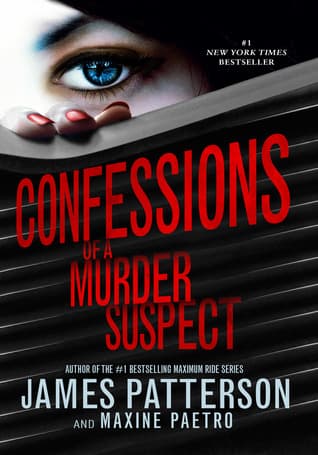
James Patterson (2012)
Genre
Thriller / Mystery / Young Adult
Reading Time
248 min
Key Themes
See below
Sign in to track this book
After her millionaire parents are murdered, teen prodigy Tandy Angel must navigate family secrets, repressed memories, and police suspicion, all while questioning her own innocence and her siblings.
The story opens with Tandy Angel, a detached teenager, finding her parents, Malcolm and Maud Angel, dead in their New York City penthouse. Malcolm is in his study and Maud in her bedroom, both seemingly poisoned. Detective Ryan and the police arrive and focus their investigation on the four Angel children: Tandy, her older brothers Matthew and Harry, and her younger sister, Hugo. Tandy, who has a photographic memory, begins to narrate the events, describing the strange family dynamics and her upbringing. The children are interrogated, and their unusual calmness makes the police more suspicious, making them the sole suspects.
As the investigation continues, Tandy looks into her family's past, revealing the unusual ways her parents raised their children. Malcolm and Maud, both scientists, treated their children as subjects in an experiment, pushing them to excel intellectually at the expense of emotional development. Tandy remembers her rigorous training in martial arts, languages, and academics, all to make her 'perfect.' This upbringing created a competitive and secretive environment among the siblings, where emotional expression was discouraged. These memories explain the family's situation and their cold reactions to their parents' deaths, suggesting deeper resentments and motives.
To clear her family's name and understand the truth, Tandy investigates her parents' lives. She starts with her father, Malcolm, CEO of Angel Pharmaceuticals. Tandy finds evidence of his extramarital affairs, including one with his assistant, Nancy. She also learns about a drug trial scandal involving Angel Pharmaceuticals, where Malcolm covered up adverse effects of a new medication. These discoveries show Malcolm as a man with many enemies, providing potential motives for his murder beyond the immediate family. Tandy confronts Nancy, who provides more details about Malcolm's manipulative nature and the dislike he inspired.
While investigating her father, Tandy also uncovers secrets about her mother, Maud, a geneticist. She finds a hidden 'little black book' belonging to Maud, containing cryptic entries about her mother's secret life. Tandy discovers that Maud was having an affair with a man named Alex, a former colleague and rival of Malcolm's. This revelation changes Tandy's perception of her mother. The diary entries also suggest Maud's growing unhappiness with Malcolm and their life, indicating a potential motive for her to want out of the marriage, or for someone to silence her due to her knowledge of Malcolm's activities.
As the police investigation grows, Tandy checks her siblings' alibis and behaviors. Matthew, the eldest, is an artist who seems to be hiding something. Harry, the middle child, is a musician but has severe anxiety and mental health issues. Hugo, the youngest and a mathematical prodigy, often seems detached. Tandy finds inconsistencies in their stories and senses that each sibling is withholding information. She recalls a past incident where Harry had a violent outburst against Malcolm, providing a potential motive. The siblings' shared history of emotional neglect and abuse by their parents creates a web of resentment and possible reasons for any of them to want their parents dead, complicating the investigation.
In her search for clues, Tandy discovers a hidden room in the penthouse that her parents had installed. This room contains a surveillance system, with cameras hidden throughout the apartment. This discovery shows the extent of Malcolm and Maud's control over their children, as they had been constantly monitoring them. The footage from these cameras is a piece of evidence, potentially showing who was in the penthouse on the night of the murders. However, the system also has blind spots, and some footage is missing or corrupted, adding another layer of mystery and suggesting an attempt to hide the truth by the killer.
Tandy, using her scientific knowledge, researches the poison used to kill her parents. She deduces that it was a rare, fast-acting neurotoxin that would have been hard to get and administer without specialized knowledge. This suggests a killer who either had access to such substances or was highly intelligent and meticulous. The method of administration, through their evening drinks, suggests an intimate knowledge of the Angels' routines. As Tandy reconstructs the timeline and the nature of the poison, she realizes that the murder was carefully planned, indicating a killer who was ruthless and familiar with the Angel household, narrowing the suspects.
Under pressure from the police and his deteriorating mental state, Harry has a breakdown. In distress, he confesses to the murders, claiming he poisoned his parents to escape their tyrannical control. While the police accept his confession, Tandy feels uneasy. She knows Harry is fragile and susceptible to manipulation, and his confession does not quite fit all the pieces she has uncovered. Tandy suspects he might be covering for someone else, or that his confession is a symptom of his mental illness rather than a true admission of guilt, prompting her to continue her investigation.
Tandy revisits Maud's 'little black book' and deciphers its true meaning. She realizes it was not just a record of an affair, but a detailed plan by Maud to escape Malcolm, divorce him, and take the children. Maud had been gathering evidence of Malcolm's illicit activities and abuse to ensure she would win custody. The 'affair' with Alex was a ruse to distract Malcolm and create an alibi for her secret meetings. This revelation changes Tandy's view of her mother, transforming her from a cold figure to a woman trying to protect her children, providing a new motive for Maud's murder — to silence her before she could expose Malcolm.
By revisiting surveillance footage, re-examining evidence, and recalling details, Tandy unmasks the killer: her youngest brother, Hugo. Tandy realizes that Hugo, a mathematical genius, knew about Maud's plan and understood the implications of her leaving Malcolm. The motive is Hugo's desire to protect Malcolm and their family's legacy, along with a deep resentment towards Maud for her perceived betrayal. Hugo, using his intellect and access to his parents' labs, planned and executed the murders, framing Harry. He saw his parents' deaths as a logical solution to prevent the family's public unraveling and maintain their 'perfection.'
Tandy confronts Hugo with her evidence, leading to a confession where Hugo calmly explains his reasons for the murders, showing no remorse. The revelation shatters any remaining family unity. The police are presented with the evidence of Hugo's guilt. The book ends with the Angel children facing an uncertain future. Hugo is taken into custody, while Tandy, Matthew, and Harry are left to deal with the truth about their family and the legacy of their parents' 'experiments.' Tandy, having solved the mystery, has the burden of knowledge and the realization that her family's pursuit of perfection led to their destruction.
The Protagonist
Tandy transforms from a detached observer to an active seeker of truth, confronting her family's dark past and her own emotional repression.
The Victim/Antagonist (posthumous)
His character is revealed posthumously, unraveling from a powerful figure to a deeply flawed and destructive individual.
The Victim/Supporting
Her character is posthumously re-evaluated from a cold, complicit mother to a protective, strategic individual seeking freedom for her children.
The Supporting
He grapples with his anger and protective instincts, trying to hold the family together amidst the chaos.
The Supporting
He struggles with his mental health, becoming a pawn in the murder investigation before his true innocence is revealed.
The Antagonist/Supporting
He transforms from an innocent, brilliant child to the revealed, calculating killer, driven by a twisted sense of family perfection.
The Supporting
He moves from initial suspicion of the siblings to a grudging respect for Tandy's investigative abilities.
The Mentioned/Supporting
Her role is to reveal Malcolm's infidelity and business dealings, providing external motives for his murder.
The Angel family's existence is built on Malcolm and Maud's pursuit of 'perfection' in their children, through extreme training and constant surveillance. This theme explores how such an environment, without emotional connection and freedom, leads to dysfunction, resentment, and violence. The children, particularly Tandy and Harry, are emotionally stunted, and Hugo's actions are a direct consequence of this upbringing, as he tries to preserve the family's 'perfect' image. The parents' control over their children's lives strips them of their humanity, creating a breeding ground for dark secrets and tragedy.
“"We were raised to be perfect. Perfect athletes, perfect scholars, perfect children. But no one told us what to do when perfection killed."”
Tandy's journey is one of self-discovery. Growing up as a 'project' rather than a child, she struggles with her identity and emotions. The murder investigation forces her to confront her parents' true natures, her own repressed feelings, and the impact of her upbringing. As she uncovers the deceit and manipulation within her family, she begins to understand herself better, moving from a logical observer to someone capable of empathy and moral judgment. Her quest for truth is also a quest to define who she is outside of her parents' expectations.
“"I had spent my whole life being told who I was supposed to be. Now, I had to figure out who I actually was."”
The Angel family is full of secrets. From Malcolm's affairs and business corruption to Maud's escape plan and Hugo's murder, deception is part of their lives. Each family member has hidden truths, creating distrust and suspicion. The book shows how these secrets, guarded over years, eventually unravel with devastating consequences, destroying the family from within. Tandy's role is to dismantle these deceptions, revealing the dark side of a seemingly perfect facade.
“"In our family, secrets were currency. And everyone was rich."”
A central conflict for Tandy is the tension between seeking justice for her parents' murders and her loyalty to her siblings, even when they are suspects. She is torn between exposing the truth, which could implicate her own family, and protecting them from the legal system. This theme is clear when Harry confesses and later when Hugo is revealed as the killer. Tandy grapples with the moral dilemma of whether to protect her dysfunctional family or to pursue an objective truth, ultimately choosing the latter, but with immense personal cost. The book explores the complex bonds of family, even when those bonds are twisted by trauma and betrayal.
“"How do you choose between the truth and the people you're supposed to love, even when they've done something unforgivable?"”
The entire story is told through the highly analytical and often detached perspective of Tandy Angel.
The novel is narrated entirely from Tandy Angel's first-person perspective, providing direct access to her thoughts, deductions, and emotional struggles. This device allows the reader to experience the mystery through her unique lens, colored by her photographic memory, scientific training, and emotional detachment. Her internal monologues and observations are crucial for piecing together clues and understanding the complex family dynamics. It also highlights her internal conflict between logic and emotion, and how her upbringing has shaped her perception of the world, making her a compelling, if unreliable, narrator at times due to her emotional repression.
Tandy's photographic memory allows for frequent, detailed flashbacks to her childhood and past events.
Tandy's extraordinary photographic memory is a key plot device, enabling her to recall specific past events, conversations, and details with perfect clarity. These flashbacks are strategically inserted throughout the narrative, gradually revealing the disturbing nature of her upbringing, her parents' manipulative tactics, and the strained relationships among the siblings. These memories serve as crucial clues, providing context for the present-day mystery and exposing the deep-seated resentments and motives that existed within the Angel family long before the murders. They are essential for understanding the psychological impact of her parents' 'experiments' on their children.
Maud Angel's cryptic diary, containing her secret plans and observations.
Maud Angel's 'little black book' functions as a central mystery object. Initially appearing to be a record of a secret affair, its true purpose is gradually unveiled by Tandy as a meticulously coded diary detailing Maud's elaborate plan to leave Malcolm and protect her children. This device creates suspense and propels Tandy's investigation, fundamentally shifting her understanding of her mother's character and providing a powerful, previously hidden motive for Maud's murder. It symbolizes the hidden lives and desperate measures taken by individuals trapped in the Angel family's web of deceit.
Malcolm and Maud's secret network of cameras used to monitor their children.
The discovery of a hidden room containing an elaborate surveillance system with cameras throughout the penthouse is a significant plot device. It not only highlights the extreme level of control Malcolm and Maud exerted over their children but also provides potential visual evidence for the night of the murders. The missing or corrupted footage from this system adds another layer of intrigue, suggesting a deliberate cover-up by the killer. This device underscores the theme of invasion of privacy and the corrosive impact of constant monitoring on the children's development, turning their home into a perpetual experiment.
“I'm not a murderer. I'm just a girl who knows how to keep a secret.”
— Tandy's internal reflection on her innocence and family's hidden truths.
“In my family, secrets are like oxygen. We breathe them in and out, and they keep us alive.”
— Describing the pervasive secrecy in the Angel family.
“Sometimes the truth is more dangerous than any lie.”
— Tandy contemplating the risks of uncovering her parents' murder.
“We were raised to be perfect, but perfection is just another kind of prison.”
— Reflecting on the high expectations and constraints of her upbringing.
“Fear is a weapon, and my parents were masters at wielding it.”
— Tandy analyzing her parents' controlling behavior.
“In this house, love was a transaction, not a gift.”
— Critiquing the conditional nature of affection in her family.
“The dead don't speak, but their secrets scream from the grave.”
— Tandy's determination to solve the murder despite obstacles.
“Trust no one, not even yourself. That was the first rule of survival.”
— A lesson Tandy learned from her family's suspicious environment.
“We were all suspects, even in our own home.”
— Describing the atmosphere of suspicion after the parents' deaths.
“Grief is a luxury we couldn't afford. We had to stay sharp.”
— Tandy prioritizing investigation over emotional processing.
“The truth doesn't set you free; it just gives you a heavier burden to carry.”
— A cynical view on the consequences of uncovering secrets.
“In a family of geniuses, the biggest mystery was our own humanity.”
— Reflecting on the emotional disconnect despite intellectual prowess.
“Sometimes the only way to find the killer is to think like one.”
— Tandy's strategic approach to solving the murder.
“We were taught to win at all costs, but no one taught us the cost of winning.”
— Critiquing the competitive and ruthless family values.
Ready to see how well you understood this book? Take our interactive quiz with 10 questions.

Biography coming soon.







