BookBrief
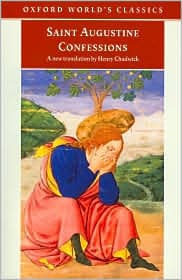
Confessions cover
Archivist's Choice

Confessions

Augustine of Hippo (1482)

Genre

Thriller / Mystery

Reading Time

1200 min

Key Themes

See below

Track Your Reading

Sign in to track this book

Augustine's spiritual autobiography follows his search for God through his sinful past, examining memory, desire, and human nature with a philosopher's mind and a convert's heart.

Synopsis

Augustine's "Confessions" is a spiritual autobiography and philosophical work. It traces his journey from infancy to Christian conversion. He recounts his early life, including a rebellious youth, intellectual curiosity, and struggles with desire. He describes his involvement with Manichaeism, a dualistic religion, and his eventual disappointment with it. Through his academic career in Carthage, Rome, and Milan, he grapples with philosophical questions, especially Neoplatonism, which prepared him for Christian teaching. The main conflict is his internal battle between worldly pleasures and his desire for spiritual truth, particularly his struggle with chastity. The story leads to his conversion in a Milanese garden, where he finally gives himself to God. The book ends with theological and philosophical thoughts on memory, time, and the interpretation of Genesis, as Augustine, now a bishop, tries to understand God and the human condition through his past.
Reading time
1200 min
Difficulty
Hard
Pacing
Slow
Mood
Introspective, Philosophical, Reflective, Theological, Spiritual
✓ Read this if...
You are interested in the origins of Western Christian thought, ancient autobiography, or a deep dive into philosophical and theological self-reflection.
✗ Skip this if...
You are looking for a fast-paced plot-driven narrative with modern thriller conventions.

Plot Summary

Infancy and Early Childhood

Augustine begins by calling on God, thinking about God's presence everywhere and humanity's desire for Him. He then discusses his infancy, recognizing his helplessness and dependence, and the sinfulness in a child's cries and desires. He remembers learning to speak by watching and copying adults, driven by a need to communicate. He describes his early experiences with feeding and how his will formed, seeing the pride and self-centeredness of his earliest years. This foundation sets up his theological view, seeing humanity as fallen from birth and always needing God's grace.

Schooldays and Reluctance to Learn

As Augustine moves to his school years in Thagaste, he admits his strong dislike for formal learning, especially Greek, which he found boring and hard. He preferred Latin literature, particularly Virgil's stories, finding more joy in fiction than in practical lessons. He confesses to avoiding studies, often lying to escape punishment, and says his youthful prayers were mainly to avoid being beaten. This time shows his early intellectual interests, his rebellious nature, and the conflict between his desires and the demands of discipline, all seen through the idea of sin and divine mercy.

Adolescent Rebellion and Lust

During his teenage years in Madaura, Augustine tells of his growing sexual desires and the strong peer pressure that led him to sin. He clearly describes the inner conflict between his developing intellect and the powerful pull of lust. He admits to engaging in immoral acts, not out of need, but from a twisted desire to fit in and avoid the shame of seeming chaste. His story of stealing pears from a neighbor's tree, not for hunger but for the thrill of breaking rules, shows his understanding of sin as an act of will, a delight in wrongdoing for its own sake. This period explores the appeal of sin and the emptiness it leaves.

Manichaeism and Intellectual Pride

After his father Patricius's death, Augustine moves to Carthage and, at nineteen, joins Manichaeism. He is drawn to its explanation of good and evil and its promise of intellectual answers. For nine years, he is a 'hearer' in the group, attracted by its eloquent words but increasingly bothered by its philosophical flaws and scientific errors. He takes a concubine, with whom he has a son, Adeodatus. His intellectual pride makes him believe he has found truth, yet a nagging doubt remains, especially about the Manichaean leader Faustus, whose shallow intellect eventually destroys Augustine's faith in the group.

Friendship, Grief, and Carthage

While in Carthage, Augustine forms a close, almost obsessive friendship with an unnamed companion from his hometown. This friend, though initially a Manichaean, converts to Christianity on his deathbed. His death plunges Augustine into deep grief, a pain so intense it makes everything around him seem empty. Augustine describes how his sorrow came from his love for the created person rather than the Creator, showing his misplaced affections. This experience forces him to confront the temporary nature of human relationships and the inadequacy of earthly comforts, deepening his sense of spiritual emptiness.

Move to Rome and Milan

Unhappy with Carthage and the Manichaeans, Augustine moves to Rome, hoping for better and more disciplined students. However, he finds Roman students just as likely to avoid paying. He gets sick but recovers, feeling a sense of God's care. Through his Manichaean friends, he gets a teaching job as a professor of rhetoric in Milan. Here, he meets Bishop Ambrose, whose sermons and intellect start to challenge Augustine's Manichaean beliefs. Though initially drawn more to Ambrose's speaking style than his theology, Augustine begins to find intellectual and spiritual comfort in the Christian message.

Intellectual Conversion to Neoplatonism

In Milan, Augustine's intellectual journey changes direction with his discovery of Neoplatonic writings, translated into Latin by Victorinus. These texts help him understand God as a non-physical, unchanging Being and evil not as a thing but as an absence of good. This philosophical insight frees him from the Manichaean dualism that had bothered his thinking for years. He begins to see the problem of evil not as an outside force but as a choice of the will. However, while Neoplatonism offers intellectual answers, it lacks the idea of the Incarnation and the grace needed for spiritual change.

The Struggle with Chastity

Despite his intellectual shift, Augustine remains caught by his sexual habits. His mother, Monica, arranges a marriage for him, and he sends away his long-term concubine, a separation that causes him great pain. However, unable to wait for his betrothed, he takes another concubine, showing his continued struggle with lust and his inability to fully commit to a chaste life. He famously prays, 'Give me chastity and self-control, but not yet,' showing the deep resistance within his will. This time is marked by strong inner conflict and a growing awareness of his own weak will.

The Garden Conversion

Overwhelmed by his inner struggle and the stories of others who had embraced ascetic lives, Augustine retreats to a garden with his friend Alypius. He is in agony, crying and questioning his inability to commit to God. He hears a child's voice chanting 'Tolle, lege' ('Pick up and read'). Interpreting this as a divine command, he opens the Bible to Romans 13:13-14: 'Not in revelry and drunkenness, not in promiscuity and sensuality, not in quarreling and jealousy; but put on the Lord Jesus Christ, and make no provision for the flesh, to gratify its desires.' This passage immediately ends his spiritual torment, giving him the strength to give up his old life and fully embrace Christ.

Baptism and Ostia

After his conversion, Augustine resigns his teaching position and prepares for baptism. During the Easter Vigil of 387 AD, he is baptized by Bishop Ambrose in Milan, along with his son Adeodatus and his friend Alypius. Shortly after, as they prepare to return to Africa, Augustine and Monica share a deep mystical experience at Ostia. They have a profound spiritual conversation, ascending in contemplation 'step by step through all material things, and the heaven itself' until their souls touch eternal wisdom. This 'Ostia Vision' is a moment of shared joy and spiritual unity, the result of Monica's prayers and Augustine's journey. Monica dies shortly after, content with her son's salvation.

Reflections on Memory

In Book X, Augustine begins a deep philosophical study of memory. He is amazed by its huge capacity, a 'vast, immeasurable space' where images, ideas, emotions, and experiences are stored. He considers different types of memory: sensory, intellectual, and even the memory of forgetting. He questions how we remember God, concluding that God is not remembered like an image or concept, but as an always-present truth that the soul encounters. He connects memory to the search for happiness and the innate desire for God, suggesting that God is deeper than memory itself, the source of all truth and goodness that memory tries to grasp.

The Nature of Time

Augustine dedicates Book XI to the complex philosophical problem of time. He famously asks, 'What then is time? If no one asks me, I know; if I wish to explain it to him who asks, I do not know.' He argues against the idea that time existed before creation, stating that time itself was created with the universe. He grapples with the ideas of past, present, and future, arguing that only the present truly exists, and even that is a fleeting moment. He suggests that time is a 'stretching of the soul,' a subjective experience of duration. This deep reflection leads him to confirm God's eternal nature, existing outside of time, and the act of creation out of nothing.

Interpretation of Genesis and Scripture

In the final books, Augustine focuses on the first chapters of Genesis, offering a detailed and often symbolic interpretation of the creation story. He examines the meaning of 'heaven and earth,' 'light,' and the 'firmament,' going beyond a literal reading to find deeper spiritual truths. He discusses the nature of spiritual creation, the formation of angels, and the spiritual meaning of the days of creation. This detailed interpretive work shows his mature theological thought, highlighting the harmony of Scripture and the deep wisdom in God's word, ending his 'confession' by praising God as the ultimate source and goal of all things.

Principal Figures

Augustine of Hippo

The Protagonist

Augustine transforms from a restless, sin-ridden seeker of earthly pleasures and intellectual pride to a devout Christian bishop and theologian, finding peace and purpose in God's grace.

Monica

The Supporting

Monica remains steadfast in her faith and prayers, ultimately witnessing her son's conversion before her peaceful death.

Patricius

The Supporting

Patricius converts to Christianity on his deathbed, influenced by Monica's faith.

Adeodatus

The Supporting

Adeodatus experiences conversion and baptism with his father, dying young but in grace.

Alypius

The Supporting

Alypius follows Augustine's path of conversion, becoming a dedicated Christian.

Unnamed Concubine

The Supporting

Sent away by Augustine, she remains a significant, though absent, figure in his past.

Ambrose of Milan

The Supporting

Ambrose serves as a guide and example, leading Augustine to intellectual and spiritual conversion.

Faustus of Mileve

The Mentioned

Faustus's intellectual inadequacy contributes to Augustine's growing skepticism towards Manichaeism.

Themes & Insights

The Search for Truth and Happiness

Augustine's life is a constant search for truth and lasting happiness. He first looks for these in worldly pleasures, philosophies (Manichaeism, Neoplatonism), and human relationships. He finds these paths ultimately unfulfilling and temporary, leading to cycles of disappointment and grief, such as the deep sorrow after his friend's death in Carthage. His 'confessions' show that true happiness and truth are found only in God, the unchanging source of all good, whom he finally embraces in his conversion in the Milanese garden. This idea runs through his entire story as he reflects on where he sought fulfillment and why he failed.

You have made us for yourself, O Lord, and our heart is restless until it rests in you.

Augustine of Hippo, Book I

The Nature of Sin and Grace

Augustine deeply examines the nature of sin, from his infant cries of self-will to his adolescent theft of pears and his long struggle with lust. He sees sin not just as a wrongdoing but as turning away from God, a disordered love of created things over the Creator. His famous pear theft shows sin committed for its own sake, a twisted delight in wickedness. Conversely, the idea of grace is very important, as Augustine repeatedly acknowledges that his conversion and freedom from sin are not due to his own efforts but to God's undeserved favor, often through his mother Monica's prayers and the influence of people like Ambrose. The garden conversion is the ultimate example of grace overcoming his stubborn will.

Grant me chastity and continence, but not yet.

Augustine of Hippo, Book VIII

Memory and Time

Augustine spends large parts of his work exploring the philosophical and theological aspects of memory and time. In Book X, he marvels at the vastness and complexity of memory, seeing it as a storage place for all experiences, knowledge, and even the self. He reflects on how we remember God, concluding that God is not an object within memory but its ultimate source and goal. In Book XI, he grapples with the elusive nature of time, famously stating, 'What then is time? If no one asks me, I know; if I wish to explain it to him who asks, I do not know.' He suggests time is a 'stretching of the soul' and that God exists outside of time, creating time itself. These thoughts are not just academic but deepen his understanding of human existence and God's eternal nature.

My soul is on fire to know this most intricate enigma.

Augustine of Hippo, Book XI

The Role of Human Relationships

Human relationships play a critical, though often painful, role in Augustine's journey. His intense friendships, particularly the one in Carthage, highlight the danger of misplaced affections and the deep grief that follows when love is directed only towards finite beings rather than God. His relationship with his concubine and the birth of Adeodatus underscore his struggle with lust and attachment. Most importantly, his relationship with his mother, Monica, shows the power of steady parental love and persistent prayer in guiding a soul towards God. The influence of figures like Ambrose also shows how human mentors can be tools of divine grace. Ultimately, Augustine learns that human relationships are meant to point towards and be ordered by the ultimate relationship with God.

I was wretched, and wretched is every soul clamped in friendship with mortal things.

Augustine of Hippo, Book IV

Intellectual Journey and Spiritual Conversion

Augustine's 'Confessions' carefully documents his intellectual development from an ambitious rhetoric student to a Manichaean 'hearer,' then to a seeker influenced by Neoplatonism, and finally to a Christian theologian. His intellectual skill is clear in his rigorous questioning of Manichaean dualism and his acceptance of Neoplatonic ideas of a non-physical God and evil as an absence. However, he ultimately finds that intellectual understanding alone is not enough for spiritual change. The 'garden conversion' clearly shows that true conversion requires giving up one's will and receiving divine grace, going beyond just intellectual agreement. His intellectual journey always serves his spiritual quest, showing how reason can lead one to the edge of faith.

I loved the truth, which was you, my God, and I loved it with a desire for certainty.

Augustine of Hippo, Book VII

Plot Devices & Literary Techniques

Retrospective Narrative

Augustine recounts his past life from the perspective of his converted self.

The entire work is a retrospective narrative, written by Augustine in his early forties, after his conversion and while he is a bishop. This allows him to interpret his past experiences, even his childhood sins, through a theological lens, attributing his salvation to God's grace and seeing divine providence in events he once misunderstood. This perspective provides theological depth and moral judgment to his recounting, making it not just a biography but a theological treatise on sin, grace, and human nature.

Prayer as Narrative Frame

The entire book is framed as a continuous prayer or address to God.

Augustine frequently addresses God directly, beginning with 'You are great, O Lord, and greatly to be praised.' This establishes an intimate and devotional tone, transforming the autobiography into a profound act of worship and confession. This device allows Augustine to express his deepest thoughts, struggles, and gratitude directly to the divine, making the reader a witness to his personal dialogue with God rather than merely an observer of his life story. It underscores the theological purpose of the work.

Allegorical Interpretation

Augustine interprets Scripture and even his own life events with symbolic meaning.

Augustine employs allegorical interpretation, particularly in his later books when discussing Genesis. He moves beyond literal readings to uncover deeper spiritual truths and meanings, a technique he learned from Ambrose. This device also extends to his recounting of his own life, where seemingly mundane events (like the pear theft) are imbued with profound theological significance, illustrating broader principles of sin, free will, and divine intervention. This method allows for a richer, multi-layered understanding of the text and his experiences.

Internal Monologue and Dialogue

Augustine frequently records his inner thoughts, debates, and conversations with himself.

Augustine often presents his internal struggles as a dialogue within his own mind, particularly during his conversion crisis in the garden. He recounts his arguments with himself, the voices of his past habits, and the emerging call to chastity. This intimate portrayal of his inner turmoil allows the reader to deeply empathize with his psychological and spiritual struggles, making his conversion feel earned and authentic. It highlights the battle between his intellect and his will, and the profound difficulty of changing ingrained habits.

Critical analysis

Notable Quotes

You called, shouted, broke through my deafness. You flared, blazed, banished my blindness. You diffused your fragrance, and I drew breath and panted for you. I tasted you, and I hunger and thirst. You touched me, and I burned for your peace.

Augustine's reflection on his conversion and God's persistent call.

Grant me chastity and continence, but not yet.

Augustine's prayer during his youth, revealing his struggle with desire.

Our heart is unquiet until it rests in you.

Augustine's opening statement, expressing humanity's innate longing for God.

For what is time? Who can easily and briefly explain it? Who can even in thought comprehend it, so as to utter a word about it? But what in speech do we mention more familiarly and knowingly than time? And certainly we understand it when we speak of it; we understand it also when we hear it spoken of by another.

Augustine's philosophical inquiry into the nature of time.

I was not yet in love, but I was in love with love.

Augustine describing his youthful yearning for romantic love and passion.

Late have I loved you, O Beauty ever ancient, ever new, late have I loved you!

Augustine's lament upon realizing the depth of God's love after years of searching elsewhere.

I probed the depths of my memory, and I found it full of countless things.

Augustine exploring the vastness and complexity of human memory.

The mind commands the body and it obeys. The mind commands itself and meets resistance.

Augustine's observation on the struggle of the will, particularly in matters of sin.

But when I shall cleave to You with all my being, then there will be for me no more sorrow or toil; my life will be living and full of You.

Augustine expressing his desire for complete union with God and the peace it would bring.

I marvelled that I now loved you, and not a phantasm instead of you.

Augustine reflecting on his conversion and the shift from worldly desires to genuine love for God.

For in order to understand, I believe; and in order to believe, I understand.

Augustine explaining the interplay between faith and reason in his intellectual journey.

I found that evil is nothing else than the privation of good, right to the point of extinction.

Augustine's theological understanding of evil as an absence of good, rather than a positive entity.

What does it profit me that I have a rich mind, when I do not have You, who are the riches of all?

Augustine reflecting on the emptiness of worldly achievements without God.

The punishment of every disordered mind is its own disorder.

Augustine's insight into the inherent consequences of sin and moral corruption.

Quiz

Test Your Knowledge

Ready to see how well you understood this book? Take our interactive quiz with 10 questions.

10
Questions
~5
Minutes
?
Best Score

Key Questions (FAQ)

Augustine's central mystery is not a whodunit, but a deep theological and philosophical inquiry into the nature of God, the origin of evil, and the process of human salvation. He relentlessly questions how an omnipotent, benevolent God can allow suffering and sin, and how his own rebellious will fits into divine providence, seeking to understand his life's trajectory as a journey guided by an unseen hand.

About the author

Augustine of Hippo

Augustine of Hippo was a prominent early Christian theologian and philosopher whose lifetime writings profoundly influenced Western Christianity and philosophy. His seminal works, 'Confessions' and 'City of God,' offer deep introspection and theological arguments that remain influential. He is revered as a Doctor of the Church and one of the most important figures in the development of Western thought.