“Everything is ridiculous when you are happy, everything is sad when you are unhappy.”
— Rosso reflecting on his emotional state and the world around him.

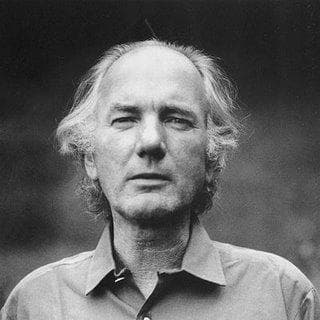
Thomas Bernhard (1986)
Genre
Literary Fiction
Reading Time
180 min
Key Themes
See below
Sign in to track this book
A tormented Viennese musicologist, paralyzed by the impossibility of his grand academic task, instead meticulously chronicles his own spiraling descent into procrastination, despair, and the darkly humorous absurdities of his self-imposed literary prison.
Rudolph, the narrator, lives in Peiskam-Hochstrass, Austria. He has tried to write a book on Felix Mendelssohn-Bartholdy for years. He has much research and notes, but cannot write. He describes his chronic headaches, a "brain-destroying" illness he blames on his studies and constant noise. He seeks the perfect time and place to write, believing any distraction will ruin his work. This shows his intellectual paralysis and self-defeating perfectionism, which stops any progress on his book.
Rudolph describes his sister's recent, unwelcome visit. He finds her presence suffocating and disruptive. He sees her as domineering, insensitive, and annoying, especially her habit of moving his things. Her visit worsens his anxieties and his wish for solitude. During this time, his sister suggests he travel to Majorca to ease his suffering and perhaps to be rid of him. She offers to pay for his trip and lodging. Rudolph first resists but accepts, seeing it as an escape and a chance to write his book.
In Majorca, Rudolph immediately searches for a quiet, isolated place to work. He believes the change of scenery will unlock his creativity. He rents a small, secluded house in a rural area, thinking the Mediterranean climate and lack of familiar distractions will help him write. However, his hopes fade. He finds the heat unbearable, local customs irritating, and solitude itself a new worry. His headaches persist, as does his sense of his task's futility. The new environment, instead of freeing him, merely shifts his frustrations, showing that his internal problems are greater than external ones.
Rudolph's attempts at isolation are broken by a German couple, the Karrers, staying nearby. He watches them with disdain and morbid interest, projecting his anxieties onto them. He finds their cheerful demeanor and ordinary conversations repulsive, seeing them as symbols of the mediocrity he despises. Their closeness, even if not directly interfering, becomes another reason for Rudolph's inability to focus. He spends much time criticizing their every move, further diverting his energy from writing and strengthening his misanthropy.
Rudolph learns that Mrs. Karrer, the wife of the German couple he observed, has died suddenly. He fixates on the details of her death, which he believes was suicide by drowning. Instead of sympathy, Rudolph finds a perverse validation in the tragedy. He sees her death as a logical outcome of her perceived superficiality and life's meaninglessness. He reconstructs the events leading to her death in his mind, often with detached cruelty. This morbid obsession further distracts him from writing, yet gives him a new, dark intellectual focus.
Rudolph attends Mrs. Karrer's funeral, driven by curiosity, not grief. He observes Mr. Karrer's public display of sorrow, analyzing every gesture and word for signs of inauthenticity. He sees Mr. Karrer's grief not as real emotion, but as a performance, a ritualistic response. Rudolph's thoughts during the funeral are full of cynical judgments about the attendees, the ceremony, and human connection. The event confirms his belief that life is a series of meaningless rituals and that real emotion is either absent or corrupted.
After Majorca, Rudolph returns home to Peiskam-Hochstrass, Austria. Despite the change of scenery and the dramatic events, his main problem remains. He still cannot write his book on Mendelssohn. The familiar surroundings bring back old distractions and anxieties he hoped to escape. His headaches, his dislike for his sister, and his general contempt for the world continue. The Majorca trip, far from a cure, is a temporary diversion, showing the inescapable nature of his internal struggles and the futility of external solutions.
Rudolph discusses his struggle with memory, especially his fear of forgetting details for his Mendelssohn book. He believes every fact must be perfectly recalled and stated, or the project is ruined. This obsession with accuracy and recall becomes another obstacle. He spends hours rereading notes and thinking about small details, instead of writing. He describes instances where his memory fails him, leading to despair and a sense of intellectual inadequacy, further stopping his writing.
Rudolph often thinks about the futility of publishing and the superficiality of literary recognition. He dislikes critics, readers, and the entire publishing industry, seeing it as corrupt and meaningless. He argues that true genius is rarely appreciated, and most published works are mediocre. This cynical view gives him another reason not to write. He believes that even if he finished his masterpiece, it would likely be misunderstood, misjudged, or ignored. This arrogance and contempt for the world protect him from the vulnerability of creation.
Rudolph ends his story returning to his constant companion: the debilitating headache. He portrays it as an almost living thing, a physical sign of his intellectual torment and his inability to escape his own mind. He admits that despite his efforts, travels, and thoughts, he is no closer to writing his book on Mendelssohn. The narrative ends where it began, in unresolved paralysis and despair. The reader is left with the idea that Rudolph is trapped in an unending, self-imposed cycle of procrastination and intellectual torment, with no hope of freedom.
The Protagonist
Rudolph remains largely static, his journey to Majorca and back only reinforcing his entrenched neuroses and inability to overcome his internal obstacles.
The Supporting
Her character is static, serving primarily as a catalyst for Rudolph's actions and a target for his misanthropy.
The Supporting/Mentioned
Her arc is tragic and serves as a plot device to further Rudolph's internal monologues and philosophical ruminations on death and meaninglessness.
The Supporting/Mentioned
His arc is one of sudden loss and public mourning, serving to highlight Rudolph's cynical worldview.
The Mentioned
As a historical figure, Mendelssohn has no arc but acts as a constant, looming presence over Rudolph's unfulfilled ambitions.
The main theme is Rudolph's deep inability to start writing his book, despite years of preparation and a strong desire. His procrastination is not laziness but a psychological paralysis from perfectionism, fear of failure, and a sense that his efforts are pointless. He constantly finds excuses—headaches, noise, the wrong place, inadequate language—to avoid writing. This is clear throughout the novel, as every potential writing opportunity (e.g., in Majorca) is ruined by his internal thoughts and complaints, as seen in his endless debates about the 'perfect' writing conditions.
“I could have written it all down in one day, I told myself, but I didn't write it down in one day, and I haven't written it down in decades, because I always postponed the writing, always put it off until the next day, and then the next.”
Rudolph has a deep contempt for humanity, finding most people, including his sister and the German couple, crude, unintelligent, and irritating. This misanthropy drives his desire for extreme isolation, as he believes others disrupt his intellectual work. His observations of others are always critical, giving him material for his internal monologues but no real connection. His trip to Majorca is an attempt to find perfect solitude, yet even there, others' presence, like the Karrers, becomes a source of annoyance and distraction, showing his inability to escape his judgmental mind.
“People are always a disturbance, and in my case they are lethal.”
The novel is largely a look into Rudolph's internal monologue, exploring his winding and often circular thoughts. Bernhard details Rudolph's obsessive thoughts, self-defeating logic, and cyclical anxieties. The narrative itself becomes a 'concrete' example of his thought process, showing how his mind, though brilliant, is trapped in a loop of self-analysis and self-sabotage. This theme explores how consciousness can be both a source of insight and an inescapable prison, as Rudolph's intellectual rigor stops him from engaging with the world productively.
“My head is a permanent construction site, I thought.”
Rudolph often thinks about death, illness, and life's meaninglessness. His chronic headaches remind him of his mortality and human fragility. Mrs. Karrer's tragic death becomes a focus for his thoughts, not as a source of grief, but as a morbid confirmation of his cynical view. He sees life as absurd rituals and human efforts as pointless. This nihilistic outlook contributes to his creative paralysis, as he questions the purpose of creating anything if all will be forgotten.
“One day everything will be meaningless, everything will be forgotten, everything will have been for nothing.”
The entire novel is presented as Rudolph's unfiltered, spiraling internal monologue.
The novel is written entirely in Rudolph's first-person stream of consciousness. There are no chapter breaks, minimal paragraphing, and sentences often run for pages, reflecting the continuous, associative, and often repetitive nature of his thoughts. This device immerses the reader directly into Rudolph's neurotic mind, allowing for a deep exploration of his anxieties, obsessions, and self-defeating logic. It blurs the line between narration and internal thought, making the reader experience his intellectual paralysis and misanthropy firsthand, rather than merely observe it.
Key phrases, ideas, and complaints are repeated throughout the text with subtle variations.
Bernhard employs extensive repetition of specific phrases, concepts, and complaints (e.g., Rudolph's headaches, his sister's intrusions, the impossibility of writing). These repetitions are not identical but often feature slight variations, building a hypnotic rhythm and emphasizing Rudolph's obsessive, cyclical thought patterns. This device highlights his inability to move past certain mental blocks and reinforces the sense of his intellectual entrapment. It also serves to create a darkly comedic effect, as Rudolph's grievances become almost absurdly familiar to the reader.
Rudolph's highly subjective and biased perspective shapes the entire story, making his account inherently untrustworthy.
Rudolph is a classic unreliable narrator. His extreme misanthropy, hypochondria, and intellectual arrogance mean that everything he describes—from his sister's actions to the Karrers' behavior—is filtered through his prejudiced and often distorted perception. The reader is never given an objective view of events or other characters, only Rudolph's highly critical and self-serving interpretations. This device forces the reader to question Rudolph's claims and to infer the reality of situations, adding layers of psychological complexity and dark humor to the narrative.
The title itself refers to the solidified, unyielding nature of Rudolph's mental blocks.
The title 'Concrete' functions as a central metaphor for Rudolph's psychological state. It represents the hardened, unyielding nature of his creative paralysis and his intellectual entrapment. His thoughts, instead of flowing freely into written work, become dense and impenetrable, like concrete. It also suggests the rigidity of his worldview and his inability to adapt or change. The word evokes a sense of being stuck, immobile, and unable to break free from self-imposed limitations, perfectly encapsulating Rudolph's predicament.
“Everything is ridiculous when you are happy, everything is sad when you are unhappy.”
— Rosso reflecting on his emotional state and the world around him.
“The world is full of people who are always on the point of doing something, but never do it.”
— Rosso's observation about human procrastination and inaction.
“One day I will write a book about everything that is wrong with me.”
— Rosso's recurring thought about his self-perceived ailments and neuroses.
“I am always on the point of going away, but I never go.”
— Rosso's constant desire to escape his current situation but his inability to act on it.
“The only thing that has any value is what one does not do.”
— Rosso's paradoxical view on value and action, hinting at the importance of non-action or restraint.
“My head is full of thoughts, but my hands are empty.”
— Rosso's frustration with his inability to translate his mental activity into physical action or productivity.
“I have to read everything twice, because the first time I don't understand anything.”
— Rosso describing his difficulty with comprehension and his meticulous, repetitive nature.
“Every person is a master of procrastination.”
— Rosso's generalization about the universal human tendency to delay tasks.
“I have been thinking about writing for forty years, but I have not written a single word.”
— Rosso's lament about his lifelong aspiration to write versus his actual lack of output.
“The world is a madhouse, and I am one of its inmates.”
— Rosso's cynical view of the world and his place within it.
“Everything I do is wrong, everything I think is wrong, everything I say is wrong.”
— Rosso's pervasive self-criticism and sense of inadequacy.
“I am always on the point of dying, but I never die.”
— Rosso's recurring thought about his health and mortality, reflecting his hypochondria.
“My whole life is a failure, and I have nothing to show for it.”
— Rosso's despairing assessment of his life's achievements.
“Silence is the only thing that doesn't betray you.”
— Rosso's reflection on the reliability of silence compared to the treachery of words or people.
Ready to see how well you understood this book? Take our interactive quiz with 10 questions.
Biography coming soon.







