“Something nasty in the woodshed.”
— Aunt Ada Doom's recurring phrase about a traumatic childhood event she uses to control the family.


Stella Gibbons (2020)
Genre
Historical Fiction
Reading Time
280 min
Key Themes
See below
Sign in to track this book
Armed with an inheritance of charm and an aversion to earning her keep, a sophisticated young woman descends upon her eccentric, doom-laden rural relatives, determined to inject some much-needed modernity and common sense into their melodramatic lives.
The novel opens with Flora Poste, a young, educated, and recently orphaned woman of nineteen, finding herself with no means of support but a talent for organizing. Rejecting the idea of earning her own living, she decides to visit her numerous distant relatives, believing it her duty to bring order to their lives. After consulting a map and a list of relatives, she settles on the Starkadders of Cold Comfort Farm in Sussex, recalling a vague family obligation on their part due to an unspecified wrong done to her father. She writes to her cousin, Judith Starkadder, announcing her impending arrival, despite never having met them. Her decision is driven by a desire to find a 'sphere of usefulness' and a comfortable living without personal effort.
Flora arrives at the isolated Cold Comfort Farm, a place of extreme squalor and emotional intensity. She is immediately struck by the farm's dilapidated state and the peculiar behavior of its inhabitants. She meets Judith Starkadder, a worried and dramatic woman, and her three sons: Reuben, obsessed with farming and suspicious of outsiders; Seth, a handsome and wild young man with a passion for cinema and 'filming'; and Amos, a fire-and-brimstone preacher. The matriarch, Aunt Ada Doom, remains confined to her room, lamenting 'something nasty in the woodshed.' Flora quickly assesses the situation, realizing her work is cut out for her in modernizing the farm and its residents.
Flora observes the deeply entrenched misery and eccentricities of the Starkadder family. She notes Judith's unhealthy obsession with her son Seth, Reuben's miserly devotion to the farm, Seth's restless desire for escape, and Amos's fervent, albeit theatrical, religious preaching. She also encounters other family members like Elfine, a wild, nature-loving cousin, and Meriam, a sullen farmhand with a baby by Seth. Flora decides that her mission is to introduce sanity, cleanliness, and happiness to their lives. She meticulously plans her interventions, starting with small changes to the farm's domestic arrangements, such as improving meals and hygiene, and subtly manipulating personalities to achieve her goals.
Flora turns her attention to the men of the farm. She encourages Seth's passion for acting and films, suggesting he pursue a career in Hollywood, which he eagerly embraces. For Amos, she finds a wealthy American patron who appreciates his unique preaching style, arranging a lucrative lecture tour abroad, thus removing his oppressive influence from the farm. Reuben, the most resistant, is appeased by Flora's promise to ensure the farm remains in his hands and her subtle approval of his farming methods. She also manages to get rid of the complaining Adam Lambsbreath, the ancient farmhand, by arranging for him to live comfortably in a cottage with a cat.
Flora takes Elfine, the beautiful but unkempt cousin, under her wing. Elfine, who spends her days communing with nature and wearing simple clothes, is secretly in love with Charles Fairford, a wealthy and sophisticated neighbor. Flora, seeing the potential for a suitable match, gently guides Elfine towards a more presentable appearance and social graces. She helps Elfine acquire proper clothing and encourages her to engage with Charles. Through Flora's subtle maneuvering and Elfine's natural charm, the romance blossoms, culminating in Charles proposing marriage to Elfine, much to the initial dismay of the Starkadders, who view Charles as an outsider.
The most challenging is Aunt Ada Doom, the tyrannical matriarch whose 'something nasty in the woodshed' trauma has held the family in a state of gloom. Flora, with her characteristic practicality, decides to confront the source of the family's misery directly. She learns that the 'nasty' event was simply seeing a calf being born. Flora gently but firmly persuades Aunt Ada to leave the farm, suggesting a luxurious trip to Paris where she can indulge in her desire for fine clothes and experience the world. Aunt Ada, surprisingly amenable to the idea of a change of scenery and new hats, agrees to depart, effectively breaking her hold over the family.
With Seth pursuing his acting career and Aunt Ada preparing for her trip, Judith Starkadder is left without her primary emotional outlets. Flora, understanding Judith's need for drama and attachment, subtly encourages her to find a new focus. She suggests that Judith channel her intense emotions into a relationship with Dr. Müller, a local psychiatrist who had previously shown interest in Judith's 'case.' Flora facilitates their connection, and Judith, after years of emotional turmoil, finds a new, more stable, and intellectually stimulating relationship, shifting her focus from her sons to her own well-being and a more appropriate partner.
By the end of Flora's stay, Cold Comfort Farm is a vastly different place. The squalor has been replaced by cleanliness and order. The inhabitants, once trapped by their eccentricities and Aunt Ada's influence, have embraced new opportunities. Seth is a successful actor in Hollywood, Amos is a celebrated preacher, Elfine is happily married to Charles, and Judith has found contentment with Dr. Müller. Even the grumpy Reuben is content, now the undisputed master of a modernized and profitable farm. The farm, once a symbol of rural misery, is now a beacon of progress and individual happiness, all thanks to Flora's methodical and benevolent interventions.
With her mission accomplished and Cold Comfort Farm running smoothly, Flora feels her work there is done. She reflects on her success in bringing order and happiness to her relatives, fulfilling her self-appointed role as a catalyst for change. As she prepares to leave, she receives a letter from a distant cousin named Mr. Mybug, an aspiring writer who is struggling with his latest work. Intrigued by the prospect of a new challenge and another opportunity to 'organize' someone's life, Flora decides to visit Mr. Mybug. She departs Cold Comfort Farm, leaving behind a scene of domestic bliss and taking with her the satisfaction of a job well done, ready for her next philanthropic endeavor.
The Protagonist
Flora remains largely static, a catalyst for change in others rather than undergoing significant personal development. She successfully applies her organizing principles to the Starkadders.
The Supporting/Antagonist (of happiness)
Aunt Ada is freed from her self-imposed misery by Flora, eventually agreeing to leave the farm and explore the world.
The Supporting
Judith shifts her emotional dependency from Seth to Dr. Mülar, finding a healthier and more fulfilling relationship.
The Supporting
Seth successfully escapes Cold Comfort Farm to pursue an acting career in Hollywood, finding freedom and success.
The Supporting
Amos leaves the farm to become a successful international evangelist, finding a suitable outlet for his dramatic sermons.
The Supporting
Reuben reluctantly accepts modernization, ultimately becoming the undisputed, albeit still traditional, master of a thriving farm.
The Supporting
Elfine transforms from a wild, unkempt 'child of nature' into a refined lady who marries the man she loves.
The Supporting
Charles successfully pursues and marries Elfine, integrating her into his cultured world.
The Supporting
Meriam's circumstances remain largely unchanged, though the improved atmosphere of the farm likely benefits her indirectly.
The novel directly parodies the popular genre of romanticized, often bleak, rural fiction prevalent in the 1930s. Stella Gibbons exaggerates every trope: the isolated, dilapidated farm, the eccentric and miserable inhabitants, the brooding matriarch, the dark secrets, and the oppressive natural elements (like the 'sukebind' flower). Through Flora's practical and no-nonsense approach, the novel exposes the absurdity of clinging to such misery, suggesting that many rural 'tragedies' are self-inflicted and easily remedied with common sense and a good scrub brush. The Starkadders' woes are not grand tragedies but rather the result of neglect and melodrama.
“''I will not have my life messed up by Aunt Ada Doom, or any other Doom, for that matter!''”
Flora Poste embodies the triumph of common sense and modern, pragmatic thinking over outdated traditions and melodramatic emotionalism. She systematically dismantles the Starkadders' misery not through grand gestures but through practical interventions: improving hygiene, encouraging personal aspirations, and applying logical solutions to seemingly insurmountable problems. Her belief that 'there is no problem that cannot be solved by a little organization' is central to the narrative. The transformation of Cold Comfort Farm from a place of squalor and despair to one of order and happiness demonstrates the liberating power of rationality and a willingness to embrace progress.
“''It is my business to see that the right people get the right jobs.''”
The Starkadder family is trapped by a combination of tradition, Aunt Ada Doom's emotional tyranny, and their own eccentricities, preventing them from pursuing individual happiness. Seth longs for Hollywood, Elfine for love and refinement, and even Amos seeks a broader audience. Flora's arrival disrupts this cycle, challenging the notion that one must remain bound by the circumstances and expectations of one's family. She liberates each character to pursue their true desires, whether it's an acting career, a proper marriage, or a successful preaching tour, demonstrating that personal fulfillment often requires breaking free from oppressive familial 'obligations.'
“''No limits are set, either by society or one's own conscience, to the amount one may impose on one's relatives.''”
The novel explores different paths to happiness. For the Starkadders, happiness is initially elusive, overshadowed by gloom and self-pity. Flora's interventions show that fulfillment can come from various sources: Seth finds it in artistic expression, Elfine in love and social integration, Amos in public recognition, and Judith in a healthy relationship. Even Reuben finds a form of contentment in mastering a prosperous farm. The book suggests that happiness is not a mysterious, unattainable state but often the result of practical choices, self-awareness, and the courage to pursue one's true calling, free from the constraints of inherited misery.
“''She was quite sure that the whole family would be happier if they were not perpetually reminded of something nasty in the woodshed.''”
Exaggerated imitation to mock romanticized rural fiction.
The entire novel functions as a parody of the 'loam and lovechild' genre of rural fiction popular in the early 20th century. Gibbons exaggerates every melancholic and melodramatic trope: the perpetually miserable family, the dark secrets, the wild and unkempt natural setting, the archaic dialect, and the characters' eccentricities. This over-the-top portrayal, combined with Flora's rational and modern perspective, creates a satirical critique of the romanticization of rural hardship and misery, highlighting its inherent absurdity rather than its supposed profundity.
A recurring, vague, and ultimately trivial source of family trauma.
Aunt Ada Doom's pronouncement about 'something nasty in the woodshed' serves as a central symbol and plot device. It is a vague, unspecified trauma that has held the entire Starkadder family in its grip for decades, justifying their misery and eccentric behavior. The device parodies the dramatic, often unexplained, dark pasts found in romanticized rural novels. Flora's practical discovery that the 'nasty' event was merely seeing a calf being born deflates the melodrama, revealing the triviality of the 'trauma' and the self-indulgence of the family's prolonged suffering.
Flora Poste, an urban, educated woman, disrupts and reforms the insular rural community.
Flora Poste functions as the classic 'outsider as catalyst' device. She arrives at Cold Comfort Farm as a representative of modernity, common sense, and urban sophistication, completely unburdened by the farm's traditions or emotional entanglements. Her objective perspective allows her to see the Starkadders' problems clearly and apply rational solutions. Her presence disrupts the stagnant, self-perpetuating misery of the farm, acting as the external force required to initiate change and bring the isolated community into the 20th century. Without her intervention, the Starkadders would likely continue in their cycle of gloom.
Characters embodying exaggerated versions of rural fiction stereotypes.
The characters in Cold Comfort Farm are deliberately crafted as archetypes, exaggerated to serve the novel's satirical purpose. We have the brooding, possessive matriarch (Aunt Ada), the wild, nature-loving maiden (Elfine), the fire-and-brimstone preacher (Amos), the rough-hewn, land-obsessed farmer (Reuben), and the sexually potent 'earthy' son (Seth). These characters are not deeply psychological studies but rather caricatures designed to mock the stock figures of romanticized rural fiction, making their dramatic pronouncements and behaviors all the more absurd when confronted by Flora's pragmatism.
“Something nasty in the woodshed.”
— Aunt Ada Doom's recurring phrase about a traumatic childhood event she uses to control the family.
“I saw something nasty in the woodshed when I was a child.”
— Aunt Ada Doom's explanation for her reclusive behavior and manipulation of the Starkadder family.
“Nature is all very well in her place, but she must not be allowed to make things untidy.”
— Flora Poste's practical and orderly philosophy upon arriving at the chaotic Cold Comfort Farm.
“I am only nineteen, but I am very, very wise.”
— Flora Poste's confident self-assessment as she decides to organize her relatives' lives.
“When you've been brought up among sand and spinifex, a little mud doesn't worry you.”
— Flora reflecting on her resilient upbringing compared to the Starkadders' melodramatic woes.
“There have always been Starkadders at Cold Comfort Farm.”
— The family's traditionalist mantra emphasizing their deep-rooted, unchanging presence.
“The sukebind was in flower.”
— A recurring, overly poetic description of the farm's flora, parodying rural romanticism.
“I'm going to tidy up life at Cold Comfort Farm a little.”
— Flora's declaration of her mission to bring order and modern solutions to the farm's dysfunction.
“One cannot have a good time without a good deal of trouble.”
— Flora's pragmatic view on the effort required to improve situations, spoken to a relative.
“A man can't help his feelings, but he can help what he does about them.”
— Flora advising a Starkadder on taking responsibility for actions over emotions.
“We are not put into this world to enjoy ourselves.”
— A Starkadder expressing the family's gloomy, puritanical outlook on life.
“The farm was looking particularly nasty that morning.”
— Narration describing the bleak, untidy state of Cold Comfort Farm, highlighting its disorder.
“I expect I shall be very happy here.”
— Flora's optimistic and determined statement upon first seeing the dilapidated farm.
“It is no use crying over spilt milk.”
— Flora's practical advice to a relative dwelling on past misfortunes.
Ready to see how well you understood this book? Take our interactive quiz with 10 questions.
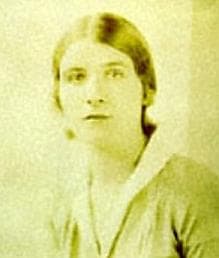
Stella Dorothea Gibbons was an English author, journalist, and poet. She established her reputation with her first novel, Cold Comfort Farm (1932) which has been reprinted many times. Although she was active as a writer for half a century, none of her later 22 novels or other literary works—which included a sequel to Cold Comfort Farm—achieved the same critical or popular success. Much of her work was long out of print before a modest revival in the 21st century.







