“The past is a country the young can’t visit. It’s all foreign to them.”
— Reflecting on the generational gap and the unshared experiences of the past.

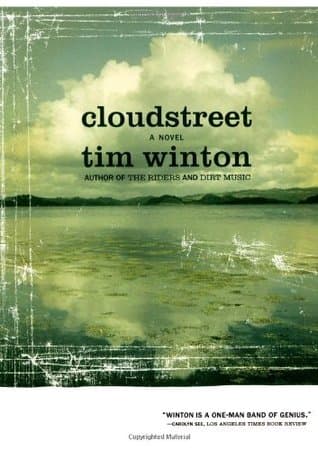
Tim Winton (1991)
Genre
Literary Fiction / Historical Fiction
Reading Time
1000 min
Key Themes
See below
Sign in to track this book
In a large, old house in Perth, two Australian families, the free-spirited Pickles and the God-fearing Lambs, live together for twenty years, sharing joy, sadness, and the everyday mess of life, forever connected by fate and the house itself.
The story begins with the Pickles, a family prone to bad luck, living in rural Australia. The father, Sam Pickle, gambles and dreams. His wife, Dolly, is sharp-tongued and wants a better life. Their son, Fish, has a terrible accident when a tree falls on him, leaving him with severe brain damage and in a permanent childlike state. This event breaks the family. Soon after, Sam unexpectedly inherits a large, run-down house in Perth, called Cloudstreet, from an unknown relative. Despite its eerie feel and the family's first hesitation, they decide to move to the city, hoping for a fresh start and a chance to escape their past troubles, especially Fish's accident.
In contrast to the Pickles, the Lambs are a religious, hardworking family with a strong sense of community and faith. Lester Lamb, the father, is a quiet and kind man, while Oriel, his wife, is a very practical and spiritual woman. Their son, Fish Lamb (who shares a name with the Pickle boy), nearly drowns in a river but is brought back to life by Oriel after what she believes is a divine act. This traumatic event deeply affects Oriel, making her question her faith and the direction of their lives. Believing it is a sign to leave their country life, the Lambs decide to move to Perth, seeking a new beginning and a way to understand the miracle.
The Lambs, upon arriving in Perth, need a place to live and a way to earn money. By chance, they find the large, empty Cloudstreet house, now owned by the Pickles. Sam Pickle, always looking for an easy solution, agrees to rent half of the house to the Lambs. The Lambs, always busy, decide to open a grocery store in their half of the ground floor. This arrangement brings the two very different families together under one roof, creating a unique living situation that will define their lives for the next twenty years. The house, a character itself, begins to witness their shared history.
Life at Cloudstreet is a constant give-and-take between the two families. The Lambs run their successful grocery, showing hard work and good morals, while the Pickles mostly live off Sam's gambling winnings and Dolly's occasional efforts, often falling into disorder and drunkenness. Despite the clear differences in their lives and values, a strange cooperation develops. The children of both families grow up together, forming complicated relationships. Fish Lamb (the Lambs' son) remains childlike, a constant, gentle presence. Dolly resents the Lambs' piety and success, while Oriel struggles with the Pickles' perceived lack of ambition and morals, creating underlying tensions.
Rose Pickle, smart and observant, is deeply ashamed of her family's untidiness and her mother's alcoholism and affairs. She longs for a life beyond Cloudstreet and its messy embrace. She is particularly affected by her mother's affairs and her father's gambling, which make her feel ignored and unloved. Rose focuses on her studies and works hard to become independent, finding comfort in books and dreams of a different future. She tries to distance herself from the family's reputation and Cloudstreet's perceived bad luck, determined to make her own way away from the house's influence.
Quick Lamb, one of the Lamb sons, grows up with a strong sense of duty but also a restless spirit. He feels the weight of his family's goodness and the expectations placed on him, especially after his brother, Fish, almost drowned. He struggles with his attraction to Rose Pickle, which he sees as going against his family's values. Unable to sort out his feelings and his desire for a different life, Quick eventually leaves Cloudstreet, seeking adventure and escape in the bush. However, the pull of his family, the house, and especially Rose, is too strong, and he eventually returns, changed but still searching for his place.
Oriel Lamb, the mother, finds the constant presence of the Pickles and the general atmosphere of Cloudstreet increasingly difficult. She struggles with the moral decline she sees in the house and the spiritual stagnation she feels in her own life. Despite her deep love for her family and her commitment to the grocery store, the weight of their shared life and her internal struggles with faith become too much. In a dramatic act of seeking quiet and spiritual clarity, Oriel moves out of Cloudstreet and sets up a tent in the backyard, living separately from her family for a long time. This shows her deep need for personal space and spiritual renewal.
Rose Pickle and Quick Lamb, despite their different upbringings and the ongoing tension between their families, are strongly drawn to each other. Their relationship is full of difficulties, marked by Rose's fear of repeating her mother's mistakes and Quick's struggle with his sense of duty and his own desires. They have a passionate but often painful courtship, dealing with social expectations, family disapproval, and their own inner conflicts. Their eventual marriage shows their lasting love, but it does not erase the complexities of their past or the differences between their families, bringing them closer to the heart of Cloudstreet's story across generations.
After much difficulty and a time apart, Rose and Quick eventually marry and settle back into Cloudstreet. Their marriage connects the two families, though with lingering hints of their distinct histories. They have children, bringing a new generation into the chaotic, lively life of the house. This new life represents hope and continuity, but also the continuation of Cloudstreet's complex legacy. The birth of their children further intertwines the destinies of the Pickles and the Lambs, deepening their shared history within the walls of the old house, creating a delicate sense of unity and a shared future.
Through the years, the Lambs' son, Fish, remains in his childlike state, a loved and central figure in both families' lives. He has a unique way of seeing the world, often speaking in riddles and experiencing moments of deep connection to the house and its spirits. As he gets older, his condition seems to change, and he is increasingly drawn to the river where he almost drowned as a child. In a moving and mystical end, Fish finally walks into the river, seemingly returning to the water that once almost took him, and is absorbed into it, finding a peaceful end. His 'death' is both a sad loss and a spiritual release, deeply affecting both families.
Dolly Pickle, after years of alcoholism, affairs, and bitterness, finds a type of healing. The loss of Fish, whom she secretly loved, deeply affects her. She begins to face her past choices and the pain she has caused. Sam, for his part, slowly comes to terms with his gambling problem and the results of his actions. While never completely changed, both Dolly and Sam show signs of growth and a deeper understanding of their family and their impact. Their acceptance of their shared history and their place within the Cloudstreet family marks a quiet but important change in their characters.
After her long time living in the tent, Oriel Lamb eventually moves back into Cloudstreet. Her time alone allowed her to process her spiritual struggles and accept the complexities of life, faith, and family. She reconnects with her family, especially Lester, and finds a renewed sense of purpose and peace within the busy house. Her return symbolizes healing and reconciliation, not just with her family, but also with the house itself, accepting its flaws and its role in their lives. She embodies a matured faith and a deeper understanding of love.
Over the decades, Cloudstreet changes from a run-down, old house into a lively, living home, filled with the memories and experiences of both families. Its 'ghosts' and oddities become part of its charm and identity. The house, initially a symbol of misfortune for the Pickles and a test of faith for the Lambs, slowly becomes a safe place, a witness to their joys and sorrows. It represents the shared history, strength, and eventual unity of the two families, becoming a loved, almost sentient entity that has shaped and been shaped by their lives. Its change mirrors the growth of its inhabitants.
By the novel's end, the Pickles and the Lambs, once separate families, are deeply linked by their shared history at Cloudstreet. The marriages, births, deaths, and countless everyday moments have created an unbreakable bond between them. They have learned to live together, to support each other, and to love despite their differences. The house, full of their collective memories, shows their resilience and the power of family, however unusual. They have created a unique, sprawling family unit that goes beyond bloodlines, finding a deep sense of belonging and a shared future within the walls of Cloudstreet.
The Protagonist
Sam learns to accept the consequences of his actions and finds a measure of peace, recognizing the value of his family over material wealth.
The Protagonist
Dolly confronts her past demons, finds a degree of redemption, and learns to accept her life and love her family more openly.
The Protagonist
Rose overcomes her shame and fear, learns to accept her family's imperfections, and finds love and belonging with Quick Lamb.
The Protagonist
Lester remains a constant, moral anchor, accepting life's challenges with grace and unwavering love for his family.
The Protagonist
Oriel grapples with her faith and personal struggles, eventually finding peace and reconciliation with her family and her place in Cloudstreet.
The Protagonist
Quick learns to reconcile his personal desires with his family loyalties, finding love and a sense of belonging at Cloudstreet.
The Supporting
Fish's arc is less about development and more about a spiritual journey, culminating in a mystical return to the river, achieving a form of transcendental peace.
The Mentioned
His arc is static; his accident is a foundational event that defines the Pickle family's initial state.
The novel explores family, not just through blood ties but through shared experiences and chosen connections. The two families, initially very different, are forced to live together, causing friction but eventually forming a strong bond. Scenes of shared meals, mourning, and support show how a sense of belonging is built over decades of living side-by-side, overcoming differences, and accepting each other's faults. Cloudstreet itself becomes a symbol of this unique, large family unit, a safe place for the outsider and the strong, where love is often shown imperfectly but deeply.
“We're all one big family now, like it or not.”
Cloudstreet looks at the tension between a set destiny and individual choice. The Pickles often blame their problems on 'bad luck' or a family curse, suggesting they have no control. The Lambs, especially Oriel, deal with the idea of divine will versus their own desires, particularly after Fish's near-drowning. Characters like Rose and Quick actively fight against what they see as their fates, trying to escape their families and Cloudstreet. The novel suggests that while outside forces and past events clearly shape lives, individual choices and strength play a big part in making one's path and finding meaning, even within a seemingly fated existence.
“It was as if the house had a will of its own, a way of drawing them in and holding them fast.”
The house, Cloudstreet, is arguably the most important character in the novel. It is a living entity, with its own history, quirks, and even ghosts, deeply affecting its residents. Initially a source of fear and burden, it gradually becomes a loved home, a place of memories, joys, and sorrows. The physical space shapes the families' interactions, forcing them to be close and helping their unique bond grow. Oriel's departure to the tent and eventual return shows the strong pull and symbolic importance of the house as a central home and a witness to their lives, eventually becoming the same as their collective identity and strength.
“Cloudstreet was alive, a heart beating in a chest, a great, old, rambling heart.”
Tragedy affects both families early on, with Fish Pickle's accident and Fish Lamb's near-drowning. These events cast a long shadow, shaping the characters' lives and inner struggles. The novel explores the various ways people cope with deep loss and sadness—Dolly's alcoholism, Oriel's spiritual crisis, Rose's shame, Quick's desire to travel. Yet, among the sorrow, there is a lasting spirit of resilience. The families' ability to rebuild, adapt, and find joy despite their difficulties speaks to the human capacity for survival. The gradual healing and acceptance of their past pains show a powerful, collective resilience that defines their shared journey.
“You could drown in it, the past. Or you could learn to swim.”
Cloudstreet mixes the sacred and the everyday, exploring how spirituality appears in daily life, often in unexpected ways. The Lambs' open religiosity contrasts with the Pickles' more secular, chaotic life, yet both families experience moments of deep spiritual meaning. Fish Lamb's unique perception and eventual spiritual journey, Oriel's spiritual struggle and ultimate peace, and the house's own 'haunted' quality give the ordinary a mystical dimension. The novel suggests that divinity can be found not just in church, but in miraculous survival, lasting love, the beauty of nature, and the shared humanity within the ordinary, flawed lives at Cloudstreet.
“There was a sacredness to life, even in the muck and the mess of it.”
The dilapidated house as a living, sentient character.
Cloudstreet is not merely a setting but a character itself, imbued with its own history, personality, and even a mystical presence. It serves as a crucible where the two families are forged together. Its dilapidated state, the 'ghosts' of previous inhabitants, and its eccentricities reflect the families' own brokenness and resilience. The house witnesses, absorbs, and even influences the events, becoming a repository of memories and a symbol of their shared destiny. It forces interaction, symbolizes the past, and ultimately becomes a beloved home, embodying the spirit of community and belonging.
The contrasting Lamb and Pickle families highlighting each other's traits.
The Lamb and Pickle families serve as foils to each other, highlighting their respective strengths and weaknesses through contrast. The Lambs are depicted as hardworking, religious, and morally upright, while the Pickles are chaotic, prone to gambling and infidelity, and less conventionally moral. This stark contrast creates initial tension and conflict but also allows for a deeper exploration of human nature, showing how different approaches to life can lead to shared humanity and love. Their differences ultimately enrich the narrative, demonstrating that family can be found in unexpected places, transcending conventional notions of morality and order.
Subtle integration of supernatural elements into a realistic setting.
The novel subtly employs magical realism, particularly through the character of Fish Lamb and the mystical qualities of Cloudstreet itself. Fish's unique perception of the world, his spiritual connection to the river, and his transcendent 'death' blur the line between reality and the supernatural. The 'ghosts' and the palpable presence of past inhabitants within the house also contribute to this. These elements are not overtly fantastical but are woven into the fabric of the realistic narrative, suggesting a deeper, more mystical layer to existence and adding a sense of wonder and spiritual depth to the everyday lives of the characters.
Water as a symbol of life, death, cleansing, and spiritual transformation.
Water, particularly the river, is a powerful recurring symbol. It is the site of Fish Lamb's near-drowning and subsequent miraculous revival, marking a pivotal moment for the Lamb family and Oriel's spiritual journey. It represents both danger and salvation, death and rebirth. Fish's eventual return to the river signifies a spiritual transcendence and a completion of his unique life cycle. Water also appears in everyday acts of cleansing and renewal, subtly reinforcing themes of purity, redemption, and the cyclical nature of life and death, linking the physical world to a deeper spiritual dimension.
“The past is a country the young can’t visit. It’s all foreign to them.”
— Reflecting on the generational gap and the unshared experiences of the past.
“Nobody owns the land. The land owns nobody. The land just is.”
— A character's philosophical take on the relationship between people and the Australian landscape.
“Life was a thing you lived, a thing you ate and drank and shat out, and if you were lucky, you got to love someone along the way.”
— A raw, pragmatic view of life's essentials and its simple joys.
“There was a time when all the world was new and all the trees were green, and all the fish were silver in the sea.”
— Evoking a sense of nostalgia for a simpler, more pristine past.
“We were all just trying to make a go of it, trying to keep our heads above water, trying to make sense of the mess we’d made.”
— Describing the universal struggle and resilience of the characters in their everyday lives.
“You can’t run away from home. You carry it with you.”
— Exploring the indelible influence of one's origins and family, even when attempting to escape them.
“The world was full of good and bad, and sometimes you just had to take what was given.”
— A stoic acceptance of life's unpredictable nature and its blend of fortune and misfortune.
“Love was a funny business. It came and went like the tide, sometimes gentle, sometimes crashing.”
— Reflecting on the unpredictable and powerful nature of love in its various forms.
“Sometimes you had to make your own luck, even if it meant getting your hands dirty.”
— Highlighting the importance of initiative and hard work in shaping one's destiny.
“The house was alive, breathing, sighing, full of secrets and stories.”
— Personifying the Cloudstreet house as a central character, imbued with history and memory.
“It was a good life, a hard life, but a good life all the same.”
— A summary of the characters' experiences, acknowledging both the difficulties and the underlying contentment.
“Grief was a thing that sat in your bones, waiting for its moment.”
— Describing the enduring and deeply felt nature of grief.
“There was always another day, another chance to get it right.”
— A hopeful outlook, emphasizing resilience and the possibility of new beginnings.
“The world kept turning, no matter what you did or didn’t do.”
— A reminder of the world's indifference to individual struggles, yet also its constant motion.
“Family was a mess, a beautiful, horrible, inescapable mess.”
— Encapsulating the complex and often contradictory nature of family relationships.
Ready to see how well you understood this book? Take our interactive quiz with 10 questions.

Biography coming soon.







