“It is not wealth that matters, but the use to which it is put.”
— Lord Peter Wimsey discussing the responsibilities of the wealthy.

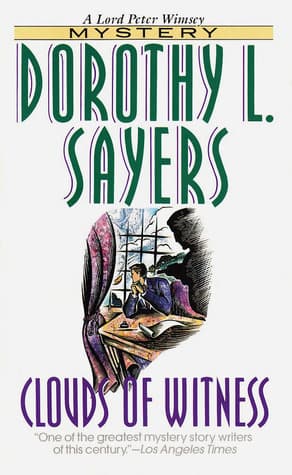
Dorothy L. Sayers (1926)
Genre
Historical Fiction / Mystery
Reading Time
360 min
Key Themes
See below
Sign in to track this book
When his future brother-in-law is murdered and his own brother is accused, Lord Peter Wimsey must navigate aristocratic secrets and a vanishing letter to prevent a bullet from finding its mark on his own kin.
Lord Peter Wimsey is invited to his brother Gerald's (the Duke of Denver) country estate, Riddlesdale Lodge, for a shooting party. Upon arrival, he finds Captain Denis Cathcart, engaged to Peter's sister, Lady Mary Wimsey, shot dead in the conservatory. Gerald, the Duke of Denver, is found holding a smoking pistol near the body, making him the immediate suspect. Gerald claims he found Cathcart already dead and picked up the gun in shock. Lady Mary is distressed and acts erratically. Lord Peter, despite his personal feelings, begins to observe details, knowing he must investigate to clear his brother's name.
Despite Gerald's claims of innocence, local police, led by Inspector Grimethorpe, gather enough circumstantial evidence to arrest the Duke of Denver for Cathcart's murder. The apparent motive is Cathcart's poor reputation and Gerald's disapproval of his engagement to Lady Mary. Lord Peter, convinced of his brother's innocence, decides to take over the investigation himself, to the police's annoyance. He brings his valet, Bunter, to help him, and they meticulously examine the crime scene and question staff and guests, including Lady Mary and Mrs. Grimethorpe.
As Lord Peter investigates, he uncovers several puzzling details. A letter from Egypt, supposedly containing vital information about Cathcart, disappears from Cathcart's room. Lady Mary, acting distressed and suspicious, disappears from Riddlesdale Lodge, taking a train to London. Her flight further implicates her in the murder or suggests she knows more than she admits. Peter and Bunter follow her, realizing her sudden departure connects to the missing letter and secrets surrounding Cathcart's past. They suspect she is either hiding something or is in danger.
Peter's investigation reveals Captain Cathcart had a shady past, particularly in America. It emerges that Cathcart had previously married a wealthy American heiress named Harriet Vane (not the Harriet Vane from later novels). This marriage was kept secret, making Cathcart's motives for marrying Lady Mary suspect—possibly for her social standing and wealth. This discovery provides an alternative motive for Cathcart's murder, suggesting he was a bigamist and fortune hunter, creating enemies beyond the Wimsey family.
Following Cathcart's past, Lord Peter travels to France, where he finds Cathcart's first wife, Harriet Vane. She confirms Cathcart's deceitful nature and details their troubled marriage and his financial schemes. She explains Cathcart had abandoned her and sought to marry Lady Mary for her family's prestige and potential wealth, as he was deeply in debt. This interview confirms Peter's understanding of Cathcart as a manipulative opportunist, providing more reason for someone to want him dead, and strengthens the case against his brother being the only one with a motive.
Back in England, Lord Peter continues his investigation, piecing together Cathcart's complex life. While examining the Riddlesdale Lodge grounds at night, an unseen assailant shoots at Peter. The bullet narrowly misses him, hitting a tree. This confirms the murderer is still at large, is desperate, and will eliminate anyone getting too close to the truth. It also puts Peter's own life in danger, adding urgency and personal risk to his pursuit of justice for his brother.
Through diligent investigation and Bunter's photographic expertise, Peter makes a breakthrough. He realizes the man found dead at Riddlesdale Lodge was not the real Captain Denis Cathcart, but Antoine, a French con artist impersonating Cathcart. The real Captain Cathcart had died earlier in Egypt, and Antoine had assumed his identity to marry Lady Mary and gain access to the Wimsey fortune. This revelation completely reframes the case, as the victim's identity was misunderstood, and the murder motive shifts dramatically.
The missing letter from Egypt, which Lady Mary had intercepted and hidden, contained photographic proof of the real Captain Cathcart's death and Antoine's impersonation. A friend of the real Cathcart sent it. Lady Mary, discovering the deception, confronted Antoine. In panic and rage, she shot him. Overwhelmed by guilt and fear, she confessed the truth to Peter. Her initial erratic behavior, flight, and the disappearance of the letter were all due to her desperate attempt to conceal her involvement and protect her family from scandal.
With Lady Mary's confession, the Duke of Denver is released, but Lady Mary is now arrested and charged with murder. The scandal threatens to destroy the Wimsey family. Lord Peter, despite the emotional toll, dedicates himself to defending his sister. He works tirelessly with his legal team, including Sir Impey Biggs, to present the full story of Antoine's impersonation and Lady Mary's desperation. The trial is highly publicized, and Peter faces the immense challenge of proving his sister's actions were justifiable or at least mitigated by the deception and her emotional state.
During the trial, Lord Peter meticulously presents evidence of Antoine's deceit and Lady Mary's emotional distress. The jury, swayed by the circumstances of the impersonation and Lady Mary's fragile state, acquits her. The Wimsey family is relieved, but the events leave a lasting impact. Lady Mary, deeply affected, eventually finds solace and recovery, largely due to Peter's unwavering support. The case, though personally devastating, solidifies Lord Peter's reputation as a brilliant, if unconventional, detective, willing to go to great lengths for his family.
The Protagonist
Peter's character is deepened as he grapples with the emotional toll of investigating a crime that directly implicates his family, forcing him to balance personal loyalty with the pursuit of truth.
The Supporting
Gerald endures the trauma of being falsely accused and arrested for murder, relying entirely on his brother's detective skills to clear his name and restore his reputation.
The Supporting
Mary moves from a victim of deception to a desperate killer, then faces trial, ultimately finding a path to recovery and forgiveness after her ordeal.
The Supporting
Bunter consistently demonstrates his unwavering loyalty and invaluable investigative assistance, solidifying his role as Peter's most trusted ally.
The Victim/Antagonist
Antoine's arc is entirely posthumous, as his true identity and deceitful past are gradually uncovered, revealing the depths of his villainy and the true motive for his murder.
The Supporting
Harriet's role is to provide exposition about the victim's past, helping to expose his true nature and the depth of his deception.
The Supporting
Sir Impey Biggs serves as the legal champion for the Wimsey family, using his formidable skills to navigate the complexities of the trial and secure an acquittal.
The Supporting
Grimethorpe's initial certainty about the Duke's guilt is challenged and ultimately overturned by Peter's revelations, forcing him to accept the amateur detective's superior insight.
This theme is central to the novel, as Lord Peter is torn between his deep loyalty to his brother and sister and his commitment to finding the truth. His investigation is driven by the desire to clear his brother's name, even when it leads to implicating his sister. The moral dilemma of protecting family at all costs versus serving justice is explored through Peter's internal conflict and his relentless pursuit of facts, no matter how painful. This is clear when he must expose Lady Mary's involvement to save Gerald, and then defend Mary against the law. The entire Wimsey family faces immense pressure, testing kinship bonds against public scrutiny and legal consequences.
““There are limits, even to the patience of a Wimsey, where a brother is concerned.””
The murder plot relies on deception and impersonation. The victim, initially believed to be Captain Cathcart, is revealed to be an imposter, Antoine, who assumed Cathcart's identity for financial gain and social climbing. This theme highlights how appearances can mislead and how a fabricated identity can manipulate others. The missing letter from Egypt and the true identity of the deceased are crucial elements that underscore the pervasive nature of deceit in the story, driving the murder and complicating the investigation. Unraveling this deception is key to solving the crime.
““The man was not Cathcart at all. He was an impostor, a French adventurer.””
The novel explores the pressures and vulnerabilities faced by the aristocracy. The Wimsey family, despite their wealth and social standing, is not immune to scandal, public humiliation, and the legal system. The Duke of Denver's arrest and Lady Mary's trial expose the family to intense scrutiny and potential ruin. Lord Peter, while using his aristocratic connections to aid his investigation, also feels the weight of his family's honor. The contrast between their privileged lifestyle and the real threat of criminal conviction shows that even the highest echelons of society can be brought low by personal failings and unforeseen circumstances. The family's public image is constantly at stake.
““The Duke of Denver in the dock! The thing was monstrous, unthinkable.””
The narrative examines the shifting perceptions of guilt and innocence. Initially, the Duke of Denver seems guilty, only for Peter to prove his innocence. Later, Lady Mary, at first seen as a victim or a distressed witness, is revealed to be the actual perpetrator. However, her guilt is lessened by Cathcart's deception and her emotional distress. The novel questions what truly constitutes guilt when one is provoked by profound betrayal and fear, and how context can alter the moral judgment of an act. It explores the psychological impact of being accused and of committing a crime.
““It’s one thing to commit a murder, but quite another to prove it in cold blood.””
Elements that mislead the investigation and audience.
The most prominent red herring is the initial belief that the Duke of Denver is the murderer, based on his presence with the smoking gun and his known disapproval of Cathcart. Lady Mary's erratic behavior and flight also serve as a red herring, suggesting her guilt in a more direct way than the truth. These diversions effectively misdirect both the official police and the reader, building suspense and making the eventual reveal of Antoine's impersonation and Lady Mary's true involvement more shocking and impactful. They force Peter to look beyond the obvious.
A crucial piece of evidence that disappears, complicating the mystery.
The letter from Egypt, containing a photograph of the real Captain Cathcart and proof of his death, is a critical piece of missing evidence. Its disappearance and eventual recovery are central to unraveling the imposter plot. Lady Mary's interception and concealment of this letter initially obstruct the investigation but ultimately provide the key to understanding the victim's true identity and her motive. The search for this letter drives a significant portion of Peter's investigation and highlights the critical role of hidden information.
The core deception that underpins the entire murder mystery.
The plot device of impersonation is fundamental to 'Clouds of Witness'. The victim's true identity as Antoine, an imposter posing as Captain Cathcart, is the central twist that redefines the entire crime. This deception changes the motive, the potential suspects, and the very nature of the murder. It allows for a layered mystery where the initial assumptions about the victim and the crime are entirely overturned, showcasing Sayers' skill in constructing complex and misleading narratives. It forces Peter to question everything he initially believes.
The contrast between Lord Peter's methods and those of the official police force.
This device highlights the differences between Lord Peter Wimsey's unconventional, intuitive, and aristocratic approach to detection and the more rigid, procedure-bound methods of Inspector Grimethorpe and the official police. Peter's access to resources, his intellectual freedom, and his ability to see beyond the obvious allow him to uncover truths that elude the professionals. This contrast not only showcases Peter's brilliance but also critiques the limitations of formal law enforcement, especially when faced with a highly complex and aristocratic crime. It reinforces the trope of the genius amateur.
“It is not wealth that matters, but the use to which it is put.”
— Lord Peter Wimsey discussing the responsibilities of the wealthy.
“The public demands a certain amount of sensationalism, and if you don't provide it, they'll invent it.”
— A newspaper editor discussing the nature of public interest and media.
“There are only two kinds of women, the plain and the painted.”
— Lord Peter making a somewhat cynical observation about female appearance.
“One can always tell a gentleman by his boots.”
— A character making a class-based observation about personal grooming.
“The greatest joy of all is to comprehend what is incomprehensible.”
— Lord Peter reflecting on the intellectual challenge of solving a mystery.
“There's nothing so dangerous as a good woman thoroughly roused.”
— A character commenting on the unexpected strength of a seemingly gentle woman.
“Facts are chiels that winna ding, and downa be disputed.”
— Lord Peter quoting Robert Burns to emphasize the undeniable nature of evidence.
“The only way to get rid of a temptation is to yield to it.”
— A character making a witty, if morally ambiguous, remark.
“It's a great mistake to think you can explain everything.”
— Lord Peter acknowledging the limits of human understanding.
“Murder is a messy business, even when it's done by a gentleman.”
— Bunter commenting on the grim reality of crime, despite the perpetrator's social standing.
“One must always be prepared for the unexpected.”
— Lord Peter emphasizing the need for readiness in investigations.
“The law is a ass, a idiot.”
— A character expressing frustration with legal complexities and perceived injustices.
“There are some things in life that are more important than being right.”
— Lord Peter reflecting on personal relationships and the pursuit of truth.
“The truth is rarely pure and never simple.”
— Lord Peter, quoting Oscar Wilde, on the nature of truth in a complex case.
Ready to see how well you understood this book? Take our interactive quiz with 10 questions.
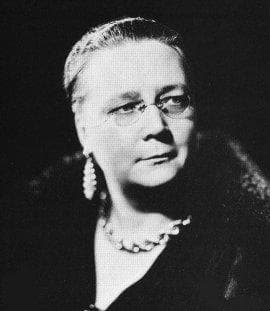
Dorothy Leigh Sayers was an English crime writer and poet. She was also a student of classical and modern languages.







