“Perhaps all things, even people, have two sides, two names. Like a cloud and a wallfish.”
— A thought about duality and hidden identities, tying into the book's title.

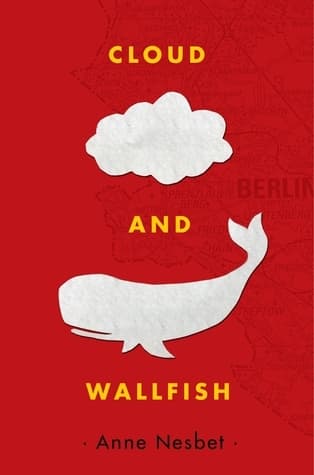
Anne Nesbet (2016)
Genre
Children's / Historical Fiction / Mystery / Young Adult
Reading Time
800 min
Key Themes
See below
Sign in to track this book
Whisked behind the Iron Curtain, a stuttering boy discovers his life is a lie, forcing him to navigate a world of spies and secrets while unraveling the mystery of his true identity and the disappearance of his friend's parents.
One ordinary afternoon, Noah Keller, an eleven-year-old boy with an 'Astonishing Stutter,' is unexpectedly pulled from school by his parents. In the car, they drop a bombshell: his name isn't Noah, he didn't just turn eleven, and he must now be called Jonah Brown. They explain new, cryptic rules – 'They' are always listening, and serious conversations are forbidden indoors. Without further explanation, they rush to the airport, leaving Noah bewildered and unable to ask questions due to both his stutter and the new rules. This marks the beginning of their journey behind the Iron Curtain, into East Berlin, where Noah's life as he knows it ceases to exist, replaced by a world of secrets and unspoken fears.
Jonah and his parents arrive in East Berlin, a city that feels starkly different from his previous life. They move into a small, functional apartment in a communist-era building. The atmosphere is oppressive, with a constant sense of surveillance and suspicion. Jonah's parents, particularly his mother, seem to adapt quickly, speaking German fluently and navigating the new environment with an unsettling ease. Jonah struggles to adjust to the drab surroundings, the scarcity of goods, and the constant feeling of being watched. The 'rules' laid out by his parents become even more critical, reinforcing the widespread fear of 'Them' – the shadowy authorities he cannot fully comprehend.
Soon after their arrival, Jonah meets Claudia, a girl who lives in the apartment below theirs. Claudia, whom Jonah affectionately renames 'Cloud' due to her dreamy, often distant demeanor, is also lonely and seems to carry her own set of unspoken burdens. She is roughly Jonah's age and becomes his primary companion in this new, alien world. Cloud introduces Jonah to the nuances of life in East Berlin, including the ration system, the state-controlled media, and the widespread fear of the Stasi. Their friendship quickly deepens, providing both children with a much-needed sense of connection and a shared understanding of their unusual circumstances.
To navigate the constant surveillance and the difficulty of speaking freely, Jonah and Cloud develop a secret game they call 'Wallfish.' This game involves writing messages on slips of paper, often hidden within the walls or passed discreetly, and communicating in codes and metaphors. The 'Wallfish' are their secret selves, able to move unseen and share truths that cannot be spoken aloud. This game becomes their primary method of discussing their suspicions about their parents, the true nature of their situation, and the mysteries surrounding Cloud's own family. It allows them to maintain a degree of agency and connection in an environment designed to isolate and control.
As their friendship grows, Cloud eventually confides in Jonah about her parents. She reveals that they were taken away by the authorities, likely the Stasi, for reasons she doesn't fully understand, leaving her in the care of her grandmother. This revelation deeply impacts Jonah, making the abstract threat of 'Them' terrifyingly real and personal. It underscores the brutal reality of life under the communist regime and the arbitrary nature of its power. Cloud's story fuels Jonah's own growing suspicions about his parents' true motives and the real danger they might all be in, intensifying his desire to uncover the truth.
Jonah starts noticing inconsistencies and peculiar behaviors from his parents. His mother, who previously seemed like a typical American mom, exhibits remarkable linguistic skills and an unusual awareness of East German customs and political sensitivities. His father, too, displays a secretive demeanor, often disappearing for long periods. Through eavesdropping, observing their coded conversations, and finding hidden documents, Jonah begins to suspect that his parents are not who they claim to be and that their move to East Berlin is part of a larger, covert operation. The 'Wallfish' game becomes crucial for him and Cloud to share these observations and develop theories.
The presence of the Stasi, East Germany's secret police, becomes increasingly clear. Jonah and Cloud notice suspicious individuals observing their building, hear strange noises from the apartment above, and find evidence of their own apartment being searched. These incidents confirm their fears that they are under constant surveillance. The children learn to be even more careful with their 'Wallfish' communications and outdoor play, understanding that any misstep could have severe consequences. The Stasi's shadow looms large over their daily lives, turning ordinary actions into potential acts of defiance.
Through a combination of his own cleverness and Cloud's insights, Jonah eventually deciphers a coded message or a series of clues left by his parents. This discovery reveals that his parents are not simply fleeing something but are involved in an intelligence operation. They are working as spies, perhaps trying to help people escape East Germany or gather vital information. This revelation is a massive shock, explaining their secretive behavior, the sudden move, and the extreme caution they've impressed upon him. It also brings a new layer of danger and responsibility to Jonah's understanding of his family's situation.
With the truth about his parents' espionage activities revealed, Jonah begins to connect the dots to Cloud's missing parents. He realizes that his parents' mission might involve helping dissidents or those imprisoned by the regime to escape to the West. There are subtle hints, perhaps a specific date or a location, that suggest a coordinated effort. This understanding adds a new urgency to Jonah's perspective, transforming his initial fear and confusion into a sense of purpose and a desire to help. He and Cloud become more actively involved, using their 'Wallfish' game to gather information or relay subtle signals, though the full extent of their involvement remains carefully managed by his parents.
The climax of the story involves a tense and dangerous operation, likely an escape attempt for several individuals, possibly including Cloud's parents, across the Berlin Wall or through a heavily guarded checkpoint. Jonah and Cloud, despite their young age, play a small but critical role, perhaps by creating a distraction, relaying a signal, or observing a particular detail. The operation is fraught with peril, with the constant threat of discovery by the Stasi. While the immediate outcome of the escape is ambiguous or partially successful, it marks a turning point. Jonah's parents' mission culminates, and the children witness the high stakes of their world.
Following the intense climax, Jonah and his parents eventually leave East Berlin, though the exact circumstances of their departure are carefully managed and not without lingering tension. They return to a life that, while safer, is forever changed by their experiences. The secrets and the 'rules' may diminish, but the memory of the Wall, the Stasi, and the bravery and fear they witnessed remain. Jonah has matured significantly, his stutter perhaps still present but less defining, and his understanding of the world profoundly deepened. The fate of Cloud and her parents, while not fully resolved for Jonah, leaves a lasting impact on him, highlighting the human cost of political division.
The Protagonist
Noah transforms from a bewildered child into a more mature and courageous individual, learning to navigate danger and understand the complexities of espionage and political oppression.
The Supporting
Cloud finds companionship and a renewed sense of hope through her friendship with Jonah, allowing her to process her grief and confront her fears.
The Supporting
She maintains her stoic facade, but her actions reveal her deep love for Jonah and her unwavering commitment to her mission.
The Supporting
His character remains largely consistent in his commitment to the mission, but his actions reveal the depth of his protective instincts towards Jonah.
The Antagonist
The Stasi remain a persistent, oppressive force, their power unchallenged within the narrative's scope, representing the larger societal conflict.
The Supporting
Her character remains a static representation of quiet resilience and maternal love amidst oppression.
The novel explores how identity is shaped by external circumstances and internal truths. Noah is forced to shed his name and past, becoming 'Jonah Brown,' and must reconcile his previous self with his new, secretive life. His journey involves questioning who he is without his familiar context, and discovering hidden strengths and curiosities. His stutter, a core part of his original identity, becomes less defining as he finds new ways to communicate and assert himself in the face of danger. The theme is highlighted as he grapples with his parents' dual identities and the stark contrast between their public and private lives.
“What if your name wasn’t your name? What if you weren’t the person you thought you were?”
The widespread nature of secrets and surveillance is central to the narrative, reflecting life behind the Iron Curtain. Jonah's parents impose strict 'rules' about not talking about serious things indoors, creating an atmosphere of constant suspicion and fear. The 'They' who are always listening represent the omnipresent Stasi, whose surveillance apparatus affects every aspect of life in East Berlin. The children's 'Wallfish' game is a direct response to this theme, a secret language and method of communication designed to evade watchful eyes and ears. This theme underscores the psychological toll of living in a society where trust is a luxury.
“Rule Number Two: Don’t talk about serious things indoors, because Rule Number One: They will always be listening.”
In a world designed to isolate and control, the friendship between Jonah and Cloud-Claudia becomes a vital source of strength and connection. Both children are lonely and carrying heavy burdens – Jonah with his parents' secrets, Cloud with the disappearance of hers. Their bond allows them to share fears, theorize about their circumstances, and find solace in mutual understanding. The 'Wallfish' game is a testament to their deep connection, enabling them to communicate truths that cannot be spoken aloud. Their friendship provides emotional support and practical assistance, demonstrating the power of human connection to resist oppression.
“We were Wallfish, moving through the walls, seeing things no one else saw. Knowing things no one else knew.”
The novel constantly questions what is real and what is a fabrication. Jonah is confronted with layers of deception: his own changed identity, his parents' covert lives, and the state-sponsored propaganda of East Germany. He must learn to discern truth from lies, both from his family and from the world around him. The narrative highlights how truth can be hidden, manipulated, or actively suppressed by authorities, and how individuals must develop critical thinking to uncover it. This theme is crucial as Jonah pieces together clues about his parents' mission and the fate of Cloud's family.
“It was like living in a world made of whispers and shadows, where nothing was quite what it seemed.”
Noah's speech impediment, which paradoxically enhances his observational skills.
Noah's stutter, which he calls his 'Astonishing Stutter,' is more than just a speech impediment; it's a character trait that significantly impacts his interactions and perception. Because speaking is difficult, Noah often internalizes his thoughts and becomes a keen observer of his surroundings. This makes him particularly adept at noticing subtle details, body language, and inconsistencies, which are crucial for uncovering his parents' secrets and understanding the dangers of East Berlin. The stutter also serves as a barrier, forcing him to find alternative, often more creative, ways to communicate, like the 'Wallfish' game.
A set of cryptic instructions given by Jonah's parents to ensure their survival and secrecy.
The 'Rules' are a crucial plot device introduced immediately, setting the tone of secrecy and danger. Rules like 'They will always be listening' and 'Don't talk about serious things indoors' are initially bewildering to Jonah but quickly become a grim reality. These rules serve multiple functions: they highlight the pervasive surveillance in East Berlin, force Jonah to adapt to his new environment, and create tension by restricting his ability to ask questions. They also underscore the extreme danger his parents are involved in, slowly revealing the high stakes of their mission and the constant threat of the Stasi.
A secret communication system developed by Jonah and Cloud to evade surveillance.
The 'Wallfish' game is a central plot device that allows Jonah and Cloud to communicate freely and share information without fear of being overheard. It involves writing coded messages, using metaphors, and hiding notes in various locations. This game is essential for their emotional well-being, providing a safe space for their friendship and mutual understanding. More importantly, it becomes a practical tool for espionage, enabling them to piece together clues about their parents' activities, the Stasi, and the mysteries of their shared world, ultimately playing a role in the climax of the story.
The physical and symbolic barrier dividing East and West Berlin, representing oppression and hope.
The Berlin Wall serves as both a literal and symbolic plot device. Physically, it is the impassable barrier that traps Jonah and Cloud in East Berlin, emphasizing the lack of freedom and the strict control of the communist regime. Symbolically, it represents the larger ideological division between the East and West, and the oppression faced by those living under totalitarian rule. Its presence constantly reminds the characters of their confinement and the dangers of attempting to cross it, making any thought of escape or connection to the outside world a perilous endeavor and driving much of the underlying tension in the narrative.
“Perhaps all things, even people, have two sides, two names. Like a cloud and a wallfish.”
— A thought about duality and hidden identities, tying into the book's title.
“The past is a tricky thing. Sometimes it's like a locked box, and sometimes it's like a ghost.”
— A reflection on the nature of history and memory, especially secrets.
“Sometimes you have to pretend to be brave until you actually are.”
— A lesson learned about courage and facing fear.
“Being alone isn't always lonely. Sometimes it's just quiet.”
— A character's realization about solitude versus loneliness.
“Truth is like a puzzle. You have to find all the pieces before you can see the whole picture.”
— A metaphor for the investigative process and uncovering secrets.
“Even the smallest lies can grow into the biggest troubles.”
— A warning about the consequences of deceit.
“Sometimes the most ordinary things are the ones that hold the most extraordinary secrets.”
— A hint at the hidden depths within everyday life.
“The world outside your window is bigger and stranger than you can imagine.”
— A young character's growing awareness of the wider world beyond their familiar surroundings.
“Fear can make you do things you never thought you would.”
— A comment on the powerful influence of fear on human actions.
“It's hard to know who you are when everyone else has already decided for you.”
— A struggle with identity, particularly when others impose expectations.
“A secret shared isn't a secret anymore.”
— A simple but profound statement about the nature of secrets.
“History isn't just dates and names; it's the stories of people, and those stories can change everything.”
— An understanding of history as personal narratives that impact the present.
“Sometimes the best way to find what you're looking for is to stop looking so hard.”
— A paradoxical approach to problem-solving or discovery.
“Even in the darkest times, there's always a little bit of light, if you know where to look.”
— A message of hope and resilience amidst difficulty.
Ready to see how well you understood this book? Take our interactive quiz with 10 questions.

Dan Gemeinhart
4.5

Kate O'Hearn
4.4

Jeanne Birdsall
4.4

Jen Wang
4.4

Wendelin Van Draanen
4.3

John Marsden
4.3

Chris Van Allsburg
4.3
Jennifer A. Nielsen
4.2