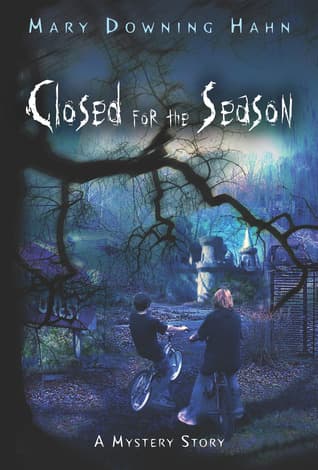
“The house looked like a giant, sleeping creature, its windows dark eyes half-closed against the world.”
— Describing the old house where the mystery unfolds.

Mary Downing Hahn (2009)
Genre
Children's / Mystery / Young Adult
Reading Time
180 min
Key Themes
See below
Sign in to track this book
Two 13-year-old boys uncover a decades-old murder linked to their new home and an abandoned amusement park, exposing their small town's secrets.
Thirteen-year-old Logan Forbes and his parents move from Baltimore to Hillsdale, Maryland, into a large, old Victorian house. Logan quickly learns from neighborhood kids that the house has a dark history: a murder happened there years ago. A woman named Liza Hempsteader was killed in the living room, and her husband, Mr. Hempsteader, was accused and imprisoned. This news immediately fascinates Logan, giving him a strange connection to the house and its past. He starts exploring, looking for clues, and Liza's death becomes his obsession.
Logan soon meets Arthur Roth, a boy his age who lives nearby. Arthur is initially uninterested in Logan's fascination with the murder, preferring to read or play video games. He sees Logan's theories as childish. However, Logan's enthusiasm and his observations about the house slowly begin to intrigue Arthur. Despite his reluctance, Arthur joins Logan's quest, and a friendship forms between the two boys as they explore the house together, searching for any overlooked details or hidden passages that might explain the past.
Logan and Arthur begin a thorough search of the house for anything related to Liza Hempsteader's murder. They find a hidden compartment in the living room wall, where they discover a small, silver locket and a faded photograph of a young woman who looks like Liza. These finds strengthen their belief that there is more to the story than what was reported. They also notice details about the house's layout and original furnishings, leading them to think the official story of a simple spousal murder might be incomplete or false. The house itself seems to hold secrets, pushing them to find the truth.
To get more information, Logan and Arthur visit the Hillsdale Public Library. They meet Mr. Henderson, an elderly local historian who knows everything about the town's past. Mr. Henderson, at first hesitant to discuss the Hempsteader murder, eventually shares details about the family and local gossip. He mentions that Liza Hempsteader was known for her beauty and charm, but also for being flighty and having many admirers. He also hints that Mr. Hempsteader, despite his conviction, was considered a quiet man, making the crime seem out of character to some.
During their research, Logan and Arthur find an old newspaper clipping mentioning Liza Hempsteader's connection to a local amusement park called 'Dreamland Park.' The park has been closed for years, earning it the nickname 'Closed for the Season.' They learn that Liza had worked there as a ticket taker and visited the park even after she married. This discovery gives them a new lead, moving their investigation from the house to a larger, potentially dangerous place. The boys decide to visit the abandoned amusement park next.
Ignoring the 'No Trespassing' signs and the broken fence, Logan and Arthur sneak into Dreamland Park. The park is a decaying version of its former self, with rusted rides, overgrown paths, and a sad atmosphere. They explore the attractions, feeling the eerie silence and imagining Liza's presence there years ago. They find an old, forgotten photo booth with undeveloped film, hoping it holds a clue. The park's atmosphere is unsettling, emphasizing the seriousness of their investigation and the darkness surrounding Liza's death.
Back at Logan's house, the boys develop the film from the photo booth. The photographs show Liza Hempsteader in playful poses, but one photo stands out: Liza is with a man who is clearly not Mr. Hempsteader. The man is tall, dark-haired, and has a distinct scar above his eye. This discovery is a breakthrough, suggesting Liza was having an affair and providing a possible motive for someone other than her husband. The image breaks the simple murder story and opens up a more complex set of possibilities.
Armed with the new photograph, Logan and Arthur return to Mr. Henderson at the library, showing him the picture. Mr. Henderson immediately recognizes the man as Mr. Silas Blackwood, a prominent and wealthy businessman in Hillsdale. Blackwood owned several local properties, including Dreamland Park. He was known for his ruthless business practices and his charming, manipulative personality. The revelation that Liza was involved with such a powerful and potentially dangerous man adds fear and urgency to the boys' investigation. They realize they are in a risky situation.
Logan and Arthur discreetly investigate Silas Blackwood, learning more about his reputation and past involvement with Dreamland Park. They discover that Blackwood was possessive and vindictive, especially when relationships ended. They also find out that Liza had been trying to end her affair with Blackwood shortly before her death. This information paints a clear picture of a man with both motive and opportunity, and the boys begin to suspect Blackwood might have framed Mr. Hempsteader. Their suspicions grow, and they know they must find concrete proof.
Driven by a hunch, Logan re-examines the hidden compartment in the living room, feeling around more thoroughly. He discovers a small, leather-bound diary tucked away behind a loose brick. The diary belongs to Liza Hempsteader. Reading it, the boys find entries detailing Liza's affair with Silas Blackwood, her growing fear of him, and her attempts to end their relationship. Liza wrote about Blackwood's threats and his possessive nature, and a chilling entry describes her fear that he would harm her if she left him. The diary directly links Blackwood to Liza's terror, strongly suggesting he was involved in her death.
The final entries in Liza's diary are horrifying. She describes a confrontation with Silas Blackwood in her living room, where she ended their affair. Blackwood, enraged, attacked her. The diary details his violent outburst and her struggle, confirming he was the murderer. She wrote frantically about her fear that he would frame her innocent husband. The diary reveals that Blackwood planted evidence to implicate Mr. Hempsteader, ensuring his conviction. Logan and Arthur are horrified by the detailed account of the murder and the injustice Mr. Hempsteader suffered; they are now sure they have found the truth.
Armed with Liza's diary, the locket, the photograph, and their research, Logan and Arthur present their evidence to the Hillsdale police. Initially skeptical, the police are convinced by the overwhelming and consistent details in the diary. The new evidence leads to a re-opening of the Hempsteader case. Silas Blackwood is arrested, and after a swift investigation, Mr. Hempsteader's original conviction is overturned. Mr. Hempsteader is released from prison, finally cleared of a crime he did not commit. Logan and Arthur, having solved the decades-old murder, feel a sense of accomplishment and justice, bringing closure to a long-standing tragedy in Hillsdale.
The Protagonist
Logan transforms from a new kid seeking excitement to a determined detective who brings justice to a decades-old crime.
The Supporting
Arthur evolves from a reluctant participant to an engaged and essential partner in solving the mystery.
The Victim
Though deceased, Liza's character is revealed through her diary, shifting from a mysterious victim to a woman trapped in a dangerous situation.
The Mentioned
Mr. Hempsteader remains a static character, but his journey moves from wrongful imprisonment to freedom.
The Antagonist
Blackwood's hidden villainy is gradually exposed, leading to his eventual downfall and arrest.
The Supporting
Mr. Henderson's role remains consistent as a helpful, knowledgeable source of information for the boys.
The Supporting
Their role remains constant as supportive parental figures.
The main theme is Logan and Arthur's determination to uncover the truth behind Liza Hempsteader's murder and correct the injustice done to Mr. Hempsteader. Their investigation is driven by a strong moral sense, pushing them to challenge the accepted story and expose the real killer. This theme is clear in their careful research at the library, their brave exploration of the abandoned Dreamland Park, and their persistence in connecting clues like the locket, the photograph, and Liza's diary, all to ensure justice.
““Some things just aren’t right, Arthur. Someone got away with murder, and an innocent man paid for it.””
The past is a living part of 'Closed for the Season,' always influencing the present. The old Victorian house holds secrets from decades ago that refuse to stay hidden. The abandoned Dreamland Park is another link to the past, a decaying reminder of forgotten joys and hidden sorrows. The boys' entire quest is about finding and understanding past events to fix a present injustice. The past is not just a background but an active force, shaping the lives of characters, both living and dead, and demanding to be known.
““This house… it remembers. It remembers everything that happened here.””
The growing friendship between Logan and Arthur is a key part of the novel. At first, Arthur is reluctant and skeptical, but his loyalty to Logan and their shared adventure build a strong bond. They support each other, balance each other's strengths and weaknesses (Logan's impulsiveness versus Arthur's caution), and rely on each other through dangerous discoveries. Their partnership is essential to solving the mystery, showing that even young boys can achieve great things when working together and trusting each other. Their bond deepens with every clue they uncover and every risk they take.
““We’re in this together, right? No matter what.””
The novel explores how appearances can mislead, showing the difference between public perception and hidden realities. Silas Blackwood, a seemingly respected businessman, is revealed to be a manipulative murderer. The initial assumption that Mr. Hempsteader, a quiet man, could kill his wife is an example of misjudgment based on superficial understanding. The entire town of Hillsdale, outwardly peaceful, hides a dark secret. The boys' investigation uncovers these layers of deception, revealing the complex and often sinister truths beneath the surface of everyday life.
““People aren’t always what they seem on the outside.””
The old Victorian house serves as a central hub of mystery and past events.
The house Logan's family moves into is not literally haunted by ghosts, but it carries the 'ghost' of a past murder. It acts as a catalyst for the plot, immediately drawing Logan into the mystery. The house itself holds physical clues (the hidden compartment, the locket, the diary) and a pervasive atmosphere of its dark history, creating a sense of unease and driving the boys' curiosity. It functions as a character in its own right, a silent witness to the crime, urging the protagonists to uncover its secrets.
Dreamland Park provides an eerie, symbolic setting for crucial discoveries.
Dreamland Park, 'Closed for the Season,' is a classic gothic setting that symbolizes decay, forgotten dreams, and lingering secrets. Its dilapidated state mirrors the unresolved nature of Liza's murder. It's in this eerie, neglected place that the boys find the crucial photo booth and the undeveloped film, directly connecting Liza to Silas Blackwood. The park's atmosphere of past joy turned to present desolation effectively heightens the suspense and underscores the gravity of the dark events tied to it.
Liza's diary serves as a direct, posthumous narrative voice, revealing the truth.
The discovery of Liza Hempsteader's hidden diary is the ultimate plot device, providing a direct, first-person account of the events leading up to and including her murder. It functions as a 'voice from the grave,' offering an undeniable and emotional revelation of the truth. The diary not only confirms the identity of the killer but also details Blackwood's motive and his plan to frame Mr. Hempsteader, serving as the irrefutable evidence needed to solve the cold case and bring about justice.
Arthur's initial skepticism provides contrast and grounds Logan's adventurous spirit.
Arthur Roth serves as the skeptical sidekick to Logan's enthusiastic detective. This dynamic is a common narrative device that allows for character development and adds realism. Arthur's initial doubt and logical questioning provide a necessary counterpoint to Logan's more impulsive nature, preventing the investigation from becoming too fantastical. His skepticism makes the eventual acceptance of the mystery more convincing and highlights the growing bond between the boys as he becomes fully invested in the pursuit of truth.
“The house looked like a giant, sleeping creature, its windows dark eyes half-closed against the world.”
— Describing the old house where the mystery unfolds.
“Sometimes you have to dig a little deeper to find the real story, the one no one wants to talk about.”
— Matt's realization about the town's secrets.
“Fear has a way of making you see things that aren't there, and not see things that are.”
— Reflecting on how fear can distort perception.
“The past isn't just behind us; sometimes it's right here, lurking in the shadows.”
— Considering the lingering influence of past events.
“It's funny how a place can feel so alive even when it's supposed to be empty.”
— Describing the atmosphere of the abandoned amusement park.
“Gossip is like a wildfire; it spreads fast and leaves destruction in its wake.”
— Discussing the impact of rumors in the small town.
“Some secrets are like heavy stones; they can weigh a person down until they can't breathe.”
— Exploring the burden of keeping secrets.
“Even good people can do terrible things when they're desperate or scared.”
— A reflection on human nature and desperation.
“The truth doesn't always set you free; sometimes it just makes things more complicated.”
— Realizing the complex consequences of uncovering the truth.
“He learned that day that silence could be louder than any scream.”
— Experiencing the chilling quiet of a significant moment.
“The world keeps turning, even when your own world feels like it's stopped completely.”
— A moment of reflection on personal grief amidst ongoing life.
“You can't outrun your past, no matter how fast you try to go.”
— Understanding the inevitability of confronting past events.
“Sometimes the scariest things aren't ghosts or monsters, but the secrets people keep.”
— A central theme of the book, contrasting supernatural and human fears.
Ready to see how well you understood this book? Take our interactive quiz with 10 questions.

Biography coming soon.

Dan Gemeinhart
4.5
Kate O'Hearn
4.4

Jeanne Birdsall
4.4

Jen Wang
4.4

Wendelin Van Draanen
4.3

John Marsden
4.3

Chris Van Allsburg
4.3
Jennifer A. Nielsen
4.2