“Time is a great river, and we are all swept along in its current.”
— A character reflects on the nature of time and destiny.

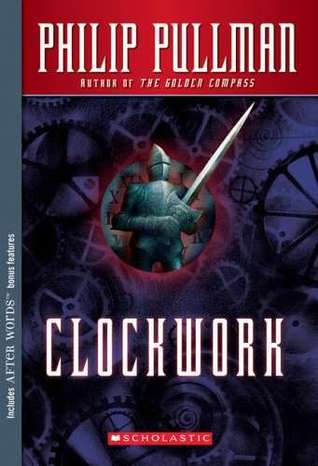
Philip Pullman (1996)
Genre
Fantasy / Children's / Mystery / Science Fiction / Young Adult
Reading Time
90 min
Key Themes
See below
Sign in to track this book
As a writer's dark fairy tale unfolds to cheer a clockmaker's apprentice, its chilling characters, from a nefarious doctor to a prince with a ticking heart, inexorably wind their way into reality, threatening to bring the story's urgent magic to life.
On the eve of the annual Clockwork Festival in Glockenheim, Fritz, a writer, is trying to finish a new story. He has invented the characters of Dr. Kalmenius, a sinister clockmaker, and Prince Otto, whose life is saved by a clockwork heart. Fritz is stuck and cannot find an ending. Meanwhile, Karl, an apprentice clockmaker, is distressed because he has failed to create a figure for the festival's clock. His master, Master Ludd, is away, and Karl knows he will be disgraced. He fears he has no creative spark. He encounters Fritz, who, trying to cheer him up, begins to tell him the unfinished story, including a mechanical knight named Sir Ironsoul.
As Fritz tells his tale to Karl, a stranger arrives at the White Horse Inn. This imposing figure introduces himself as Sir Ironsoul, a knight made of clockwork. He claims to be on a quest to find Prince Otto, whom he is sworn to protect. Gretl, the innkeeper's daughter, is immediately wary of him. Sir Ironsoul's arrival is similar to the character Fritz had just described, unsettling both Fritz and Karl. Fritz is horrified, realizing his story is coming to life, but he cannot explain how. Sir Ironsoul's quest for Prince Otto sets the stage for events in Glockenheim.
Desperate about his unfinished clockwork figure, Karl wanders through town. He encounters Dr. Kalmenius, a master clockmaker with an unsettling aura, who offers to help Karl. Kalmenius says he has a clockwork figure Karl can present as his own, saving him from disgrace. Karl, overwhelmed and wanting an easy solution, accepts. Unbeknownst to Karl, Kalmenius has a deeper, sinister motive. He is manipulating events, using Karl as a pawn in a larger scheme involving Prince Otto and the clockwork heart. Kalmenius's intervention directly links Karl to the dangerous narrative.
During the Clockwork Festival, Karl unveils the figure from Dr. Kalmenius. It is a life-sized figure of a young boy. The townspeople are impressed, and Karl feels a moment of relief. However, this relief is short-lived. Almost immediately after, the real Prince Otto arrives in Glockenheim, with his nursemaid, Frau Eleonora. Prince Otto is a frail young boy whose life depends on a delicate clockwork heart. He has come to Glockenheim to have Dr. Kalmenius repair his failing heart. The two 'Prince Ottos' at the festival create tension, and the danger to the real prince becomes clear.
Sir Ironsoul, seeing the clockwork figure Karl presented, believes it is Prince Otto. He pledges his loyalty to the mechanical boy, mistaking it for the one he is sworn to protect. This confusion plays into Dr. Kalmenius's hands. Kalmenius intends to replace the ailing clockwork heart of the real Prince Otto with a new, more powerful, but destructive, mechanism that will give the prince immense strength but also a dark, unfeeling nature. He plans to perform this procedure, a transformation, during the festival, using the distraction to his advantage. The stage is set for a perilous exchange.
Gretl, observing the strange events and Dr. Kalmenius, grows suspicious. She notices the resemblance between Karl's clockwork figure and the real Prince Otto. Feeling foreboding, she follows Kalmenius and overhears parts of his plan to replace Prince Otto's heart. She also realizes that Sir Ironsoul, the clockwork knight, is not entirely autonomous; he is bound by specific commands. Gretl's intelligence and bravery lead her to understand the danger facing Prince Otto and the town. She knows she must act to prevent Kalmenius's plot from succeeding.
Gretl confronts Dr. Kalmenius as he prepares to operate on Prince Otto. She tries to warn Frau Eleonora and the prince, but Kalmenius, using his hypnotic influence and the confusion from Sir Ironsoul, proceeds with his plan. Kalmenius intends to replace Prince Otto's failing heart with a new, more powerful, but destructive, mechanism. During the struggle, the real Prince Otto's clockwork heart is removed. Gretl, with quick thinking, grabs the old heart, preventing Kalmenius from destroying it immediately. The fate of Prince Otto hangs in the balance as the procedure unfolds.
Realizing Sir Ironsoul is programmed to protect Prince Otto, Gretl understands she can manipulate his strict commands. She shows Sir Ironsoul the new, dark heart Kalmenius has implanted in the prince, and then presents the old, failing heart, saying that the 'real' Prince Otto is in danger. This creates a paradox in Sir Ironsoul's programming. His internal conflict leads him to self-destruct in a burst of clockwork gears and springs, destroying Kalmenius's workshop and his creations. Kalmenius himself is caught in the explosion and seemingly destroyed by his own devices.
In the chaos, Gretl manages to reinsert the original, failing clockwork heart into Prince Otto. While it is still weak, it is enough to sustain him. With Dr. Kalmenius gone and Sir Ironsoul destroyed, the immediate danger passes. Fritz, witnessing the ordeal, is relieved and shaken. He realizes the power and responsibility that comes with storytelling; his unfinished tale had manifested into reality, with dire consequences. He understands that stories, once told, take on a life of their own and can impact the world. The events change his perspective on his craft.
In the aftermath, Karl, inspired by Gretl's bravery and having faced the consequences of his shortcut, finds his true calling. He realizes that the clockwork figure he presented was, in fact, what Prince Otto was meant to be, a clockwork boy with a strong heart, not the real prince. He is now determined to create his own figures, with genuine artistry. Prince Otto, though still frail, is safe. The characters reflect on how their lives became intertwined with Fritz's story. Fritz finally understands how to finish his tale, not by inventing a new ending, but by recounting the events that actually transpired, recognizing that the story had written itself, and they were all part of it. The festival concludes, leaving a changed Glockenheim.
The Supporting
From a frustrated storyteller, he transforms into someone who understands the profound, almost magical, power and responsibility of creation.
The Protagonist
He learns to trust his own abilities and reject shortcuts, finding his true calling as a clockmaker.
The Protagonist
She develops from a watchful observer to a proactive hero, saving the day through her intelligence and courage.
The Antagonist
He remains a static character, driven by his dark ambition, ultimately meeting his end through his own creations.
The Supporting
He is a static character whose programming is exploited, leading to his dramatic, self-sacrificing end.
The Supporting
His physical state remains fragile, but he is saved from a dark transformation, retaining his true self.
The Supporting
She learns to be more discerning about who to trust, recognizing true danger.
The Mentioned
Not present in the story, but his influence motivates Karl's journey.
Stories, once conceived, can take on a life of their own and even manifest into reality. Fritz's casual narration of his unfinished tale directly leads to the arrival of Sir Ironsoul and the unfolding of the plot. This shows the impact of creativity and imagination, suggesting that authors are not just inventors but also creators of worlds that can intersect with our own. The book blurs the lines between fiction and reality, making the reader question the nature of creation itself and the responsibility that comes with it.
“A story is not a thing you can simply make up. It is a thing that exists, and you discover it.”
This theme explores what makes someone 'real' or authentic. Prince Otto's clockwork heart raises questions about the distinction between human and machine, life and artifice. Karl's struggle to create his own figure versus using Kalmenius's emphasizes the importance of genuine effort and self-expression over imitation or shortcuts. Sir Ironsoul, a perfectly crafted automaton, is a character without a soul, showing the limitations of mechanical perfection. The story suggests that true identity comes from within, from one's own efforts and choices, rather than from external appearances or borrowed creations.
“He knew it wasn't his own work, and that made it hollow.”
The conflict between Dr. Kalmenius's ambition and the efforts of Gretl and Karl represents the struggle between good and evil. Kalmenius embodies a cold, calculating evil, driven by a desire to control and transform life for his own ends. Gretl, on the other hand, represents courage, empathy, and the willingness to fight for what is right. Karl's initial temptation to take a shortcut and his subsequent redemption show the importance of moral choice and the consequences of one's decisions. The story emphasizes that even small choices can have far-reaching ethical implications.
“There was no kindness in his heart, only the intricate, cold precision of gears and springs.”
The narrative plays with the idea of destiny versus choice. Sir Ironsoul is a character whose actions are determined by his programming, representing mechanical determinism. However, Gretl's ability to manipulate his programming and the characters' reactions to Fritz's unfolding story suggest that while a narrative might seem fated, there is still room for free will and intervention. The blurring of the story and reality implies a pre-ordained plot, yet the characters actively make choices that alter its course, especially Gretl's actions. This creates a tension between the 'written' path and the 'chosen' path.
“The story was not finished until it had lived itself out.”
Given the title and setting, clocks and time are symbols. Prince Otto's clockwork heart marks the passage of his life, emphasizing its fragility and the finite nature of time. The Clockwork Festival itself celebrates the mechanics of timekeeping. Clocks represent order, precision, and the march of events, which mirrors the plot. Dr. Kalmenius's mastery over clockwork suggests a desire to control or defy time. The ticking of a clock is a metaphor for the story's own unfolding, with its progression towards a climax.
“A clockwork heart, once wound, must run its course.”
A story within a story that blurs the lines between reality and fiction.
The primary plot device is Fritz's unfinished story coming to life. The narrative directly references its own creation and the impact of the author's imagination on the 'real' world within the book. This metafictional element challenges the reader to consider the nature of storytelling itself and the boundaries between the author, the characters, and the audience. Fritz's struggle to write the ending mirrors the unfolding events, creating a self-aware narrative that constantly comments on its own construction.
A literal and symbolic device representing life's fragility and artificiality.
Prince Otto's clockwork heart is a central symbol and plot driver. Literally, it sustains his life but also makes him vulnerable. Symbolically, it represents the delicate balance between life and mechanism, nature and artifice. Its winding down creates urgency, and its potential replacement by Kalmenius signifies a dark transformation. It also serves as a poignant reminder of the preciousness of time and the fragility of existence, especially for a character whose life is literally ticking away.
A clockwork automaton whose strict programming drives a key plot point.
Sir Ironsoul is a magnificent clockwork knight, a physical manifestation of Fritz's imagination. He represents the limitations and dangers of pure mechanism and programmed obedience. His inability to discern between the real Prince Otto and Karl's clockwork figure leads to a critical misunderstanding that propels the plot. His ultimate self-destruction, triggered by a paradox in his programming, is a key turning point, demonstrating how strict, unthinking adherence to rules can be exploited or lead to unforeseen consequences.
A celebratory event that provides a backdrop and timing for the unfolding drama.
The annual Clockwork Festival in Glockenheim serves as more than just a setting; it's a crucial plot device. Its impending arrival creates a deadline for Karl's figure, escalating his desperation. The festival atmosphere provides a public stage for the unveiling of Karl's figure and the arrival of Prince Otto. The celebratory noise and distractions also offer the perfect cover for Dr. Kalmenius's sinister plans, allowing the dramatic events to unfold with a sense of heightened urgency and public unawareness.
Fritz's narrative hints at future events, creating suspense and irony.
Fritz's initial telling of his story to Karl acts as extensive foreshadowing. He describes characters and situations that then literally come to pass. This device creates dramatic irony, as the characters within the story are living out a tale that was 'written' moments before. It builds suspense, as the reader (and eventually Fritz) realizes that the narrative is not just a story, but a blueprint for reality. The unfinished nature of the story initially creates tension for Fritz, but its unfolding into reality provides the actual 'ending'.
“Time is a great river, and we are all swept along in its current.”
— A character reflects on the nature of time and destiny.
“Every clock has a heart, and every heart has a story.”
— Describing the magical essence of clockwork mechanisms.
“In the ticking of a clock, you can hear the universe breathe.”
— A moment of quiet observation in the story.
“To fix a broken clock, you must first understand its soul.”
— Advice given to a character learning about clockwork repair.
“The past is a locked room, but the key is in the present.”
— A philosophical insight shared during a mystery.
“Some secrets are meant to be wound up tight, never to be unwound.”
— Warning about the dangers of uncovering hidden truths.
“A clock without hands still knows the time; it just doesn't show it.”
— Metaphor for inner knowledge versus outward appearance.
“In the silence between ticks, whole worlds can be born.”
— Imagining the possibilities in fleeting moments.
“To master time, you must first become its servant.”
— A lesson on humility and the power of time.
“The gears of fate turn slowly, but they never stop.”
— Commenting on the inevitability of destiny.
“A broken clock is right twice a day, but a heartbroken one never is.”
— A poignant reflection on emotional versus mechanical failure.
“In every tick, there is a tock waiting to be heard.”
— Encouraging patience and attention to detail.
“Time heals all wounds, but some clocks are beyond repair.”
— A bittersweet observation on loss and acceptance.
“The future is a clock yet to be wound; the past, one that has run down.”
— Philosophizing about the nature of time's progression.
Ready to see how well you understood this book? Take our interactive quiz with 10 questions.
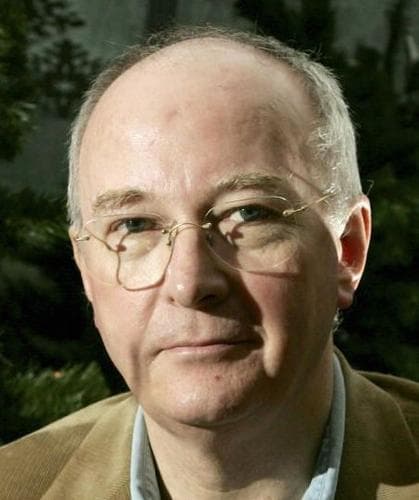
Sir Philip Nicholas Outram Pullman is an English writer. His books include the fantasy trilogy His Dark Materials and The Good Man Jesus and the Scoundrel Christ, a fictionalised biography of Jesus. In 2008, The Times named Pullman one of the "50 greatest British writers since 1945". In a 2004 BBC poll, he was named the eleventh most influential person in British culture. He was knighted in the 2019 New Year Honours for services to literature.







