“Sometimes the hardest thing in the world is to be yourself.”
— Vidya reflects on societal expectations and her own identity.

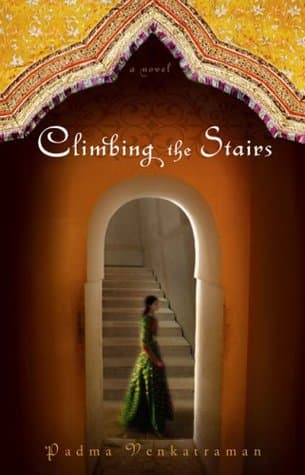
Padma Venkatraman (2009)
Genre
Historical Fiction / Young Adult / Romance
Reading Time
360 min
Key Themes
See below
Sign in to track this book
During WWII and India's fight for independence, a fifteen-year-old girl defies tradition, secretly reading forbidden books in an upstairs library, while also dealing with new love and her family's changing loyalties.
Vidya, a fifteen-year-old in 1940s British-occupied India, lives a modern life with her progressive lawyer father, mother, and younger brother, Kitta. Her father supports her desire for knowledge and wants her to go to college, which was rare for girls then. But their lives change when British police severely beat her father during a protest. He goes into a coma, leaving the family without money. They must move from their home in Madras to her paternal grandfather Periappa's large, traditional ancestral house in a smaller town. This move is a big change for Vidya; the women in Periappa's house live separately and must follow strict customs.
When Vidya arrives at Periappa's house, she immediately sees the realities of traditional Indian life. The house has separate areas for men and women. Vidya, her mother, and Kitta are in the women's quarters. Vidya finds the customs stifling, especially the idea that women should not be educated and should only focus on housework and marriage. Her mother, who was against these ideas at first, slowly starts to go back to traditional ways, which upsets Vidya. Kitta, on the other hand, finds a new purpose among the men, making Vidya feel more alone. The many family members and constant talk make it hard for Vidya to be herself.
Feeling trapped and wanting to learn, Vidya finds her grandfather Periappa's forbidden upstairs library. Women are not allowed in this room. Because she loves books and knowledge, Vidya secretly starts going to the library. There, she finds comfort and a connection to the intellectual world she fears losing. She meets Raman, a young man also living in the house who loves reading. Raman is Periappa's grandnephew, a medical student who has returned home temporarily. Their shared interest in books and ideas creates a bond, giving Vidya a rare moment of understanding and intellectual friendship in her new, restrictive home.
Vidya and Raman's secret meetings in the library become important. They talk about books, poems, and politics, finding common ground in their curiosity and modern views. Raman, unlike many other men in the house, respects Vidya's intelligence and encourages her desire for knowledge. Their friendship grows, giving Vidya emotional and intellectual support. During these talks, Vidya also learns about Raman's life and goals, strengthening their connection. Their shared secret and the intellectual freedom they find in the library help counter the restrictive atmosphere of the women's quarters.
As World War II continues, its effects start to be felt in the household. The family discusses the war, with many expressing anti-British feelings because of India's fight for independence. However, Kitta, Vidya's younger brother, makes a surprising choice: he says he will join the British Indian Army to fight the Nazis. This decision greatly upsets the family, especially Periappa, who sees it as going against the nationalist cause. Vidya is conflicted; she understands the global threat of Nazism, but she also struggles with Kitta joining the power that oppressed their people and hurt their father. This further complicates family relationships and Vidya's ideas about loyalty and patriotism.
Raman, seeing his feelings for Vidya and their intellectual match, proposes marriage. This offer, while a possible way to avoid traditional arranged marriage, also gives Vidya a difficult choice. On one hand, Raman offers a partnership based on respect and shared interests, possibly allowing her to continue her education. On the other hand, accepting means marrying young, possibly giving up her immediate dream of going to college independently. She struggles with the pressure to marry, her own goals, and her feelings for Raman, unsure how to balance these conflicting desires.
The women of the house, especially Vidya's aunts and grandmother, start to pressure her about marriage. Her age, her father's health, and the family's money situation make her a candidate for an early arranged marriage, as was common. Vidya feels the weight of these expectations, knowing her desire for education clashes with the path set for her. She sees her mother slowly accepting traditional ways and fears losing her own independent spirit. Constant talks about eligible bachelors and her expected duties as a woman in the household add to her inner conflict, making her decision about Raman even harder.
Despite the family's disapproval, Kitta remains firm in his decision to join the British Indian Army and eventually leaves for the war. Vidya is sad but also proud of her brother's conviction. Soon after, the family gets the news that Kitta has been killed. This news brings deep sadness to the entire household, making the atmosphere even more somber. Vidya is especially devastated, not only by losing her brother but also by seeing the personal cost of the war, a war many in her family opposed. Kitta's death highlights how fragile life is and the harsh realities outside their ancestral home.
Amazingly, Vidya's father slowly starts to get better from his coma, regaining consciousness and some abilities, though he remains partly paralyzed. His slow return to awareness gives Vidya some hope. With her father improving, Vidya feels a renewed sense of control over her life. She carefully considers Raman's proposal, her own dreams, and the changing family situation. She realizes that while she cares for Raman, she is not ready to marry and give up her educational goals. She decides to follow her own path, perhaps with her father's continued support, to go to college and create an independent future.
Vidya, after experiencing much loss, cultural differences, and personal choices, bravely decides to decline Raman's marriage proposal for now. She explains that she needs to pursue her education and establish her own identity before marrying. Raman, though disappointed, respects her choice and understands her drive to learn. With her father's steady recovery, Vidya feels ready to actively pursue her dream of attending college, even if it means challenging societal norms and family expectations. The novel ends with Vidya accepting her new independence and choosing her own path, like she once went up to the forbidden library.
The Protagonist
Vidya transforms from a sheltered, dream-filled girl into a resilient young woman who, despite immense pressure and loss, makes a conscious choice to prioritize her education and independence.
The Supporting
Though largely comatose for much of the story, his initial progressive influence and eventual recovery provide a framework for Vidya's journey and her ultimate choices.
The Supporting
She begins as a modern woman but slowly retreats into traditional roles under pressure, highlighting the challenges women faced in that era.
The Supporting
He transforms from a carefree boy into a young man driven by a sense of duty, ultimately making the ultimate sacrifice.
The Supporting
He remains a steadfast symbol of tradition, whose influence is a constant challenge to Vidya's modern aspirations.
The Supporting
He serves as an intellectual and romantic catalyst for Vidya, offering her a path that, while appealing, ultimately helps her define her own independent desires.
The Supporting
She remains a consistent voice of tradition, providing a foil for Vidya's progressive aspirations.
The Supporting
She serves as a quiet witness and a source of subtle companionship for Vidya, representing a different social stratum within the household.
The novel explores Vidya's search for her own identity amid conflicting societal expectations. After moving to her grandfather's house, Vidya deals with losing her modern self and the pressure to fit into traditional female roles. Her secret library visits and talks with Raman help her discover herself, letting her confirm her love for learning and her desire for independence. Her decision to decline Raman's proposal and go to college shows her assertion of self, choosing a path aligned with her own desires rather than what society or romance expects.
“Perhaps all women were meant to be like her mother, to be content with a life of purdah, of cooking and cleaning and bearing children. But then, why did her father say she could go to college?”
This theme is clear in the difference between Vidya's modern upbringing and the strict traditions of Periappa's ancestral home. The purdah system, arranged marriages, and lack of female education represent tradition, while Vidya's father's views, her goals, and the library's intellectual freedom represent modernity. The conflict is both external and internal, as Vidya's mother slowly goes back to traditional ways, showing the strong influence of societal norms. The novel suggests that while tradition is strong, people like Vidya can make modern choices within or alongside it.
“Here, women lived in a world of their own, separated from the men, their lives dictated by ancient custom.”
For Vidya, education and books are not just hobbies; they are a lifeline and a symbol of freedom. The forbidden upstairs library becomes her safe place where she can escape her traditional life and connect with her true self. Books give her knowledge, comfort, and a link to the wider world, helping her grow intellectually and think critically. Her desire to go to college is not just an ambition; it is a deep need to fulfill her intellectual abilities and create an independent future. Education is her tool for freedom.
“The library was my secret haven, a place where I could breathe, where I could be myself.”
Vidya experiences much loss throughout the novel: her father's health, their home, her brother Kitta's life, and a part of her mother's former self. Each loss tests her strength and makes her adapt. Her sadness over Kitta's death is particularly moving, showing the personal cost of war and societal conflict. Despite these difficulties, Vidya shows great inner strength, refusing to let her losses define her. Her ability to grieve, adapt, and choose a path that honors her desires shows her lasting spirit and resilience.
“Loss was like a part of the air now, invisible but ever-present, reminding her of what was gone.”
The novel comments on the limited gender roles for women in 1940s India. The purdah system, the expectation of early marriage, and discouraging female education are central to the women's experience in Periappa's house. Vidya actively resists these limits, while her mother's gradual acceptance shows the societal pressure. The story supports women's rights to education, self-determination, and intellectual freedom, showing how Vidya's struggle is part of a larger fight for gender equality in a patriarchal society.
“A woman's place was in the kitchen, not with her nose in a book.”
A symbolic and literal sanctuary for intellectual freedom and connection.
The upstairs library in Periappa's house serves as a powerful symbol of forbidden knowledge, intellectual escape, and personal freedom. Literally, it is a physical space where Vidya can read and connect with Raman, away from the prying eyes and restrictive customs of the women's quarters. Symbolically, it represents Vidya's inner world, her aspirations, and her refusal to be confined by societal norms. 'Climbing the stairs' to the library becomes a metaphor for Vidya's journey of self-discovery and her pursuit of a life beyond traditional expectations, a path she ultimately chooses for herself.
A cultural practice symbolizing the confinement and restriction of women.
The purdah system, the practice of secluding women from men and public view, is a prominent plot device that immediately establishes the traditional and restrictive environment Vidya enters. It physically separates the women's quarters from the men's, highlighting the lack of freedom and agency afforded to women. This system acts as a constant antagonist to Vidya's modern sensibilities, forcing her to confront and resist its limitations. It serves to emphasize the theme of tradition versus modernity and the challenges women faced in asserting their individuality within such a system.
A catalyst for the plot and a symbol of the fragility of modern ideals.
The severe injury and subsequent coma of Vidya's progressive father serve as the initial inciting incident of the novel. It forces Vidya and her family into the traditional ancestral home, directly thrusting her into the central conflict of the story. Beyond its plot function, the father's incapacitated state symbolizes the vulnerability of modern, liberal ideals in the face of political oppression and traditional societal pressures. His eventual slow recovery offers a glimmer of hope and a symbolic reawakening of the progressive values that Vidya ultimately embraces for her own future.
A historical backdrop highlighting broader conflicts and personal choices.
The ongoing World War II serves as a significant historical backdrop, influencing characters' decisions and adding layers of conflict. It provides the context for Kitta's controversial decision to join the British army, leading to his tragic death and deepening the family's grief. The war's presence reminds the reader that Vidya's personal struggles are set against a much larger, tumultuous global landscape, connecting her individual quest for freedom with the broader fight for national independence and human rights. It also highlights the complex loyalties and moral dilemmas faced by individuals during this period.
“Sometimes the hardest thing in the world is to be yourself.”
— Vidya reflects on societal expectations and her own identity.
“Freedom is not given; it is taken.”
— Vidya's thoughts on independence during India's struggle for freedom.
“Love is not a weakness; it is a strength that gives us courage.”
— Vidya contemplates her feelings for Raman amidst family disapproval.
“Education is the key that unlocks the door to a better future.”
— Vidya's determination to pursue her studies despite obstacles.
“In the silence of the library, I found my voice.”
— Vidya discovers solace and self-expression through books.
“Tradition can be a cage, but it can also be a foundation to build upon.”
— Vidya navigates the complexities of her cultural heritage.
“The stairs we climb are not just made of wood; they are made of dreams.”
— Metaphor for Vidya's aspirations and personal growth.
“Courage is not the absence of fear, but the will to act despite it.”
— Vidya faces challenges in her family and society.
“A woman's mind is her own kingdom, no matter the walls around her.”
— Vidya asserts her intellectual independence.
“The past may shape us, but it does not define our future.”
— Vidya reflects on her family's history and her own path.
“In the heart of conflict, we often find our true selves.”
— Vidya's experiences during India's political turmoil.
“Hope is a fragile thing, but it can light the darkest of nights.”
— Vidya maintains optimism during difficult times.
“To love is to risk, but to not love is to risk even more.”
— Vidya's internal struggle with her feelings for Raman.
“The world may try to silence you, but your thoughts are your own.”
— Vidya's defiance against societal constraints.
Ready to see how well you understood this book? Take our interactive quiz with 10 questions.

Biography coming soon.