“The only way to solve a mystery is to become a part of it.”
— A guiding principle for the protagonist, Ted, as he delves deeper into the game and mystery.

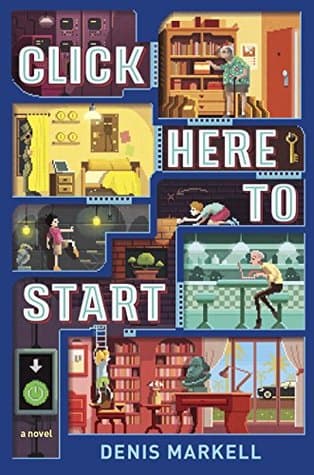
Denis Markell (2016)
Genre
Children's / Mystery / Young Adult
Reading Time
260 min
Key Themes
See below
Sign in to track this book
A video game-obsessed twelve-year-old finds his skills tested when his eccentric great-uncle's apartment turns into a real-life escape room, sending him and his friends on a quest for a hidden WWII treasure.
Twelve-year-old Ted Gerson, a video game player, learns that his Great-Uncle Ted, whom he barely knew, has died. To his surprise, Ted is named the sole heir to his great-uncle's apartment and everything in it. When Ted and his mother visit the New York City apartment, he finds it a messy, junk-filled place, seemingly without any valuable treasure. However, a strange note from his great-uncle suggests the 'treasure' is hidden inside the apartment, hinting at a game or puzzle. Ted's initial disappointment turns to interest as he recognizes elements from his video games and escape rooms.
While searching the apartment, Ted finds a hidden compartment with a small, old wooden box. Inside is a cryptic note from his Great-Uncle Ted, giving game rules and a first clue. The note explains that the apartment is an elaborate, real-life escape game, made for Ted. Excited by the challenge, Ted realizes his great-uncle knew about his love for puzzles and video games. This discovery makes Ted determined to solve the mystery, turning the big task of cleaning the apartment into an exciting quest. He decides to ask his two best friends, Caleb and Isabel, for help.
Ted calls his friends, Caleb and Isabel, and explains the unusual situation. Caleb, a tech expert good with codes and logic, immediately joins, seeing it as an exciting mental challenge. Isabel, a history lover and reader, is interested in the historical connections and the chance for a real adventure. They agree to meet at the apartment, ready for the first clue. Their combined skills and different viewpoints prove helpful as they begin working together, forming a team set on solving Great-Uncle Ted's game. Their friendship and individual strengths become important assets in the unfolding mystery.
As Ted, Caleb, and Isabel work through the puzzles, they notice a mysterious man in a fedora often lurking near the apartment building and trying to get inside. This man, later identified as Mr. Nimbus, seems to watch their every move, making them suspicious. His presence adds danger and urgency to their quest. They realize they are not the only ones interested in Great-Uncle Ted's treasure. The children become more careful, understanding that their game has real risks and a possible enemy who is trying to stop them and claim the treasure.
Through a series of puzzles, including old maps, riddles in vintage games, and historical documents, Ted and his friends find a connection to World War II. They learn that Great-Uncle Ted was part of the 442nd Regimental Combat Team, a decorated Japanese American unit. The clues suggest the 'treasure' is not just a game, but a real fortune in gold and jewels their unit found during the war and had to hide. This revelation raises the stakes, turning their scavenger hunt into a historical investigation.
Isabel's historical knowledge becomes important as they learn more about the 442nd Regimental Combat Team, mostly made of Nisei (second-generation Japanese Americans). They learn about the prejudice these soldiers faced, with many of their families held in internment camps back home, even as they fought for the United States. The treasure, they realize, might be more than money; it could represent the untold stories and sacrifices of these overlooked heroes. This historical background deepens the children's understanding and appreciation for Great-Uncle Ted's legacy, adding a moral purpose to their mission.
Mr. Nimbus acts more aggressively. He breaks into the apartment, searches parts of it, and even directly confronts the children, demanding the treasure. This shows he knows about the treasure's true nature and will do much to get it. The children realize they are in a race against time with a dangerous enemy. They must use their intelligence and work together more efficiently, always watching their backs, to stay ahead of Mr. Nimbus and secure the treasure before he can get it. The game has become a dangerous real-world chase.
The final clues lead Ted, Caleb, and Isabel beyond the apartment. They discover the treasure is not inside the building but in a location reached through the New York City subway system. The clues involve subway maps, specific station names, and historical facts about the city's infrastructure. This twist expands their adventure, forcing them to navigate the busy city, using their puzzle-solving skills on real landmarks and public transport. The chase with Mr. Nimbus continues, making their city journey even more exciting and dangerous.
Following the subway clues, Ted, Caleb, and Isabel arrive at a forgotten, unused part of an old subway tunnel. There, hidden in a clever compartment, they find Great-Uncle Ted's treasure. To their surprise, it is not just gold and jewels, but also historical artifacts and documents from the 442nd Regimental Combat Team, along with Great-Uncle Ted's journal detailing their wartime experiences and the treasure's discovery. This shows that the treasure's real worth is not only monetary but also its historical importance and the stories it holds.
Just as the children find the treasure, Mr. Nimbus appears, having followed them. A tense confrontation follows, but thanks to the children's quick thinking and teamwork, they outsmart him. Authorities, called by Ted's worried mother, arrive and arrest Mr. Nimbus. With the immediate danger gone, Ted, Caleb, and Isabel decide the historical artifacts and the story of the 442nd are too important to keep or sell. They arrange for the historical documents and artifacts to be given to a museum, ensuring the Nisei soldiers' legacy is honored and preserved, while the monetary treasure is handled properly.
The Protagonist
Ted transforms from a game-obsessed kid into a real-world problem-solver, learning about history, friendship, and the value of non-digital experiences.
The Supporting
Caleb further develops his problem-solving skills and learns to apply them in high-stakes, real-world situations, enhancing his confidence.
The Supporting
Isabel's love for history moves from academic interest to a personal connection, as she helps uncover and honor a significant historical narrative.
The Mentioned
N/A (character is deceased, but his legacy is revealed and honored)
The Antagonist
Mr. Nimbus remains a static antagonist, driven by greed and ultimately foiled by the protagonists.
The Supporting
She moves from skepticism and concern to understanding and supporting her son's unique adventure, appreciating its deeper meaning.
The novel shows how skills from seemingly simple activities like video games and escape rooms can be useful in real-world problems. Ted's strategic thinking, pattern recognition, and problem-solving, honed by gaming, help him navigate Great-Uncle Ted's puzzle. This theme suggests that play can be a way to learn and prepare, turning a junk-filled apartment into an important quest. It confirms Ted's passion by showing its practical use in finding a historical secret and a real treasure.
“For years, Ted had been training for this. Not for life, exactly, but for a very specific kind of life. A life of puzzles.”
A main theme is finding and honoring overlooked historical stories, especially that of the Japanese American 442nd Regimental Combat Team during World War II. The treasure hunt becomes a mission to highlight the bravery and sacrifice of these soldiers, who fought for a country that imprisoned their families. Isabel's historical knowledge is key here, making the gold and jewels a way to share a larger historical legacy. The story emphasizes the need to remember and share these untold stories.
“It wasn't just gold. It was a story. A story that needed to be told.”
The success of the treasure hunt depends entirely on the teamwork and different skills of Ted, Caleb, and Isabel. Ted's strategic mind, Caleb's technical ability, and Isabel's historical knowledge form a strong team. The challenges are too complex for any one of them to solve alone, showing the strength in different viewpoints and mutual help. Their friendship is tested but grows stronger through shared adventure, danger, and discovery, proving that teamwork helps overcome obstacles.
“They were a team. And a team was always stronger than one person alone.”
At first, the 'treasure' seems to be money, but as the story continues, its true value is revealed to be much greater. The historical artifacts, the journal, and the story of the 442nd Regimental Combat Team become the most valuable part of Great-Uncle Ted's legacy. This theme explores the idea that true treasure is not just gold and jewels, but preserved history, personal stories, and the honor of those who sacrificed. The children's choice to donate the historical items shows this change in understanding, valuing legacy over money.
“The real treasure wasn't the gold. It was the stories. The history.”
The great-uncle's will sets the entire mystery in motion.
Great-Uncle Ted's will, bequeathing his eccentric apartment and its 'treasure' to young Ted, acts as the primary catalyst for the entire plot. Without this unusual inheritance, Ted would never have encountered the puzzles or embarked on the adventure. It immediately establishes the central mystery and provides Ted with a compelling reason to engage with a world beyond his video games, transforming an ordinary summer into an extraordinary quest. This device effectively draws the protagonist into the story's core conflict.
The plot is structured like a real-life escape room or video game level.
The entire treasure hunt is meticulously designed by Great-Uncle Ted to mimic the structure of an escape room or a multi-level video game. This device is central to the narrative, as it leverages Ted's specific skills and interests. Each clue leads to another, puzzles must be solved sequentially, and progress is marked by unlocking new areas or understanding deeper layers of the mystery. This structure provides a clear, engaging framework for the plot, making the complex mystery accessible and exciting for the target audience.
The initial perception of 'treasure' misleads characters and readers.
The initial mention of 'treasure' creates a false expectation of a purely monetary fortune. This serves as a red herring, subtly guiding the characters and the reader to focus on material wealth. However, as the story unfolds, the true nature of the treasure—historical documents and the untold story of the 442nd Regimental Combat Team—is revealed to be far more significant. This device allows for a thematic reveal, emphasizing that the real value lies beyond mere riches and enriching the story with a deeper historical and emotional core.
Mr. Nimbus's pursuit adds urgency and danger to the children's quest.
The relentless pursuit by Mr. Nimbus serves as a crucial plot device to heighten tension and create a sense of urgency. His presence transforms the leisurely puzzle-solving into a dangerous race against time. He acts as an external threat, forcing Ted and his friends to work faster, think more strategically, and confront real-world consequences. This antagonist ensures that the stakes are always high, adding excitement and propelling the plot forward through confrontations and near-misses.
“The only way to solve a mystery is to become a part of it.”
— A guiding principle for the protagonist, Ted, as he delves deeper into the game and mystery.
“Sometimes the biggest secrets are hidden in plain sight.”
— Ted realizes this as he re-examines a seemingly ordinary object from his grandfather's belongings.
“Every game has rules, but not every player follows them.”
— As Ted encounters other players in the 'game,' he learns that not everyone is playing fair.
“The past isn't just history; it's a puzzle waiting to be solved.”
— Ted reflects on his grandfather's life and the clues he left behind, which are all tied to the past.
“Friendship is the best cheat code.”
— Ted realizes the value of his friends, Caleb and P.K., in helping him overcome obstacles he couldn't alone.
“You can't win if you don't play.”
— An encouraging thought that pushes Ted forward even when the challenges seem daunting.
“The real treasure isn't what you find, but what you discover about yourself along the way.”
— Ted's internal growth throughout the adventure, realizing his own capabilities.
“A true hacker doesn't just break codes; they understand the mind that made them.”
— P.K., the tech-savvy friend, explains the deeper aspect of understanding complex systems.
“Sometimes you have to look beyond the screen to see the bigger picture.”
— Ted often gets caught up in the digital world of the game but learns to observe his physical surroundings.
“Every ending is just a new beginning, if you know where to look for the 'start' button.”
— Reflecting on the conclusion of one part of the mystery and the opening of another.
“Clues are like breadcrumbs; follow enough of them, and you'll find your way home.”
— Ted's methodical approach to piecing together the information his grandfather left behind.
“The most important thing about a journey isn't the destination, but the company you keep.”
— Ted appreciates his friends' companionship and help more and more as they progress.
“Fear is just a puzzle piece. Once you figure out where it fits, it loses its power.”
— Ted overcoming his anxieties and fears as he confronts dangerous situations.
“Even the smallest detail can unlock the biggest secret.”
— A tiny, seemingly insignificant detail often turns out to be crucial for solving a puzzle.
Ready to see how well you understood this book? Take our interactive quiz with 10 questions.

Dan Gemeinhart
4.5
Kate O'Hearn
4.4

Jeanne Birdsall
4.4

Jen Wang
4.4

Wendelin Van Draanen
4.3

John Marsden
4.3

Chris Van Allsburg
4.3
Jennifer A. Nielsen
4.2