“For the love of woman is as a devouring fire, and though it warm, it also consumes.”
— Harmachis's reflection on the nature of love and its dangers.

H. Rider Haggard (1881)
Genre
Fantasy / Historical Fiction / Romance
Reading Time
270 min
Key Themes
See below
Sign in to track this book
Sworn to overthrow the seductive and treacherous Cleopatra and purge Egypt of Roman influence, the last true Pharaoh, Harmachis, finds his sacred quest complicated by prophecy, forbidden love, and the queen's irresistible will.
Harmachis, a young priest of Isis, is called by the High Priest, Amenemhat, to a secret meeting. There, he learns he is the last male descendant of Egypt's ancient royal lineage. Amenemhat says Cleopatra, the current queen, is an impostor and a tool of Rome, defiling Egypt's traditions. Harmachis takes an oath to assassinate Cleopatra, expel the Romans, and reclaim the throne, restoring Egypt's former glory. He feels a sense of destiny to fulfill this duty, despite the personal sacrifice.
To access Cleopatra's inner circle, Harmachis sheds his priestly robes and pretends to be a wealthy Greek merchant named 'Pharaoh.' He travels to Alexandria, a city of Roman influence and Egyptian intrigue. His mission is dangerous, as the city has many spies and loyalists to the queen. He begins to watch Cleopatra from a distance, studying her movements and habits, looking for a chance to strike. He sees her as charming and intelligent, a formidable opponent whose beauty is as captivating as her political skill. He feels a growing conflict between his sacred oath and the queen's unexpected allure.
Through careful maneuvers and lucky breaks, Harmachis (as Pharaoh) attracts Cleopatra's attention. He is invited to her palace, where her wit, knowledge, and presence captivate him. Cleopatra, a master manipulator, senses something unique about him and tests his loyalty and intellect. Harmachis, despite his oath, finds himself increasingly enchanted by her. He is torn between his duty to Egypt and the growing, forbidden attraction he feels for the woman he is sworn to destroy. This internal struggle becomes a central conflict, threatening his mission and his soul.
Charmion, Cleopatra's maidservant, has a secret: she is Harmachis's sister, separated from him in childhood. Seeing 'Pharaoh' in the queen's court, she recognizes him. Torn between loyalty to Cleopatra and her family, Charmion struggles with this discovery. She tries to subtly warn the queen about 'Pharaoh,' hinting at his dangerous intentions. However, Cleopatra, blinded by her growing affection for Harmachis and her own political plans, dismisses Charmion's veiled warnings as jealousy. Charmion's attempts to protect both her brother and her queen fail.
The moment comes for Harmachis to carry out his mission. He is alone with Cleopatra, a dagger hidden in his robes. His heart pounds with dread and duty. As he raises his hand, ready to strike, Cleopatra's beauty and her trust in him momentarily paralyze him. The conflict between his oath and his feelings for her peaks. He falters, unable to deliver the fatal blow. The chance passes, and his failure to act in that moment marks a turning point, sealing his tragic fate and changing his mission. He has betrayed his oath, at least for now.
Cleopatra, with her intelligence and spies, eventually uncovers Harmachis's true identity and his plot, likely through Charmion's warnings or her own investigations. Instead of punishing him, she confronts him, showing she knows his past and his mission. She then manipulates his conflicted emotions, playing on his growing affection for her. She promises him power, a shared throne, and a future ruling Egypt together, if he abandons his oath and joins her. Her offer further ensnares Harmachis, deepening his internal turmoil and making his escape from her influence harder.
Seduced by Cleopatra's promises and his own desire, Harmachis abandons his oath to Isis and his ancestral duty. He becomes Cleopatra's lover, a participant in her court and her political schemes. This betrayal of his vows and heritage deeply shames him, leading to internal conflict and self-loathing. His actions cause a rift with the Priesthood of Isis, who see him as a fallen prophet and a traitor. He finds himself in a gilded cage, enjoying temporary pleasures of power and affection, but haunted by his broken promises and the destiny he has forsaken. He is no longer the pure priest he once was.
The Priesthood of Isis, learning of Harmachis's betrayal and alliance with Cleopatra, is furious. Amenemhat and the other high priests see his actions as a desecration of their lineage and an insult to the gods. They denounce him, stripping him of his priestly titles and condemning him as an apostate. They begin to work against him and Cleopatra, using their influence to stir dissent and undermine the queen's authority. Harmachis, now isolated from his former allies and spiritual home, realizes the consequences of his choices, facing the wrath of both the gods and his people.
The political situation in Egypt worsens with the arrival of the Roman general Mark Antony. His presence in Alexandria means Rome's grip on Egypt is tightening, and Cleopatra relies on Roman power. Cleopatra, pragmatic, shifts her affections and alliances to Antony, seeing him as a powerful partner for her ambitions. Harmachis, now a discarded lover, watches in anguish as Cleopatra forsakes him for Antony. He realizes her treachery and his own foolishness in trusting her. This betrayal reignites his hatred for Cleopatra and the Romans, fueling a desire for vengeance and a desperate hope for redemption.
After being cast aside and blinded by Cleopatra, Harmachis is broken, physically and spiritually. His mission has become a bitter quest for personal vengeance. Charmion, despite her conflicted loyalties, finds and cares for him. Guided by Charmion and his remaining loyalists from the Priesthood, Harmachis plans his final act against Cleopatra. His plan is no longer about restoring Egypt's glory, but about inflicting suffering upon the woman who destroyed him. He seeks a symbolic end to her reign, even if it means his own death.
During a feast held by Cleopatra and Antony, Harmachis, disguised and guided by Charmion, makes his move. He slips a poison into Cleopatra's wine cup. However, just as Cleopatra is about to drink, Charmion, in a moment of loyalty to her queen and to spare her brother from further sin, intervenes. She snatches the cup, spilling its contents and foiling the assassination. This saves Cleopatra's life but further enrages Harmachis, who sees his final chance for revenge thwarted by his sister. The tension rises, and Harmachis's identity is again jeopardized.
After the failed poisoning, Cleopatra, fully aware of Harmachis's treachery and Charmion's involvement, orders their capture and execution. In a final act of devotion, Charmion confesses to being the sole conspirator, claiming she acted alone to protect Harmachis and shield the queen from the plot. She begs Cleopatra for Harmachis's life, offering her own in exchange. Cleopatra, moved by Charmion's loyalty, accepts the sacrifice. Charmion is executed, allowing Harmachis to escape, though burdened by his sister's death. This sacrifice deepens Harmachis's despair.
The political tide turns against Cleopatra and Antony. Octavian's Roman forces march on Egypt, leading to the Battle of Actium and the siege of Alexandria. Antony, defeated, commits suicide. Cleopatra, seeing her empire crumble, tries to negotiate with Octavian but realizes her fate is sealed. To avoid the humiliation of being paraded as a captive in Rome, she takes her own life, famously by an asp. Her death marks the end of the Ptolemaic dynasty and Egypt's annexation by the Roman Empire, fulfilling part of Harmachis's original prophecy.
Blinded, broken, and alone, Harmachis retreats to a hidden temple. The Priesthood of Isis embraces him again, recognizing his suffering and his ultimate, though flawed, devotion to Egypt. He spends his remaining years in contemplation and penance, dictating his life story onto papyrus scrolls. He finds spiritual redemption through his renewed dedication to the gods and his acceptance of his tragic fate. He dies peacefully within the temple, his story preserved, showing the destructive power of ambition, love, and betrayal, and the spirit of ancient Egypt.
The Protagonist
From a pure, duty-bound priest, Harmachis falls into corruption and betrayal, only to find a measure of redemption through suffering and penance.
The Antagonist
Cleopatra maintains her cunning and manipulative nature throughout, ultimately facing the inevitable downfall of her reign and choosing death over Roman subjugation.
The Supporting
Amenemhat remains a constant force of tradition and duty, never wavering in his beliefs, even as he witnesses Harmachis's betrayal and eventual penance.
The Supporting
Charmion navigates conflicting loyalties, ultimately sacrificing herself to save her brother, proving the strength of her love and devotion.
The Supporting
Antony's character arc mirrors his historical trajectory, from powerful Roman leader to a man undone by his devotion to Cleopatra and his political missteps, ending in defeat and suicide.
The Mentioned
Octavian's influence is constant, culminating in his historical victory over Antony and Cleopatra, establishing Roman dominance.
The Supporting
The Priesthood of Isis remains a steadfast moral and spiritual authority throughout the narrative, ultimately offering Harmachis a path to redemption.
This theme explores Harmachis's conflict between his sacred oath to restore Egypt's true lineage and his forbidden desire for Cleopatra. His struggle to reconcile spiritual duty with human passions drives his tragedy. This is clear when he fails his assassination attempt (Plot Summary, Section 5) and later when he succumbs to Cleopatra's promises, abandoning his vows for love and power (Plot Summary, Section 7). His subsequent blindness and suffering result from this internal battle.
“For the love of woman is a thing of naught, but the love of Egypt is for ever!”
The novel shows how power and ambition can corrupt even noble intentions. Harmachis, initially driven by duty, becomes entangled in Cleopatra's court and is seduced by the promise of power with her. Cleopatra herself exemplifies this, manipulating others and sacrificing loyalties for her throne and influence (Plot Summary, Section 6, 9). The downfall of both characters illustrates the destructive consequences of unchecked ambition and the compromises made to pursue it.
“For power is a serpent, and it biteth with a deadly fang.”
Betrayal is a constant element, from Harmachis's betrayal of his oath and the Priesthood (Plot Summary, Section 7) to Cleopatra's betrayal of Harmachis for Antony (Plot Summary, Section 9). The story explores the impact of these acts on individuals and the state. However, it also offers a path, though painful, to redemption. Harmachis, through suffering, loss, and a return to his spiritual roots, finds peace and forgiveness in the end (Plot Summary, Section 14). Charmion's sacrifice, while tragic, can also be seen as redemption for her conflicted loyalties.
“Yea, and though I sinned in the flesh, yet was my spirit ever fain to return to the service of the Mother.”
The geopolitical struggle between ancient Egyptian traditions and the rising Roman Empire forms a background. Harmachis's mission is about resisting Roman influence and restoring an Egyptian golden age. Cleopatra, though Egyptian, aligns herself with Rome, embodying adaptation to a changing world. The defeat of Cleopatra and Antony by Octavian (Plot Summary, Section 13) symbolizes Roman dominance and the end of an independent Egypt, highlighting the clash and the fading glory of ancient civilizations.
“For the Shadow of Rome fell ever longer across the land of Khem, and the ancient Gods wept.”
A binding vow that dictates the protagonist's mission and creates internal conflict.
The sacred oath taken by Harmachis (Plot Summary, Section 1) is the primary inciting incident and a powerful narrative device. It establishes his purpose, sets the stakes, and creates the profound internal conflict that drives his character arc. The violation of this oath is the source of his guilt, suffering, and the wrath of the Priesthood, making it a constant moral compass and a measure of his fallen state. Its weight underscores the themes of duty and betrayal.
Harmachis's use of an alter ego to infiltrate Cleopatra's court.
Harmachis's adoption of the identity 'Pharaoh' (Plot Summary, Section 2) allows him to gain access to the queen's inner circle, facilitating the plot's progression. This device creates dramatic irony, as the audience is aware of his true intentions while Cleopatra is initially oblivious. It also heightens the tension, as his true identity is constantly at risk of exposure, and serves to symbolize his shedding of his priestly self and his immersion into the secular world of court intrigue.
Subtle hints and pronouncements that allude to future events and character fates.
Throughout the narrative, there are subtle hints and pronouncements from the Priesthood or Harmachis's own visions that allude to his tragic fate, Cleopatra's downfall, and the ultimate triumph of Rome. For example, the Priesthood's initial warnings about the dangers of his mission or Harmachis's own premonitions of sorrow. This device builds suspense and imbues the story with a sense of inevitability, reinforcing the tragic elements and the idea of destiny. It also adds to the 'biblical' tone of the narrative.
An object or concept that serves as a plot driver, though its inherent value is secondary.
The ancient royal bloodline, of which Harmachis is the last male descendant, functions as a MacGuffin. While it is the stated reason for Harmachis's mission and the Priesthood's actions, its inherent 'value' (i.e., the specific details of its ancient rights) is less important than its role in driving the plot. It serves as the catalyst for the entire conflict, motivating Harmachis to confront Cleopatra and setting in motion the chain of events that follow. The focus is on the quest, not the specific intricacies of the lineage.
“For the love of woman is as a devouring fire, and though it warm, it also consumes.”
— Harmachis's reflection on the nature of love and its dangers.
“The gods are but the symbols of our own desires.”
— Harmachis musing on the nature of religious belief.
“Death is but a door, and when we pass through it, we shall find whatever waits beyond.”
— A contemplation on mortality and the afterlife.
“There is no joy in life like the joy of power.”
— Cleopatra expressing her ambition and desire for control.
“For the hearts of men are as easily swayed as the reeds by the river.”
— Harmachis observing the fickle nature of popular opinion.
“Beauty is a weapon, and like all weapons, it can be used for good or ill.”
— A reflection on Cleopatra's physical allure and its impact.
“To rule is to serve, and to serve is to suffer.”
— Harmachis contemplating the burdens of leadership.
“The past is a phantom, the future a dream, but the present is ours to command.”
— A philosophical statement on the importance of living in the moment.
“Love, though it blinds us, also shows us truths we might otherwise never see.”
— Harmachis's complex feelings about his love for Cleopatra.
“There are fates woven by the gods, and fates woven by the hands of men.”
— A discussion on destiny versus free will.
“The greatest treasure a man can possess is a clear conscience.”
— Harmachis reflecting on the value of moral integrity.
“Dreams are often but the shadows of coming events.”
— Harmachis's prophetic dreams guiding his actions.
“Vengeance is a bitter fruit, and those who taste it often find it turns to ashes in their mouths.”
— Harmachis's internal struggle with the desire for revenge.
“For the heart of a queen is often a lonely place, even amidst a multitude.”
— A poignant observation on Cleopatra's isolation despite her power.
Ready to see how well you understood this book? Take our interactive quiz with 10 questions.
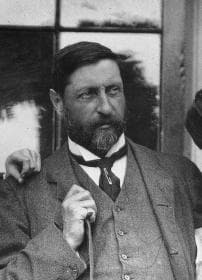
Sir Henry Rider Haggard was an English writer of adventure fiction romances set in exotic locations, predominantly Africa, and a pioneer of the lost world literary genre. He was also involved in land reform throughout the British Empire. His stories, situated at the lighter end of Victorian literature, continue to be popular and influential.







