“I am not a monster. I am Clementine.”
— Clementine often corrects people's perceptions of her actions.

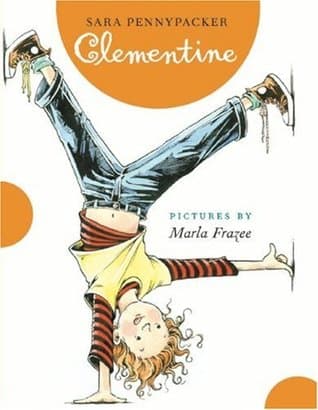
Sara Pennypacker (2006)
Genre
Children's
Reading Time
90 min
Key Themes
See below
Sign in to track this book
A well-meaning but perpetually misunderstood third-grader named Clementine navigates a calamitous week filled with accidental haircuts, principal's office visits, and strained friendships, all while trying to make things right.
Clementine, a spirited third-grader, sees her friend Margaret struggling with dried, sticky glue in her hair after an art project. Wanting to help, Clementine decides to cut out the glue, accidentally giving Margaret a very uneven haircut. Margaret is upset, and her mother is angry. The incident lands Clementine in Principal Meyers' office, where she tries to explain her good intentions, but her actions are seen as mischievous. Despite her explanations, Clementine feels misunderstood and frustrated, setting a chaotic tone for her week.
The haircut's impact continues on Tuesday. Margaret's mother calls Clementine's mother, expressing her anger over Margaret's new hairstyle. Clementine overhears the conversation, feeling the weight of the adult's anger, which she thinks is too much for her well-meaning actions. She struggles to understand why helping a friend caused such a fuss. Clementine's apologies to Margaret are met with coldness, as Margaret is still upset about her hair. This further isolates Clementine, making her feel like an outcast, even from her best friend.
On Wednesday, Clementine's cat, Moisturizer, loses his favorite toy: a plastic eyeball. Believing it rolled under the school bleachers, Clementine sets out to find it. During recess, she asks other students to help her search, leading to a chaotic scene under the bleachers. The commotion draws a teacher's attention, and Clementine is again sent to Principal Meyers' office. Despite her earnest explanation about Moisturizer's sadness, Principal Meyers sees it as another disruption. Clementine feels increasingly singled out and misunderstood, believing that adults just don't grasp her unique view of the world.
Thursday brings the silent treatment from Margaret. Clementine tries various ways to get Margaret to talk to her again, from leaving her a drawing to trying to make her laugh during class. However, Margaret remains silent and avoids Clementine. This hurts Clementine deeply, as Margaret is her closest friend. Clementine thinks about their friendship and wonders if she has ruined it. The silence makes Clementine feel lonely and isolated, showing how her 'helpful' actions have affected her most important relationship.
Friday starts poorly with Clementine facing unappetizing eggs for breakfast, a small but notable annoyance. Later that morning, Clementine's mother finds a note from Principal Meyers in Clementine's backpack, detailing another school incident. Clementine had been trying to help a new student find the library, but her method was seen as disruptive. Her mother's reaction is one of exasperation and disappointment, adding to Clementine's growing feeling of being a 'problem child.' Clementine feels her mother's disapproval, increasing her belief that she can't do anything right this week.
During a walk home from school, Clementine sees a 'For Rent' sign on the apartment building next to hers. To her horror, she learns that Margaret and her family are planning to move into it. This news devastates Clementine. She fears that if Margaret moves, their friendship will change, especially with the current tension between them. The thought of Margaret living so close yet still being angry with her is unbearable. This news increases Clementine's desperation to fix things with Margaret before it's too late, adding more anxiety to her already difficult week.
On Saturday, Clementine's mother takes her to see the apartment Margaret's family is considering. While there, Clementine sees Margaret, who is still giving her the silent treatment. Clementine decides she can't wait any longer and gives a heartfelt, if rambling, apology to Margaret. She genuinely says she is sorry for the haircut and explains her intentions. To Clementine's relief, Margaret finally speaks, acknowledging Clementine's apology and revealing her own feelings. This interaction marks a turning point, as their friendship begins to heal.
Later on Saturday, Clementine learns that Margaret's family has decided not to take the apartment next door. This news brings immense relief to Clementine, as it removes a major source of anxiety about their friendship changing. More importantly, Margaret fully reconciles with Clementine. They talk and laugh, and the tension that has been building all week finally goes away. Clementine realizes that even though her intentions were good, her actions sometimes have unexpected results, and that true friendship needs understanding and forgiveness. The week ends with renewed hope and restored friendship.
After the tumultuous week, Clementine thinks about what happened. She recognizes that while she always tries to be helpful and kind, her methods often lead to misunderstandings and trouble. She learns that sometimes her good intentions are not enough, and that she needs to consider how her actions affect others. Despite the difficulties, Clementine also realizes the strength of her friendships and the love of her family. She ends the week with a new, though still growing, understanding of social dynamics and the complexities of human relationships, especially those with adults.
As the week ends, Clementine begins to see her 'disastrous' experiences not just as a series of unfortunate events, but as a learning curve. She understands that her unique perspective, while sometimes causing trouble, also makes her creative and empathetic. She does not lose her spirited nature, but gains a bit of self-awareness. The week's challenges, especially the strain with Margaret, strengthen her understanding of friendship's value and the importance of communication, even if she still has much to learn about the adult world.
The Protagonist
Clementine learns that good intentions don't always prevent unintended negative consequences, and begins to develop a nascent understanding of empathy and the impact of her actions on others.
The Supporting
Margaret moves from anger and silent treatment to forgiveness, reinforcing the strength of her friendship with Clementine.
The Supporting
Principal Meyers consistently tries to instill a sense of responsibility and adherence to rules in Clementine, acting as a consistent, if slightly weary, voice of authority.
The Supporting
Clementine's mother consistently attempts to balance her daughter's unique spirit with the need for social responsibility, showing unwavering love and support.
The Mentioned
Moisturizer's role is static, serving as a beloved pet and a catalyst for Clementine's actions.
This theme explores how Clementine's good intentions often lead to disastrous and unexpected outcomes. From cutting Margaret's hair to finding Moisturizer's eyeball, Clementine always believes she is doing the right thing, yet her actions consistently create more problems. The book shows the gap between intent and impact, showing Clementine's struggle to understand why her helpfulness is often met with anger or punishment. It subtly teaches that while intentions matter, understanding the potential results of one's actions, and considering others' perspectives, is also important. This is clear in the haircut incident (plot_summary 1) and the bleacher search (plot_summary 3).
“I was just trying to help.”
A central theme is the frequent misunderstandings between Clementine and the adults, and between Clementine and Margaret. Clementine struggles to explain her reasoning in a way adults understand, and adults often fail to see the logic or good intentions behind her unusual actions. Margaret's silent treatment (plot_summary 4) shows a breakdown in communication between friends. The story highlights the importance of clear communication and empathy in bridging these gaps, showing how a lack of understanding can make problems worse and strain relationships, as seen when Clementine's mother finds the note from Principal Meyers (plot_summary 5).
“Adults just don't get it.”
Clementine's friendship with Margaret is the emotional core of the story. The 'disastrous' week severely tests this bond, especially after the haircut incident and Margaret's silent treatment. Clementine's deep distress over possibly losing Margaret's friendship, especially with the news of Margaret possibly moving (plot_summary 6), shows how much she values their connection. The eventual reconciliation (plot_summary 7, 8) highlights the strength of true friendship, showing that even after significant conflict, understanding, apology, and forgiveness can restore and strengthen bonds. The fear of losing Margaret drives much of Clementine's emotional journey.
“I didn't want Margaret to stop being my best friend.”
The book explores the challenges of being a spirited child in a world with adult rules and expectations. Clementine constantly bumps up against boundaries, not out of malice, but because her creative and literal interpretations of situations often clash with established norms. Her frequent trips to Principal Meyers' office (plot_summary 1, 3) and her mother's exasperation (plot_summary 5) illustrate this struggle. The theme suggests that while rules are necessary, children's unique perspectives and impulses also need to be understood and gently guided, rather than simply suppressed.
“Rules were like invisible fences, and sometimes I forgot they were there.”
Each day of the week functions as a distinct, self-contained mini-adventure.
The novel is structured episodically, with each chapter corresponding to a day of Clementine's 'disastrous' week. This device allows for a series of escalating conflicts and misunderstandings, building tension while also giving Clementine distinct opportunities for reflection and growth with each incident. It mirrors the feeling of a child's week, where each day can bring a new challenge or misadventure. This structure makes the story digestible and engaging for young readers, as each day presents a clear problem and its immediate consequences, contributing to the overall narrative arc of Clementine's learning.
The story is told from Clementine's unique, unfiltered perspective.
The use of first-person narration allows readers to fully immerse themselves in Clementine's vibrant and often chaotic mind. We experience her thought processes, her good intentions, her frustrations, and her unique logic directly. This perspective is crucial for understanding why Clementine acts the way she does, even when her actions lead to trouble. It fosters empathy for her character, making her relatable despite her blunders, and highlights the theme of misunderstanding between children and adults, as we see the world through her eyes, not theirs.
Everyday objects take on heightened significance, driving plot points and revealing character.
Ordinary items like Margaret's hair, Moisturizer's plastic eyeball, and even a 'For Rent' sign become significant catalysts for Clementine's week. Margaret's hair (plot_summary 1) is not just hair; it represents her appearance and the bond with Clementine. The lost eyeball (plot_summary 3) symbolizes Clementine's devotion to her pet and her willingness to go to great lengths for those she cares about. The 'For Rent' sign (plot_summary 6) becomes a symbol of impending change and the potential loss of friendship. These objects ground Clementine's imaginative world in tangible, relatable problems.
The reader understands Clementine's good intentions, even when other characters do not.
Situational dramatic irony is frequently employed, where the reader is privy to Clementine's genuine, well-meaning thought processes, while the characters around her (adults, and sometimes Margaret) misinterpret her actions as mischievous or disruptive. For example, when Clementine cuts Margaret's hair, the reader knows she was trying to help with glue, but Margaret's mother sees it as an act of defiance. This device creates both humor and empathy, as the reader understands Clementine's perspective and feels her frustration at being misunderstood, reinforcing the theme of communication breakdowns.
“I am not a monster. I am Clementine.”
— Clementine often corrects people's perceptions of her actions.
“It was not a bad idea. It was an idea that did not work.”
— Clementine reflects on one of her many schemes that went awry.
“My mom says I have a very active imagination. My dad says I have a very active imagination. My teacher says I have a very active imagination. I think it's just imagination.”
— Clementine ponders the adult descriptions of her creative mind.
“Sometimes you just have to do things, even if they're a little bit wrong, to make things right.”
— Clementine justifies her unconventional methods for helping her friend Margaret.
“You can't just fix things by wishing. You have to do something.”
— Clementine realizes that action is required to solve problems, not just hope.
“It's hard to be good all the time when you have so many good ideas.”
— Clementine struggles with the line between creativity and mischief.
“Having a best friend is like having a secret keeper, but not really because you tell them everything.”
— Clementine reflects on her close bond with Margaret.
“Rules are important, but sometimes they get in the way of important things.”
— Clementine often finds herself bending or breaking rules for what she perceives as a greater good.
“My brain is like a jumping bean. It just keeps going.”
— Clementine describes her constantly active and imaginative mind.
“Being a grown-up looked like a lot of work. And not much fun.”
— Clementine observes the adults around her and their responsibilities.
“Some mistakes are good mistakes because you learn from them.”
— Clementine often finds a silver lining in her many mishaps.
“It's not about being perfect. It's about trying your hardest.”
— Clementine's internal monologue about her efforts in school and life.
“The best kind of surprise is the one you don't expect, but turns out to be exactly what you needed.”
— Clementine's thoughts on unexpected positive outcomes.
Ready to see how well you understood this book? Take our interactive quiz with 10 questions.

Dan Gemeinhart
4.5

Kate O'Hearn
4.4

Jeanne Birdsall
4.4

Jen Wang
4.4

Wendelin Van Draanen
4.3

John Marsden
4.3

Chris Van Allsburg
4.3
Jennifer A. Nielsen
4.2