“The greatest good for the greatest number, even if it means sacrificing some of the members of the greatest number.”
— A philosophical point made about societal structures and the greater good.

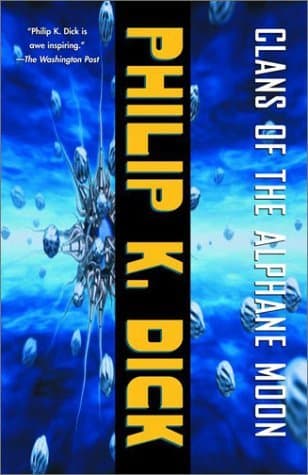
Philip K. Dick (1964)
Genre
Psychology / Science Fiction
Reading Time
256 min
Key Themes
See below
Sign in to track this book
On a distant moon ruled by liberated psychotics, a CIA agent, his psychiatrist ex-wife, and a TV comedian find their divorce proceedings escalate into a darkly hilarious laser gun battle, blurring the lines between sanity and madness.
The story opens with CIA agent Chuck Rittersdorf and his estranged wife, Dr. Mary Rittersdorf, a psychiatrist, in a contentious divorce. Mary sees Chuck as pathologically passive-aggressive and wants to control their shared life, including their home. Their conflict is worse because Mary is a 'Healer,' believing in rehabilitating the mentally ill, while Chuck has a more traditional, cynical view of human nature. This personal struggle is set in a future Earth where psychiatric classifications influence social standing and interplanetary policy, especially concerning Alpha III M2, a colony for various psychotics.
After the divorce, Chuck is unemployed. He gets a job as a public relations man for Bunny Hentman, a popular and eccentric comedian. Hentman, known for his bizarre public persona, is intelligent and manipulative. He values Chuck's cynicism and competence. Hentman is involved in a secret project about the Alphane Moon and its inhabitants, the 'Alphanes.' His intentions are unclear, but his involvement quickly pulls Chuck into the moon colony's complex politics and hidden agendas.
Alpha III M2 is a unique colony for Earth's mentally ill. Instead of traditional treatment, the Alphanes have organized into distinct 'clans,' each based on a specific psychiatric diagnosis. These include the Obsessive-Compulsives (OCs), the Paranoids (PPDs), the Schizophrenics (SKZs), the Manic-Depressives (M-Ds), and the Healers, who are the most 'sane' and act as administrators. This societal structure, while seemingly chaotic, has developed its own rules, economies, and political systems, often mirroring Earthly power struggles, but filtered through their specific pathologies.
The Alphane Moon, originally a controlled experiment, has begun to assert its independence, worrying Earth. The CIA, Chuck's former employer, sees the Alphanes' self-governance as a threat and wants to regain control. This political maneuvering involves various factions within Earth's government, each with ideas about managing or exploiting Alphane society. Earth's 'Healers,' like Mary, advocate for continued self-determination and therapeutic approaches. More pragmatic or militaristic elements push for intervention. This conflict is a backdrop to the personal dramas.
Bunny Hentman, seeing an opportunity for profit or influence, sends Chuck to the Alphane Moon as a public relations mission. Chuck's real task is to gather intelligence and potentially manipulate the Alphane clans to Hentman's advantage. This journey puts Chuck into the bizarre and often dangerous world of Alpha III M2, where he navigates the social structures and peculiar logic of the various psychotics. His arrival marks a turning point; he becomes a pawn in a larger game involving Earth and Alphane politics.
Unbeknownst to Chuck, Mary also travels to Alpha III M2, with a different agenda. As a 'Healer,' she is part of an Earth delegation sent to assess the Alphanes' progress and ensure their autonomy and well-being. Her presence on the moon reignites the personal conflict with Chuck, but their individual missions also intersect with the broader political landscape. Mary, with her belief in therapeutic intervention, clashes with Chuck's pragmatic and cynical approach. This reflects the larger ideological divide between Earth's factions regarding the Alphane Moon.
The balance of power on Alpha III M2 unravels, leading to open warfare between the clans. The Paranoids (PPDs) become aggressive, while the Schizophrenics (SKZs) struggle with internal divisions. The Obsessive-Compulsives (OCs) try to maintain order through rigid systems, and the Manic-Depressives (M-Ds) swing between grand plans and despair. Earthly agents, including Chuck and Mary, inadvertently or deliberately fuel these conflicts through their attempts to influence the Alphane political landscape, leading to skirmishes and power plays.
As the conflict on the moon intensifies, Bunny Hentman's true motivations surface. He is not interested in public relations or benevolent oversight; he wants to profit from the Alphane Moon, perhaps by selling its resources or exploiting its unique society. Hentman's cynical and self-serving nature is exposed; he is a manipulator who views both the Alphanes and Earthly agents as pawns. His actions complicate the already volatile situation, forcing Chuck to confront the moral implications of his employer's actions.
The plot threads converge in a showdown on Alpha III M2. Chuck, Mary, and Bunny Hentman, each with their own agendas and allegiances, confront each other, often with laser guns. This chaotic scene highlights the absurdity of the situation, with personal vendettas intertwining with interplanetary politics and the bizarre logic of the Alphane clans. The lines between sanity and madness blur as the characters, 'sane' and 'ill,' use violent and illogical means to achieve their goals, ending in a darkly comedic and tense standoff.
Despite the violence and absurdity, the shared ordeal on Alpha III M2 forces Chuck and Mary to confront their biases and re-evaluate their relationship. Interacting with the Alphanes, who, despite their diagnoses, show their own forms of logic, community, and wisdom, breaks down Mary's rigid psychiatric framework and Chuck's cynical detachment. They begin to see each other, and the Alphanes, with new understanding, recognizing the complexities of the human psyche and the arbitrary nature of 'sanity' or 'illness' in different contexts. A fragile reconciliation begins.
The conclusion leaves the future of the Alphane Moon ambiguous. While the immediate conflict may resolve, the long-term viability of a society founded on mental illness, and its relationship with Earth, remains an open question. However, the Alphanes, despite their pathologies, show resilience and capacity for self-organization. The story suggests that their unique societal structure, while unconventional, might offer a different, challenging path to existence. The novel questions whether Earth's 'sane' solutions are superior to the Alphanes' self-determined, chaotic way of life.
The Protagonist
Chuck moves from cynical detachment to a more empathetic understanding of both his ex-wife and the Alphanes, questioning his previous assumptions about sanity.
The Protagonist/Antagonist
Mary's rigid psychiatric framework is challenged by her experiences on Alpha III M2, leading her to a more flexible and empathetic understanding of mental illness and her ex-husband.
The Antagonist
Hentman remains largely unchanged, serving as a consistent force of cynical manipulation and self-interest throughout the narrative.
The Supporting
Lord Running Clam demonstrates the complex agency and political acumen possible within the Alphane society, challenging Earth's perception of mental illness.
The Supporting
Nitz remains a consistent voice for Earth's security interests, highlighting the political tensions surrounding the Alphane Moon.
The Supporting/Setting
The Alphanes collectively assert their autonomy and demonstrate the viability of their unique societal structure, challenging Earth's perception of them as merely 'ill.'
The novel blurs the lines between sanity and madness, questioning definitions used by Earth society. On Alpha III M2, mental illnesses form the basis of social structures and political systems. The Alphanes, despite their pathologies, show logic, community, and wisdom. This often makes 'sane' Earthlings seem equally, if not more, irrational in their pursuit of power. Mary's rigid psychiatric framework is challenged by Alphane life, while Chuck's cynicism proves more adaptable than Earth's 'rational' approaches. The story suggests 'madness' can be a functional, unconventional way of organizing society.
“Perhaps the insane, by their very nature, form the only true society.”
Philip K. Dick satirizes the bureaucratic and control-obsessed nature of government and institutions, especially through the CIA and Earth's approach to the Alphane Moon. Earth's attempts to 'manage' or 'reintegrate' the Alphanes are clumsy, self-serving, and absurd, given the unique social structures on the moon. The elaborate plans of figures like General Nitz and even Mary's therapeutic interventions often fail to account for the unpredictability and self-determination of the Alphanes. The novel shows how attempts to impose order from outside often lead to greater chaos, mirroring the characters' internal conflicts.
“The government had decided that insanity, like any other natural resource, must be properly exploited.”
Manipulation and self-interest drive many characters, 'sane' and 'mad.' Bunny Hentman is the prime example, using charisma and resources to exploit the Alphane Moon for personal gain. Chuck, less overtly malicious, is often a pawn in these games, driven by his desire for security. Even Mary, with benevolent intentions, tries to manipulate the Alphanes through therapeutic frameworks. On the Alphane Moon, clans constantly maneuver and deceive, each acting in what they see as their own best interest, often worsening conflicts. This theme shows a human flaw that transcends mental diagnosis.
“Everyone, sane or otherwise, had an angle.”
The bitter divorce between Chuck and Mary is a central personal conflict that mirrors larger societal and philosophical clashes. Their relationship is marked by Mary's diagnostic labeling of Chuck and Chuck's passive resistance. However, their shared ordeal on Alpha III M2 forces them to confront their biases and rigid thinking. The moon's chaotic environment, where traditional rules of sanity are suspended, paradoxically allows them to see each other more clearly, beyond predetermined roles and diagnoses. Their eventual, fragile reconciliation suggests that understanding and empathy can come from shared adversity and a willingness to question one's perceptions.
“On Alpha III M2, their personal war seemed almost normal, a petty squabble in a universe of grander insanities.”
The novel explores how identity is constructed, individually and collectively, especially in relation to mental illness. For the Alphanes, their diagnosis *is* their identity, forming their social structure and self-perception. This challenges Earth's view of mental illness as solely a deficit. Chuck and Mary must re-evaluate their own identities when faced with a society where their 'sanity' is not necessarily an advantage. The story questions whether a label truly defines a person or if identity is a more fluid and adaptable concept, capable of redefinition in different contexts.
“To be an Alphane was to be a diagnosis, a living definition.”
A planetary colony exclusively for the mentally ill, serving as a social experiment and mirror to Earth.
The Alphane Moon is not merely a setting but a central plot device. It functions as a grand social experiment, allowing for the exploration of what happens when mental illness becomes the organizing principle of a society. The moon's unique societal structure (clans based on diagnoses) directly drives the political conflicts and character interactions. It also serves as a distorting mirror, reflecting and exaggerating Earth's own societal flaws and bureaucratic absurdities. The moon's existence allows the narrative to challenge conventional notions of sanity and provide a unique backdrop for personal and geopolitical drama.
The use of mental illness diagnoses as the basis for political and social organization.
This device is fundamental to the world-building and thematic exploration. By having the Alphane clans defined by their psychiatric diagnoses (e.g., Paranoids, Schizophrenics, Obsessive-Compulsives), Dick creates a society where mental illness is not merely a medical condition but a social identifier and political allegiance. This allows him to satirize Earth's own rigid classifications and prejudices, while also exploring the inherent logic and functionality that can arise even from seemingly irrational frameworks. It directly drives the conflicts between the clans and challenges Earth characters' perceptions of mental health.
A personal marital conflict that parallels the larger ideological and political struggles.
The strained relationship and ongoing divorce between Chuck and Mary serve as a crucial narrative device. Their personal conflict, rooted in Mary's psychiatric analysis of Chuck and his passive resistance, mirrors the larger ideological clashes between Earth's 'Healers' and more cynical factions regarding the Alphane Moon. Their journey together to Alpha III M2 forces them to confront their personal biases, leading to a potential reconciliation. This personal drama grounds the more expansive science fiction elements and provides an emotional core, allowing the abstract themes of sanity and madness to be explored through relatable human interaction.
A seemingly harmless public figure who embodies external, self-serving exploitation.
Bunny Hentman acts as a catalyst and antagonist, representing the external forces of cynical exploitation and manipulation that threaten the Alphane Moon's autonomy. His comedic facade belies a shrewd and amoral mind, making him a dangerous, yet often darkly humorous, figure. He serves to draw Chuck into the deeper conflicts and to highlight the pervasive nature of self-interest, even among Earth's 'sane' population. Hentman's actions directly contribute to the escalating tensions and provide a clear counterpoint to Mary's more idealistic, yet equally flawed, approach.
“The greatest good for the greatest number, even if it means sacrificing some of the members of the greatest number.”
— A philosophical point made about societal structures and the greater good.
“Reality is that which, when you stop believing in it, doesn't go away.”
— A character's musing on the nature of reality and perception, a common theme in Dick's work.
“The trouble with most people is that they're not crazy enough.”
— A statement reflecting on the need for unconventional thinking or a departure from the norm.
“Insanity is often a question of perspective.”
— Discussing the various mental states and how they are perceived by others.
“Every man has his own universe, and it is a unique universe.”
— Explaining the subjective nature of individual experience and reality.
“The truth is what survives the last lie.”
— A cynical but profound observation about the persistence of truth despite deception.
“We are all prisoners of our own brains.”
— Reflecting on the limitations and biases inherent in human cognition.
“To be sane in an insane world is in itself insane.”
— A paradoxical statement highlighting the difficulty of maintaining normalcy in a chaotic environment.
“The future is not a road; it is a river.”
— A metaphor suggesting the unpredictable and flowing nature of future events.
“Love is an act of creation.”
— A character's view on the active and generative nature of love.
“Perhaps the purpose of life is to be a machine for generating new kinds of experiences.”
— A speculative thought on the underlying drive of existence and consciousness.
“There are no facts, only interpretations.”
— Emphasizing the subjective lens through which all information is processed.
“The universe is a place of constant transformation.”
— A general observation about the dynamic and ever-changing nature of the cosmos.
“Every system, no matter how perfect, contains the seeds of its own destruction.”
— A commentary on the inherent flaws and eventual decay within all structures, social or otherwise.
Ready to see how well you understood this book? Take our interactive quiz with 10 questions.
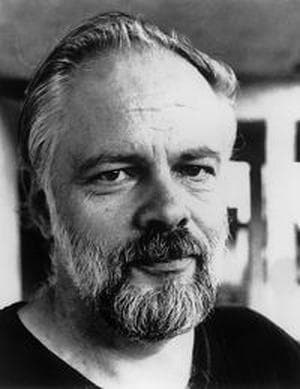
Philip Kindred Dick, often referred to by his initials PKD, was an American science fiction writer. He wrote 44 novels and about 121 short stories, most of which appeared in science fiction magazines during his lifetime. His fiction explored varied philosophical and social questions such as the nature of reality, perception, human nature, and identity, and commonly featured characters struggling against elements such as alternate realities, illusory environments, monopolistic corporations, drug abuse, authoritarian governments, and altered states of consciousness.