“The place was a dump. I mean, not just a dump, but a dump with aspirations.”
— Describing the theme park CivilWarLand itself.

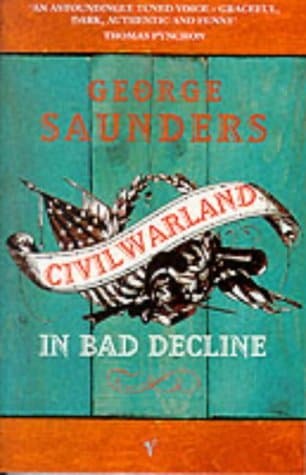
George Saunders (1996)
Genre
Literary Fiction / Science Fiction
Reading Time
150 min
Key Themes
See below
Sign in to track this book
In a hilariously bleak near-future, George Saunders dissects the absurd and often heartbreaking struggles of ordinary people navigating theme parks, corporate drudgery, and the collapse of societal norms.
The story opens with the unnamed narrator, a history buff and re-enactor, working at CivilWarLand, a dilapidated historical theme park. The park is in severe decline, plagued by vandalism, drug use, and a general lack of maintenance. The narrator worries about his family—his wife, his son, and especially his daughter, Cindy, who has a mysterious illness that causes her to lose consciousness. He is also burdened by the memory of his brother, who died under ambiguous circumstances. His job involves portraying a Civil War soldier, but he is increasingly distracted by the park's problems and his personal anxieties, including a menacing gang of youths who frequent the park and the indifference of his superiors, Mr. A. and Mr. B.
Vandalism at CivilWarLand intensifies. Historical artifacts are defaced and park property is destroyed. The narrator is put in charge of security, a role he is ill-equipped for. He tries to deter the vandals, but his efforts are largely futile. A 'ghost' begins to appear, causing further disruption and scaring visitors. This 'ghost' is an elderly, mentally unstable homeless man who has taken refuge in the park. The narrator, under pressure from Mr. A. and Mr. B., is tasked with removing the man. He approaches this task with reluctance and desperation to protect his job and family.
The narrator confronts the homeless man, who is gentle but confused. He tries to reason with him, but the man is disoriented. Later, while trying to protect the park from the vandals, the narrator shoots and kills one of them, a young boy. The incident is a tragic accident, but it plunges the narrator into a deeper moral crisis. He is haunted by the boy's death and the implications for his own conscience and his family's future. The park's management attempts to cover up the incident, further highlighting the moral decay of their enterprise. The narrator's mental state deteriorates as he grapples with his actions.
The park's decline accelerates after the shooting. Visitors abandon CivilWarLand, and the remaining staff are demoralized. The narrator's family life also crumbles; his daughter's illness worsens, and his relationship with his wife becomes strained. He is eventually fired from his job, leaving him without income and further exacerbating his family's precarious situation. The weight of his actions at the park, combined with his family's suffering, pushes him to the brink. He reflects on his brother's death and the cyclical nature of misfortune, seeing his own life as a series of bad decisions and uncontrollable events, mirroring the decay of the park itself.
Ted, a timid and overweight man, works for a company run by an obese and tyrannical CEO. The corporate culture is one of extreme cruelty and humiliation, where employees are forced to participate in bizarre and degrading rituals to maintain their employment. Ted, desperate to provide for his family, endures these abuses, including being publicly ridiculed and forced to consume excessive amounts of food. He rationalizes his compliance by focusing on his family's needs, but his self-esteem is constantly eroded. The story highlights the dehumanizing effects of corporate power and the lengths individuals will go to for survival in a harsh economic climate, questioning the ethics of such environments.
Despite the constant humiliation, Ted experiences a brief moment of internal resistance when he sees the CEO's vulnerability. He considers standing up for himself or others but ultimately succumbs to the pressure, fearing the loss of his job. The story ends with Ted continuing his miserable existence, a stark portrayal of the powerlessness of the individual against an oppressive system. His momentary defiance is quickly extinguished, showing how deeply ingrained the culture of fear and obedience has become. The narrative comments on the erosion of personal dignity in the pursuit of economic stability.
The novella 'Bounty' introduces a dystopian future where environmental collapse has led to a society divided into genetically 'perfect' 'Stupids' and 'Flaws'—people with genetic defects. The 'Stupids' live in a protected enclave, while 'Flaws' are forced to live in a dangerous, polluted wasteland. The protagonist, a 'Flaw' named Bounty, is part of a community constantly on the run from the 'Stupids' who hunt them for sport and to maintain their perceived genetic purity. Bounty's family consists of her parents and her sister, who is pregnant. Their existence is one of constant fear, scarcity, and the struggle to maintain their humanity in a world that deems them subhuman.
Bounty and her family are targeted by 'Stupid' hunters. During a harrowing chase, Bounty's sister is captured. Bounty and her parents manage to escape, but the loss of her sister deeply affects them. This event shows the brutality of their world and the constant threat they live under. The family's journey is fraught with danger, as they navigate the desolate landscape, encountering other desperate 'Flaws' and the ever-present threat of the 'Stupids'. Bounty's parents try to protect her, but the harsh realities of their existence force her to mature quickly and confront the violence around her.
Bounty, driven by a desire for revenge and a need to understand her oppressors, infiltrates a 'Stupid' enclave. What she finds there is not the idealized society she imagined but a sterile, joyless existence. The 'Stupids' are emotionally stunted, obsessed with superficial perfection, and ironically, seem just as miserable as the 'Flaws' they persecute. She learns that their genetic 'purity' has come at the cost of their humanity and capacity for genuine emotion. This revelation complicates her understanding of good and evil, showing that neither side is truly 'better' than the other, just different forms of brokenness.
Bounty returns to her 'Flaw' community, sharing her observations about the 'Stupids'. Her experiences have changed her, making her question the simple binaries of their world. She brings back not just information but a nuanced perspective, realizing that the 'Stupids' are also victims of their own system. The novella ends with Bounty facing a difficult choice: whether to continue the cycle of violence or to seek a different path, one that acknowledges the shared humanity and suffering of both 'Flaws' and 'Stupids'. The future remains uncertain, but Bounty's journey offers a fragile hope for understanding and perhaps, a different kind of survival.
The Protagonist
Starts as a hopeful idealist, descends into moral compromise and despair, ending in complete personal ruin.
The Supporting
Remains a static symbol of vulnerability and the narrator's motivation, her condition worsening throughout the story.
The Protagonist
Starts as compliant and hopeful, becomes increasingly demoralized and resigned to his fate, with brief flickers of resistance.
The Antagonist
A static antagonist, serving as the embodiment of oppressive corporate power.
The Protagonist
Transforms from a revenge-driven survivor to someone with a deeper, more complex understanding of her world and its divisions.
The Antagonists/Supporting
Static, serving as the oppressive force and later revealed to be complexly flawed themselves.
The Supporting
A static character, serving as a catalyst for the narrator's moral decline.
The Supporting
Static antagonists, embodying the corporate indifference that drives the plot.
Saunders explores how the pursuit of profit and corporate efficiency can strip individuals of their dignity and humanity. In 'CivilWarLand in Bad Decline,' the narrator makes morally compromising decisions, ultimately leading to violence, all to protect a job in a failing, exploitative theme park. In 'The 400-Pound CEO,' Ted endures extreme humiliation and degradation to maintain his employment, highlighting how economic insecurity forces individuals into subservience. The 'Stupids' in 'Bounty,' despite their 'perfection,' live sterile, joyless lives, suggesting that even a seemingly utopian capitalist outcome can be devoid of true human connection. This theme permeates the collection, showing the destructive power of systems that prioritize capital over people.
“What I liked about my job was the sense of history, the sense of being part of something larger than myself. What I didn't like was that it was a total fucking disaster.”
Many of Saunders' characters are forced into morally questionable acts due to their circumstances, leading to profound guilt. The narrator in 'CivilWarLand' grapples with the decision to remove the homeless man and, more tragically, with the accidental killing of a vandal. His internal monologue is filled with self-recrimination and a desperate attempt to justify his actions, which ultimately spirals into despair. Ted in 'The 400-Pound CEO' feels a constant internal conflict between his desire for dignity and his need to provide for his family, leading to self-loathing. These narratives explore the psychological toll of compromising one's values and the lasting burden of guilt.
“I was a man who had killed a boy. I was a man who had done a bad thing. And I was a man who was going to pay for it.”
Saunders depicts worlds in various states of decline, reflecting a broader societal decay. CivilWarLand itself is a symbol of this, a historical park falling apart due to neglect, vandalism, and corporate indifference. The dystopian future of 'Bounty' shows a world ravaged by environmental collapse and social stratification, where humanity has split into oppressors and oppressed. The corporate environment in 'The 400-Pound CEO' is a microcosm of decay, where ethical standards have eroded in favor of cruelty and power. This theme suggests a pessimistic view of humanity's trajectory, where systems and values are consistently breaking down.
“Our world was a mess, but at least it was our mess.”
In the face of overwhelming adversity and dehumanizing forces, characters often struggle to maintain a sense of self-worth and identity. The narrator in 'CivilWarLand' tries to cling to his historical knowledge and family values even as his life crumbles. Ted, despite his humiliations, harbors a desire for respect and a brief spark of defiance against his corporate tormentors. Bounty and the 'Flaws' in 'Bounty' fight to retain their humanity and community in a world that labels them as subhuman. This theme highlights the resilience of the human spirit, even when confronted with systems designed to erase individual worth.
“It was not a good day to be a man. It was not a good day to be a human.”
Creates a bleak, exaggerated world to highlight societal flaws.
Saunders frequently uses dystopian or near-dystopian settings to amplify and satirize contemporary societal issues. 'CivilWarLand in Bad Decline' presents a theme park as a microcosm of a decaying society, while 'Bounty' directly constructs a future devastated by environmental disaster and extreme social stratification. These settings allow Saunders to explore themes of corporate greed, social inequality, and the dehumanizing effects of power in an exaggerated, yet disturbingly plausible, manner. The fantastical elements serve to make the underlying critiques of real-world problems more stark and impactful, pushing readers to consider the logical extremes of current trends.
Provides intimate access to the characters' internal struggles and moral dilemmas.
The use of first-person narration in many of Saunders' stories, particularly 'CivilWarLand in Bad Decline' and 'The 400-Pound CEO,' provides immediate and intimate access to the protagonists' thoughts, anxieties, and moral struggles. This allows readers to deeply empathize with their predicaments and understand the complex internal justifications for their actions. The often rambling, stream-of-consciousness style of the narrators reflects their mental states and the chaos of their environments. This device is crucial for conveying the emotional weight of their moral compromises and the psychological toll of their oppressive circumstances, fostering a strong connection between reader and character.
Uses absurdity and irony to critique societal norms and power structures.
Saunders employs a distinctive blend of satire and dark humor to underscore the absurdities and cruelties of modern life. The decaying CivilWarLand, the grotesque rituals of 'The 400-Pound CEO,' and the ironically named 'Stupids' in 'Bounty' are all examples of this. The humor often arises from the juxtaposition of mundane, bureaucratic language with horrific or tragic events, creating a sense of uncomfortable laughter. This device prevents the stories from becoming purely depressing, instead offering a critical lens that highlights the ridiculousness of the systems and behaviors being critiqued, forcing readers to confront uncomfortable truths through a veil of dark comedy.
Uses objects, places, and characters to represent larger ideas.
Symbolism is prevalent throughout Saunders' work. CivilWarLand itself symbolizes the decay of historical memory, cultural values, and institutional integrity. Cindy's illness in 'CivilWarLand' represents the innocent suffering caused by systemic neglect and the narrator's personal anxieties. The 400-pound CEO symbolizes unchecked corporate power and gluttony. In 'Bounty,' the 'Flaws' and 'Stupids' are symbolic of societal divisions based on arbitrary criteria, while the polluted wasteland represents environmental degradation. These symbols enrich the narratives, providing deeper layers of meaning and reinforcing the overarching themes of the collection.
“The place was a dump. I mean, not just a dump, but a dump with aspirations.”
— Describing the theme park CivilWarLand itself.
“There are people who can do good in this world, and then there are people who are just in the way.”
— Spoken by Samuel, a character who embodies a certain kind of pragmatic ruthlessness.
“My job was to make the past seem more compelling than the present, which was easy, since the present sucked.”
— The narrator's cynical view of his role at the historical theme park.
“We were all just trying to get by, which meant we were all just trying to screw each other over.”
— A bleak assessment of human relations in a desperate environment.
“Sometimes you just have to do what's right, even if it means losing everything.”
— A rare moment of idealism or moral conviction in a generally cynical world.
“The trick was to pretend you believed in something, anything, just to get through the day.”
— The coping mechanism of characters facing a meaningless existence.
“He had that look, the one that said, 'I'm a good guy, really, just misunderstood by a world that expects too much.'”
— Observation of a character's self-perception.
“We kept moving forward, because what else were we going to do? Stand still and let it all catch up?”
— A sense of inevitability and a grim determination.
“The future was just the present, but with more rust and fewer options.”
— A dystopian view of what's to come.
“Every day was a negotiation between what you wanted and what you could actually get.”
— Reflecting on the constant compromises of daily life.
“He had a way of looking at you that made you feel like you were the only thing wrong with the world, and he was the only one who noticed.”
— Describing an accusatory or judgmental gaze from another character.
“The past was a weapon they used against us, a way to remind us how much we'd failed.”
— The historical theme park's past serving as a tool for control or criticism.
“We were all just ghosts haunting a future that had already happened.”
— A profound statement on the feeling of being anachronistic or irrelevant.
“There's a certain kind of freedom in knowing you've got nothing left to lose.”
— A character embracing desperation as a form of liberation.
Ready to see how well you understood this book? Take our interactive quiz with 10 questions.
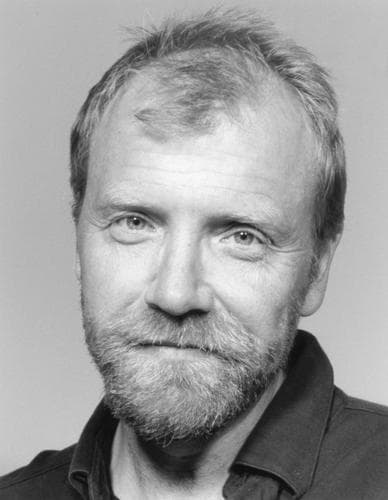
George Saunders is an American writer of short stories, essays, novellas, children's books, and novels. His writing has appeared in The New Yorker, Harper's, McSweeney's, and GQ. He also contributed a weekly column, American Psyche, to The Guardian's weekend magazine between 2006 and 2008.







