“Perhaps the greatest tragedy of mankind is that they are, in essence, a herd.”
— Reflecting on human nature and the motivations for leaving Earth.

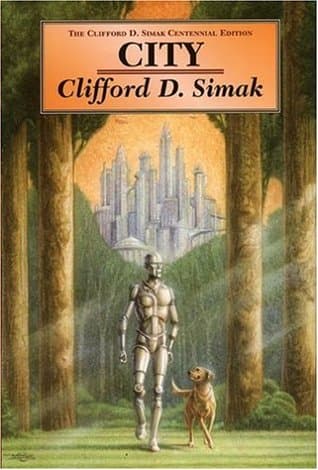
Clifford D. Simak (1952)
Genre
Fantasy / Science Fiction
Reading Time
251 min
Key Themes
See below
Sign in to track this book
Simak's "City" tells the bittersweet story of humanity's decline through fireside legends shared by Dogs and their robot companions, leaving behind a universe shaped by the gifts they gave their loyal creations: speech, exploration, and service.
The story begins with Jenkins, an advanced robot, serving Gramps Webster, the last human, at the family's old homestead. Most humans have left Earth for other planets, leaving behind robots and genetically enhanced Dogs. Jenkins thinks about humanity's decline and the Websters' part in space colonization and creating intelligent Dogs. He maintains the property and cares for Gramps, ensuring his comfort in a world increasingly run by non-human intelligence. The Dogs, who can now speak, gather to hear Jenkins tell 'legends' of humanity, especially the Websters, showing their fading memory and the Dogs' developing culture.
Jerome Webster, a genius in Martian diseases, lives in an isolated 'huddling place' because of his severe agoraphobia. He is one of the few humans left on Earth and is urgently needed on Mars to fight a growing plague. Despite his importance, Jerome cannot bring himself to leave his safe home, even for a short trip. His robot, Jenkins, and a Martian envoy try to convince him, stressing the serious results of his inaction. Jerome's deep fear of open spaces and new environments symbolizes humanity's increasing withdrawal from the universe they once explored, hinting at their eventual disappearance.
Richard Webster, a descendant of the original Websters, finds an ant colony on his property that is quickly becoming intelligent. This unexpected evolution creates a moral problem for him and the remaining humans. At the same time, a new philosophical movement, 'The New Way,' appears, advocating for a simpler, more natural life and rejecting technology and space travel. Many humans are drawn to this movement, further speeding up Earth's depopulation. Richard tries to understand the ants' potential, while also seeing humanity's growing detachment from its past goals, and the increasing influence of the Dogs and robots.
Kent Fowler, a human explorer, volunteers for a dangerous experiment on Jupiter. To survive Jupiter's harsh environment, he transforms into a Loper, a native Jovian creature. The experiment succeeds, but Fowler never returns to human form. Instead, he embraces his new life, finding a deep sense of peace and belonging in the alien landscape. His assistant, who also transforms, chooses to stay as well. This story, told by Jenkins, illustrates humanity's willingness to change its form and identity, and the appeal of other ways of being, contributing to their eventual departure from Earth.
Nathaniel Webster, the last human on Earth, decides to leave his ancestral home for a peaceful 'paradise' where he can spend his final days. Jenkins and the Dogs go with him. Nathaniel reflects on the long history of the Websters and the evolution of Earth's new inhabitants. His departure marks the definite end of human presence on Earth, symbolizing a graceful exit rather than a tragic extinction. The Dogs, now the main sentient species, respectfully observe his passing, inheriting the planet and the legacy of humanity's past.
With humans gone, the Dogs have built a sophisticated and peaceful society, guided by Webster family principles. They pursue intellectual interests and maintain a good relationship with their robot companions. However, a new threat appears: the intelligent ant colonies, which have grown in power and numbers. The ants, with a collective consciousness, begin to challenge the Dogs' dominance. The Dogs must decide how to live with or compete with this growing intelligence, thinking about humanity's past conflicts with other species and its own technological progress.
The Dogs, now Earth's guardians, continue to interpret humanity's 'legends,' especially those of the Websters, passed down by Jenkins. They meet an alien visitor, a 'traveler,' who brings up new philosophical questions about life and purpose. This encounter challenges the Dogs' understanding of their own history and humanity's role. The Dogs, through their philosophical inquiries and interactions with the alien, begin to form their own identity and future, moving beyond simply preserving human memory to creating their own path. Jenkins acts as a living archive, but his stories are now seen through a new lens.
The tension between the Dogs and the intelligent ants grows. The ants, with their collective mind and efficient organization, are a strong force. The Dogs, with their individual yet cooperative society, must find a way to deal with this growing threat. Jenkins, always a wise observer, offers advice, drawing comparisons to human history and their mistakes. The story explores the difficulties of different intelligences living together and the potential for conflict when resources and territory are fought over. The Dogs' future on Earth depends on their ability to manage this complex relationship.
Clifford D. Simak provides a brief author's note, explaining his inspiration for 'City' and his intentions in writing the stories. He discusses his interest in a post-human world and the evolution of new intelligent species. Simak highlights the book's main themes, such as humanity's decline, the nature of intelligence, and the lasting legacy of culture and myth. This note gives context to the overall narrative and emphasizes the collection's philosophical basis, presenting it as a reflection on civilization and change.
The Epilog takes place countless millennia after the last human left. Earth is now a diverse world of sentient life, including evolved Dogs, robots, and the ant collective. Humanity has become a myth, a collection of 'legends' passed down, often inaccurately, through Dog generations. Jenkins, the immortal robot, is still present, a living link to the human past, but his stories are now deeply part of the Dogs' own culture and interpreted through their unique understanding. The book ends with the Dogs reflecting on these ancient tales, confirming their role as Earth's true inheritors and its future.
The Supporting
Jenkins remains largely unchanged in his core programming, but his role evolves from human servant to the primary custodian and interpreter of human history for the Dogs, adapting to their evolving society.
The Protagonist/Mentioned
The Webster family's collective arc depicts the graceful, if melancholic, retreat of humanity from Earth, allowing other species to inherit the planet, leaving behind a rich, if often misinterpreted, legacy.
The Protagonist
The Dogs evolve from being humanity's companions to becoming the primary inheritors and custodians of Earth, forging their own identity and future based on, but distinct from, human legacy.
The Supporting
Gramps' arc is one of gentle decline and acceptance, embodying humanity's quiet exit from the stage of Earth.
The Supporting
Jerome's arc is one of tragic stasis; his internal conflict and fear ultimately prevent him from changing or fulfilling his potential, mirroring humanity's broader decline.
The Supporting
Richard's arc involves a growing awareness of humanity's changing place in the world, as he observes the rise of other intelligences and new philosophies.
The Mentioned
Fowler's arc is one of complete transformation and acceptance of a new, non-human identity, symbolizing a radical form of human 'departure'.
The Supporting
Nathaniel's arc is the culmination of humanity's departure, a peaceful and reflective journey to their final resting place.
The Antagonist/Supporting
The Ants' arc shows their rapid evolution from simple insects to a formidable, collectively intelligent species, challenging the established order of the Dogs.
A main theme of 'City' is humanity's gradual, peaceful, and almost unnoticed decline on Earth. Instead of a catastrophic end, humans simply fade away, moving to other planets, retreating into isolation, or changing into other forms. Their legacy, however, continues through their creations: the intelligent Dogs and the immortal robots. The Websters' story, as told by Jenkins, becomes a founding myth for the Dogs, shaping their philosophy and culture. This theme appears in stories like 'City' and 'Paradise,' where the last humans quietly leave, leaving their mark not through continued presence but through the lasting impact of their past actions.
“Perhaps the greatest of all human legends was the legend of themselves.”
'City' explores the idea that intelligence is not unique to humanity and can appear in many forms. The genetically enhanced Dogs, advanced robots like Jenkins, and the collectively intelligent ants represent successive dominant species on Earth. The narrative suggests a natural progression where one species makes way for another, showing evolution's dynamic nature. 'Desertion' further emphasizes this by showing a human choosing to become a Jovian creature, illustrating how fluid species identity can be. This theme questions human-centered views and suggests a future where Earth has many varied, evolving intelligences.
“Man was leaving the Earth, leaving it to the things he had created.”
As millennia pass, the factual history of humanity, especially the Websters, becomes myth and legend for the Dogs. Jenkins, the robot, is the main source of these stories, but they are interpreted and reinterpreted through the Dogs' unique cultural perspective. The stories are not just historical accounts but foundational narratives that shape the Dogs' understanding of their world, origins, and purpose. This theme is central to the book's entire structure, as each chapter is presented as a 'legend' told by the Dogs. It highlights how history changes, shaped by the views and needs of those who remember it, as seen in 'Aesop' where the Dogs deal with human concepts.
“These are the stories of the Websters, told by the Dogs around the dying embers of a campfire.”
The book examines the challenges and possibilities of different intelligent species living together. The Dogs and robots form a harmonious society, but the appearance of intelligent ant colonies introduces a new dynamic of potential conflict. This theme explores the ethical considerations of interspecies relations, territory, and resource distribution. The Dogs, unlike humans, often seek philosophical solutions rather than outright war, showing a different approach to conflict resolution. Stories like 'Hobbies' and 'The Simple Way' directly address the growing tension and the Dogs' attempts to manage their relationship with the ants, questioning whether true peace can be achieved between different intelligences.
“Man had learned to live with the robot and the Dog, but how would the Dog learn to live with the ant?”
The entire narrative is presented as a series of 'legends' or 'myths' told by Dogs about humanity.
The primary plot device is the framing narrative where each chapter is introduced as a 'legend' or 'myth' recounted by the Dogs, often with Jenkins as the storyteller. This device immediately establishes the post-human context and positions humanity as a past, almost mythical entity. It allows for chronological jumps and shifts in perspective, as the stories are filtered through the Dogs' understanding and cultural interpretations. This framing emphasizes the theme of history becoming legend and the subjective nature of memory, making the reader aware that they are receiving an interpreted version of events.
The ancestral home of the Webster family, serving as a symbolic anchor for humanity's presence and departure.
The Webster homestead is more than just a physical location; it's a symbolic anchor for humanity's presence on Earth. It is where the last Websters reside, where Jenkins faithfully serves, and where the Dogs gather to hear the ancient stories. As humans depart, the homestead remains, a poignant reminder of a bygone era. It represents continuity and tradition, even as the world around it changes dramatically. Its eventual abandonment by the last human, Nathaniel, signifies the definitive end of humanity's direct stewardship of Earth, making it a powerful symbol of transition.
Genetically engineered canines given intelligence and speech, serving as humanity's successors.
The uplifted Dogs are a crucial plot device, as they are not merely companions but the direct inheritors of Earth and the primary perspective through which the story is told. Their intelligence and capacity for speech, gifted by humans, allow them to develop a sophisticated society and culture. They serve as a mirror to humanity, reflecting on human history and mistakes, but also forging their own unique path. Their existence directly addresses the question of what comes after humanity and provides a hopeful, if sometimes challenging, vision of a post-human world.
An advanced robot who serves as the living memory and historian for both humans and Dogs.
Jenkins is an immortal robot, a constant presence throughout millennia. His longevity allows him to witness the entire arc of humanity's decline and the rise of the Dogs and other intelligences. He functions as the story's primary historian and archivist, recounting the 'legends' of the Websters. His objective yet compassionate perspective provides a unique lens through which to view the events, offering insights into both human nature and the evolving non-human societies. He is the bridge between the past and the present, ensuring that humanity's legacy, however distorted, is preserved.
“Perhaps the greatest tragedy of mankind is that they are, in essence, a herd.”
— Reflecting on human nature and the motivations for leaving Earth.
“The wind was still, and the world was silent, save for the whisper of dry leaves.”
— Describing the quiet, almost desolate atmosphere of the abandoned Earth.
“There was no purpose to be served by holding on to things that had lost their meaning.”
— Discussing the obsolescence of human cities and artifacts.
“A man is a creature who has to find something to believe in, or he isn't a man at all.”
— Exploring the existential need for belief and purpose in sentient beings.
“The past is a story we tell ourselves, and we can change the story whenever we wish.”
— Reflecting on the subjective nature of history and memory.
“It was a peaceful world, and peace was a thing that man had never known.”
— Commenting on the tranquility of Earth after humanity's departure.
“The dogs had learned the lesson of responsibility, which was more than men had ever done.”
— Highlighting the evolution of dogs into responsible, self-sufficient beings.
“Knowledge is a dangerous thing, for it makes you aware of your ignorance.”
— A philosophical observation on the nature of learning and self-awareness.
“There was a time when men had been important, but that time was long past.”
— Contemplating the decline of human dominance and the rise of other species.
“The web of life was intricate, and every strand was important.”
— Emphasizing the interconnectedness of all living things in the evolving ecosystem.
“Perhaps the greatest wisdom is to know when to let go.”
— A thought on the necessity of adapting to change and relinquishing the past.
“Fear is a thing that lives in the mind, and it is a thing that can be conquered.”
— A general observation on overcoming fear through understanding.
“The robots, they were the keepers of the stories, the last echoes of mankind.”
— Describing the role of robots in preserving human history and culture.
“To be truly free, one must first be free of oneself.”
— A philosophical insight into the nature of true freedom and self-liberation.
Ready to see how well you understood this book? Take our interactive quiz with 10 questions.
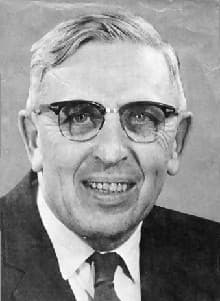
Clifford D. Simak was a celebrated American science fiction author, known for his thoughtful and often pastoral tales. His most famous work, "City," explores themes of humanity's future and its relationship with robots and dogs. Simak's writing style, characterized by its gentle pacing and focus on philosophical questions, earned him multiple Hugo and Nebula Awards, solidifying his legacy as a master of the genre.







