“The purpose of a master is to teach the slave that he is not a slave, but a man.”
— Thorby's early interactions with Baslim, who teaches him about freedom and self-worth.

Robert A. Heinlein (1957)
Genre
Fantasy / Science Fiction / Young Adult
Reading Time
288 min
Key Themes
See below
Sign in to track this book
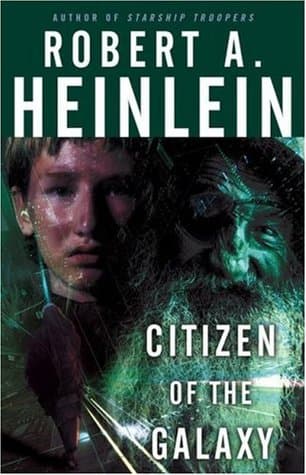
From a slaver's auction block to the Free Traders' routes, an orphaned boy navigates a dangerous galaxy, guided by an abolitionist spy's ghost and the growing mystery of his noble lineage.
The story begins with Thorby, a young boy with no memory, sold at a slave auction on Jubbulpore. Baslim the Cripple, a seemingly poor beggar with a mysterious past, buys him for a surprisingly high price. Thorby is initially afraid and distrustful, having lived a hard life and suffered the trauma of being an orphan sold into bondage. Baslim, however, treats him kindly, teaching him the local dialect and the ways of a beggar, while observing his intelligence. This period establishes their bond and the dangerous world they live in.
Under Baslim's guidance, Thorby learns begging, advanced math, history, and languages. Baslim gradually reveals he is an abolitionist spy, working to stop widespread slavery. He teaches Thorby about different cultures and legal systems across the galaxy, stressing adaptability and critical thinking. Thorby becomes Baslim's trusted helper, gathering information and sending messages. Their life is constantly risky, as Baslim's work puts them in danger, forcing Thorby to grow up quickly and understand the high stakes of their mission against the slave trade.
Authorities close in on Baslim. Knowing his time is short, Baslim prepares Thorby for his departure. He gives Thorby a coded message and instructions: find the Free Traders, a powerful merchant fleet, and deliver the message to their High Captain. Baslim sacrifices himself to ensure Thorby's escape. Thorby, heartbroken but determined, follows Baslim's last orders, using his skills to avoid capture and begin his dangerous journey across the galaxy, carrying his mentor's mission and his own uncertain future.
After a difficult journey, Thorby boards a Free Trader vessel, the 'Sisu.' The Free Traders are a nomadic, self-governing people with strict rules. Thorby is initially an outsider, struggling to understand their customs and earn their trust. He works hard, proving his worth through intelligence, resilience, and willingness to learn. Captain Feswe, the ship's matriarch, and her family take him in. Thorby adapts to their communal life, learning space navigation, trade, and Free Trader laws, slowly becoming part of their community.
Thorby becomes fully involved in the Free Trader life aboard the 'Sisu.' He learns about communal property, the share system, and the High Captain's authority in law and justice. He finds that Free Traders do not use money, relying instead on trade and the value of goods. Thorby's education continues as he masters navigation, cargo handling, and negotiation. He observes their mix of matriarchal leadership and democratic decision-making, and begins to feel a sense of belonging for the first time since Baslim's capture, finding a new family among the stars.
Thorby accidentally breaks a Free Trader custom about personal property, leading to a trial before the ship's officers. Unfamiliar with their strict laws, he struggles to defend himself. The situation is tense, and Thorby faces possible exile or harsh punishment. However, the High Captain, a wise leader also named Baslim (not Thorby's mentor), intervenes. Recognizing Thorby's good intentions and unique background, the High Captain gives a merciful judgment, allowing Thorby to stay with the Free Traders and continue learning. This event solidifies Thorby's acceptance into their society.
As Thorby grows, he travels with the Free Traders across star systems, encountering diverse cultures and dangerous situations. He becomes skilled at trading, navigating, and self-defense. His intelligence and quick thinking are tested and proven. He takes part in daring trade negotiations, escapes hostile authorities, and learns to operate complex machinery. Thorby's abilities grow, changing him from a frightened orphan into a competent and respected member of the Free Trader community. He begins to take on more responsibility, showing leadership and a deep understanding of their way of life.
During their travels, the Free Traders meet the Xylar, an alien race known for their rigid social structure and dislike for other species. This encounter highlights the dangers of interstellar travel and the constant need for caution. Thorby sees firsthand the Free Traders' diplomatic skills and their ability to navigate complex political situations without violence when possible. The Xylar pose a threat, but the Free Traders, through their cleverness and unity, avoid conflict, further solidifying Thorby's understanding of their strength in a hostile galaxy. This interaction shows the theme of cultural difference and the challenges of living together.
Years after Baslim's sacrifice, Thorby finally understands the full meaning of the message he received. The Free Traders, through their network, had been secretly helping the abolitionist movement. Baslim's message contained intelligence, allowing the Free Traders to better coordinate efforts against the slave trade. Thorby, now a respected Free Trader, helps interpret and act on this information. The message is a catalyst that spurs the Free Traders into more direct action against slavery, fulfilling Baslim's legacy and Thorby's duty.
Through investigations by the Free Traders, Thorby's true identity is uncovered. He is Thorby Rudbek, the long-lost heir of the powerful Rudbek-Jaum family, a prominent lineage in the Terran Federation. His abduction as a child was an act of political intrigue. Thorby now faces a choice: stay with his Free Trader family or reclaim his birthright and join the Federation. He chooses to join the Federation, not for wealth, but to use his influence to fight slavery and bring justice, embodying the principles Baslim taught him.
As Thorby Rudbek, he enters the complex world of Federation politics. His experiences as a slave, a beggar, and a Free Trader give him a unique perspective and a strong moral compass. He uses his family's influence and his own credibility to advocate for the end of slavery across Federation worlds. He meets resistance from special interests and corrupt officials, but his determination and understanding of different cultures allow him to form alliances and expose injustices. Thorby becomes a powerful voice for the enslaved, working to dismantle the system from within the highest levels of power.
Thorby actively participates in the galactic campaign to end slavery. He uses his knowledge of the underworld, from Baslim, and his understanding of interstellar trade, from the Free Traders, to disrupt slave rings and rescue enslaved people. He works with Federation authorities, providing intelligence and strategic insights. His journey ends in a victory against the slave trade, marking a turning point in galactic history. Thorby, once a helpless slave, becomes a key figure in freeing countless others, fulfilling Baslim's dream and forging his own destiny as a citizen committed to justice and freedom.
The Protagonist
Thorby transforms from a helpless slave into a highly capable Free Trader, and finally into a powerful figure within the Terran Federation, using his influence to fight slavery.
The Supporting
Baslim serves as Thorby's initial guide and moral compass, sacrificing himself to set Thorby on his path.
The Supporting
Feswe guides Thorby through his integration into Free Trader society, providing him with a new family and cultural understanding.
The Supporting
The High Captain validates Thorby's place among the Free Traders, ensuring his continued growth and integration.
The Supporting
The Free Traders provide Thorby with a new identity, a family, and the skills needed to navigate the galaxy independently.
The Mentioned
The family's existence provides Thorby with a powerful identity and a platform for his anti-slavery efforts.
This theme runs through the entire story. The novel shows the dehumanizing aspects of slavery through Thorby's early experiences and the constant threat of re-enslavement. It contrasts this with the independence of the Free Traders, who represent a different kind of freedom—one built on communal responsibility and self-reliance. Baslim's life is dedicated to fighting slavery, and Thorby's journey shows that freedom is not just the absence of chains, but the ability to choose one's path and fight for justice. The story explores the systemic nature of slavery and the need to oppose it.
“"A citizen of the galaxy has no master but the law, and no law but the law of all free men."”
Thorby's journey is a search for identity and a place to belong. He starts as an orphan with no memory, losing his past and sold like an animal. He finds a temporary identity as Baslim's 'son' and apprentice, then works to adapt to the Free Trader culture, eventually finding a deep sense of belonging and family among them. The revelation of his birthright as Thorby Rudbek forces him to connect these different identities: the slave, the beggar, the Free Trader, and the Federation heir. His choice to use his heritage for good reflects his integrated identity, shaped by all his experiences.
“"He was a citizen of the galaxy – and that was a far, far greater thing than being merely a citizen of any one world, or of a family, or of a fleet."”
Baslim's mentorship focuses on practical skills, critical thinking, and a broad knowledge of languages and cultures. He teaches Thorby to observe, analyze, and adapt, preparing him for survival in a dangerous galaxy. The Free Traders further this education, teaching Thorby navigation, trade, and their social laws, fostering his self-reliance. Thorby's ability to learn quickly and apply his knowledge is vital to his survival and success. This theme highlights that true education is not just about facts, but about developing the ability to think independently and make ethical choices, empowering individuals to shape their own lives.
“"There is no safety in numbers, or in rules, or in words. Only in your own wits, and your own hands."”
The novel explores many alien and human cultures, each with its own laws, customs, and moral codes. From the slave-holding societies of Jubbulpore to the communal Free Traders, and the Xylar, Thorby encounters vastly different ways of life. This makes him, and the reader, consider what is 'right' and 'wrong' and the challenges of interstellar diplomacy. The Free Traders, in particular, show how to navigate diverse cultures through respect, understanding, and strategic trade, rather than conquest, highlighting the importance of cultural intelligence in a complex galaxy.
“"Laws are for a single world, or a single people. But in the galaxy, there are a million worlds, and a million laws. You must learn to read the heart of a people, not just their books."”
Baslim's true identity and past are gradually revealed, driving Thorby's early development.
Baslim the Cripple serves as the archetypal mysterious mentor. His true nature as an abolitionist spy is slowly unveiled, adding layers of intrigue to his character and to Thorby's early life. His cryptic instructions and sudden disappearance propel Thorby into the wider galaxy. This device allows for the transfer of crucial knowledge and skills to the protagonist while simultaneously creating a compelling mystery that the protagonist must eventually unravel, directly impacting the overarching plot and Thorby's personal quest.
Baslim entrusts Thorby with a crucial message that guides his journey.
Baslim's final act is to give Thorby a seemingly simple message to deliver to the Free Traders. This message acts as a 'MacGuffin' for a significant portion of the story, giving Thorby a purpose and direction after Baslim's death. Its true importance and impact are only revealed much later, creating a delayed payoff that enhances the sense of destiny and the interconnectedness of events. The message not only drives Thorby's physical journey but also symbolizes the legacy of Baslim's fight against slavery.
Thorby's forgotten past as a lost heir is a central mystery.
Thorby begins the story with no memory of his past or his family, making him a blank slate onto which his experiences are written. This amnesia is a key plot device that fuels the mystery of his origins and allows for his complete immersion into different cultures without preconceived biases. The eventual revelation of his true identity as Thorby Rudbek, a lost heir of a powerful Federation family, provides a powerful twist, elevates his status, and gives him the means to directly influence galactic politics, transforming him from a nobody into a somebody.
Thorby's complete integration into diverse societies drives his character development.
This device is crucial to Thorby's character arc. He is forced to adapt completely to three distinct cultures: the beggar underworld of Jubbulpore, the nomadic Free Traders, and eventually the sophisticated Terran Federation. Each immersion requires him to learn new languages, customs, and survival skills, shaping his worldview and capabilities. This constant adaptation highlights his resilience and intelligence, and provides the reader with detailed insights into the complex sociology of Heinlein's galaxy. It underscores the theme that one's environment profoundly shapes identity and skills.
“The purpose of a master is to teach the slave that he is not a slave, but a man.”
— Thorby's early interactions with Baslim, who teaches him about freedom and self-worth.
“Never try to teach a pig to sing. It wastes your time and annoys the pig.”
— Baslim's practical advice to Thorby about not wasting effort on impossible tasks or people.
“A man who will not die for something is not fit to live.”
— Baslim's philosophy on conviction and the importance of having principles.
“The greatest truth is that there is no truth.”
— A philosophical statement that challenges absolute certainty and encourages critical thinking.
“There are no dangerous weapons, only dangerous men.”
— A reflection on the nature of conflict and the responsibility of individuals.
“It is not enough to be free; you must be free for something.”
— Baslim's teaching that freedom is not an end in itself but a means to a purpose.
“Justice is a relative term.”
— Thorby's understanding of how different cultures and societies define right and wrong.
“Knowledge is power, but only if you use it.”
— The emphasis on applying what one learns, rather than simply acquiring information.
“A wise man learns from his mistakes; a wiser man learns from the mistakes of others.”
— A piece of wisdom about learning and avoiding pitfalls.
“Never make a decision until you have to.”
— Baslim's advice on strategic patience and avoiding hasty choices.
“Loyalty is a two-way street.”
— Thorby's realization about the reciprocal nature of trust and allegiance.
“The universe is a dangerous place, but it's the only one we've got.”
— A pragmatic acceptance of the challenges and wonders of existence.
“To be truly free, you must be able to choose your own chains.”
— A paradoxical statement about the nature of choice and commitment, even within limitations.
“It is better to light a single candle than to curse the darkness.”
— A call to action and a rejection of passive despair, emphasizing individual effort.
Ready to see how well you understood this book? Take our interactive quiz with 10 questions.
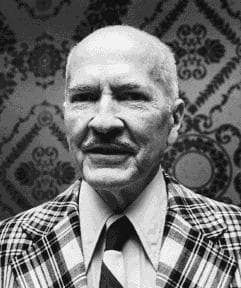
Robert Anson Heinlein was an American science fiction author, aeronautical engineer, and naval officer. Sometimes called the "dean of science fiction writers", he was among the first to emphasize scientific accuracy in his fiction, and was thus a pioneer of the subgenre of hard science fiction. His published works, both fiction and non-fiction, express admiration for competence and emphasize the value of critical thinking. His plots often posed provocative situations which challenged conventional social mores. His work continues to have an influence on the science-fiction genre, and on modern culture more generally.







