“There was a saying in Dublin that you were never more than a stone's throw from a pub, or a priest, or a relative. For Benny Hogan, it was usually all three.”
— Introducing Benny Hogan and her life in Knockglen.

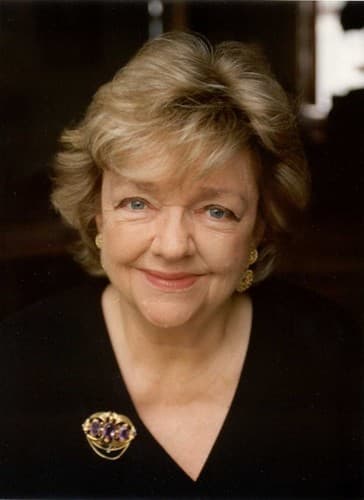
Maeve Binchy (1990)
Genre
Historical Fiction / Romance
Reading Time
1200 min
Key Themes
See below
Sign in to track this book
In 1950s Ireland, two small-town friends navigate the freedoms and betrayals of university life in Dublin, forever changing their circle and their understanding of independence.
Bernadette 'Benny' Hogan, a large but kind-hearted girl, grows up in the small, insular Irish town of Knockglen. Her parents, Frank and Kathleen, own a drapery shop, and Benny's life is comfortable but sheltered. Her best friend is Eve Malone, a beautiful, intelligent, and independent orphan raised by the kind nuns at the local convent. Eve's mysterious parentage and her sharp wit set her apart from the other girls. The two share a deep bond, dreaming of escaping Knockglen for the excitement of university life in Dublin. Their days are filled with school, church, and the quiet routines of their small community, all while they anticipate their future.
Benny and Eve gain admission to University College Dublin, marking their first taste of true freedom away from Knockglen. They rent a room together, sharing the thrill and trepidation of their new environment. On their first day, they meet Nan Mahon, a stunningly beautiful but manipulative young woman who quickly attaches herself to their group. They also meet Jack Foley, a charming and handsome medical student who immediately catches Benny's eye. Benny is instantly smitten with Jack, despite her insecurities about her weight, while Eve remains more cautious and observant of the new dynamics forming within their circle of friends.
Benny's affection for Jack Foley deepens, and she begins to see him as her ideal partner. Jack, while friendly and kind to Benny, is driven by his medical studies and his ambition to escape his own humble background. He sees Benny as a good-natured friend and a potential stepping stone due to her family's comfortable financial situation. Benny, blind to Jack's underlying motivations, interprets his attention as genuine romantic interest. Eve, ever perceptive, notices the subtle differences in their interactions and worries about Benny's vulnerability, sensing that Jack may not be as sincere as Benny believes.
Nan Mahon, always looking for an advantage, quickly identifies potential targets for her manipulative schemes. She sets her sights on Sean Walsh, a wealthy older man from Knockglen who has a reputation as a womanizer. Nan feigns innocence and vulnerability, drawing Sean into a relationship that she believes will secure her financial future and elevate her social standing. Her actions are calculated and self-serving, and she skillfully plays the role of the naive young woman. This relationship introduces a dangerous element into the lives of the friends, as Sean's character is known to be less than reputable, and his presence stirs unease among those who know him.
Disturbed by Nan's involvement with Sean Walsh, and spurred by lingering questions about her own origins, Eve Malone begins to discreetly investigate her past. She learns that her mother, a young woman named Kitty, died in childbirth and that her father was Sean Walsh. The circumstances surrounding her birth reveal a scandal that was carefully suppressed by the conservative community of Knockglen. Eve discovers that Kitty was deeply wronged by Sean, and that her own existence is a hidden tragedy. This revelation fuels her anger and determination to protect Benny and herself from similar exploitation.
The annual Knockglen Dinner Dance is a focal point for rising tensions and the unraveling of secrets. Benny attends with Jack, while Nan arrives with Sean Walsh, flaunting their relationship. Eve, now armed with the knowledge of her parentage, observes the dynamics with a heavy heart. During the dance, a drunken Sean Walsh makes inappropriate advances towards Benny, who is deeply shaken. Jack, witnessing the scene, is torn between his ambition and his growing sense of loyalty to Benny. The event ends in a confrontation where Eve subtly asserts her knowledge, leaving Sean visibly discomfited and hinting at the impending exposure of his past misdeeds.
Following the dinner dance, Eve confronts Sean Walsh directly, revealing that she knows he is her father and exposing his past cruelty towards her mother, Kitty. Sean, cornered and threatened by the exposure of his long-held secret, is thrown into a panic. In a desperate attempt to silence Eve and prevent his reputation from being ruined, he pursues her. A struggle ensues, leading to Sean's accidental death. The event is traumatic for Eve, but she is quickly supported by Benny and their friends, who rally around her to protect her from legal repercussions and the judgmental eyes of the community.
In the aftermath of Sean Walsh's death, Nan Mahon, seeing an opportunity to distance herself from the scandal and advance her own interests, coldly betrays Benny and Eve. She provides a damaging statement to the authorities, painting Eve in a negative light and attempting to shift blame. Jack Foley, initially hesitant due to his ambition and fear of damaging his medical career, faces a moral dilemma. He must choose between protecting his future and standing by his friends, particularly Benny, who has shown him unwavering loyalty and affection. His decision will define his character and his relationships.
Despite the emotional turmoil and Nan's betrayal, Benny Hogan discovers an inner strength she never knew she possessed. She stands unwavering by Eve's side, providing comfort and support during the investigation into Sean Walsh's death. Benny's quiet determination and unwavering loyalty become her defining traits. She confronts her own insecurities and societal expectations, realizing that her worth is not tied to her appearance or the approval of others. This period of adversity solidifies her bond with Eve and forces her to re-evaluate her feelings for Jack, seeing him more clearly for who he truly is, beyond her initial infatuation.
Eve Malone faces a trial for Sean Walsh's death. The community of Knockglen, initially gossiping and judgmental, gradually comes to understand the truth of Sean's character and the circumstances surrounding Eve's birth. Through the testimony of various characters and the sheer force of Eve's honesty, she is acquitted, with the court ruling that Sean's death was accidental or in self-defense. The verdict brings a sense of closure to Eve and the community, exposing the hypocrisy and long-held secrets of Knockglen. It also is a small victory for justice against the powerful and corrupt.
Jack Foley, having witnessed the strength and loyalty of Benny and Eve, makes a crucial decision. He testifies truthfully at Eve's trial, choosing integrity over ambition, even if it jeopardizes his career. This act of redemption earns him Benny's respect, though her romantic feelings for him have evolved. Benny, no longer defined by her infatuation with Jack, finds a new sense of purpose and independence. She embraces her intelligence and kindness, deciding to pursue a career that aligns with her values, perhaps in teaching or social work. She understands that true happiness comes from within, not from external validation or a romantic partner.
With the scandal behind them, Benny and Eve look towards their futures. Eve, free from the shadow of her past, decides to pursue her studies with renewed vigor, perhaps even considering a career in law. Benny, having matured significantly, finds a deep sense of self-acceptance and a clear vision for her life. While their romantic relationships might shift and change, their core friendship remains the bedrock of their lives. They have faced adversity, betrayal, and heartbreak, but their bond has only strengthened, proving that true friendship and self-discovery are the most valuable achievements.
The Protagonist
Benny transforms from an insecure, lovestruck girl into a self-assured, independent woman who understands her own worth beyond romantic validation.
The Protagonist/Supporting
Eve uncovers her scandalous past, confronts her father, and finds justice and a sense of belonging through her own strength and the support of her friends.
The Supporting
Jack's arc is one of moral awakening, moving from self-serving ambition to choosing integrity and truth.
The Antagonist
Nan's arc is one of consistent self-interest and eventual isolation, as her manipulative nature alienates those around her.
The Antagonist
Sean Walsh's arc is one of discovery and consequence, as his past actions are brought to light, leading to his downfall.
The Supporting
Frank's arc involves coming to terms with Benny's growing independence and supporting her choices, even if they differ from his expectations.
The Supporting
Kathleen's arc shows her learning to trust Benny's judgment and embrace her daughter's growing autonomy.
The Supporting
Father Barry serves as a moral compass and a witness to the changing values and unfolding truths in Knockglen.
The lasting and transformative power of friendship is the central theme. The bond between Benny and Eve anchors the narrative, sustaining them through personal insecurities, romantic disappointments, and tragedy. Their loyalty to each other, especially during Eve's crisis and trial, highlights the strength found in true companionship. This theme is clear when Benny stands by Eve after Sean Walsh's death, even when others, like Nan, betray them.
“A circle of friends is a strong thing, stronger than any love, stronger than any hate.”
The journey of the young women from the sheltered confines of Knockglen to the freedom of Dublin university is a quest for independence. Benny and Eve both want to define themselves outside of societal expectations and their small-town origins. Benny's struggle with her body image and her initial infatuation with Jack give way to self-acceptance and a clear sense of purpose. Eve's investigation into her past allows her to reclaim her identity and overcome the shame associated with her birth. Their experiences force them to confront who they are and who they want to become, asserting their autonomy.
“She had thought freedom was a place, but it was really a state of mind.”
The novel explores the rigid social structures and underlying hypocrisy of Irish society, particularly in a small town like Knockglen. The wealth and influence of figures like Sean Walsh allow him to exploit others and conceal his past wrongs, while those with less power, like Eve's mother, suffer the consequences. The judgmental attitudes of the community, contrasted with the hidden vices of its prominent members, expose the superficiality of respectability. This theme is central to Eve's backstory and the scandal surrounding her birth, revealing how appearances are often maintained at the cost of truth and justice.
“In Knockglen, everyone knew everyone else's business, but only the convenient parts were ever spoken aloud.”
The novel looks into different facets of love: the deep, unconditional love of friendship, the naive infatuation of first romance, and the manipulative 'love' sought by characters like Nan. Benny's idealized love for Jack is a central focus, showing how easily genuine affection can be mistaken for self-serving ambition. Her eventual disillusionment and growth demonstrate the painful but necessary process of distinguishing true love from fleeting infatuation. The story suggests that while romantic love can be complex and fraught with disappointment, the love of true friends offers a more stable and lasting foundation.
“Love was a dangerous thing, a thing that made you blind and foolish.”
The past influences the present lives of the characters, particularly Eve. Her mysterious origins and the tragic circumstances of her mother's death are a constant undercurrent, shaping her identity and driving her quest for truth. The secrets and scandals of Knockglen's past, especially those involving Sean Walsh, refuse to stay buried and ultimately resurface to demand reckoning. The novel illustrates how unresolved historical injustices and personal traumas can continue to affect individuals and communities until they are confronted and addressed.
“The past was never really past; it was always there, waiting to catch you.”
The story follows the protagonists' transition from adolescence to adulthood.
The novel is primarily a coming-of-age story, charting the emotional and psychological development of Benny and Eve as they leave their sheltered small-town lives for university in Dublin. Their experiences with new friendships, romantic relationships, betrayal, and tragedy force them to mature, confront their insecurities, and discover their inner strength. The device allows for exploration of themes like independence, identity, and the challenges of young adulthood, as the characters navigate complex moral choices and personal growth.
The narrative critiques the social norms and hypocrisy of 1950s Irish society.
Maeve Binchy uses the story to offer subtle but pointed social commentary on the conservative values, class distinctions, and hidden hypocrisies prevalent in mid-20th century Ireland. The small town of Knockglen serves as a microcosm for these societal issues, particularly in its treatment of women, illegitimacy, and the power wielded by wealthy individuals like Sean Walsh. This device highlights the societal pressures faced by the characters and the struggle for individual freedom against rigid social structures.
Hints and clues are dropped throughout the narrative, hinting at future events and revelations.
Foreshadowing is employed to build suspense and hint at the darker aspects of the plot, particularly regarding Eve's parentage and Sean Walsh's true character. Early mentions of Eve's mysterious background, the hushed whispers about Sean, and Nan's calculating nature all subtly prepare the reader for the later revelations and tragic events. This device creates a sense of impending doom and heightens the emotional impact when the secrets are finally unveiled, making the plot feel inevitable and carefully constructed.
The story is largely seen through the naive perspective of Benny, highlighting her growth.
While the narrative encompasses multiple perspectives, a significant portion of the early story is filtered through Benny Hogan's somewhat naive and optimistic viewpoint. This 'innocent eye' allows the reader to experience the excitement of university life and the initial charm of characters like Jack Foley, making the subsequent betrayals and harsh realities more impactful. As Benny matures and gains insight, her perspective shifts, mirroring her personal growth and deeper understanding of the world around her.
“There was a saying in Dublin that you were never more than a stone's throw from a pub, or a priest, or a relative. For Benny Hogan, it was usually all three.”
— Introducing Benny Hogan and her life in Knockglen.
“Friendship was a curious thing. It was a shelter, a comfort, and sometimes a cage.”
— Reflecting on the complexities of Benny and Eve's friendship.
“You couldn't choose your family, but you could choose your friends, and sometimes your friends were more like family than your actual family.”
— Benny's thoughts on Eve's importance in her life.
“Life wasn't a rehearsal. You only got one shot at it, and you had to make it count.”
— Benny considering her future and the choices she faced.
“Love was a dangerous thing, especially when you gave it to someone who didn't deserve it.”
— Eve observing Nan Mahon's manipulative nature.
“The past was like a shadow, always there, even when you tried to outrun it.”
— Eve reflecting on her past and its impact on her present.
“It was amazing how much trouble a pretty face could cause, especially when it came with a calculating mind.”
— Describing Nan Mahon's character and her impact on others.
“Sometimes the bravest thing you could do was to admit you were wrong, and try to make things right.”
— Benny realizing her mistakes regarding Jack.
“People always saw what they wanted to see, and believed what they wanted to believe.”
— Discussing the rumors and gossip prevalent in Knockglen.
“There was a certain kind of loneliness that came from being surrounded by people who didn't truly understand you.”
— Eve's feelings of isolation despite her friendships.
“Money didn't buy happiness, but it certainly made unhappiness a lot more comfortable.”
— Sean Walsh's pragmatic view on wealth.
“It was easy to judge from the outside, but you never knew what battles someone was fighting on the inside.”
— Benny's growing empathy for others' struggles.
“The greatest gift you could give someone was your time, because you were giving them a piece of your life you'd never get back.”
— A general reflection on the value of relationships.
“Sometimes the quietest people had the loudest thoughts.”
— Eve's internal world contrasting with her reserved exterior.
“You couldn't hold onto people who didn't want to be held. You just had to let them go, no matter how much it hurt.”
— Benny coming to terms with the changing dynamics of her relationships.
Ready to see how well you understood this book? Take our interactive quiz with 10 questions.
Biography coming soon.







