“Living is exhausting, but it's also a kind of happiness.”
— Xu Sanguan often reflects on the hardships and simple joys of life.

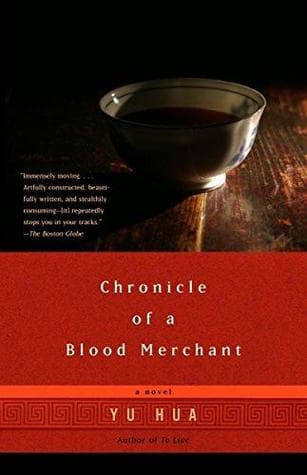
Yu Hua (2003)
Genre
Literary Fiction / Historical Fiction
Reading Time
360 min
Key Themes
See below
Sign in to track this book
During Mao's Cultural Revolution, a cart-pusher learns the true cost of survival and the complicated strength of family, both by blood and by choice, in a world that threatens to take everything from him.
Xu Sanguan, a cart-pusher in a silk mill, learns from his friends, Ah Fang and Genlong, that selling blood is a quick way to earn money and feel stronger. He visits the Blood Chief, Li, and passes a physical examination, which includes drinking a lot of water. After successfully selling 400cc of blood, he feels invigorated and uses the money to buy a new suit and shoes. This new wealth allows him to pursue Xu Yulan, a beautiful woman known for her affair with He Xiaoyong. Despite her reputation, Xu Sanguan marries her, starting his family.
Xu Sanguan and Xu Yulan have three sons: Xu Yile, Xu Erle, and Xu Sanle. Xu Sanguan favors Xu Yile, often taking him to the market for special treats. However, a rumor begins to spread, started by gossip from Lin Fenfang, that Xu Yile is actually the son of He Xiaoyong, Xu Yulan's former lover. The strong resemblance between Xu Yile and He Xiaoyong, coupled with Xu Yile consistently preferring He Xiaoyong's company over his supposed father's, causes great pain and public humiliation for Xu Sanguan. He confronts Xu Yulan, who tearfully confesses the truth, devastating Xu Sanguan and creating a lasting rift in their family.
After the truth about Xu Yile's paternity comes out, Xu Yulan is publicly shamed and paraded through the streets as a 'broken shoe' (prostitute) by her neighbors. Xu Sanguan, initially overcome with shame and anger, refuses to defend her and even joins in the public scorn. He then seeks revenge against He Xiaoyong. He arranges a public confrontation, demanding compensation for raising He Xiaoyong's son. This public shaming of He Xiaoyong is Xu Sanguan's way of restoring his own honor and asserting his authority, even as the incident permanently damages his family's reputation.
A severe famine hits the region, making food scarce and expensive. Xu Sanguan, despite his earlier dislike for Xu Yile, feels responsible for feeding all his children. He repeatedly sells his blood, enduring weakness and dizziness, to buy small amounts of sweet potatoes, cornmeal, and sometimes even noodles for his family. These frequent blood sales harm his health, but he sees no other way to prevent his family from starving. The famine forces him into a cycle of self-sacrifice, showing the extreme measures people took to survive during this difficult time.
As part of the 'Up to the Mountains and Down to the Countryside' movement, Xu Yile, now a young man, is sent to work in the countryside. This separation is especially hard on Xu Sanguan, who, despite their complicated paternity, has grown to care for Xu Yile. The move means a further scattering of the family and a loss of control over their children's futures. Xu Sanguan worries constantly about Xu Yile's well-being and the harsh conditions he faces, reflecting the anxieties of many parents whose children were sent away during this political campaign.
Xu Erle, while working, suffers a severe head injury. The medical treatment is expensive, and the family faces another financial crisis. Xu Sanguan begins a desperate journey, traveling to different towns and selling his blood repeatedly, often against the advice of the blood chiefs due to his weakened state. He becomes a skeletal figure, his body ravaged by the constant loss of blood, but he is driven by a strong determination to save his second son. This period shows the extreme lengths a father will go to for his child, even when facing his own physical collapse.
Xu Yile falls gravely ill while working in the countryside and is sent back home. He is weak, jaundiced, and near death. Xu Sanguan, despite his earlier resentment, is filled with concern. He nurses Xu Yile back to health, selling his blood one more time to buy expensive medicine and food. During this time, the emotional distance between father and son begins to close. Xu Yile finally accepts Xu Sanguan as his father, and Xu Sanguan accepts Xu Yile fully into his heart, showing that love and care can go beyond biological ties.
Xu Sanle, the youngest son, falls ill. Xu Sanguan, now an old man, instinctively goes to sell his blood again, believing it to be the only solution. However, the Blood Chief at the hospital, seeing his frail condition and the toll years of blood selling have taken, refuses to draw his blood, stating he is too old and weak. This rejection is a shock and a moment of deep despair for Xu Sanguan, as his lifelong method of providing for his family is no longer available. He feels useless and unable to protect his loved ones, marking a significant change in his self-perception.
Distraught by his inability to sell blood, Xu Sanguan wanders the streets, feeling his life's purpose has ended. His three sons, now adults, find him and, learning of his distress, pool their money to buy him a celebratory meal of noodles with pork sauce and two bowls of yellow rice wine. This act of collective support from Xu Yile, Xu Erle, and Xu Sanle is a powerful moment of role reversal and filial piety. It shows that the children, for whom Xu Sanguan had sacrificed so much, are now capable of caring for him, offering him comfort and a sense of worth beyond his ability to sell blood.
In the final scenes, Xu Sanguan, having been cared for by his sons, finds a quiet sense of peace. He reflects on his life, marked by repeated blood sales that sustained his family through famines, illnesses, and political turmoil. Despite the initial betrayals and hardships, the novel ends with a look at the resilience of the human spirit and the lasting strength of family bonds, even those formed in unconventional ways. Xu Sanguan's journey, though filled with physical pain and emotional scars, ultimately confirms the deep, if sometimes complicated, love he holds for his wife and all three of his sons.
The Protagonist
Xu Sanguan transforms from a man preoccupied with personal honor and a perceived slight to a selfless patriarch, finding true paternal love beyond biological fatherhood.
The Supporting
Xu Yulan endures public humiliation and the consequences of her past, ultimately finding strength and stability within her family.
The Supporting
Xu Yile transitions from a son with a fractured identity to one who fully embraces Xu Sanguan as his father, recognizing the depth of his adoptive father's love.
The Supporting
Xu Erle's experiences, particularly his illness, solidify the bond of sacrifice and love with his father, leading him to support Xu Sanguan in old age.
The Supporting
Xu Sanle represents the ongoing need for paternal care, eventually transitioning to a role of providing comfort to his aging father.
The Antagonist/Mentioned
He Xiaoyong remains largely unchanged, serving primarily as a plot device and a symbol of past transgression.
The Supporting
Blood Chief Li remains a constant, practical figure, representing the established system of blood selling.
The Supporting
Ah Fang remains a consistent friend and peer, demonstrating the shared struggles of the community.
The Supporting
Genlong remains a consistent friend and peer, demonstrating the shared struggles of the community.
The novel explores the extreme lengths people go to survive and protect their families during times of great hardship. Xu Sanguan's repeated blood sales, often to the point of severe physical harm, symbolize this theme. Each sale is a sacrifice of his own vitality for his wife and sons, whether for food during a famine, medicine for an injured child, or simply to gain respect. This theme is clear when Xu Sanguan travels between towns, selling blood multiple times in a single day, nearly dying, to save Xu Erle after his accident.
“Blood selling was like a man going to bed with a woman; it was something that, once you started, you couldn't stop.”
A central theme is the complex and changing nature of family bonds, especially fatherhood. Initially, Xu Sanguan's rejection of Xu Yile due to his paternity highlights the societal focus on biological lineage. However, through shared suffering and Xu Sanguan's provision for all three sons, regardless of biology, the novel argues that true fatherhood is defined by love, responsibility, and sacrifice. The reconciliation between Xu Sanguan and Xu Yile, particularly when Xu Yile is gravely ill, shows that love and care can go beyond genetic ties, forming a stronger family unit.
“Xu Sanguan didn't know if he was Xu Yile's father, but he had raised him for so many years. Whether he was his father or not, he was still his son.”
The story is about human resilience against poverty, political upheaval (like the Cultural Revolution and famine), and personal betrayals. The Xu family, and especially Xu Sanguan, endures public shaming, starvation, illness, and the psychological toll of constant struggle. Despite these overwhelming challenges, they find ways to survive, adapt, and even find moments of joy and connection. The family's ability to come together and support Xu Sanguan in his old age, after his body can no longer sustain his sacrifices, shows their lasting spirit and collective strength.
“He knew that life was hard, but he also knew that people could endure it.”
The novel shows how gossip, public judgment, and shaming were common in small communities during this historical period. Xu Yulan's public parading as a 'broken shoe' and the constant rumors about Xu Yile's paternity show how societal norms and moral policing can cause great suffering. Xu Sanguan himself initially participates in shaming his wife and He Xiaoyong, driven by his own sense of violated honor. This theme highlights the pressure to conform and the severe consequences of perceived wrongdoings in a close-knit, ideologically charged society.
“Everyone knew that He Xiaoyong was the father of Xu Yile. It was a scandal that had lasted for more than ten years.”
A striking theme is the commodification of the human body, specifically blood, as a means of economic survival. Xu Sanguan's body becomes his main asset, a resource he uses repeatedly to earn money. The ritualistic nature of blood selling, including preparations and recovery, shows its importance as a legitimate, though desperate, form of labor. This theme highlights the desperation of people living in poverty, where their own physical essence becomes their only capital, forcing them to literally 'bleed' for their families' survival.
“For men like Xu Sanguan, selling blood was not just a way to make money; it was a way to prove their strength, their manhood.”
The act of selling blood serves as a recurring symbol of sacrifice and the family's primary economic engine.
Blood selling is not merely an event but a central, recurring motif and a unique economic system within the narrative. It functions as Xu Sanguan's primary means of income during times of crisis, from funding his marriage to providing food during famine and paying for medical expenses. Each instance of blood selling is a mini-narrative in itself, with its own rituals and physical toll, marking the passage of time and the severity of the family's struggles. It symbolizes his masculinity, his self-worth, and ultimately, his profound love and sacrifice for his family.
Historical events like famine and the 'Up to the Mountains and Down to the Countryside' movement shape the characters' lives.
The novel is set against the backdrop of specific historical events in Maoist China, particularly a severe famine and the 'Up to the Mountains and Down to the Countryside' movement. These events are not just background but active plot devices that directly influence the characters' actions and circumstances. The famine forces Xu Sanguan into desperate blood sales, while the political movement dictates Xu Yile's departure to the countryside, creating separation and new challenges. These historical realities drive the plot, creating a sense of urgency and explaining the extreme hardships faced by the family.
The spread of rumors and gossip acts as a catalyst for conflict and public shaming.
Rumors and gossip serve as a powerful plot device, particularly in the early parts of the novel. The widespread gossip about Xu Yulan's past affair and Xu Yile's true paternity is what ignites the central family conflict, leading to Xu Yulan's public shaming and Xu Sanguan's quest for retribution against He Xiaoyong. This device highlights the oppressive social environment and how public opinion can profoundly impact individual lives and family dynamics, often with devastating consequences that ripple through years.
The simple meal of noodles with pork sauce symbolizes comfort, reconciliation, and filial piety.
The noodle meal, particularly noodles with pork sauce, appears at key moments in the narrative, functioning as a recurring symbol. Initially, it represents a luxury Xu Sanguan buys for Xu Yile after a blood sale, a small indulgence in hard times. More significantly, it becomes a symbol of reconciliation and filial love when his three adult sons buy him a celebratory noodle meal after his final, failed attempt to sell blood. This act signifies the reversal of roles, the sons now caring for their father, and represents a moment of profound comfort and affirmation of family bonds.
“Living is exhausting, but it's also a kind of happiness.”
— Xu Sanguan often reflects on the hardships and simple joys of life.
“When a man sells his blood, he is selling his life.”
— A common understanding among the blood sellers, highlighting the gravity of their act.
“The past is like a dream, the future is like a dream. Only the present is real.”
— Xu Yulan's philosophical musings about time and reality.
“Sometimes, when you have nothing, you have everything.”
— A paradoxical statement reflecting the resilience and perspective of the poor.
“A good son is one who doesn't cause trouble for his father.”
— Xu Sanguan's simple definition of a 'good son' in the context of his own children.
“If you don't eat, you'll die. If you eat too much, you'll also die.”
— A pragmatic and somewhat fatalistic view on the necessities of life.
“Blood is not water; it's thicker than water.”
— A literal and metaphorical statement about the value of blood and family ties.
“What's the point of living if you can't even eat a bowl of noodles?”
— Xu Sanguan's despair when he is unable to afford even basic food.
“A man's worth is not in how much money he has, but in how much blood he has.”
— A reflection of the unique economy and social standing in the story, where blood is a currency.
“Children are debts, but also treasures.”
— Xu Sanguan's conflicted feelings about the burden and joy of raising his sons.
“To sell blood is to use your life to fight for your life.”
— A poignant summary of the desperate measures people take to survive.
“You can't live without hope, even if it's just a little bit.”
— A recurring theme of resilience despite overwhelming hardship.
“The more you suffer, the more you understand life.”
— A stoic acceptance of suffering as a path to wisdom.
“No matter how much you eat, you'll still be hungry tomorrow.”
— A reflection on the endless cycle of poverty and basic needs.
“The greatest happiness is to have a full stomach and a peaceful heart.”
— Xu Sanguan's simple aspiration for contentment amidst the chaos of his life.
Ready to see how well you understood this book? Take our interactive quiz with 10 questions.

Biography coming soon.







