“The test of a man isn't what he'll do to stay alive, but how he'll behave when he knows he's going to die.”
— Leto II reflecting on his father's actions and his own destiny.

Frank Herbert (1976)
Genre
Fantasy / Science Fiction
Reading Time
450 min
Key Themes
See below
Sign in to track this book
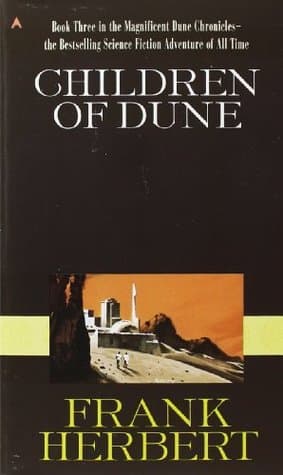
On a greening Arrakis, nine-year-old twins with their father's prescient burden navigate a galactic empire that both craves and fears their messianic destiny amidst whispers of rebellion.
Nine years have passed since Paul Muad'Dib walked into the desert. His twin children, Leto II and Ghanima, are under the regency of their Aunt Alia. Arrakis has begun its terraforming, which upsets the Fremen who miss their desert culture. Leto and Ghanima, born with full ancestral memories (Pre-Born), have heightened awareness and prescience. They also struggle against the voices of their ancestors, especially the 'Abomination' that threatens to consume Alia. Princess Wensicia, daughter of the former Emperor Shaddam IV, plans to assassinate the twins to restore House Corrino's power, using her son Farad'n. The Bene Gesserit, Spacing Guild, and Tleilaxu also work to gain control, fearing the twins' power and the possible end of the spice monopoly.
Alia Atreides, burdened by her Pre-Born nature and the pressure of ruling, slowly gives in to the ancestral voices within her, especially Baron Vladimir Harkonnen. Her behavior becomes erratic and cruel, alienating her husband Duncan Idaho and the Fremen. Lady Jessica, Paul's mother and a Bene Gesserit Reverend Mother, is called back from Caladan by the Bene Gesserit to assess Alia's condition and the threat from the twins. Jessica observes Alia's increasing corruption and the growing unrest among the Fremen, particularly Stilgar, who remains loyal to the Atreides but is wary of Alia's rule. Jessica's return further destabilizes the political situation, as she is a powerful force.
Wensicia's plot to assassinate the twins happens during a falcon hunt. Ghanima is wounded, but Leto escapes deeper into the desert, faking his death to mislead his enemies. He leaves a coded message for Ghanima, saying he is alive. Ghanima, recovering, is manipulated by Alia into believing Leto is dead. She decides to get revenge. Meanwhile, Leto travels through the forbidden deep desert, encountering the wild, un-terraformed regions and the last true Fremen culture. He begins to understand his father's vision and the need for his own 'Golden Path' to save humanity from stagnation and extinction.
A blind Preacher, who looks like Paul Muad'Dib, appears in the cities of Arrakis. He gives sermons that condemn the Atreides government, the corruption of the Qizara (Fremen priesthood), and the destruction of the desert. He speaks with power and insight, attracting large crowds and causing dissent. The Qizara, led by Alia, tries to silence him, but his message resonates with the disillusioned Fremen and city dwellers. Duncan Idaho, disturbed by Alia's actions, suspects the Preacher's true identity but cannot reconcile it with Paul's disappearance. The Preacher acts as a moral guide, showing the dangers of uncontrolled power and religious fanaticism.
Deep in the desert, Leto II encounters wild sandtrout, the larval stage of sandworms. Driven by his vision of the Golden Path, he makes a big decision: he allows thousands of sandtrout to cover his body, starting a symbiotic transformation. His skin hardens and thickens, giving him great strength, near-invulnerability, and a very long lifespan. This radical change is agonizing but necessary for his plan to guide humanity. He sacrifices his humanity and his ability to reproduce, becoming a living bridge between humans and the desert ecosystem, able to control the spice cycle and enforce his will on Arrakis.
Believing Leto is dead, Ghanima is brought back to the capital. Alia, influenced by Baron Harkonnen, arranges a political marriage between Ghanima and Farad'n Corrino, hoping to consolidate power and neutralize the Corrino threat. Ghanima, despite her grief for Leto, agrees to the marriage as a strategic move, planning to assassinate Farad'n on their wedding night. She struggles with the Abomination herself, fighting ancestral voices that try to control her. Lady Jessica, seeing the escalating crisis, realizes the danger Alia poses and the desperate situation of her grandchildren, while still unaware of Leto's true fate and transformation.
Realizing how much Alia is possessed and the danger she poses to the Atreides line and humanity, Lady Jessica makes a daring escape from Alia's palace with Duncan Idaho's help. She seeks refuge with the Bene Gesserit, specifically Reverend Mother Mohiam, and begins to gather forces against Alia. Jessica's goal is to save Ghanima and, if possible, find out the truth about Leto. She reveals the full extent of Alia's Abomination to the Bene Gesserit, who must now confront the failure of their breeding program and the immediate threat to their plans for humanity. This creates a powerful, though cautious, alliance against Alia.
The Preacher makes a public appearance, confronting Alia directly and calling her an Abomination. His words resonate, sparking open rebellion among the people. During this chaos, Leto II, now fully transformed into his human-sandworm hybrid form, appears before Ghanima in the desert. He reveals his survival and his grotesque but powerful new body. He explains his Golden Path – a brutal but necessary future to ensure humanity's long-term survival by making them adapt and spread throughout the galaxy. Ghanima, initially horrified, eventually accepts his vision and commits to his plan, understanding his great sacrifice.
Leto and Ghanima, now united, return to the Citadel on Arrakis. Leto, with his physical power and prescient awareness, confronts Alia directly. The possessed Alia, consumed by Baron Harkonnen, cannot withstand Leto's will and the force of his transformed being. The Preacher, Paul Muad'Dib, also arrives, further weakening Alia's control. In a climax, Alia is defeated, succumbing to the overwhelming ancestral voices and collapsing. Duncan Idaho, witnessing the destruction of the woman he loved, struggles with his loyalty and grief, ultimately standing by the twins.
With Alia defeated, Leto II takes the Imperial throne. He declares his intention to rule for thousands of years as the God Emperor of Dune. He forces Farad'n Corrino to become his chronicler and advisor, neutralizing the Corrino threat. Ghanima, committed to her brother's vision, agrees to a strategic marriage to solidify the Atreides dynasty and ensure their line continues. Leto explains his Golden Path: a future where humanity is pushed to its limits, forced to diversify and spread across the universe, preventing its stagnation and eventual extinction. The terraforming of Arrakis continues under his control, setting the stage for a new, terrifying, but ultimately hopeful era for humanity.
The Protagonist
Leto transforms from a burdened child into a powerful, non-human entity, sacrificing his personal life for the survival of the human species.
The Protagonist/Supporting
Ghanima grapples with grief and political machinations, ultimately choosing to support her brother's Golden Path, sacrificing her own desires for humanity's future.
The Antagonist
Alia devolves from a powerful, if troubled, regent into a possessed tyrant, ultimately consumed by the ancestral voices she could not control.
The Supporting
Jessica returns to Arrakis, confronts the dark legacy of her bloodline, and works to save her grandchildren and humanity from the Abomination.
The Supporting
Duncan struggles with loyalty and love as Alia succumbs to possession, ultimately siding with the Atreides against his possessed wife.
The Supporting
The Preacher, Paul Atreides, returns to witness and indirectly guide the next stage of humanity's evolution, condemning the perversion of his own legacy.
The Antagonist
Wensicia schemes to regain power for House Corrino, but her efforts are ultimately thwarted by the Atreides twins' superior prescience and power.
The Supporting
Farad'n transitions from a pawn in his mother's schemes to an essential, albeit controlled, advisor to the new God Emperor.
The Supporting
Stilgar grapples with his unwavering loyalty to the Atreides amidst the destruction of his culture and the corruption of their rule, ultimately accepting Leto's path.
The Mentioned/Antagonist
The Baron's 'arc' is his spectral resurgence through Alia, where he attempts to reassert his power through her, only to be ultimately defeated by Leto II.
This theme explores the heavy burden of knowing humanity's future and the terrible sacrifices needed to save it. Leto II's prescience shows him a future of human stagnation and extinction. This prompts him to undertake the Golden Path – a millennia-long, tyrannical rule as a human-sandworm hybrid. This path requires him to give up his humanity, his ability to procreate, and his personal happiness, all to make humanity diversify and spread across the universe, ensuring its survival. The theme questions the morality of such an extreme intervention and what leadership means when facing existential threats.
“"The Golden Path is a terrible thing, Ghanima. It is a path to survival for all of humankind, but it is a terrible path for me."”
The concept of 'Abomination' refers to Pre-Born individuals who are consumed by their ancestral memories, losing their original identity. Alia Atreides' tragic possession by Baron Harkonnen shows the danger of uncontrolled access to the past. Leto II and Ghanima constantly fight their own ancestral voices, showing the struggle to keep one's self amid many inherited consciousnesses. This theme discusses self, the influence of heritage, and the psychological toll of being a vessel for countless past lives. It also shows how fragile individual identity is.
“"The Abomination is the child who, in the mother's womb, becomes aware of its own consciousness and of the consciousness of its ancestors."”
Children of Dune continues to explore how power, especially with religious dogma, can corrupt. Alia Atreides, as regent and head of the Qizara, has great power but gives in to the Abomination, leading to tyranny and distorting Paul's original teachings. The Qizara itself becomes a self-serving bureaucracy, prioritizing its authority over the spiritual needs of the Fremen. The Preacher (Paul) criticizes this corruption, showing how institutions meant for liberation can become tools of oppression. The theme warns against blind faith and unchecked authority, even from a charismatic leader.
“"The greatest lesson I learned from my father was that when you're in command, you're alone."”
The terraforming of Arrakis is a central ecological theme. While it makes the planet habitable, it also destroys the unique desert ecosystem and the Fremen culture built on it. This transformation is presented as both necessary and tragic. Leto II's physical change, merging with the sandtrout to become a human-sandworm hybrid, is the ultimate expression of this theme. He embodies the ecological transformation of Arrakis and, by doing so, takes control of the planet's life cycle. He becomes a living bridge between humanity and nature, though a monstrous one.
“"The desert is a thing of the past. No more shall we live in the sietch and fight the worms."”
The book examines sacrifice, especially for humanity's long-term survival. Leto II's decision to undergo his grotesque transformation for the Golden Path is the ultimate act of self-sacrifice. He gives up his humanity, personal happiness, and future for the species. Ghanima also makes sacrifices, agreeing to a political marriage and supporting her brother's terrifying vision. The theme questions what actions are justified to ensure a species' survival and whether an individual can truly agree to such a profound loss for the collective good.
“"To save humanity, I must become inhuman."”
Leto II's prescient vision of humanity's survival, requiring his tyrannical rule and biological transformation
The Golden Path is a central plot device, serving as Leto II's ultimate motivation and the driving force of the narrative. It is a prescient vision of humanity's future, revealing a path to avoid extinction through stagnation. The path requires Leto's radical transformation into a human-sandworm hybrid, granting him immense power and an extended lifespan to guide humanity through a forced evolution. This device justifies Leto's tyrannical actions and the extreme sacrifices he makes, providing both a narrative goal and a source of profound moral ambiguity for the reader.
The condition of being born with full ancestral memories, leading to either immense power or dangerous possession
The Pre-Born condition, also known as Abomination, is a key plot device explaining the unique abilities and vulnerabilities of Alia, Leto II, and Ghanima. It grants them access to the memories and consciousness of all their ancestors, providing profound wisdom and prescient abilities. However, it also carries the risk of ancestral possession, where a malevolent ancestor can take over the child's mind, as seen with Alia and the Baron Harkonnen. This device creates internal conflict for the twins and establishes Alia as a tragic antagonist, while also highlighting the genetic and psychic heritage of the Atreides line.
The mystery surrounding the blind Preacher, who is subtly revealed to be Paul Atreides
The Preacher's true identity as Paul Atreides is a significant plot device that adds mystery and pathos to the narrative. His appearance and sermons serve to critique the current Atreides regime and the Qizara, acting as a moral voice without directly interfering. The slow reveal of his identity through subtle clues and the reactions of characters like Duncan Idaho and Lady Jessica builds suspense and emotional resonance. His presence allows for a reflection on Paul's legacy and the unexpected consequences of his messianic rise, providing a link between the previous book and Leto's new path.
Leto II's deliberate merging with sandtrout to achieve his human-sandworm hybrid form
The sandtrout transformation is a pivotal plot device that radically changes Leto II's character and capabilities. By allowing thousands of sandtrout to encapsulate his body, Leto achieves a symbiotic relationship that grants him immense strength, invulnerability, and control over Arrakis's ecology. This physical metamorphosis is crucial for him to fulfill the Golden Path, providing the necessary longevity and power to enforce his will. It is a visually striking and conceptually profound transformation that symbolizes his complete sacrifice and his role as the future God Emperor, blurring the lines between human and ecological force.
Strategic alliances formed through marriage to consolidate power and neutralize threats
Political marriages, specifically the proposed union between Ghanima Atreides and Farad'n Corrino, serve as a significant plot device to highlight the ongoing power struggles and strategic maneuvering within the Imperium. These marriages are not based on love but on political expediency, designed to either neutralize rival houses (like the Corrinos) or solidify alliances. Ghanima's acceptance of the marriage, despite her initial intent to assassinate Farad'n, demonstrates her political acumen and willingness to make sacrifices for the Atreides cause, illustrating the high stakes and ruthless nature of imperial politics.
“The test of a man isn't what he'll do to stay alive, but how he'll behave when he knows he's going to die.”
— Leto II reflecting on his father's actions and his own destiny.
“The highest function of love is that it makes the loved one a unique and irreplaceable being.”
— Ghanima considering her feelings and the nature of love.
“To be human is to be caught in the web of cause and effect, and to be able to see that web.”
— Leto II's internal monologue about prescience and human existence.
“Power attracts the corruptible. Absolute power attracts the absolutely corruptible.”
— The Bene Gesserit reflecting on the nature of political power.
“The future is a river, and you are a stone in it. You can divert it, but you cannot stop it.”
— Leto II explaining his prescient vision and the Golden Path to Ghanima.
“You can't buy freedom with gold, but you can buy a slave.”
— Stilgar's pragmatic view on the nature of freedom and servitude.
“The greatest danger to the universe is not chaos, but order that has become too rigid.”
— Leto II's reasoning for the necessity of his Golden Path.
“Every man has his price, but some men are priceless.”
— Internal thought from a character considering motivations and loyalty.
“There is no escape from the past, only a learning from it.”
— Jessica's wisdom to her grandchildren regarding their ancestral memories.
“A leader is a man who can get others to do what they don't want to do, and like it.”
— A reflection on the manipulative nature of leadership.
“God moves in mysterious ways, but He's always on the side of the big battalions.”
— A cynical observation on the role of divinity in warfare and power.
“The true measure of a society is how it treats its weakest members.”
— A philosophical statement about justice and societal values.
“I am a creature of the desert. I know its ways. I know its dangers. And I know its secrets.”
— Leto II embracing his transformation and connection to Arrakis.
“When you have to make a choice and don't make it, that in itself is a choice.”
— Jessica advising Ghanima on the importance of decisive action.
Ready to see how well you understood this book? Take our interactive quiz with 10 questions.
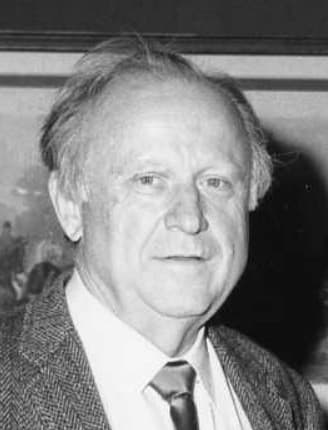
Franklin Patrick Herbert Jr. was an American science fiction author best known for the 1965 novel Dune and its five sequels. Though he became famous for his novels, he also wrote short stories and worked as a newspaper journalist, photographer, book reviewer, ecological consultant, and lecturer.







