“I won't let your ignorance silence my pain.”
— Zélie confronts King Saran about the oppression of the maji.

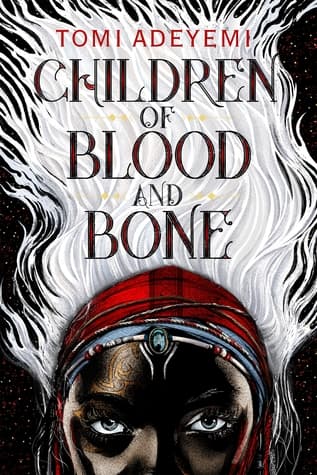
Tomi Adeyemi (2018)
Genre
Fantasy / Young Adult / Romance
Reading Time
12-15 hours
Key Themes
See below
Sign in to track this book
A young Reaper with a stolen heritage must restart ancient powers and outrun a prince to restore her people's hope, all while battling her own forbidden heart, in a land where magic has been silenced.
Ten years after the Raid, King Saran's purge of maji, Zélie Adebola lives in Ilorin with her brother Tzain and their father. Zélie, a divîner, struggles to control her magic, which is forbidden. Their village must pay a high tax, so Zélie and Tzain go to Lagos to sell a valuable albino sailfish. In the market, Zélie sees Princess Amari, the heir, trying to escape the palace with a scroll of great magical power. Amari accidentally drops the scroll, and Zélie, drawn by a mysterious force, picks it up. This leads to a fight with royal guards, forcing Amari and Zélie to flee together. Tzain reluctantly joins them to protect his sister. This event begins their dangerous quest to restore magic.
Zélie, Amari, and Tzain flee Lagos, pursued by Prince Inan, Amari's brother and royal guard commander. He wants to get the scroll back and stop magic's return. The scroll, which describes old magic, guides them to Mama Agba, Zélie's former magic teacher, who now hides. Mama Agba, a Sentry, says the scroll contains a prophecy: magic can be restored by a ritual on the centennial solstice night. This ritual needs three old relics—the Sunstone, the Bone Dagger, and the Scrying Stone—to connect with the gods. Their first task is to find the Sunstone, hidden in old Chândomblé. Mama Agba also gives Zélie a magic staff, her first real power tool.
The three travel to Chândomblé, a ruined city that once held much magic. Here, Zélie starts to connect with her Reaper magic, guided by the scroll and her mother's spirit. She has visions and learns to move souls, though her power is raw. In the old temple, they face trials and traps for those worthy of the Sunstone. Zélie passes these challenges, proves her worth, and gets the Sunstone, a glowing orb with old power. During their time in Chândomblé, Inan and his forces track them. Inan also starts to have visions of magic, a troubling event given his father's hate for it. This causes him inner conflict.
Their journey continues to the Serpent's Pass, a dangerous mountain route. Here, they meet mercenaries hired by King Saran, which shows how urgent their mission is. Amari uses her knowledge to help them through the dangers. During this trek, Amari tells a dark secret: she was at the Raid and saw her father's cruelty. This truth has haunted her. This revelation strengthens the bond between Amari and Zélie, solidifying their shared purpose against the monarchy. Meanwhile, Inan, struggling with his own awakening magic, starts to question his father's reasons and Orïsha's true history, creating a split between his duty and his conscience.
The second relic, the Bone Dagger, is in the underwater city of Gombe, off the Ivory Coast. To get it, they must cross dangerous waters and face spectral guardians. Zélie's Reaper abilities help her talk to spirits and get the dagger, which has death and life power. However, Inan's pursuit grows stronger. He corners them on the Ivory Coast, leading to a fight. During the escape, Tzain is badly hurt. Zélie uses her magic to save him, showing her growing power and her willingness to sacrifice for those she loves. This further strengthens her resolve.
After Tzain's injury, the group finds refuge and healing. During this time, Inan, who has had more vivid magic visions, finally faces his own emerging magic. He finds out he is a maji, a Tider who controls water. This shatters his view of the world and his loyalty to his father. He captures Zélie, not out of meanness, but to understand his powers and possibly control them without causing the chaos his father fears. Zélie tries to teach him about magic, and a complex, forbidden connection starts between them, blurring the lines between enemy and friend.
Inan's inner conflict peaks. He is torn between his love for Amari and his duty to his father, and his feelings for Zélie and the truth about magic. He betrays Zélie to Saran's forces in Ibeji. He believes this is the only way to stop a war and protect his family, though it hurts him greatly. Saran captures Zélie and tortures her for information about the ritual. Amari and Tzain, having tracked them, rescue her. They free Zélie, but the experience leaves her traumatized and her trust in Inan broken. The escape is costly, showing the king's power and ruthlessness.
With the solstice near, the group, now more determined, goes to the Spirit Temple, where the third and last relic, the Scrying Stone, is. This old temple is guarded by powerful spirits. Zélie must fully use her Reaper abilities to navigate its challenges. She must face her fears and talk to ancestors, showing her control over life and death. Getting the Scrying Stone, which allows foresight and spirit communication, is a difficult experience that pushes Zélie's magic to its limits. The prophecy and the coming ritual weigh heavily on her, as they know Saran's forces are close.
The group arrives at the old temple where the ritual must happen on the centennial solstice night. They prepare the altar with the three relics: the Sunstone, the Bone Dagger, and the Scrying Stone. Zélie, guided by the scroll and her ancestors' spirits, begins the difficult ritual, channeling much magical energy. However, King Saran, expecting their move, attacks the temple with his whole army. Inan, having chosen a side, arrives with royal guards loyal to Amari. This creates a desperate battle for time and the future of magic. The fight is brutal, with maji and non-maji fighting for their beliefs.
During the battle, Saran confronts Zélie, determined to stop her. He kills Tzain, who sacrifices himself to protect Zélie and the ritual. Zélie's grief and rage from her brother's death unleash a surge of magic, amplifying the ritual. She channels her pain into the relics, finishing the connection to the gods. A flash erupts, and magic returns to Orïsha, empowering all divîners and even some non-maji. But magic's return has a twist: Amari, caught in the surge, also awakens her own maji abilities, a Tider. The cost of magic's return is great, leaving Zélie with triumph and deep loss, and an uncertain future for Orïsha.
The Protagonist
Zélie transforms from a fearful, oppressed divîner into a powerful, confident maji leader who successfully restores magic to Orïsha, though at a great personal cost.
The Supporting
Amari evolves from a sheltered, fearful princess into a courageous warrior and an unexpected maji, embracing her true self and fighting for justice.
The Antagonist/Supporting
Inan's journey is a tragic one, as he struggles to reconcile his loyalty to his father and his kingdom with his own emerging magic and growing understanding of the truth, ultimately making a fatal choice.
The Supporting
Tzain evolves from a cautious, protective brother to a selfless warrior who sacrifices his life for the return of magic and his sister.
The Antagonist
Saran remains steadfast in his hatred of magic and his tyrannical rule, ultimately being defeated by the return of magic he so desperately tried to prevent.
The Supporting
Mama Agba acts as a foundational guide and mentor, initiating Zélie's quest and providing essential knowledge and support.
The Mentioned
Roën serves as a recurring obstacle and temporary ally, driven by self-interest and survival, ultimately playing a minor role in the larger conflict.
The Supporting
Bâbá remains a constant, loving presence, representing the family Zélie is fighting to protect and avenge.
The Supporting
Nailah remains a steadfast and loyal companion, a symbol of the wild magic and unwavering support for Zélie.
The novel explores how characters deal with their identity in a world of oppression and forbidden magic. Zélie's journey is key. She must accept being a maji and a Reaper, learning to embrace powers she once feared. Amari changes from a princess to a rebel, and then a maji. Inan struggles with his own magic, which makes him question his upbringing and loyalty. The theme shows that true identity comes from one's actions and inner truth, not from labels or inherited roles.
“"The divîners are not just a race of people. We are a people of magic. And we will rise again."”
The central conflict is the oppression of maji by King Saran's monarchy and the resistance that follows. The Raid, the initial magic purge, and the ongoing persecution of divîners show the effects of discrimination and hate. Zélie's quest is a direct act of resistance, a fight for her people's freedom. The novel looks at the moral questions of rebellion, the sacrifices needed, and the human desire to fight for freedom against tyranny. It reflects real-world struggles against oppression.
“"They tried to bury us. They didn't know we were seeds."”
Family bonds, both by blood and by choice, are a main driving force and source of conflict. Zélie's love for her brother Tzain and her wish to avenge her mother drive her quest. Tzain's loyalty to Zélie, even in danger, is a strong example of family devotion. Amari's rebellion comes partly from her disappointment with her father, King Saran, and her growing loyalty to Zélie. Inan's struggle comes from his loyalty to his family and kingdom, even as he questions his father's actions. The theme explores how these loyalties are tested, broken, and rebuilt under pressure.
“"No matter what, I will never let anyone hurt you, Zélie. Not while I breathe."”
The novel looks at how absolute power can corrupt, as seen in King Saran, who misuses his authority to suppress magic and keep control. His fear of magic leads him to do terrible things, believing he brings order. The book also examines the responsibility that comes with great power, especially as Zélie learns to use her volatile magic. The characters consider how power can be used for good or evil, and the temptations to abuse it. Magic's return changes the balance of power, with unknown results.
“"Power is a weapon. It can be used for good or for evil. It's up to you to decide."”
Love, in different forms—family, friendship, and romance—motivates sacrifice. Zélie's love for her family makes her risk everything. Amari's growing love for Zélie and Tzain makes her defy her father. The forbidden romance between Zélie and Inan shows sacrifices made for love across enemy lines. The greatest acts of love in the novel involve sacrifice, like Tzain's death to finish the ritual. These sacrifices show the high stakes of their mission and the characters' deep commitment to each other and their cause.
“"Some things are worth dying for. Some things are worth fighting for."”
A magical artifact guiding the quest to restore magic.
The ancient scroll serves as the primary expositional and directional plot device. It contains the prophecy that outlines the ritual to restore magic, detailing the three relics needed and the location of the final ritual. It acts as a magical compass and guide for Zélie, revealing hidden truths and ancient knowledge. Without the scroll, the protagonists would be lost, unable to understand the prophecy or locate the relics. Its accidental acquisition by Zélie sets the entire plot in motion, making it a crucial catalyst for the narrative.
Magical artifacts essential for the ritual to bring back magic.
These three distinct magical artifacts function as MacGuffins, driving the plot forward through a series of quests. Each relic (the Sunstone of life, the Bone Dagger of death, and the Scrying Stone of foresight) has unique properties and is located in a perilous, ancient place. The search for each relic provides distinct challenges and opportunities for character development, forcing Zélie to confront her powers and the group to overcome obstacles. Their retrieval is absolutely necessary for the climax, making them central to the core mission of restoring magic.
A historical event serving as the inciting incident and central trauma.
The Raid, the brutal purge of maji that occurred ten years prior to the story's beginning, is a foundational plot device. It serves as the inciting incident for Zélie's personal quest for vengeance and justice, as her mother was killed during it. It also establishes the oppressive political climate of Orïsha and King Saran's reign of terror. The trauma of the Raid deeply impacts all characters, particularly Zélie, Amari, and Inan, shaping their motivations and fears. It is constantly referenced, reminding readers of the high stakes and the historical context of the conflict.
A dynamic plot element revealing latent magical abilities in key characters.
The gradual emergence and development of magical abilities in Zélie, Inan, and Amari is a dynamic plot device. For Zélie, it's about controlling and mastering her inherited Reaper powers. For Inan, it's the shocking discovery of his own Tider magic, which creates deep internal conflict and challenges his worldview. For Amari, her unexpected magical awakening at the climax is a twist that reshapes her future. This device allows for character growth, introduces new challenges, and constantly raises the stakes, showing that magic is an inherent force that cannot be fully suppressed.
Supernatural insights guiding and foreshadowing events.
Visions and prophecies serve as crucial narrative tools, providing both guidance and foreshadowing. The prophecy within the ancient scroll dictates the entire quest, setting the clear objective for Zélie. Beyond the scroll, Zélie experiences visions linked to her Reaper magic and the spirits of her ancestors, offering cryptic clues and emotional connections to the past. Inan also experiences unsettling visions of magic, which fuel his internal conflict and foreshadow his own magical awakening. These devices add a mystical layer to the narrative, reinforcing the power of destiny and the spiritual realm in Orïsha.
“I won't let your ignorance silence my pain.”
— Zélie confronts King Saran about the oppression of the maji.
“They don't hate you, my child. They hate what you were meant to become.”
— Mama Agba explains the fear driving the monarchy's persecution.
“I am a daughter of the gods. I will not be afraid.”
— Zélie asserts her heritage and strength in a moment of doubt.
“You crushed us to build your monarchy on the backs of our blood and bone.”
— Zélie accuses the monarchy of exploiting maji suffering.
“The greatest lie the monarchy ever told was convincing the world that cruelty was strength.”
— Reflection on the monarchy's propaganda and brutality.
“Love is a seed that must be planted in the right soil to grow.”
— Tzain reflects on his feelings for Amari and their circumstances.
“We are the children of blood and bone, and our legacy will be the end of yours.”
— Zélie declares the maji's resilience and future triumph.
“Fear is a phoenix. You can watch it burn a thousand times and still it will return.”
— Amari observes the persistent nature of fear in society.
“Magic is like a river. It can give life or take it away.”
— Explanation of the dual nature of magic in the story.
“In the end, we are all just stories. Make yours one worth telling.”
— Inan contemplates his role and the choices he must make.
“The sky used to be ours. Now it's just a reminder of what we lost.”
— Zélie laments the loss of maji culture and freedom.
“Strength is not in the absence of fear, but in the will to move forward despite it.”
— Amari encourages Zélie during a difficult moment.
“Our scars remind us that the past was real, but they don't have to dictate our future.”
— Tzain speaks about healing and moving forward from trauma.
“You can't kill magic. It's in the air we breathe, the ground we walk on.”
— Zélie argues that magic is an intrinsic part of their world.
Ready to see how well you understood this book? Take our interactive quiz with 10 questions.

Biography coming soon.







