“The only way to avoid being miserable is to make sure you have no free time at all. Then you can't get bored, and you can't get lonely, and you can't get sad.”
— Early human perspective on the Overlords' arrival and the end of conflict.


Arthur C. Clarke (2010)
Genre
Fantasy / Science Fiction
Reading Time
240 min
Key Themes
See below
Sign in to track this book
Humanity's golden age of peace and prosperity under the benevolent, yet enigmatic, Overlords slowly reveals itself to be a cosmic nursery, preparing mankind for an unimaginable, terrifying metamorphosis into a collective consciousness that transcends individual existence.
In the mid-20th century, humanity is on the brink of nuclear war. Suddenly, vast, silent alien spaceships, belonging to a race dubbed the 'Overlords,' appear hovering over every major city. They do not communicate directly for fifty years, only observing. Their initial actions are subtle, preventing a nuclear conflict by disabling all weapons, thereby forcing humanity into a unified, peaceful existence. This intervention, though initially met with fear and resistance, particularly from figures like Rupert Boyce, eventually brings an era of unprecedented peace, prosperity, and technological advancement, ending poverty and war. The Overlords remain unseen, communicating only through their enigmatic envoy, Karellen, who speaks to the UN Secretary-General, Stormgren.
After fifty years of observation, the Overlords, through Karellen, begin to actively guide humanity. They enforce a global government, eliminate all forms of warfare, and provide advanced technology that eradicates poverty and disease. This period, known as the Golden Age, sees humanity achieve a utopian society, free from the struggles that once plagued it. However, a sense of stagnation begins to settle in; with no challenges to overcome, human creativity and ambition wane. Stormgren, as the UN Secretary-General, becomes Karellen's primary contact, often questioning the Overlords' motives and their continued concealment, sensing a deeper, unrevealed purpose behind their benevolence.
After seventy years of hidden presence, Karellen finally agrees to reveal the Overlords' physical form. The revelation is shocking: they resemble the traditional Western depiction of the Devil, complete with horns, leathery wings, and a tail. This physical appearance deeply disturbs humanity, particularly religious individuals, leading to widespread psychological impact and the breakdown of many traditional beliefs. Despite their terrifying appearance, Karellen reassures humanity that they are not malevolent, explaining that their form is purely coincidental to human mythology and that their intentions remain benevolent. This reveal, however, solidifies a sense of unease and mystery about their true nature and long-term plans.
As the Golden Age progresses, a faction of humanity, feeling stifled by the Overlords' enforced utopia and the decline of creative arts, establishes a commune called 'New Athens' on an island. Led by figures like George Greggson and Jean Morrel, this community aims to preserve and cultivate human creativity, art, and intellectual pursuits, believing that the Overlords' perfect society has inadvertently stripped humanity of its drive. They reject the Overlords' technological advancements, opting for a simpler, self-sufficient life focused on artistic expression and philosophical debate, hoping to find purpose beyond the imposed peace.
The children born in the Golden Age, starting with Jennifer Greggson, George and Jean's daughter, begin to display extraordinary psychic abilities. They experience powerful telepathy, telekinesis, and precognition, often in their sleep. These powers manifest as vivid dreams and uncontrolled physical phenomena. The Overlords, through Karellen, reveal that this is the true purpose of their long stewardship: to facilitate humanity's transition into the next stage of evolution, a collective consciousness, a process they themselves cannot undergo. The children, exhibiting these powers, are essentially the harbingers of this transformation, becoming increasingly detached from their parents and the physical world.
As the children's powers intensify, they become more unified and less individual. The Overlords, recognizing the danger and the necessity of this transition, establish facilities where all children under a certain age are gathered. They are no longer capable of normal human interaction, their minds merging into a collective consciousness. Parents, including George and Jean, are devastated by this forced separation, watching their children become something entirely alien. Humanity divides into two distinct groups: the evolving children and the remaining adults, who are left to contemplate their impending obsolescence and the end of their species as they know it.
Jan Rodricks, a bright and ambitious astrophysicist, secretly stows away on an Overlord supply ship, defying their prohibition on space travel. He journeys to their home planet, a world orbiting a binary star system. During his lengthy voyage, he learns about the Overlords' own history and their role as 'supervisors' for a cosmic entity known as the Overmind. Upon his return to Earth, 80 years have passed due to relativistic time dilation. He finds a transformed Earth, now devoid of adult human life, populated only by the evolving children and the Overlord observation post.
The children, now a unified, non-corporeal collective consciousness, begin their final transformation. They shed their physical bodies and merge entirely with the Overmind, a vast cosmic intelligence. Their departure from Earth is marked by a spectacular, ethereal light show, leaving behind an empty planet. This event signifies the end of humanity as a distinct biological species, its consciousness transcending physical form and joining a greater cosmic entity. The Overlords, having fulfilled their ancient mission, remain as observers, their role as midwives to humanity's evolution complete.
After the children's ascension, Jan Rodricks, the last remaining human, witnesses the complete destruction of Earth. The planet, having served its purpose in nurturing the next stage of consciousness, disintegrates into a cloud of stardust, consumed by the energy released during the children's final merging with the Overmind. Karellen explains to Jan that this is a natural consequence of the process, a final act of transformation and transcendence. Jan, alone and overwhelmed, transmits his final observations to Karellen, marking the absolute end of the human race and its home planet, leaving only the Overlords to continue their cosmic watch.
The Supporting
Karellen remains largely static, a consistent force guiding humanity, but his interactions reveal the depth of his species' cosmic purpose and the emotional toll of their role.
The Protagonist
Stormgren transitions from a wary leader to a resigned observer, accepting humanity's fate while grappling with the loss of its independent spirit.
The Supporting
George moves from a position of intellectual resistance to profound personal loss, ultimately witnessing the dissolution of his family and species.
The Supporting
Jean experiences the joy of motherhood followed by the profound grief of losing her child to an alien evolution, embodying the personal tragedy of humanity's end.
The Supporting
Jennifer transforms from a normal child into the vanguard of a new, collective species, losing her individual identity in the process.
The Protagonist
Jan fulfills humanity's last act of independent exploration, becoming the sole witness to its ultimate transcendence and the end of Earth.
The Supporting
Boyce's initial defiance gives way to the realization of humanity's powerlessness against the Overlords, leading to his eventual, quiet acceptance.
The novel explores whether a perfect, peaceful society, enforced by an external power, comes at the cost of human creativity, ambition, and individuality. The Overlords eradicate war, poverty, and disease, creating a global utopia. However, this lack of struggle leads to a malaise, where art stagnates, scientific inquiry dwindles, and humanity loses its drive. The creation of New Athens by George and Jean is a direct response to this, an attempt to reclaim a sense of purpose and creative freedom that the 'Golden Age' inadvertently suppressed. The story questions whether true human flourishing requires challenges and the freedom to fail.
“The golden age was over. The human race was no longer master of its own destiny, and for the first time it was content.”
Central to the narrative is the concept of humanity's next evolutionary leap, not physical, but psychic. The Overlords act as midwives, guiding humanity towards a collective consciousness that merges with the cosmic Overmind. This theme highlights the idea that individual identity and biological form are transient, mere stepping stones to a higher state of being. The transformation of the children, like Jennifer Greggson, from individual beings to a unified psychic entity, illustrates this radical transcendence, suggesting that humanity's ultimate purpose is to shed its physical limitations and join a greater universal intelligence. It's a bittersweet evolution, as it means the end of humanity as we know it.
“You are the chrysalis, and the children are the butterfly.”
The Overlords embody the 'alien other' in its most profound sense. Their initial unseen presence, followed by Karellen's shocking 'devil' appearance, plays on humanity's deepest fears and preconceived notions. Despite their benevolence, their alien nature and unfathomable motives create constant unease and suspicion among humans like Stormgren. This theme explores humanity's struggle to come to terms with a superior intelligence that operates on a completely different moral and existential plane. The Overlords' ultimate purpose, while benevolent from a cosmic perspective, is devastating to individual human identity, highlighting the inherent conflict when vastly different species interact.
“The Overlords had done their work so well that humanity had forgotten how to rebel.”
The novel charts the gradual erosion of human individuality in favor of a collective consciousness. Initially, the Overlords' global government unifies humanity, but the true shift occurs with the psychic children. Their minds merge, and they lose their distinct personalities, becoming part of a single, vast entity. This raises questions about the value of individual identity versus the power and potential of a unified, collective mind. While the collective consciousness represents a higher evolutionary state, it comes at the cost of everything that defines individual human experience, love, ambition, and personal connection, as painfully experienced by George and Jean with Jennifer.
“The human race was about to take the ultimate step—the step beyond individuality.”
The delay in revealing the Overlords' physical form creates suspense and symbolic impact.
For seventy years, the Overlords remain unseen, communicating only through voice or projections. This prolonged secrecy builds intense curiosity and apprehension. When Karellen finally reveals their 'devil-like' appearance, it serves as a powerful plot device. It shatters human religious and cultural frameworks, forcing humanity to confront its own preconceived notions of good and evil, and demonstrating the profound alienness of their benefactors. This reveal also highlights the Overlords' careful control over humanity's psychological state, only introducing this shock when humanity is stable enough to endure it.
Jan Rodricks' space journey uses time dilation to create a vast temporal gap.
Jan Rodricks' clandestine journey to the Overlords' home world involves traveling at near-light speeds, resulting in significant relativistic time dilation. While he experiences only a few years, eighty years pass on Earth. This device allows the narrative to fast-forward through critical stages of humanity's evolution (the full development of the psychic children and the demise of adult humanity) without directly depicting them. It provides a unique perspective through Jan as the 'last human' to witness the ultimate fate of Earth and his species, emphasizing the cosmic scale of the events.
A cosmic entity serving as the ultimate destination for evolving species.
The Overmind is revealed to be the ultimate goal of humanity's evolution, a vast, collective cosmic consciousness that the Overlords serve. This plot device provides the overarching purpose for the Overlords' actions and gives a grand, almost spiritual, dimension to humanity's transformation. It explains why the Overlords, despite their power, are merely 'supervisors' and cannot evolve further themselves. The Overmind represents the ultimate transcendence and the final, inevitable destination for certain intelligent species, contextualizing humanity's end within a much larger, universal process.
A period of enforced peace and prosperity that inadvertently leads to stagnation.
The 'Golden Age' is the period when the Overlords eradicate war, poverty, and disease, leading to a utopian society on Earth. This device is crucial for exploring the novel's central theme of the 'price of utopia.' By removing all external challenges, the Overlords inadvertently remove humanity's drive for creativity, ambition, and individual struggle. This stagnation sets the stage for the psychic children's emergence, as humanity's traditional path is rendered obsolete, making way for a new form of existence. It highlights the idea that struggle and challenge are fundamental to human identity and progress.
“The only way to avoid being miserable is to make sure you have no free time at all. Then you can't get bored, and you can't get lonely, and you can't get sad.”
— Early human perspective on the Overlords' arrival and the end of conflict.
“The stars are not for man.”
— Rashaverak's pronouncement to Stormgren, revealing the Overlords' true purpose and humanity's ultimate destiny.
“Man has always assumed that he is the final step in evolution. He may have to learn that he is merely a stage.”
— A reflection on humanity's place in the universe, challenged by the Overlords' presence.
“Behind every man now alive stand thirty ghosts, for that is the ratio by which the dead outnumber the living. Since the dawn of time, roughly a hundred billion human beings have walked the planet. That is a sobering thought, but one which most of us rarely consider.”
— A philosophical musing on the vastness of human history and the individual's fleeting existence.
“The golden age was over. The golden age had never been.”
— A poignant reflection on the human perception of a utopian past, contrasted with the reality of continuous struggle.
“Ignorance is not bliss. Ignorance is merely ignorance.”
— A character's realization about the limitations of not knowing, especially concerning the Overlords' motives.
“There was no other life, no other hope, no other purpose. Only the stars, and the endless night.”
— A moment of existential despair as humanity faces its transformation and the loss of its unique identity.
“The stars are not for you. They are for the children.”
— Rashaverak reiterates the Overlords' message, emphasizing that humanity's future lies in its transformed offspring, not in space exploration by adults.
“A world where man had no enemies but himself was a world that had lost its savour.”
— A reflection on the paradoxical effect of the Overlords' peace, leading to a loss of drive and purpose for some.
“The mind of man, and the mind of the Overlord, were separated by a gulf that no bridge could span.”
— Highlighting the fundamental difference in understanding and perspective between humanity and the alien Overlords.
“Perhaps they were not devils, nor angels, but simply beings who had outgrown the need for such distinctions.”
— A realization about the Overlords' nature, transcending human moral categories.
“The human race was about to take the ultimate step. It was about to merge its consciousness with that of the Overmind.”
— Describing the final, transformative destiny of humanity's children.
“There are some things that even the Overlords cannot do. They cannot stop the future.”
— A statement about the inevitability of the evolutionary process and the Overlords' role as facilitators, not creators, of humanity's destiny.
“It was the end of man, but the beginning of something else.”
— The concluding thought on humanity's transformation, marking the end of one form of existence and the birth of another.
Ready to see how well you understood this book? Take our interactive quiz with 10 questions.
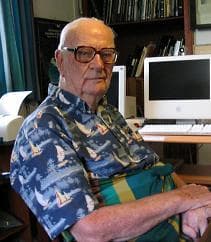
Sir Arthur Charles Clarke was an English science fiction writer, science writer, futurist, inventor, undersea explorer, and television series host.







