“The wind was picking up, and the smell of rain was in the air. It was a good night for a murder.”
— Early in the novel, setting a foreboding tone for the events to come in Delano.

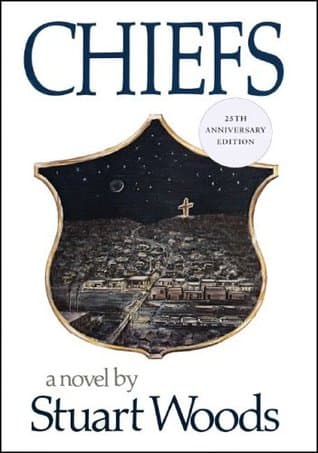
Genre
Thriller / Historical Fiction / Mystery
Reading Time
540 min
Key Themes
See below
Sign in to track this book
A small Southern town's dark secrets unravel over decades through the eyes of three police chiefs, all linked by the ritualistic murder of a teenager in 1920s Georgia.
In 1920, Delano, Georgia, a small, peaceful town, appoints its first police chief, Will Henry Lee, a former cotton farmer. His first job is to investigate the disappearance of a young boy named Bo. Lee, still learning his new role, finds Bo's naked body in a ditch. The body shows signs of a brutal beating, but the cause of death is unclear. The town's important citizens, including Colonel Felton and Dr. Abner, try to downplay the incident, suggesting it was an accident or done by a hobo. They fear the negative attention a murder investigation would bring to their growing community. Lee, however, is deeply disturbed and determined to find the truth, sensing something sinister under Delano's calm surface.
Will Henry Lee's investigation into Bo's death meets silence and obstruction from Delano's powerful figures. Colonel Felton, a wealthy and influential landowner, and other town council members pressure Lee to close the case quickly. They offer explanations that avoid the possibility of a local killer. Dr. Abner, the town physician, also hesitates to give a clear cause of death, further complicating Lee's efforts. Despite the lack of cooperation and resources, Lee, driven by a strong sense of justice, continues to probe. He interviews residents and looks for clues, but the small-town atmosphere makes witnesses afraid to speak out, fearing consequences from powerful families.
Years pass, and the investigation into Bo's murder stalls, mostly due to the town's resistance and lack of evidence. Will Henry Lee, though still bothered by the unsolved case, has seen no further incidents. However, in the late 1940s, a second young boy is found dead, with similar brutal marks and ritualistic elements as Bo. This horrific discovery shocks Delano and confirms Lee's long-held suspicion that a serial killer has been operating unseen. The crime's recurrence strengthens Lee's resolve, and he renews his efforts, now sure that the killer is local and has been living among them all these years, hidden in plain sight.
By the 1950s, Will Henry Lee is an aging man, worn down by the unsolved murders and the constant fight against the town's complacency. He retires as Chief of Police, passing the job to Sonny Butts, a younger, ambitious, and somewhat opportunistic officer. Butts inherits the cold cases of the two murdered boys, which have become local legends and whispered rumors. Initially, Butts cares more about keeping order and advancing his own career within Delano's political system. He sees the old cases as historical curiosities rather than active investigations, unaware of the deep evil he has been tasked to confront.
Chief Sonny Butts's time as police chief shows increasing corruption and a cynical approach to law enforcement. He uses his position for personal gain, accepting bribes and ignoring various illegal activities, especially those involving the town's influential white citizens. Butts also shows clear racism, often abusing his authority against Delano's Black community. The unsolved murders of the boys remain dormant under his watch; he shows little real interest in pursuing justice, preferring to maintain the status quo and his own comfortable position within the town's power structure. His leadership further embeds the town's secrets and allows the true killer to remain hidden.
In the early 1960s, a third boy is brutally murdered in Delano, with the same horrifying marks as the previous two victims. This time, the victim is a young Black boy. Chief Sonny Butts and the town's white establishment see this as a chance to deflect attention and blame. Instead of starting a proper investigation, Butts, pressured by powerful figures like Colonel Felton's son, actively participates in a cover-up. They quickly arrest and frame a mentally disabled Black man named Billy Lee, getting a confession through threats and violence. This clear injustice aims to quickly close the case and keep the illusion of order, sacrificing an innocent man to protect the town's dark secret.
By the late 1960s, Chief Sonny Butts's corruption and incompetence become clear, even to the town's powerful elite. He is eventually forced out, and a new chief arrives: Tyler Watts. Watts is different from his predecessors. He is young, college-educated, and trained in modern police techniques. He comes to Delano wanting to bring professionalism and justice to the department, unaware of the deep corruption and decades-old unsolved murders hidden beneath the surface. Watts immediately faces the town's resistance to change and its long history of secrets, especially the lingering whispers of the ritualistic killings.
Chief Tyler Watts, bothered by the rumors and the clear inconsistencies in the Billy Lee case, begins to investigate the past murders. He quickly realizes that Billy Lee was wrongly convicted and that the true killer is still free. Watts meets strong opposition from the old guard, including the now-elderly Colonel Felton and his son, who want to keep the past buried. Despite threats and attempts to undermine his authority, Watts carefully re-examines evidence, interviews hesitant witnesses, and uses his modern investigative skills to piece together the truth about all three murders, connecting them to a single, horrifying pattern.
Through diligent investigation, Chief Tyler Watts uncovers the shocking truth: the serial killer is Colonel Felton, the seemingly kind patriarch of Delano. Watts discovers that Felton, a respected man in the community, had a dark, violent secret from his own twisted psychological issues. The ritualistic beatings and murders were a perversion of his privileged position and a horrifying display of his inner demons, done under the guise of respectability. Watts carefully gathers the evidence, connecting Felton to all three victims over the decades, despite immense pressure from Felton's family and allies to drop the investigation.
Chief Tyler Watts confronts Colonel Felton with the undeniable evidence of his crimes. The confrontation is tense and dramatic, showing the full extent of Felton's depravity and the town's involvement in allowing him to operate undetected for so long. Felton, at first defiant, eventually breaks under Watts's findings. The killer's identity shocks Delano, exposing the deep corruption and moral decay that had grown beneath its calm surface for decades. Watts's commitment to justice finally brings closure to the victims' families and begins the painful process of healing and accountability for the town, marking a turning point in Delano's history.
The Protagonist
Transforms from an inexperienced farmer to a dedicated, if ultimately frustrated, lawman who never gives up on the truth.
The Antagonist
Degenerates from a potentially ambitious officer into a symbol of institutional corruption and racial injustice.
The Protagonist
Arrives as an outsider and transforms into the catalyst for justice, exposing the town's darkest secrets.
The Antagonist
Remains outwardly powerful and respected while secretly committing heinous acts, his true nature revealed only at the end.
The Supporting
His initial complicity in avoiding the truth sets a precedent for the town's long-standing denial of justice.
The Mentioned
His wrongful conviction tragically underscores the depth of injustice and fuels the eventual pursuit of truth.
The Mentioned
His death is the inciting incident that drives the entire narrative, though he is only present as a victim.
The novel shows how unchecked power, especially in a small, isolated community, leads to corruption and injustice. Colonel Felton uses his wealth and social standing to stop investigations and keep a respectable appearance, even while committing terrible crimes. Chief Sonny Butts abuses his authority for personal gain and to continue racial prejudice. This theme appears in the town's initial hesitation to seriously investigate Bo's murder, fearing bad publicity, and ends with the deliberate framing of Billy Lee, an innocent Black man, to protect the town's image and the powerful.
“In Delano, money and blood ran thicker than any law.”
Racial prejudice is a destructive force throughout the story, greatly affecting justice. From the casual dismissal of crimes against Black individuals to Chief Sonny Butts's clear racism, the novel highlights the systemic inequalities of the Jim Crow South. The clearest example is the wrongful conviction of Billy Lee, a mentally disabled Black man, for a murder he did not commit, simply because he was an easy target and his suffering was considered less important by the white power structure. This theme shows how racial bias can be used to maintain social order and protect the guilty.
“A colored man's life wasn't worth much in Delano, not when a white man's reputation was on the line.”
The novel explores the lasting psychological and societal impact of unsolved crimes. Will Henry Lee is bothered by Bo's murder for decades, carrying the weight of his failure to find the killer. The unresolved cases create unease and a lingering dark secret within Delano, affecting its moral fabric. The town's inability or unwillingness to face the truth allows the killer to operate freely, poisoning the community. Only when Tyler Watts reopens the cases is the burden lifted, allowing for some healing and accountability.
“Some secrets, once buried, refuse to stay down, festering beneath the surface of a town.”
Despite widespread corruption and obstruction, the novel maintains a strong theme of pursuing truth and justice. Will Henry Lee's initial, though ultimately unsuccessful, dedication sets the stage. However, Tyler Watts, with modern methods and a strong moral compass, embodies this theme most fully. He systematically breaks down decades of lies and cover-ups, risking his career and safety to expose the powerful killer. His journey shows the importance of integrity and perseverance when facing overwhelming odds, bringing closure and redemption to a town long in denial.
“Justice, he thought, might be delayed, but it could not be denied forever.”
Decades-old unsolved murders that drive the narrative.
The central plot device is the 'cold case' of the ritualistic murders, spanning from 1920 to the late 1960s. This device allows the story to unfold across multiple generations and through the perspectives of three different police chiefs. It creates a sense of lingering mystery and escalating tension, as the killer remains at large for decades. The cold case highlights the failures of past investigations due to corruption and societal pressures, making the eventual resolution by Tyler Watts all the more impactful.
The story is told through the eyes of three police chiefs across different eras.
The novel employs a generational perspective by focusing on three distinct police chiefs – Will Henry Lee, Sonny Butts, and Tyler Watts – each representing a different era and approach to law enforcement in Delano. This device allows the author to explore how the town and its secrets evolve over time, from the post-WWI period to the civil rights era. It contrasts the naive integrity of Lee, the cynical corruption of Butts, and the modern determination of Watts, showcasing the changing social and legal landscapes that impact the pursuit of justice.
The pervasive silence and complicity of a small town in protecting its dark secrets.
Small town secrecy is a crucial plot device, where the close-knit nature of Delano, combined with the influence of powerful families, creates a wall of silence around the murders. Witnesses are reluctant to speak, and town leaders actively suppress information to protect Delano's image. This device amplifies the mystery and frustrates the early investigators, allowing the killer to remain hidden for decades. It underscores the theme of corruption and highlights how collective denial can perpetuate injustice.
The distinct, repeated pattern of the murders.
The ritualistic nature of the murders – naked bodies, brutal beatings, specific locations – serves as a critical plot device. This consistent pattern is what links the otherwise disparate crimes across decades and eventually allows Tyler Watts to identify a single perpetrator. It elevates the crimes beyond simple homicides, suggesting a deeper, more disturbing psychological motive. This device creates a terrifying signature that, despite the town's attempts to ignore it, ultimately becomes the key to unlocking the truth.
“The wind was picking up, and the smell of rain was in the air. It was a good night for a murder.”
— Early in the novel, setting a foreboding tone for the events to come in Delano.
“There was a certain kind of man who was drawn to power, and another kind who was born to it.”
— Reflecting on the different types of leaders and influential figures in the town.
“Justice, he had learned, was often a matter of who had the most money and the best lawyers.”
— A cynical observation about the legal system and its biases, particularly in the South.
“The past was never really dead; it just lay in wait, ready to spring out when you least expected it.”
— As old secrets and unresolved crimes begin to resurface in Delano.
“Sometimes, the truth was just too inconvenient to be believed.”
— When faced with evidence that challenges established beliefs or power structures.
“Fear was a powerful motivator, capable of making men do things they never thought possible.”
— Examining the psychological impact of the murders and the racial tensions in the town.
“He understood then that some battles were never truly won, only endured.”
— A reflection on the ongoing struggle against prejudice and injustice.
“The silence in the room was heavier than any spoken word, filled with unspoken accusations and regrets.”
— During a tense confrontation or revelation among the characters.
“There were shadows in every town, even the sunniest ones, and Delano had more than its share.”
— A metaphor for the hidden darkness and secrets beneath the seemingly calm surface of the town.
“A man's reputation was often a fragile thing, easily shattered by rumor and innuendo.”
— Discussing the impact of gossip and suspicion on individuals in a small town.
“History, he realized, was not just about dates and names, but about the echoes of human choices.”
— Contemplating the long-term consequences of past decisions and prejudices.
“Sometimes, the only way to move forward was to dig up the past, no matter how ugly it was.”
— As the investigation into the cold cases progresses, forcing characters to confront uncomfortable truths.
“The weight of a badge was not just authority, but responsibility, and sometimes, a heavy burden.”
— Reflecting on the duties and pressures faced by the chiefs of police throughout the decades.
“The smell of magnolias and secrets hung heavy in the air.”
— A sensory detail that encapsulates the atmospheric and mysterious nature of Delano, Georgia.
Ready to see how well you understood this book? Take our interactive quiz with 10 questions.

Biography coming soon.







