“A told B, and B told C, 'I'll meet you at the top of the coconut tree.'”
— The opening line that sets the story in motion.


Bill Martin Jr. (1989)
Genre
Children's
Reading Time
5 min
Key Themes
See below
Sign in to track this book
When all 26 lowercase letters decide to race to the top of a coconut tree, pandemonium (and a pile-up) is sure to follow in this rhythmic, alphabet adventure.
The story starts with the lowercase letter 'a' telling 'b', and 'b' telling 'c', that they will meet at the top of a tall coconut tree. This challenge quickly spreads among the other letters. 'd', 'e', and 'f' join in, followed by 'g', all wanting to climb. The excitement builds as more letters decide to participate in this ascent, setting the stage for an adventure.
As the first letters begin their climb, 'h', 'i', 'j', and 'k' follow, and 'lmnop' (often read quickly as one unit) also make their way up. The tree, empty at first, starts to fill with the colorful, energetic letters. 'qrs' and 'tuv' continue the steady stream, each letter adding to the increasing weight and activity on the tree's branches. The tree becomes quite crowded with all the lowercase letters determined to reach the top.
The last of the lowercase letters, 'w', 'x', 'y', and 'z', enthusiastically join the others, completing the full alphabet's climb. Now, all twenty-six lowercase letters are nestled within the branches of the coconut tree, from its base to its top. The tree is completely full, packed with the entire alphabet, leading to a precarious situation as the weight becomes significant.
With all twenty-six lowercase letters now crammed onto its branches, the coconut tree groans under the weight. The branches sway and bend, unable to hold the alphabetical burden. Suddenly, with a resounding 'Chicka Chicka Boom Boom!', the tree gives way, and all the letters tumble down in a heap at the base of the tree. This dramatic collapse is the climax of the letters' daring adventure.
After the big 'Boom Boom!', the uppercase 'mama' and 'papa' letters, along with their 'aunts' and 'uncles', rush to the scene. They appear concerned for their lowercase children, who are scattered and bruised at the bottom of the tree. Their arrival shows a shift from the letters' independent adventure to a moment of parental care and comfort as they begin to pick up and dust off their little ones.
The concerned uppercase letters carefully help their lowercase counterparts. They dust them off, one by one, checking for injuries. 'Mama A' hugs 'little a', 'Papa P' helps 'little p', and 'Uncle S' helps 'little s'. Some letters have bandages, such as 'e' with a stubbed toe, 'f' with a loose tooth, and 'm' and 'n' with a scraped knee. This shows the tenderness and care of the parental figures.
As the sun sets and the moon begins to glow, most of the letters are tucked away, recuperating from their fall. However, 'little a', still full of energy and determination, wants another try. Despite the previous mishap and the warnings from the others, 'little a' whispers, 'Dare double dare, you can't catch me!', and begins to climb the coconut tree once more. This hints at the cyclical nature of adventure and resilience.
The Protagonists
They experience a collective adventure, a dramatic fall, and then a period of being nurtured, demonstrating a cycle of ambition, consequence, and recovery.
The Supporting
They transition from absent figures to active caregivers, demonstrating their protective nature.
The Setting/Antagonist (passive)
It transforms from an upright challenge to a bent, collapsed structure, and then stands tall again, ready for new adventures.
The Minor Protagonist
Initiates the adventure, experiences the fall, and then demonstrates an immediate desire to repeat the challenge.
The story is about the lowercase letters' adventurous spirit and their decision to explore the height of the coconut tree. Their journey up the tree, driven by a simple challenge, shows the thrill of discovery and pushing boundaries. This theme is clear from 'a told b, and b told c' to the last scene where 'little a' dares to climb again, showing a continuous quest for new experiences.
“A told b, and b told c, 'I'll meet you at the top of the coconut tree.'”
The story illustrates what happens when there is over-ambition and overcrowding. The 'Chicka Chicka Boom Boom!' moment happens because too many letters are on the tree, leading to their fall and subsequent bumps and bruises. However, the letters, especially 'little a', show resilience by being ready to try again. This theme teaches that while actions have consequences, there is always a chance to recover and learn, or in this case, to simply try again with new energy.
“Chicka chicka BOOM! BOOM! All the letters fell out of the coconut tree.”
The arrival of the uppercase 'mama' and 'papa' letters, along with 'aunts' and 'uncles', introduces the theme of family support and nurturing. After the chaotic fall, these larger, adult letters gently care for their smaller, injured children, dusting them off, hugging them, and putting bandages on their scrapes. This shows the comforting and protective role of family figures in times of distress, providing security and love after a dangerous adventure.
“Mama A and Papa P and Uncle S came to help their little 'dears'.”
The book supports learning the alphabet through its repetitive structure and visual representation of each letter. The entire alphabet is presented twice – once in their adventurous climb and again as they are picked up and identified by their uppercase counterparts. The rhythmic, rhyming text also helps with memorization. 'Little a' climbing again suggests that learning, like play, often involves repetition and trying until it is mastered.
“Next from the pile, all the letters came out, each one a different shape and about.”
Giving human qualities to inanimate letters and a tree.
The most prominent plot device is personification, where the letters of the alphabet are imbued with human-like characteristics. They talk, climb, fall, get bruised, and express emotions like ambition and resilience. The coconut tree also 'groans' and 'bends' under the weight, giving it a sense of agency and responsiveness to the letters' actions. This device makes the abstract concept of the alphabet relatable and engaging for young readers, transforming letters into active characters in a story.
Rhythmic, rhyming text used to create a memorable and engaging narrative.
The book heavily relies on repetition, particularly the phrase 'Chicka Chicka Boom Boom!', and a consistent rhyming scheme. This creates a strong, musical rhythm that is highly engaging for young children. The repetitive listing of the letters as they climb and fall reinforces alphabet recognition. This device not only makes the story fun to read aloud but also aids in memorization and language development, making the alphabet an active participant in a song-like narrative.
Adding elements one by one to build tension and then a climax.
The story employs a cumulative plot structure where letters are added one by one to the coconut tree, gradually building tension. Each new letter joining the climb increases the visual and narrative weight on the tree, leading inevitably to the 'Chicka Chicka Boom Boom!' climax. This progressive addition makes the eventual fall feel both surprising and logical, mirroring how a physical load would build up until a breaking point, creating a clear cause-and-effect narrative for young audiences.
Illustrations integral to conveying plot and character.
The vibrant and expressive illustrations are crucial to the storytelling, often conveying as much information as the text, or more. The visual depiction of each letter, their movement up the tree, the tree's bending, and the heap of letters at the bottom are essential for understanding the plot. The distinct personalities of the letters and their 'injuries' are primarily conveyed through the artwork. This device makes the book highly accessible and engaging for pre-readers, allowing them to follow the narrative visually.
“A told B, and B told C, 'I'll meet you at the top of the coconut tree.'”
— The opening line that sets the story in motion.
“Chicka chicka boom boom! Will there be enough room?”
— Repeated refrain as letters climb the tree.
“Here comes H up the coconut tree.”
— Part of the sequence of letters joining the climb.
“Skit skat skoodle doot. Flip flop flee.”
— Describes the chaotic fall of the letters.
“M is looped. N is stooped. O is twisted alley-oop.”
— Illustrates the tangled letters after the fall.
“Still the chicka chicka boom boom!”
— Emphasizes the ongoing commotion.
“A is out of bed.”
— Shows the letters recovering and starting over.
“The whole alphabet up the—Oh, no!”
— Builds anticipation before the fall.
“Chicka chicka... BOOM! BOOM!”
— The dramatic moment of the letters falling.
“Next time won't you sing with me?”
— Implied invitation for reader participation at the end.
“Look who's coming! It's black-eyed P, Q, R, S, and loose-tooth T.”
— Introduces letters with playful descriptions.
“Whee! said D to E F G, 'I'll beat you to the top of the coconut tree.'”
— Shows the competitive yet friendly race among letters.
“Chicka chicka rock rock, chicka rock rock chicka boom!”
— A variant line adding musical rhythm.
Ready to see how well you understood this book? Take our interactive quiz with 10 questions.

Bill Martin Jr. was a prolific American educator and author of over 300 children's books. He is best known for the beloved "Brown Bear, Brown Bear, What Do You See?" and the rhythmic "Chicka Chicka Boom Boom." His work frequently focused on themes of learning, friendship, and the joy of language, making him a significant figure in early childhood literature.
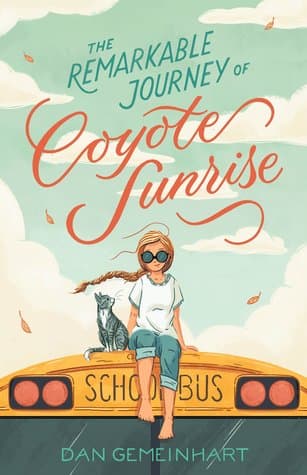
Dan Gemeinhart
4.5
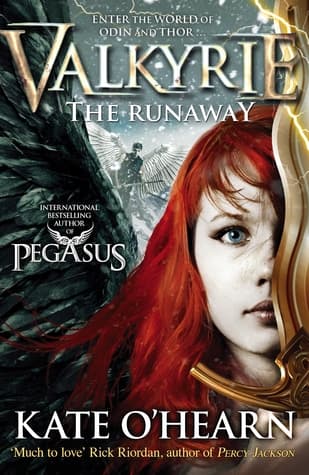
Kate O'Hearn
4.4

Jeanne Birdsall
4.4

Jen Wang
4.4
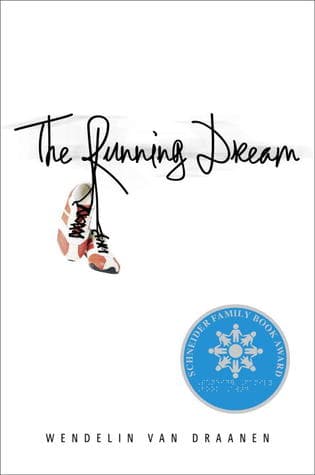
Wendelin Van Draanen
4.3

John Marsden
4.3

Chris Van Allsburg
4.3
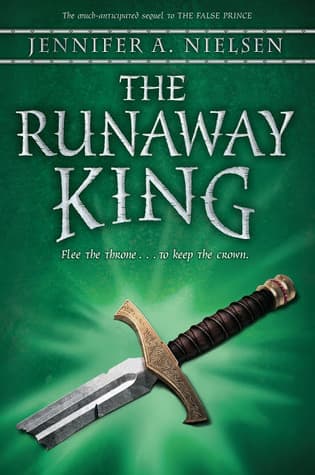
Jennifer A. Nielsen
4.2