“It is not love that is blind, but jealousy.”
— A reflection on the nature of emotions, particularly in the context of Cheri's relationships.


Colette (1976)
Genre
Historical Fiction / Romance
Reading Time
320 min
Key Themes
See below
Sign in to track this book
In Belle Époque Paris, a young man and an older courtesan navigate their complex love, the passage of time, and a passion that lingers.
The novel begins with Léa de Lonval, a renowned courtesan in her late forties, watching her young lover, Fred Peloux, known as Chéri, sleep in her lavish bedroom. Chéri, handsome and self-absorbed, is the son of Léa's former rival and friend, Madame Peloux. Their six-year affair, marked by deep, unspoken affection, is ending as Chéri is about to marry Marie-Laure, a wealthy young woman chosen by his mother. Léa feels regret but also a sense of freedom, believing she is ready to move on. Chéri, however, seems unaware of the coming end, focused on his own beauty and the comforts Léa provides.
Chéri's engagement to Marie-Laure, a quiet and somewhat plain young woman, proceeds as planned. Léa, acting as the graceful elder, attends the wedding with a calm manner, though she feels a deep emptiness afterward. Chéri, for his part, initially embraces his new life of wealth and respectability. However, he soon feels restless and bored by the routine of marriage and Marie-Laure's lack of the passion he had with Léa. He often visits his mother, Madame Peloux, using it as an excuse to be near Léa's area, though he avoids direct contact for a time.
Unable to hold back his longing, Chéri eventually returns to Léa's apartment. Their reunion is immediate and passionate, as if no time had passed. Léa, despite her earlier resolve, cannot resist his charm and the comfort of their shared past. They fall back into their old routine, with Chéri spending nights at her place, much to the annoyance of his new wife, Marie-Laure, and the watchful eye of Madame Peloux. This brief period of renewed intimacy is intense, showing their deep physical and emotional bond, but it also carries the knowledge that it cannot last.
Léa, seeing the destructive path they are on, decides their affair must end for good. She sees that Chéri is stuck, unable to fully embrace his new life while still tied to her. With a heavy heart, she tells Chéri that their time together is truly over. Chéri, at first resistant and confused, eventually accepts her decision, though he is deeply hurt. This farewell is emotional, with both characters dealing with the profound loss of their unique connection. Léa shows selfless love by pushing him toward his future, even if it means her own pain.
After the final break with Chéri, Léa travels and explores. She visits Venice and other European cities, trying new things and enjoying her new freedom. During this time, she consciously allows herself to age, letting go of the careful upkeep that defined her life as a courtesan. She gains weight, lets her hair gray, and adopts a more natural, relaxed look. This change shows her acceptance of her age and her freedom from the need to maintain an idealized image for others, especially Chéri. She finds quiet contentment in her solitude and independence.
Years later, Chéri, now in his late twenties, is still married to Marie-Laure, but his unhappiness has grown. He has become more withdrawn and sad, haunted by Léa's memory. His wealth and status bring him no joy, and he finds Marie-Laure's attempts at affection insufficient. He drifts through life, unable to find purpose or real connection. His mother, Madame Peloux, watches his decline with worry, often noting his changed appearance and lack of energy, comparing him to the lively young man he once was.
Chéri, while walking, unexpectedly sees Léa. She is no longer the radiant, youthful woman he remembers but an older, heavier woman, with graying hair and a calm, grandmotherly air. This encounter is a deep shock for Chéri. The sight of Léa, so completely changed by age, shatters his idealized image of her and, by extension, his idealized memory of their past. He cannot reconcile the woman before him with the Léa he has been longing for, creating a deep sense of confusion and loss within him.
The sight of the aged Léa devastates Chéri. He realizes that the Léa he loved and yearned for exists only in his memories. This realization is not just about Léa's physical change but also about the passage of time and the impossibility of reliving the past. His idealized memories, which had sustained him in his unhappiness, are now forever damaged. He becomes even more withdrawn, consumed by a sense of pointlessness and the brutal truth of time's relentless march. He feels a sharp sense of betrayal, not from Léa, but from life itself.
In his growing despair, Chéri seeks out an old courtesan, Charlotte Peloux (his mother's friend, but not his mother), someone who understands his past world. He tries to explain the emptiness he feels and his inability to connect with his current life. He speaks about Léa, not as she is now, but as the idealized figure he held onto. Charlotte, with her worldly wisdom, listens patiently, offering an understanding ear. She recognizes the deep sadness that has taken root in Chéri, a sadness that comes from his inability to live in the present and his obsessive clinging to a vanished past.
Chéri's despair grows. He becomes increasingly isolated, refusing to engage with his wife or his social circle. The memory of Léa, especially the youthful Léa, becomes an unbearable burden. He cannot adapt to the present or imagine a future without the idealized past he shared with her. The novel ends with the tragic suggestion that Chéri, unable to accept his romanticized memories with the harsh realities of time and change, wastes away, consumed by his grief for a lost love and a lost youth, leading to his implied death (often softened in translation from the original French). He remains a prisoner of his past with Léa.
The Protagonist
Léa initially resists aging and the end of her affair but ultimately embraces her independence and the natural progression of life, finding peace in her solitude.
The Protagonist/Antagonist (to himself)
Chéri begins as a pampered youth, attempts to conform to societal expectations, but ultimately declines into despair, unable to escape the idealized past with Léa.
The Supporting
Her character remains largely consistent, focused on securing Chéri's financial well-being and maintaining her social standing.
The Supporting
She remains a largely static character, a victim of Chéri's emotional unavailability rather than undergoing significant personal change.
The Mentioned/Supporting
Her role is to provide a sounding board for Chéri, her character remaining constant as a voice of experience.
This theme is key, explored through both Léa and Chéri. Léa first resists aging, keeping her youthful look for Chéri, but later accepts it after their separation, finding a new freedom and dignity. Chéri, however, cannot accept time's passage. He clings to an idealized image of a young Léa, and when he sees her aged appearance, he is devastated. His inability to accept time's march leads to his deep sadness and eventual decline. The novel contrasts Léa's acceptance with Chéri's destructive longing for the past, showing how people cope differently with aging.
“She looked at herself, at her face, at her body, with the cold, critical eye of a woman who is no longer young.”
Colette explores the destructive power of nostalgia, especially through Chéri. He romanticizes his affair with Léa, remembering it as a perfect time that nothing else can match. His inability to let go of this idealized past stops him from living his present life, including his marriage to Marie-Laure. The sight of the aged Léa shatters this illusion, leaving him with only emptiness. The novel suggests that clinging to a perfect past can trap someone, preventing them from living truly in the present. Léa, in contrast, manages to let go of her nostalgia and move forward.
“He carried with him the image of a Léa who no longer existed, a Léa made of memories and desires, not flesh and blood.”
The complex nature of love and desire is at the novel's heart. Léa and Chéri's relationship goes beyond physical attraction, becoming a deep emotional dependency. Chéri relies on Léa for comfort, adoration, and a sense of self, while Léa finds in Chéri a renewing force and a last great passion. Their love is unconventional, blending roles of lover, mother-figure, and mentor. However, the novel also shows the unhealthy parts of this dependency, especially how it stops Chéri's growth. The pain of their separation highlights their deep connection, even as Léa sees the need to end it for Chéri's own good.
“They were two solitary beings who had met and loved each other, each giving to the other what the other lacked.”
The novel is set in the Parisian world of courtesans and their wealthy clients, offering a unique background for examining social expectations and individual freedom. Léa, as a successful courtesan, lives outside conventional society but is still subject to its judgments and the realities of aging in her profession. Chéri, born into this world, struggles when forced into a 'respectable' marriage. The characters navigate a world where love and money often mix, and personal desires conflict with social norms. The novel quietly critiques the superficiality and materialism of this society, while also portraying its people with understanding.
“In their world, beauty was a currency, and love often a transaction, but sometimes, a real tenderness bloomed.”
Represents Léa's wealth, beauty, and the bond with Chéri.
Léa's pearl necklace is a recurring symbol throughout the novel. It signifies her affluence and the trappings of her courtesan life. More significantly, it becomes a symbol of Chéri's attachment to her; he often plays with it, caresses it, and eventually Léa gives it to him as a parting gift, a tangible piece of their shared history. The pearls represent the precious, perhaps irreplaceable, nature of their love and the luxury of their life together. When Chéri eventually sells it, it marks a futile attempt to sever ties with the past, highlighting his deeper inability to let go of Léa herself.
Reflects narcissism, self-perception, and the harsh reality of aging.
Mirrors are frequently used in the novel, particularly in Léa's boudoir, serving as a powerful plot device. Initially, they highlight Chéri's exquisite beauty and narcissism, as he spends considerable time admiring his own reflection. For Léa, the mirror initially reflects her fading youth, causing her anxiety. Later, after their separation, the mirror becomes a tool for Léa's acceptance of her age; she looks into it with a 'cold, critical eye' and allows herself to age naturally. For Chéri, the mirror ultimately reflects his inner decline and the loss of his youthful vibrancy, starkly contrasting with his earlier vanity. It functions as a visual representation of both self-absorption and self-awareness.
Highlights the central conflict and the transience of beauty and love.
Colette masterfully employs the juxtaposition of youth and age, primarily through the characters of Chéri and Léa. Chéri embodies vibrant, albeit self-absorbed, youth, while Léa represents the beauty and wisdom of middle age. This contrast is central to their relationship, as Léa finds rejuvenation in Chéri's youth, and Chéri finds security and passion in Léa's maturity. The device becomes particularly poignant in 'The Last of Chéri' when Chéri encounters the visibly aged Léa, shattering his idealized memories. This stark contrast underscores the novel's themes of time's passage, the transience of physical beauty, and the differing ways individuals cope with aging and loss.
Provides deep insight into characters' inner lives and emotional states.
Colette frequently uses interior monologue and a keen observational narrative style to delve into the characters' psychological states, particularly Léa's and Chéri's. The reader is given access to their unspoken thoughts, doubts, and desires, often through Léa's internal reflections on her fading youth or Chéri's melancholic musings on his discontent. This device allows for a nuanced exploration of their complex emotions, their unspoken affections, and their struggles with self-identity and the passage of time. It builds empathy for both characters, despite their flaws, and reveals the subtle shifts in their emotional landscapes over the course of the narrative.
“It is not love that is blind, but jealousy.”
— A reflection on the nature of emotions, particularly in the context of Cheri's relationships.
“One does not love to forget, but to remember.”
— Léa's internal thoughts on the enduring nature of affection and past loves.
“The memory of a pleasure is almost as good as the pleasure itself.”
— A common sentiment in the book, reflecting the characters' tendency to romanticize the past.
“Youth is a gift, but one that is quickly squandered.”
— Léa's melancholic observation on the fleeting nature of youth as she ages.
“He was an object of beauty, but a beauty that lacked expression.”
— Léa's perception of Cheri's youthful handsomeness, which sometimes seemed superficial.
“Happiness is a long habit.”
— A philosophical thought on the cultivation of contentment, often contrasted with passionate love.
“There are no new loves, only new ways of suffering.”
— A cynical yet poignant reflection on the cyclical nature of romantic pain.
“The past is a foreign country; they do things differently there.”
— While a famous quote from another author, the sentiment perfectly encapsulates the characters' struggle with changing times and their bygone youth.
“To be loved is to be understood.”
— A deep yearning for connection and comprehension within the complex relationships.
“One never knows how to say goodbye to a pleasure that one believes to be eternal.”
— Léa grappling with the end of her affair with Cheri, which felt timeless.
“He was a spoiled child, but a very beautiful spoiled child.”
— Léa's indulgent view of Cheri's character flaws, often excused by his charm.
“The greatest elegance is to be oneself, without fear or apology.”
— Reflecting the independent and self-assured nature of characters like Léa.
“Love is a game, and the rules are always changing.”
— The unpredictable and often unfair dynamics within the romantic entanglements of the characters.
“What does one do when one is no longer young, and still desires everything?”
— Léa's internal struggle with aging and the persistence of her desires.
Ready to see how well you understood this book? Take our interactive quiz with 10 questions.
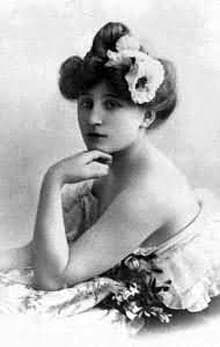
Sidonie-Gabrielle Colette, known monomously as Colette, was a French author and woman of letters. She was also a mime, actress, and journalist. Colette is best known in the English-speaking world for her 1944 novella Gigi, which was the basis for the 1958 film and the 1973 stage production of the same name. Her short story collection The Tendrils of the Vine is also famous in France.







