“A woman's heart is a deep ocean of secrets, and Charlotte's was no exception.”
— Narrator reflecting on Charlotte's inner life and hidden emotions.


Norah Lofts (1971)
Genre
Historical Fiction / Romance
Reading Time
240 min
Key Themes
See below
Sign in to track this book
Haunted by a child's mysterious death and her own family's suffocating secrets, Charlotte flees to a remote school, only to find her past—and a chilling new tragedy—unraveling around her, making her question her own innocence.
The novel opens in Charlotte's oppressive Cornwall home, ruled by her stern father and the presence of her sickly stepbrother, John Vincent. Charlotte wants freedom. John Vincent, a delicate child, dies suddenly. While illness is the official cause, whispers start in the community, subtly blaming Charlotte. Her father's coldness and others' talk make her situation unbearable. Fearing accusation and desperate to escape the stifling atmosphere and her own mixed feelings of guilt, Charlotte decides to flee. She leaves her past and the questions about John Vincent's death behind. She takes only a few things and little money, heading into the unknown English countryside.
After days of hard travel and searching for work, Charlotte arrives at a remote girls' school run by Mrs. Armitage. The school is stark and unwelcoming. Mrs. Armitage is a strong, untrusting woman with a stern manner and a secret air. Desperate for work and a place to hide, Charlotte uses a false name, Miss Smith, and invents a past. Mrs. Armitage, though suspicious, needs a teacher and hires Charlotte. She makes it clear she expects hard work and obedience. There is an unspoken tension between the two women from the start. Mrs. Armitage seems to sense Charlotte's hidden past, a fact she plans to use.
Charlotte, now Miss Smith, settles into the school's strict routine. The environment is plain, and the other teachers are quiet. She focuses on her duties. Her gentle nature soon makes her popular with some younger pupils, who lack kindness. A new pupil arrives, a delicate, sickly child named Lucy. Lucy reminds Charlotte of John Vincent, both in her physical weakness and her sweet, vulnerable way. Charlotte feels an immediate, strong affection for Lucy. She pours her maternal instincts and desire for peace into caring for the child. She becomes Lucy's main caregiver and protector. Their relationship quickly deepens beyond teacher and student, becoming almost obsessive for Charlotte.
As weeks pass, Lucy's health declines. She has a cough, weakness, and a general frailty, like John Vincent before he died. Charlotte, always by Lucy's side, grows more anxious. She tries to nurse Lucy back to health, but it seems useless. Mrs. Armitage watches with calculating eyes. Her vague suspicions grow stronger as she sees Charlotte's intense attachment to Lucy and the child's decline. The headmistress's veiled comments and pointed questions about Charlotte's past create fear. Charlotte worries her secret will be exposed and that history is repeating itself.
Despite Charlotte's desperate care, young Lucy's condition worsens, and she dies. The death shocks the small school and community. Mrs. Armitage uses the chance to openly accuse Charlotte of neglect, if not worse, suggesting a pattern of behavior. The similarities to John Vincent's death are too clear to ignore, for Mrs. Armitage and for Charlotte. Charlotte is plunged into guilt and self-doubt. The local authorities are informed, and an investigation begins. Terrified of a trial and convinced no one will believe her, Charlotte flees again, leaving the school and the dead child. She is now a fugitive, haunted by two deaths.
After her second flight, Charlotte travels further into the English countryside. She adopts another new name, 'Mrs. Brown,' and creates a new, believable story. She finds work as a governess or companion to a kind, unsuspecting family in a remote village. This family, perhaps a widower with children or an elderly couple, offers her a safe place and a chance for a normal life. Charlotte, though always looking over her shoulder, tries to bury her past and focus on her new duties. She finds comfort in the children, if any, and the quiet pace of rural life, but the shadow of her past tragedies remains. This makes her wary of forming close relationships.
Charlotte's fragile peace breaks with the arrival of a detective, Mr. Thorne, who has been tracking her. He does not immediately say why he is there but starts to quietly investigate Charlotte's background and behavior. He asks questions of her employers and the villagers. Charlotte recognizes the danger and feels trapped. The detective's presence forces her to face the lies she has built her new life on. The story includes flashbacks or internal thoughts where Charlotte relives parts of her past, especially John Vincent's death and Lucy's. The detective's investigation makes Charlotte revisit her memories and understand the truth.
The detective, Mr. Thorne, eventually confronts Charlotte. He shows her the evidence he gathered, linking her to both John Vincent's and Lucy's deaths. Cornered and unable to run, Charlotte confesses her true identity and tells her story. She describes her childhood home's oppressive atmosphere, her father's coldness, and her intense, complicated feelings for John Vincent. She strongly denies any bad intentions but admits to certain actions or inactions that, looking back, might have contributed to the children's deaths. She struggles with her memory, unsure of the exact order of events or her precise role, questioning her own mind and blame.
At a key moment, Charlotte details John Vincent's death. She explains he was a very frail child. She also reveals that her father, in his stern way, denied the boy proper medical attention or, through neglect, contributed to his decline. Charlotte might have been present during a critical moment, or made a decision (or failed to make one) that, while not meant to harm, had fatal results for the delicate child. She expresses deep regret and the guilt she has carried. She also implicates her father, showing a household where neglect and a lack of care were common, leading to the tragedy. Her father's oppressive nature was a main reason for her initial escape.
Charlotte recounts the events at Mrs. Armitage's school. She explains her strong affection for Lucy and her desperate attempts to care for her. It comes out that Lucy, like John Vincent, had a severe, existing illness. Importantly, Charlotte exposes Mrs. Armitage's true nature: the headmistress deliberately withheld proper medical care for Lucy, perhaps to save money, or even to create a situation where she could blackmail or control Charlotte. Mrs. Armitage recognized Charlotte's weakness and used Lucy's illness as leverage. She deliberately created an environment that led to the child's death and then blamed Charlotte. Charlotte was an easy scapegoat, and Mrs. Armitage's 'suspicions' were planned manipulations.
With both stories fully revealed, the detective, Mr. Thorne, understands the full, tragic truth. He sees that Charlotte, while perhaps showing poor judgment or intense emotion, was not a malicious murderer. The systemic neglect in her father's house and Mrs. Armitage's deliberate actions were the real causes. Charlotte's name is cleared of the most serious accusations. While she will always bear the pain of her experiences and the guilt of the children's deaths, she is no longer a fugitive. The resolution brings a sense of release and the chance for a future where she can live without constant fear, though deeply marked by the past. The novel ends with Charlotte finding a fragile but real sense of peace and a path to rebuilding her life, no longer defined by running or false accusations.
The Protagonist
Charlotte transforms from a frightened fugitive plagued by guilt into a woman who confronts her past, understands her true role in the tragedies, and ultimately finds a fragile sense of redemption.
The Supporting/Catalyst
John Vincent's death remains a static but foundational event, his memory evolving as Charlotte uncovers the truth of his circumstances.
The Antagonist
Mrs. Armitage's manipulative nature is revealed and exposed, leading to her downfall or at least the nullification of her power over Charlotte.
The Supporting/Catalyst
Lucy's character arc is tragic and static, her death serving as a pivotal event that propels Charlotte's journey towards truth.
The Supporting
Mr. Thorne transitions from an antagonist (pursuer) to a sympathetic figure who helps Charlotte find resolution.
The Supporting/Antagonist (initial)
His character remains largely static, his influence primarily felt through Charlotte's memories and the consequences of his actions.
Guilt and self-doubt affect Charlotte throughout her journey. From John Vincent's death, she feels a vague sense of blame, unsure if she is a 'murderer.' This inner struggle grows worse with outside accusations and Lucy's death, which mirrors the first. Charlotte's inability to trust her memories and her constant questioning of her intentions drive her to flee and cause her deep distress. The book shows how guilt, even unproven, can shape a person's identity and actions, forcing them into a cycle of fear and avoidance.
“In darker moments, even Charlotte herself cannot be sure.”
Charlotte's repeated flights mean she must shed old identities and create new ones. She uses different names and invents new pasts, trying to erase her history and escape its results. This theme explores how fragile identity is when faced with trauma and society's judgment. Each new persona ('Miss Smith,' 'Mrs. Brown') is an attempt to find safety and a fresh start, but the past always catches up. The novel suggests that true identity cannot be made up. It must be faced and understood, no matter what names one uses. Her journey is ultimately about reclaiming her true self by confronting the truth.
“She fled deep into the countryside and there taught at a school run by the untrusting and untrustworthy Mrs Armitage, who was prepared to keep quiet about Charlotte's past - but only up to a point.”
Charlotte's first flight is a desperate attempt to get away from her father's oppressive home, marked by his emotional coldness and John Vincent's death. This wish for freedom appears throughout the novel, as she constantly tries to escape her past and the accusations that follow her. However, true freedom is hard to find as her inner guilt and external pursuers keep her tied down. The book examines different kinds of oppression – from family, society, and self – and Charlotte's struggle to break free. It shows that freedom is not just physical escape but also psychological release from one's own problems.
“She fled deep into the countryside and there taught at a school run by the untrusting and untrustworthy Mrs Armitage, who was prepared to keep quiet about Charlotte's past - but only up to a point.”
A central theme is how hard it is to know the truth, especially when seen through memory and emotion. Charlotte's memory of events, particularly John Vincent's death, is broken and unclear, clouded by guilt and trauma. The novel constantly asks what 'really' happened. It suggests that truth is often personal and can be hidden by bias, fear, and others' manipulations (like Mrs. Armitage). The detective, Mr. Thorne, tries to put together a clear story. Still, the book emphasizes how hard it is to be absolutely certain, especially when relying on a main character's unreliable memory.
“Had Charlotte been responsible for the death of the little pupil she loved? And has that crime been repeated? In darker moments, even Charlotte herself cannot be sure.”
The novel shows the strong and often damaging power of societal judgment and reputation in 19th-century England. The first whispers and blame after John Vincent's death are enough to make Charlotte leave home, even without solid proof. Her later flights come from fear of public accusation and the lasting stain on her character. Mrs. Armitage effectively uses Charlotte's vulnerable reputation to manipulate and accuse her. The story highlights how easily a woman's reputation could be ruined and how hard it was to get it back, forcing Charlotte into a life of hiding and false identities.
“Strangers pried, asked too many questions and pointed accusing fingers at Charlotte - herself eager to escape from the oppressive atmosphere of her father's home.”
Charlotte's subjective and fragmented memory of events.
The narrative relies heavily on Charlotte's perspective, but her memories of the crucial events surrounding John Vincent's and Lucy's deaths are often hazy, contradictory, and deeply colored by her guilt and trauma. This device keeps the reader in suspense, mirroring Charlotte's own self-doubt and making it difficult to discern the objective truth until the final revelations. It forces the reader to question Charlotte's culpability and intentions, creating a pervasive atmosphere of psychological suspense and moral ambiguity. The 'unreliable narrator' emphasizes the subjective nature of memory under duress.
The mirroring deaths of John Vincent and Lucy.
The most prominent plot device is the striking parallel between the death of Charlotte's stepbrother, John Vincent, and the later death of her pupil, Lucy. Both are frail, delicate children who become objects of Charlotte's intense affection, and both die under mysterious circumstances, with Charlotte becoming the primary suspect. This 'doubling' intensifies Charlotte's guilt and the reader's suspicion, suggesting a pattern of behavior or fate. It is crucial to the mystery, as the repetition forces both Charlotte and the detective to re-examine the past, ultimately revealing the manipulations and external factors that link the two tragedies.
Charlotte's repeated flights from justice and pursuit.
The entire plot is structured around Charlotte's repeated flights from her past and the authorities. Her initial escape from Cornwall, followed by her second flight from Mrs. Armitage's school, establishes a clear 'fugitive arc.' This device creates constant tension and a sense of impending discovery, as Charlotte attempts to build new lives under assumed identities, always looking over her shoulder. The pursuit by Mr. Thorne is the culmination of this arc, forcing Charlotte to finally stop running and confront the truth, providing a clear narrative drive towards resolution.
Charlotte's recounting of her story to the detective.
Much of the truth is revealed through Charlotte's extended confession to Mr. Thorne. This device allows for a gradual unveiling of information, often in a non-linear fashion, as Charlotte struggles to articulate her fragmented memories and emotions. The detective acts as a catalyst, prompting her to delve deeper into her past. The confessional format emphasizes Charlotte's internal struggle and her journey towards self-awareness, as the act of telling her story becomes part of her therapeutic process and the path to her ultimate exoneration, bringing clarity to the reader as well.
“A woman's heart is a deep ocean of secrets, and Charlotte's was no exception.”
— Narrator reflecting on Charlotte's inner life and hidden emotions.
“In the end, we are all prisoners of our own choices, bound by the chains we forge ourselves.”
— Charlotte contemplating the consequences of her decisions in life.
“Love is not a gentle breeze but a tempest that uproots everything in its path.”
— Describing the tumultuous nature of Charlotte's romantic relationships.
“History does not remember the quiet lives, only the loud deeds.”
— Reflecting on Charlotte's place in the historical events of her time.
“A house is not made of stone and timber, but of memories and dreams.”
— Charlotte thinking about her home and what it represents.
“Sometimes the bravest thing a woman can do is to simply endure.”
— Charlotte facing societal pressures and personal hardships.
“The past is a ghost that haunts the present, whispering secrets we dare not hear.”
— Charlotte grappling with her family history and personal regrets.
“In a world ruled by men, a woman's voice is her most dangerous weapon.”
— Charlotte asserting herself in a male-dominated society.
“We are all actors on the stage of life, playing parts we did not choose.”
— Reflecting on the roles society imposes on individuals.
“The heart has its own reasons, which reason does not know.”
— Charlotte justifying her emotional decisions against logic.
“A single moment can change the course of a lifetime, like a pebble thrown into a still pond.”
— Describing a pivotal event in Charlotte's life.
“To love is to risk everything, and yet, what is life without that risk?”
— Charlotte contemplating the dangers and rewards of love.
“The truest mirror is not glass, but the eyes of those who know us best.”
— Charlotte reflecting on how others perceive her true self.
“In the silence between words, the soul speaks loudest.”
— During a quiet, introspective moment for Charlotte.
Ready to see how well you understood this book? Take our interactive quiz with 10 questions.
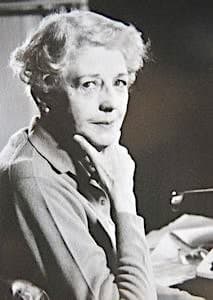
Biography coming soon.







