“So please, oh please, we beg, we pray, go throw your TV set away, and in its place you can install a lovely bookshelf on the wall.”
— The Oompa-Loompas sing this after Mike Teavee is shrunk by television.

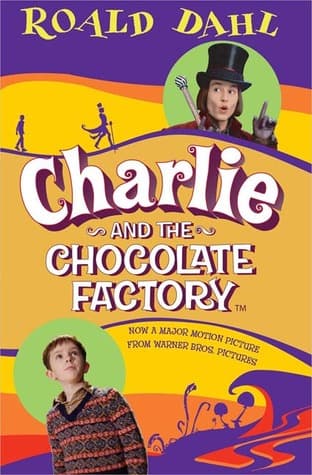
Roald Dahl (1964)
Genre
Fantasy / Children's / Young Adult
Reading Time
150 min
Key Themes
See below
Sign in to track this book
A penniless boy's life transforms with a golden ticket, whisking him into Willy Wonka's whimsical, perilous chocolate factory where sugary dreams and unexpected lessons await.
Charlie Bucket lives in a tiny, rundown house with his parents and all four of his grandparents, who share one bed. The family is very poor, often eating only cabbage soup. Across town is the large, mysterious chocolate factory owned by the reclusive Willy Wonka. Grandpa Joe, a former employee, tells stories of Wonka's creations and the spy incident that led to the factory's closure and subsequent reopening with mysterious workers. Charlie, despite his hunger, is interested in the factory and enjoys the one chocolate bar he receives each year for his birthday, savoring every bite.
One day, a big announcement shakes the world: Willy Wonka is opening his factory to five lucky children who find Golden Tickets hidden inside his chocolate bars. The winners will receive a lifetime supply of chocolate and a tour of the factory. The world goes into a frenzy, with people buying millions of Wonka bars. Charlie's family is excited, but also knows their chances are slim because of their poverty. Grandpa Joe, however, holds a bit of hope for his grandson, remembering Wonka's creations.
The first four Golden Tickets are quickly found, each by a child with a specific fault. Augustus Gloop, an obese, gluttonous boy from Dusselheim, finds the first. Veruca Salt, a spoiled, demanding girl whose wealthy father bought thousands of bars, finds the second. Violet Beauregarde, a competitive, gum-chewing champion, finds the third. Mike Teavee, a boy obsessed with television, finds the fourth. Each winner is celebrated by the media, and their less-than-charming personalities are shown, contrasting with Charlie's quiet humility.
Charlie's birthday arrives, and his present is a single Wonka Whipple-Scrumptious Fudgemallow Delight. With trembling hands, he unwraps it, but finds no Golden Ticket, only chocolate. Despite his disappointment, Charlie shares the chocolate with his family, showing his selfless nature. The family tries to be cheerful, but the sadness about their financial situation and Charlie's missed chance remains. The hope for the fifth ticket lessens, and the search grows globally, with many giving up hope of ever finding it.
One very cold day, while walking home from school, Charlie sees a fifty-pence piece half-buried in the snow. Despite his hunger, his first thought is to give it to his mother. However, he decides to buy one Wonka bar. He eats it quickly, still hungry, and decides to buy another. To his surprise, under the wrapper of the second bar, a glimmer of gold appears. It is the fifth and final Golden Ticket! He races home, shouting the news, and his family is overcome with joy, especially Grandpa Joe, who jumps out of bed for the first time in twenty years.
The day of the factory tour arrives. Charlie, with Grandpa Joe, stands outside the gates with the other four winners and their parents. The air is full of anticipation and media. At exactly ten o'clock, the gates open, and out steps the eccentric, lively, and slightly unsettling Willy Wonka himself. He greets the children and their guardians, his eyes twinkling, and leads them into the candy-filled world of his chocolate factory, warning them to follow his rules.
The first room the group enters is the Chocolate Room, a landscape of chocolate rivers, edible trees, and candy flowers. Wonka reveals his workers: the Oompa-Loompas, tiny people from Loompaland. Augustus Gloop, unable to control his hunger, begins scooping up chocolate from the river and eventually falls in. Despite warnings, he gets sucked into a pipe that leads to the fudge room. The Oompa-Loompas sing a song about his greed, and his parents are left bewildered, as the tour continues without him.
Next, the group visits the Inventing Room, full of Wonka's latest creations. Wonka shows a three-course meal chewing gum. Violet Beauregarde, despite Wonka's warnings that it is not quite right, snatches a piece and begins chewing. She experiences the tomato soup, roast beef, and baked potato courses, but when it comes to the blueberry pie and cream, her face and body begin to swell and turn blue. She becomes a giant blueberry and must be rolled to the juicing room by Oompa-Loompas to be deflated, while her parents look on in horror.
The tour goes to the Nut Room, where hundreds of squirrels are trained to shell nuts for Wonka bars. Veruca Salt, seeing the squirrels, immediately demands one. When Wonka refuses, she throws a tantrum and tries to grab a squirrel herself. The squirrels, seeing her as a 'bad nut,' pin her down and tap her head, determining she is hollow. They then throw her down the garbage chute, which Wonka explains leads to the incinerator. Her parents follow, trying to rescue her, but are also sent down the chute.
Finally, the group arrives at the Television Chocolate Room, where Wonka shows how he sends real chocolate bars through television waves. Mike Teavee, always wanting an exciting show, sees an opportunity to be the first person sent through television. Ignoring Wonka's warnings, he jumps onto the platform and is zapped into a tiny version of himself, appearing on a television screen. He is then stretched in the taffy-pulling machine by the Oompa-Loompas to regain some height, much to his parents' dismay.
With all the other children eliminated by their own faults, Charlie Bucket is the only child left. Wonka smiles at him and reveals the true purpose of the Golden Ticket contest: to find a worthy, honest, and kind heir to his entire chocolate factory. Wonka declares that Charlie, along with his entire family, will move into the factory and take over the business. Charlie and Grandpa Joe are stunned and overjoyed, realizing the incredible fortune that has just fallen into their laps, changing their lives forever.
Wonka leads Charlie and Grandpa Joe into a glass elevator that can go in any direction. They pick up the rest of Charlie's family, including his bedridden grandparents, by crashing through the roof of their tiny house. The entire Bucket family is then transported to the chocolate factory. They are introduced to their new home and the wonders inside. Charlie is excited for his new life and the adventure of running the factory with Wonka, ensuring a good future for his family.
The Protagonist
From a starving, hopeful child, Charlie ascends to become the heir of the world's greatest chocolate factory, ensuring his family's prosperity.
The Supporting/Mentor
Wonka transitions from a solitary, reclusive inventor to a mentor, finding a pure-hearted heir to continue his legacy.
The Supporting
From a bedridden, resigned old man, Grandpa Joe regains his vitality and experiences an incredible adventure with his grandson, becoming a key figure in Charlie's success.
The Antagonist (minor)
His character arc is short, as he quickly succumbs to his gluttony and is removed from the factory tour.
The Antagonist (minor)
Her arc demonstrates the consequences of extreme materialism and entitlement, as she is literally thrown away.
The Antagonist (minor)
Her brief arc illustrates the pitfalls of arrogance and breaking rules, transforming her into a literal 'berry' of her own making.
The Antagonist (minor)
His arc serves as a cautionary tale against technology obsession and impulsiveness, leading to his physical reduction.
The Supporting
They remain consistent throughout the story, serving as Wonka's loyal, musical, and moralistic workforce.
The Supporting
They endure hardship with dignity and are ultimately lifted out of poverty by their son's good fortune.
The book clearly shows the results of good and bad behavior. The four misbehaving children—Augustus's gluttony, Veruca's greed and entitlement, Violet's impulsiveness and arrogance, and Mike's obsession and destructiveness—all lead to their removal from the factory. In contrast, Charlie's kindness, humility, and selflessness are rewarded with the ultimate prize: inheriting the entire chocolate factory. This theme directly illustrates Roald Dahl's moral lessons about good character.
“''Oh, my dears, there is nothing like a good long squash to make you feel as though you've been born again!''”
Charlie's extreme poverty is a central part, showing his family's struggle for basic needs. Despite their destitution, the family, especially Grandpa Joe, holds onto hope, particularly about the Golden Tickets. Charlie's ability to stay kind and optimistic despite such hardship makes his eventual success more meaningful. The story emphasizes that true wealth is in character and family bonds, though it ultimately provides material comfort as a reward for virtue.
“''It was a scrumptious bar of chocolate, but Charlie got it only once a year, on his birthday.''”
Willy Wonka's chocolate factory is a place of boundless imagination and wonder. From the chocolate river and edible landscapes to the Oompa-Loompas and the glass elevator, the factory is a place where impossible things happen. Wonka himself shows this theme, always inventing and surprising. Charlie, with his innocent and appreciative nature, is the only child who truly enjoys the factory's magic, making him the ideal successor to Wonka's imaginative legacy.
“''Everything in this room is edible. Even I'm edible. But that, dear children, would be called cannibalism, and is frowned upon in most societies.''”
The Bucket family, despite their poverty, is a strong unit built on love and support. Charlie shares his single chocolate bar, and his grandparents offer encouragement and stories. Grandpa Joe's willingness to go with Charlie on the tour, despite his long-term illness, shows deep family devotion. In contrast, the other children's parents are either too indulgent or neglectful, adding to their children's flaws. The reward for Charlie is not just the factory, but the ability to lift his entire family out of poverty and bring them into a new, wonderful life together.
“''There are four old people, four grown-ups, and two children in the house, and all of them are as hungry as wolves.''”
Each of the four 'bad' children represents a different form of excess. Augustus Gloop shows excessive gluttony, leading him to fall into the chocolate river. Veruca Salt's excessive greed and entitlement result in her being deemed a 'bad nut.' Violet Beauregarde's excessive competitiveness and gum chewing, along with her impulsiveness, lead to her blueberry transformation. Mike Teavee's excessive obsession with television and technology results in him being shrunken. The book clearly shows that moderation and self-control are important, while excess leads to negative outcomes.
“''She'll be purple with green stripes for the rest of her life!''”
The catalyst for the entire plot and a symbol of hope and destiny.
The Golden Ticket serves as the central MacGuffin and plot device, driving the entire narrative. Its scarcity and the global frenzy to find it create immediate tension and introduce the various character types. For Charlie, it represents an almost impossible dream and a chance for his family to escape poverty. Its discovery by Charlie is the turning point of his life, leading him into the magical world of the factory and ultimately to his destiny as Wonka's heir. It acts as a selective mechanism, allowing Wonka to choose his successor.
Musical interludes that provide moral commentary and foreshadowing.
After each misbehaving child meets their fate, the Oompa-Loompas appear and sing a song. These songs are not merely entertaining; they serve as a Greek chorus, offering direct moral commentary on the specific vice that led to the child's downfall (gluttony, greed, arrogance, screen addiction). They reinforce the book's themes about good behavior and bad consequences, making the lessons explicit and memorable for the young reader. They also add to the whimsical and slightly dark humor of the factory.
The setting itself functions as a series of trials for the children.
Willy Wonka's factory is more than just a place of wonder; it's an elaborate testing ground designed to expose the flaws of the children and reveal the true character of a potential heir. Each room and invention presents a temptation or a rule, which the four 'bad' children fail to heed due to their specific vices. Charlie, by contrast, observes, listens, and shows restraint and respect, passing each unspoken test. The factory's wonders are thus both a reward and a challenge.
Over-the-top portrayal of children's vices to make moral points.
Roald Dahl uses exaggerated characterization for Augustus Gloop, Veruca Salt, Violet Beauregarde, and Mike Teavee. Each child embodies a single, amplified vice (gluttony, greed, arrogance, media obsession). This hyperbole makes their flaws immediately obvious and their subsequent downfalls more impactful and comically grotesque. This technique effectively highlights the moral lessons without subtlety, making the characters memorable and their fates clear consequences of their extreme behaviors, particularly for a young audience.
“So please, oh please, we beg, we pray, go throw your TV set away, and in its place you can install a lovely bookshelf on the wall.”
— The Oompa-Loompas sing this after Mike Teavee is shrunk by television.
“A little nonsense now and then is relished by the wisest men.”
— Willy Wonka says this to explain his whimsical nature.
“We are the music makers, and we are the dreamers of dreams.”
— Willy Wonka quotes Arthur O'Shaughnessy to describe his creative spirit.
“If you want to view paradise, simply look around and view it.”
— Willy Wonka sings this in the chocolate room, expressing wonder.
“There is no life I know to compare with pure imagination.”
— Willy Wonka sings about the power of imagination in the factory.
“The suspense is terrible. I hope it will last.”
— Willy Wonka says this during a tense moment, showing his love for drama.
“Candy doesn't have to have a point. That's why it's candy.”
— Charlie Bucket reflects on the joy of simple pleasures.
“So shines a good deed in a weary world.”
— Willy Wonka quotes Shakespeare when Charlie returns the Everlasting Gobstopper.
“I, Willy Wonka, have decided to allow five children to visit my factory this year.”
— The announcement that sets the plot in motion.
“Don't forget what happened to the man who suddenly got everything he wanted.”
— Willy Wonka warns about the dangers of greed and entitlement.
“Everything in this room is eatable, even I'm eatable! But that is called cannibalism, my dear children, and is in fact frowned upon in most societies.”
— Willy Wonka explains the edible nature of the chocolate room.
“You should never, never doubt something that no one is sure of.”
— Willy Wonka says this to encourage belief in the impossible.
“The waterfall is most important! It mixes the chocolate!”
— Willy Wonka describes the chocolate waterfall's role in production.
“I'm a poet and don't know it.”
— Willy Wonka says this playfully, showing his whimsical side.
Ready to see how well you understood this book? Take our interactive quiz with 10 questions.
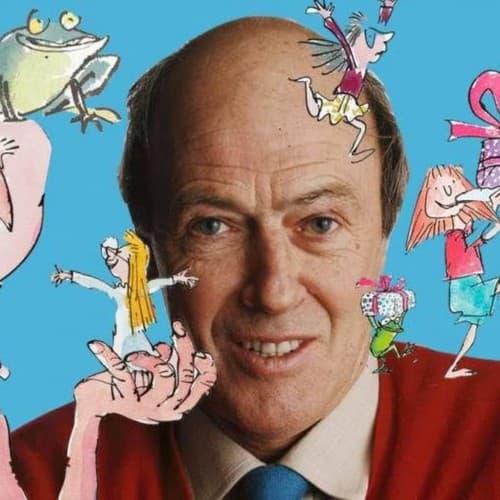
Roald Dahl was a British popular author of children's literature and short stories, a poet, and wartime fighter ace. His books have sold more than 300 million copies worldwide. Dahl has been called "one of the greatest storytellers for children of the 20th century".







