“Academic life is a succession of meetings to discuss the next meeting.”
— Philip Swallow reflects on the nature of university administration.

Genre
Literary Fiction
Reading Time
500 min
Key Themes
See below
Sign in to track this book
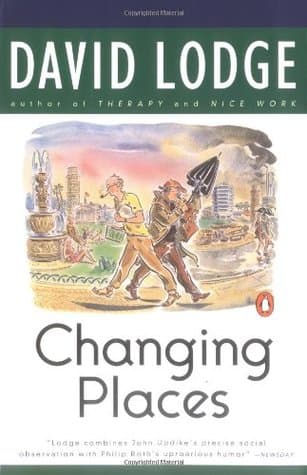
Two professors, one American and one British, swap lives and campuses, exposing the greed and pretension within higher education on both sides of the Atlantic.
Philip Swallow, a quiet Senior Lecturer in English Literature at the University of Rummidge, England, begins a six-month exchange at Euphoria State University in California. He leaves his wife, Hilary, and their children. He immediately notices the differences from British academia: the grand campus, the casual students, the obvious wealth, and the widespread focus on therapy and self-expression. Philip, a man of routine and traditional values, feels lost in the size and informality of American life, especially the free atmosphere of Euphoria, which contrasts sharply with Rummidge.
At the same time, Morris Zapp, a well-known American professor of English Literature from Euphoria State, arrives at the University of Rummidge. Zapp, known for his work on Jane Austen and his ambition, is put off by the bad weather, the old buildings, and the general lack of energy among his British colleagues and students. He finds the students uninspired and the faculty isolated, with little interest in the theories he supports. Zapp, used to comfort and intellectual stimulation, struggles to adapt to Rummidge's perceived narrowness and strictness, feeling increasingly alone and creatively stuck.
Influenced by Euphoria State's liberal setting, Philip starts to let go of his usual inhibitions. He attends a student protest, tries marijuana for the first time, and becomes involved with Mary-Ann Mendelson, a free-spirited American graduate student. Their relationship quickly becomes intimate, a big change from his conservative married life. Philip also finds new confidence in his teaching, trying less traditional methods and enjoying his American students' open participation, a contrast to the reserved British undergraduates. He begins to enjoy the freedom and anonymity California offers, making him question his past life choices.
Morris Zapp's frustration in Rummidge grows. His attempts to introduce modern literary theory are met with polite but firm resistance, and he finds the department politics stifling. His estranged wife, Désirée, who was supposed to join him, instead files for divorce, adding to his problems. He tries to start an affair with Hilary Swallow, Philip's wife, at first seeing it as a casual distraction, but Hilary, though curious, keeps him at a distance. Zapp feels more and more out of place and intellectually bored, missing the energy and opportunities of his American life, while his own academic project stalls.
While Philip is away, Hilary Swallow, initially lonely, starts to become more independent. She takes a new job, learns to drive, and even considers an affair with Morris Zapp, who pursues her directly. Although she resists Zapp's advances, his presence and her new freedom make her re-evaluate her marriage and her role in it. She begins to see Philip's absence as a chance for self-discovery, leading to a quiet but important shift in her outlook and desires.
Political tensions at Euphoria State peak with a large student protest against the Vietnam War and university policies. Philip, who initially found student activism somewhat amusing, gets caught in a violent clash between students and police. This experience is a wake-up call, showing him the raw energy and potential danger of American counter-culture, a sharp contrast to the calmer protests he might have seen in England. He sees the destruction and chaos firsthand, making him reconsider his romanticized view of American freedom and its consequences.
Morris Zapp, despite his initial plans for a new book on Jane Austen, finds himself unable to write in Rummidge. The lack of intellectual stimulation, the dull environment, and his personal worries about his divorce all lead to severe writer's block. He becomes increasingly cynical and unhappy, his former confidence in his academic ability starting to waver. He feels intellectually alone and unappreciated, his grand theories about literary criticism seeming irrelevant in Rummidge, making him question his own academic identity.
As the six-month exchange ends, both Philip and Morris decide to extend their stays for another six months. Philip, now involved with Mary-Ann and enjoying his new identity, wants to continue his Californian adventure. Morris, despite his unhappiness, sees a chance to escape his personal problems in America and perhaps find a new academic path, or at least avoid returning to his estranged wife. This decision, made without telling their spouses, leads to more complications and forces Hilary and Désirée to react to their husbands' unexpected choices, creating new tensions.
Alarmed by Philip's decision to extend his stay, Hilary Swallow travels to Euphoria State. She quickly discovers Philip's affair with Mary-Ann and faces the reality of his change. The meeting is emotional, as Hilary deals with Philip's infidelity and the person he has become. She also experiences Euphoria's bewildering culture firsthand, including its unconventional social norms and academic environment. This visit forces both Philip and Hilary to confront the results of their separation and Philip's new life, reaching a turning point in their marriage.
Désirée Zapp, Morris's estranged wife, arrives in Rummidge, having found him. She is forceful, demanding attention and confronting Morris about their failing marriage and his responsibilities. Her arrival disrupts Morris's already unstable life in Rummidge, adding more personal drama to his professional frustrations. Désirée, a strong and independent woman, makes it clear that she will not let Morris avoid their issues, forcing him to deal with what he has been trying to escape, further complicating his stay in England.
All four main characters—Philip, Hilary, Morris, and Désirée—meet in London for an academic conference. This neutral ground, though full of tension, brings their intertwined relationships and personal dramas to a head. Philip and Hilary have a tense discussion about their future, while Morris tries to handle Désirée's demands. The conference setting, with its mix of intellectual talk and social maneuvering, reflects the larger cultural and personal conflicts that have defined their exchange, leading to uncomfortable truths and unresolved issues.
In a final scene, Morris Zapp, desperate to escape Désirée and Rummidge, makes a desperate plea to Hilary. He proposes that they, as a new couple, switch places entirely with Philip and Mary-Ann, essentially swapping partners and countries. This bold proposal shows the extreme lengths both men have gone to escape their lives. While the full outcome of this 'changing places' is left somewhat unclear, the novel ends with a strong sense of role reversal, suggesting that the initial exchange has permanently altered everyone involved, leaving their futures uncertain and connected.
The Protagonist
Philip transforms from a conservative, inhibited academic into a more liberated, experimental individual, embracing new experiences and challenging his own moral boundaries.
The Protagonist
Morris experiences a crisis of confidence and identity, finding his intellectual theories challenged by a new environment and his personal life in disarray, leading to despair and a desperate search for escape.
The Supporting
Hilary evolves from a seemingly passive wife into a more assertive and self-aware individual, questioning her marital role and exploring new possibilities.
The Supporting
Désirée maintains her strong will and determination, asserting her agency by confronting Morris and demanding resolution to their marital issues.
The Supporting
Mary-Ann remains a consistent embodiment of Californian counter-culture, acting as a catalyst for Philip's personal awakening.
The Supporting
Professor Masters remains steadfast in his traditional academic views, serving as a consistent representation of the British academic establishment.
The Supporting
Joop serves as a consistent, objective observer, offering a detached commentary on the cultural clashes without undergoing significant personal change.
The novel explores the differences between British and American academic cultures and national identities. Philip Swallow initially finds American life confusing and excessive, while Morris Zapp feels stifled by British provincialism. This clash makes both men rethink their identities and values, leading to personal changes. Philip becomes more open in California, while Morris struggles with his ambition in Rummidge. The contrast shows how environment shapes personality and how people adapt, or fail to adapt, to new cultural norms, as seen in Philip's embrace of American casualness and Morris's dislike for British stoicism.
“One of the things I've found hardest to adjust to here is the sheer size of everything... and the way people talk about it, as if bigness were a virtue in itself.”
Lodge satirizes the pretensions, petty politics, and intellectual trends within academia. From Morris Zapp's pursuit of academic fame and his theories on Jane Austen, to the isolated world of Rummidge's English department, the novel exposes the often-silly aspects of university life. The contrast between the free Euphoria State and the traditional Rummidge highlights different forms of academic absurdity. The conference scenes, in particular, show the performative nature of intellectual discussion and the superficiality of some academic pursuits, revealing how academics often prioritize status and self-promotion over true scholarship.
“Literary criticism is not a science. It is an art. And the art of literary criticism is to make people believe that it is a science.”
The exchange program helps characters find personal freedom, especially Philip Swallow, who embraces a more pleasure-seeking lifestyle in California, including an affair. This theme looks at the results of escaping one's established life and moral boundaries. Both Philip and Hilary, in their own ways, discover new aspects of their desires and identities. Morris Zapp also tries to find freedom through an affair with Hilary, though his reasons are more selfish. The novel examines the appeal of infidelity as a way to escape and renew oneself, and how these choices affect marriages and self-perception.
“He felt a sudden, exhilarating sense of freedom, as if he had shed a skin, or a decade.”
Throughout the novel, Philip, Morris, and Hilary go on journeys of self-discovery. Philip, initially a conformist, questions his life's path and values as he gets involved in American culture. Morris, despite his outward confidence, faces a crisis when his academic work stalls and his personal life falls apart. Hilary, left behind, finds her own independence and desires outside of her husband's influence. The 'changing places' literally and figuratively forces these characters to confront who they are, what they truly want, and whether their established identities are real or just products of their environment.
“Perhaps, he thought, the real 'changing places' was not between two universities, but within himself.”
The central conceit allowing for a direct comparison of two contrasting worlds.
The academic exchange program is the primary plot device, serving as the engine for the entire narrative. It literally 'changes places' for the two protagonists, Philip Swallow and Morris Zapp, placing them in vastly different cultural and academic environments. This device facilitates the exploration of cultural clashes, personal transformations, and the satirical critique of academic life. It provides a clear framework for observing how individuals react to unfamiliar settings and how their identities are shaped or challenged by their surroundings, directly driving all major conflicts and character developments.
Alternating chapters following the experiences of Philip and Morris.
The novel employs a parallel narrative structure, alternating between the experiences of Philip Swallow in Euphoria State and Morris Zapp in Rummidge. This allows David Lodge to draw direct comparisons and contrasts between the two men's reactions to their new environments, highlighting the cultural differences and their respective personal journeys. The device also builds suspense as readers follow two distinct but interconnected stories, often ending chapters with cliffhangers or ironic juxtapositions, emphasizing the 'changing places' theme by showing two sides of the same coin.
The use of humor and exaggeration to critique academic and cultural norms.
Satire and irony are pervasive plot devices used to deliver the novel's social commentary. Lodge employs humorous exaggeration to lampoon the pretentions of academia, the cultural eccentricities of both Britain and America, and the foibles of his characters. For example, Morris Zapp's complex theories on Jane Austen are a satirical jab at academic jargon, while Philip's naive encounters with Californian counter-culture are rich with irony. This device allows the author to critique serious themes like identity and cultural differences with a light touch, making the commentary both incisive and entertaining.
Letters between characters used to reveal inner thoughts and advance plot.
While not exclusively epistolary, the novel frequently incorporates letters (and later, telegrams/phone calls) between characters, particularly between Philip and Hilary. These communications serve as a device to reveal the characters' inner thoughts, feelings, and evolving perspectives without direct narration. They also advance the plot by sharing information across geographical divides and highlighting the growing distance, both literal and emotional, between the characters. The contrast between what is said and what is unsaid in these letters often creates dramatic irony and underscores the theme of miscommunication and changing identities.
“Academic life is a succession of meetings to discuss the next meeting.”
— Philip Swallow reflects on the nature of university administration.
“The trouble with England is that it's full of English people.”
— Morris Zapp, an American professor, offers his candid opinion on British culture.
“He felt a sudden, sharp pang of nostalgia for a life he hadn't yet lived.”
— Philip Swallow contemplates the allure of American academia and lifestyle.
“Every man is the hero of his own story.”
— A general observation on human self-perception, relevant to the characters' journeys.
“The true sign of intelligence is not knowledge but imagination.”
— Part of a broader discussion on intellectual pursuits and academic values.
“Culture shock is a term invented by people who don't understand that all cultures are shocking.”
— Morris Zapp's cynical take on cross-cultural experiences.
“He was beginning to suspect that freedom was just another word for not knowing what to do next.”
— Philip Swallow experiences the disorienting aspects of his new environment.
“Life, after all, was just a series of adjustments.”
— A character's reflection on the adaptability required in life's various situations.
“The greatest enemy of knowledge is not ignorance, it is the illusion of knowledge.”
— A philosophical point made in the context of academic discourse and intellectual humility.
“One could not truly understand a place until one had made love in it.”
— A humorous and intimate perspective on experiencing new environments.
“He felt like a character in a novel, and not even the main character.”
— Philip Swallow's self-awareness of his role and experiences, touching on meta-narrative.
“The world was full of coincidences, but only the novelist had to make them plausible.”
— A meta-fictional comment on the nature of storytelling and reality.
“All travel is a form of nostalgia for the place you haven't been yet.”
— A poetic reflection on the motivations behind travel and exploration.
“Perhaps the only way to truly understand a culture was to commit adultery in it.”
— A provocative and humorous thought on deep cultural immersion and transgression.
Ready to see how well you understood this book? Take our interactive quiz with 10 questions.
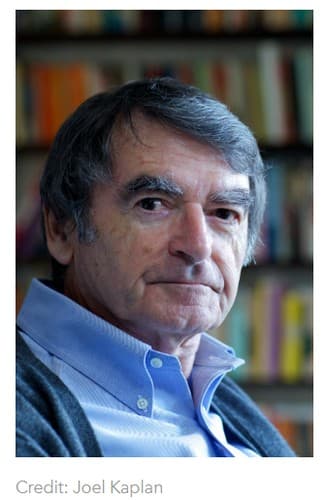
David Lodge is a celebrated British novelist and critic known for his satirical explorations of academic life. His acclaimed works, including "Small World," "Nice Work," and "Changing Places," humorously dissect the absurdities of university culture and the literary world. Lodge's sharp wit and intellectual depth have earned him a significant place in contemporary British fiction.







