“I know what you did last summer.”
— The infamous opening line of the chain letter that sets the whole mystery in motion.

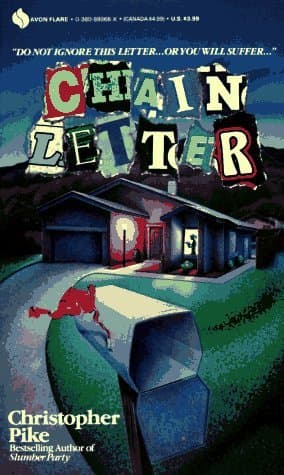
Christopher Pike (1986)
Genre
Thriller / Fantasy / Children's / Mystery / Young Adult
Reading Time
150 min
Key Themes
See below
Sign in to track this book
A year after covering up a fatal accident, seven friends are stalked by a mysterious 'Caretaker' who forces them into a deadly game of escalating dares and revenge via a terrifying chain letter.
Alison receives a chilling chain letter signed 'Your Caretaker.' It details a horrific secret: the hit-and-run death of a man a year prior, which Alison and six friends — Tony, Ralya, Pete, Fran, Neil, and Michael — covered up. The letter demands she perform a specific, dangerous task: steal a rare book from the library. Failure, it warns, will result in dire consequences. Alison initially dismisses it as a cruel prank, but the letter's intimate knowledge of the accident unnerves her. She confides in her boyfriend, Tony, who is equally disturbed. The letter marks the beginning of a terrifying ordeal, pulling Alison back into the guilt of their shared secret.
Alison, Tony, Ralya, Pete, Fran, Neil, and Michael gather, each having received an identical chain letter. They are forced to confront the hit-and-run accident they caused a year ago, where they struck and killed a man, then fled the scene and buried his body in the desert. The letters demand increasingly dangerous tasks from each of them. Alison's task is to steal a rare book from the library. She attempts it but is caught by a librarian. Miraculously, the librarian lets her go, seemingly without consequence, leading Alison to believe the 'Caretaker' might have intervened, or that the threat is not as immediate as it seems. However, the incident only deepens their fear and suspicion.
Pete receives his task from the Caretaker: to spend a night alone in a deserted, supposedly haunted house. Despite his fear, Pete agrees, hoping to prove the Caretaker's threats are empty. He endures a night of psychological torment, hearing strange noises and feeling an unseen presence. The experience is genuinely terrifying for him, pushing him to the brink of his sanity. The next morning, he emerges shaken but unharmed. His survival, however, does little to calm the group's nerves; instead, it reinforces the idea that the Caretaker is watching their every move and is capable of orchestrating highly disturbing events. The friends realize the game is becoming more dangerous.
Fran's letter demands she drive her car at an impossibly high speed down a treacherous road. Reluctantly, she attempts the task. While driving, her car mysteriously malfunctions, leading to a horrific crash. Fran is severely injured, suffering a broken leg and other wounds, and is hospitalized. This incident shatters the group's remaining skepticism. They now understand that the Caretaker's threats are real and deadly. The 'accidents' are not coincidences, and the consequences of disobedience are severe. The friends are gripped by fear, realizing their lives are truly in danger, and the Caretaker is willing to inflict serious harm.
Ralya receives her task, which involves entering a dangerous, abandoned building. Despite the group's warnings, she goes. The next day, Ralya is reported missing, and her car is found abandoned near the building. Her disappearance sends a wave of terror through the remaining friends. They frantically search for her, but she is nowhere to be found. The police are involved, but without a body or clear evidence, they have few leads. The group is convinced that the Caretaker is responsible for Ralya's vanishing act, and they fear she may be dead. This event pushes them further into paranoia and desperation, as they realize their number is dwindling.
Neil, increasingly paranoid and desperate, receives his task: to swim across a dangerous, shark-infested bay. He attempts it, believing he can outwit the Caretaker. However, during his swim, he is attacked and killed by a shark. While seemingly a tragic accident, the remaining friends are convinced it was orchestrated by the Caretaker. Neil's death is a brutal confirmation of the Caretaker's lethal intent and power. The group is now truly terrified, realizing that no one is safe and that defying the letters means certain death. The guilt of their past crime, combined with the present danger, consumes them.
Michael, already fragile, descends into a severe mental breakdown after Neil's death. He becomes increasingly withdrawn and erratic. In a moment of extreme distress, he confesses to Alison and Tony that he knows more about the accident than he let on. He admits that the man they hit wasn't dead when they buried him; he was still alive. This revelation horrifies Alison and Tony, adding another layer of unspeakable guilt to their secret. Michael's confession suggests a deeper, more sinister aspect to their crime, making the Caretaker's vengeance feel even more justified and inescapable. He becomes a shell of his former self, haunted by his actions.
Driven by desperation and Michael's confession, Alison and Tony begin to investigate the hit-and-run victim. They trace his identity to a man named Mr. Davids, a local recluse. They soon discover that Mr. Davids had a son, who was also a recluse and had a strong connection to his father. Through careful deduction and piecing together clues, they realize that the Caretaker is, in fact, Mr. Davids' son. He was the only person who knew about his father's disappearance and subsequently discovered the truth about the friends' crime. This revelation explains the Caretaker's intimate knowledge and relentless pursuit of revenge, as he seeks justice for his murdered father.
Alison and Tony track the Caretaker, Mr. Davids' son, to his secluded home. They confront him, and he confirms his identity and motive: avenging his father's death. He reveals that he witnessed the burial from a distance and has been meticulously planning his revenge ever since. The Caretaker, filled with cold fury, explains how he orchestrated each 'accident' and disappearance, ensuring the friends paid for their crime. He describes the psychological torment and physical harm he inflicted as a form of poetic justice. The confrontation is tense and dangerous, with the Caretaker showing no remorse, only a chilling determination to complete his vendetta.
The Caretaker sets his final task for Alison and Tony: to return to the desert grave and confess their sins. They obey, driven by fear and a desperate hope for survival. At the grave site, the Caretaker confronts them one last time. A struggle ensues, and in the chaos, the Caretaker is accidentally killed. His death brings an end to the chain letter nightmare, but not to the friends' guilt. Alison and Tony are left with the profound weight of their past actions and the tragic consequences. They realize that while the physical threat is over, the psychological scars will remain, forcing them to live with the memory of their crime and the lives lost.
The Protagonist
Alison transforms from a guilt-ridden, passive participant to an active investigator, ultimately confronting her past and the Caretaker.
The Supporting
Tony moves from denial to terrified acceptance, ultimately aiding Alison in the investigation and confrontation.
The Antagonist
The Caretaker's arc is one of sustained, escalating vengeance, culminating in his own demise.
The Supporting
Michael's arc is one of increasing guilt and mental unraveling, culminating in a confession that propels the plot forward.
The Supporting
Fran's arc demonstrates the immediate, physical danger posed by the Caretaker, from skepticism to severe injury.
The Supporting
Pete's arc highlights the psychological horror inflicted by the Caretaker, from bravado to profound fear.
The Supporting
Ralya's arc represents the Caretaker's ability to make victims vanish, escalating the fear of death.
The Supporting
Neil's arc culminates in his death, solidifying the Caretaker's role as a deadly avenger.
The Mentioned
Mr. Davids' 'arc' is posthumous, as his death fuels the main conflict and drives the Caretaker's actions.
The central theme is the crushing weight of guilt following an unspeakable crime and the inevitable, severe consequences. The friends initially try to bury their guilt along with the body, but the chain letter forces them to confront it. Each task and subsequent 'accident' is a direct consequence of their past actions, showing that secrets, especially those involving murder, rarely stay buried. Michael's confession about burying the man alive intensifies this theme, highlighting the horrific nature of their original sin and the inescapable nature of its repercussions.
“You thought you could bury your secret in the desert. But some things refuse to stay buried.”
The novel explores the line between revenge and justice through the character of the Caretaker. Driven by the loss of his father and the friends' cover-up, the Caretaker believes he is delivering just retribution. His methods, however, are cruel and often lethal, blurring the lines between seeking justice for a wrong and inflicting vengeful punishment. The escalating nature of his demands, from stealing a book to causing death, shows how the pursuit of revenge can consume an individual and lead to extreme, violent measures, even if born from a desire for 'justice' for a loved one.
“An eye for an eye, a life for a life. You took my father, now I take yours.”
The story shows how a shared, dark secret can corrupt and destroy a group of individuals. The initial act of covering up the hit-and-run binds the friends together in a web of lies and fear. This secret creates suspicion and paranoia among them, even before the Caretaker appears. As the letters arrive and the friends start to die, their secret becomes a weapon against them, isolating them and driving them to madness. The inability to confide in authorities due to their crime further traps them, showing how secrets can lead to self-destruction.
“The desert holds many secrets, but none as deadly as the one you carry.”
The friends repeatedly face moral compromises, first in covering up the accident, and later in obeying the Caretaker's increasingly dangerous demands. Their desperation to survive drives them to perform acts they wouldn't normally consider, such as theft or reckless behavior. This theme highlights how extreme circumstances can push individuals to abandon their moral compass. The story questions how far one would go to protect their life, and whether survival at any cost is truly worth the moral degradation and psychological toll it exacts. Each character's struggle with their assigned task reflects this theme.
“We were trapped. Every choice was wrong, but we had to choose.”
The primary catalyst and ongoing threat.
The chain letter serves as the central plot device, initiating the conflict and driving the narrative forward. It is the Caretaker's chosen method of communication and control, allowing him to deliver demands, threats, and reveal his intimate knowledge of the friends' crime without direct confrontation. The anonymous nature of the letter creates suspense and paranoia, as the friends are constantly guessing the sender's identity and location. Its escalating demands and increasingly dire warnings build tension and force the characters into action, making it a relentless engine of the plot.
A constant sense of being watched and manipulated.
This device creates pervasive tension and paranoia. The Caretaker is initially an unseen, omniscient force, knowing every detail of the friends' lives and crimes. This leads the characters to constantly suspect each other and question who among them might be the betrayer or the Caretaker's accomplice. The feeling of being watched, even when alone, heightens the psychological horror and makes escape seem impossible. This device emphasizes the Caretaker's power and control, turning the friends' world into a prison where every move is monitored, fostering deep mistrust within the group.
A progressive increase in danger and consequences.
The plot employs escalating stakes, starting with relatively minor demands (like stealing a book) and quickly progressing to tasks that result in severe injury, disappearance, and ultimately death. This gradual increase in danger maintains reader engagement and reinforces the Caretaker's ruthlessness. Each new 'accident' or death raises the emotional and physical stakes for the remaining characters, making their situation feel increasingly desperate and pushing them closer to breaking point. This device ensures that the tension never wanes, constantly reminding both characters and readers of the deadly seriousness of the situation.
Information held back or distorted by group members.
Initially, the group shares a common lie about the hit-and-run, but as the story progresses, it becomes clear that not everyone knows the full truth, or some are actively withholding information. Michael's confession that the victim was buried alive is a prime example. This device creates internal conflict and suspense, as the protagonist, Alison, must discern who is being truthful and what secrets still lie hidden. It highlights the corrosive nature of their shared crime and how deceit within the group further complicates their desperate situation, making it harder to trust and unite against their common enemy.
“I know what you did last summer.”
— The infamous opening line of the chain letter that sets the whole mystery in motion.
“The game isn't over until the last player drops out.”
— A recurring theme, highlighting the inescapable nature of the chain letter's demands.
“No one believed us. No one ever does.”
— One of the teenagers expressing frustration at the adults' disbelief regarding the supernatural elements.
“Sometimes the past isn't just dead, it's waiting.”
— A chilling reflection on how past actions continue to haunt the characters.
“Fear has a way of making you do things you never thought you would.”
— A character contemplating the extreme actions they are driven to by the mysterious threats.
“It wasn't just a game anymore; it was a matter of life and death.”
— The realization by the protagonists that the stakes have become incredibly high.
“We all make mistakes. Some just have bigger consequences.”
— A character reflecting on the fateful decision they made the previous summer.
“The truth was out there, but no one wanted to find it.”
— Highlighting the group's initial reluctance to confront the reality of their situation.
“You can run, but you can't hide from your conscience.”
— A metaphorical statement about the inescapable guilt felt by the characters.
“The silence was almost as terrifying as the threats.”
— Describing the psychological impact of the unknown and the wait between threats.
“We were all connected by that one terrible night.”
— Emphasizing the bond, albeit a dark one, that links the group of friends.
“Trust was a luxury they could no longer afford.”
— As paranoia grows, the characters find it increasingly difficult to trust each other.
“The past has claws, and it doesn't let go easily.”
— A vivid metaphor for how their past actions continue to grip and torment them.
“Sometimes the monster isn't under your bed, it's inside your head.”
— Reflecting on the internal torment and psychological pressure faced by the characters.
Ready to see how well you understood this book? Take our interactive quiz with 10 questions.

Christopher Pike is a prolific author known for his young adult horror and thriller novels. His works, including "Remember Me," "Chain Letter," and "Falling," often feature suspenseful plots, supernatural elements, and teenage protagonists. Pike's distinctive writing style has made him a popular figure in the genre, captivating readers with his ability to blend mystery and fright.







