“Perhaps it was just as well that some things remained unspoken, like the dark side of the moon, always there but never seen.”
— Reflecting on unspoken truths within families and relationships.

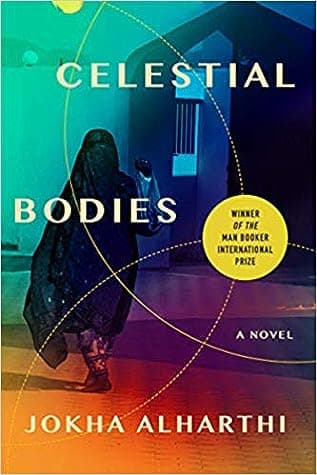
Jokha Alharthi (2018)
Genre
Literary Fiction / Historical Fiction
Reading Time
360 min
Key Themes
See below
Sign in to track this book
Three sisters in a changing Omani village navigate love, duty, and defiance as their society moves from its past toward an uncertain future.
The story begins with Mayya's marriage to Abdallah, which happens after she experiences a heartbreak. Abdallah, though initially detached, has a complex family history. His mother, Salima, suffers trauma related to the abolition of slavery in Oman and the loss of her beloved slave, Zarifa. Salima's grief and Zarifa's presence haunt Abdallah's childhood, shaping his reserved nature and his complicated past. Mayya's arrival in the household slowly uncovers these buried emotions and the effects of a changing society, where old ways clash with new. Abdallah's perspective shows the psychological impact of his family's history and wider societal changes. He often thinks about his mother's pain and the societal shifts.
Asma, Mayya's sister, marries Khalid, driven by duty and her family's needs rather than love. Unlike Mayya, Asma finds fulfillment not in her domestic life, but in intellectual pursuits. She reads a lot and observes the world, often retreating into books and her thoughts. Her marriage, while stable, lacks the emotional intensity of Mayya's, yet Asma creates a rich inner life for herself. She uses literature to understand changing Omani society and her place in it. Her curiosity and desire for knowledge become central to her identity, contrasting with traditional expectations for women of her generation in al-Awafi.
Khawla, the youngest sister, shows a different kind of resistance. She is deeply in love with Nasser, a childhood sweetheart who moved to Canada. Despite family and societal pressure to marry, Khawla rejects all other proposals, holding onto hope for Nasser's return. Her loyalty to Nasser defines her, setting her apart from her sisters. Her story highlights waiting and how emigration affects Omani families. Khawla's decision, while romantic, also illustrates rebellion against societal norms, as she prioritizes personal love over traditional expectations of marriage and family. Her life shows enduring hope, even with long absence and uncertainty.
A significant part of the story looks at the past, specifically the deep relationship between Abdallah's mother, Salima, and Zarifa, the slave woman who was like a sister to her. Their bond was one of deep affection and trust, different from a typical master-slave dynamic. The abolition of slavery, while societal progress, meant a deep personal loss for Salima, as Zarifa was taken away. This separation left a lasting scar on Salima, causing lifelong grief and abandonment. Her trauma is clear, influencing her interactions with her children and her view of life. The story explores the complex emotional fallout of a changing social order, where the end of one system, however unjust, caused deep personal sorrow for those who had formed bonds within it. Salima's memories are important for understanding the historical context.
Abdallah's childhood is deeply shaped by his mother Salima's grief for Zarifa. He grows up in a household where Zarifa's absence is almost tangible, influencing his mother's moods and his own understanding of loss. This environment contributes to Abdallah's introspective and somewhat melancholic nature. He observes his mother's pain and the lingering effects of a past that society tries to move beyond, yet which still holds power. These early experiences give him sensitivity to the complexities of human relationships and the burden of history. His thoughts often return to these formative years, trying to understand his mother's sorrow and the societal changes that led to it. This shapes his somewhat detached manner in his marriage to Mayya.
The novel takes place in the village of al-Awafi, which reflects Oman's transformation from a traditional, isolated society to a modern, interconnected nation. The story portrays the arrival of new technologies, the changing economy, and shifting social norms. The characters' lives are linked to these changes, as they deal with the erosion of old customs and the emergence of new opportunities and challenges. The transition from a slave-owning society to one with new wealth and global connections is explored through the experiences of its inhabitants, from former slave families to the newly affluent. The village's physical and social fabric changes, reflecting Oman's national journey into modernity. The village constantly reminds readers of the rapid changes happening.
Midjan represents the experiences of the former slave population in al-Awafi. Her story highlights the challenges and ambiguities of freedom after abolition. Though no longer enslaved, Midjan and her family often struggle with poverty and lack of social mobility in a society still dealing with its past hierarchies. Her story offers a counterpoint to the experiences of more privileged families like Abdallah's and Mayya's, revealing deep inequalities that persist even as the country modernizes. Midjan's resilience and her efforts to create a life for herself and her children show the lasting impact of historical injustices and the slow pace of true social integration. Her perspective reminds the reader that freedom, while important, does not automatically erase generations of systemic disadvantage. Her story is about lives on the margins.
Abdallah and Mayya's daughter, London, embodies the new generation in Oman. Named after the city her father visited, London is more independent, globally aware, and less bound by traditional expectations than her mother or aunts. Her perspective gives a glimpse into the future of Omani society, where young women increasingly seek education, professional careers, and personal autonomy. London's choices and aspirations often contrast sharply with her elders' lives, highlighting the generational gap and the accelerating pace of social change. She represents a break from the past, embracing modernity while navigating her cultural heritage. Her character offers hope for a more independent future for Omani women, showing the tangible results of the country's modernization. Her journey is about forming a new identity.
The novel explores the lives of women in Oman, showing their struggles, resilience, and varying degrees of agency within a patriarchal society. Mayya, Asma, and Khawla each represent different responses to societal expectations regarding marriage, family, and personal fulfillment. While they are bound by tradition, they also find subtle and overt ways to assert their individuality. Asma's intellectual pursuits, Khawla's refusal of proposals, and even Mayya's quiet endurance, all show forms of agency. The experiences of women like Salima and Zarifa further illuminate the historical context of female lives. The novel portrays the complex inner lives of these women, highlighting their inner strength and their capacity for love, loss, and self-discovery, even within restrictive social frameworks. Their stories are central to understanding the evolving role of women in Oman.
The novel uses a fragmented and non-linear narrative, combining memories, dreams, and multiple perspectives to reconstruct the past. Abdallah's internal monologues, Salima's recollections, and other characters' observations all contribute to a rich picture of historical and personal memory. This structure reflects how history is often remembered and understood — not as a linear progression, but as subjective experiences and lingering echoes. The past is not just told but actively shapes the present, influencing characters' identities, relationships, and choices. The narrative constantly shifts between different timelines, emphasizing memory's power and how it continues to inform and define the contemporary Omani experience. This technique allows for a deeper exploration of the psychological impact of historical events.
After years of waiting, Nasser returns to al-Awafi from Canada. However, the reunion is not the romantic ideal Khawla envisioned. Time, distance, and their separate experiences have changed both Nasser and Khawla, creating a gap between them. Nasser's return shows the reality that some loves cannot withstand long absence and diverging paths of individual growth. Khawla faces the difference between her cherished memory of Nasser and the man he has become. This plot point highlights the passage of time and the often-unrealistic nature of youthful dreams. It forces Khawla to confront the consequences of her loyalty and the truth that some expectations remain unfulfilled. Their interaction explores changed affections.
Throughout the story, Abdallah quietly seeks to understand his family's complex history, especially his mother's trauma and the legacy of slavery. He thinks deeply about the societal changes around him and his own role. His thoughts are often philosophical, pondering memory, identity, and belonging. He tries to reconcile the past with the present, seeking meaning in his own life and others'. His journey is one of gradual self-discovery, as he slowly pieces together his ancestors' fragmented stories and comes to terms with their impact on him. Abdallah's introspection connects the various narratives and offers a nuanced perspective on the burdens and blessings of heritage. He seeks peace with his history.
Mayya, despite her initial heartbreak, shows quiet resilience throughout her marriage to Abdallah and her role in his complex family. She observes the household dynamics, particularly Salima's grief, and adapts with pragmatic strength. While she may not make grand pronouncements or rebellious gestures, her endurance and commitment to her family are deep. She learns to navigate her husband's family history and the expectations placed on her as a wife and mother in al-Awafi. Her journey is one of subtle growth, as she finds strength in her domestic sphere and builds a life despite personal losses and societal pressures. Mayya's character embodies a quiet, enduring spirit that is often overlooked but powerful. She is the anchor of her immediate family.
The narrative shows the deep interconnectedness of all lives in al-Awafi, regardless of social standing or family history. The stories of wealthy families, former slave families, and other individuals are woven together, revealing how their fates are linked. The abolition of slavery, new wealth, emigration, and personal relationships all have ripple effects that touch everyone. The novel highlights how historical events shape individual lives and how individual choices impact the broader community. This interconnectedness shows that no one exists in isolation, and that the past continues to resonate in the present, shaping the collective identity of the village and its people. The intricate web of relationships is central to the novel's themes. Their fates are intertwined.
The novel ends with a sense of the cyclical nature of grief and memory, clear in Salima's enduring sorrow for Zarifa and Abdallah's ongoing processing of his family's past. However, there is also a subtle hope for generational healing and new beginnings. Characters like London, Abdallah's daughter, represent a future where traditional constraints may lessen, and individuals have more freedom to forge their own paths. While past wounds are deeply ingrained, the narrative suggests that understanding and acknowledging these histories can lead to a more integrated and perhaps less burdened future. The ending is not a definitive resolution but a contemplation of ongoing change, memory, and the enduring human spirit in a rapidly evolving world. It suggests that while the past is always present, the future holds possibilities for growth.
The Protagonist
Mayya evolves from a heartbroken individual into a resilient wife and mother who quietly endures and adapts to her life's challenges, finding strength in her commitment to family.
The Protagonist
Abdallah moves from a state of quiet contemplation about his family's past to a deeper understanding and acceptance of its complexities, seeking meaning in his identity.
The Supporting
Asma establishes an identity rooted in intellectual pursuits, finding personal fulfillment beyond traditional marital expectations.
The Supporting
Khawla maintains her romantic idealism through years of waiting, only to face the bittersweet reality of a changed love upon Nasser's return.
The Supporting
Salima remains deeply entrenched in her past grief, serving as a living testament to the personal impact of historical societal shifts.
The Mentioned
Zarifa's life and eventual absence serve as the catalyst for Salima's enduring grief and a central historical anchor for the novel's themes.
The Supporting
Midjan struggles for survival and dignity in a post-slavery society, embodying the challenges of true freedom for the formerly enslaved.
The Supporting
London grows into an independent and educated young woman, embodying the progressive future of Omani society and challenging traditional norms.
The Supporting
Nasser's journey abroad changes him, leading to a reunion with Khawla that exposes the irreparable toll of time and distance on their youthful love.
The Supporting
Khalid provides a stable, if unromantic, partnership for Asma, allowing her to pursue her intellectual interests.
The novel explores the lasting effects of slavery in Oman, even after its abolition. Salima's lifelong grief over Zarifa and Abdallah's thoughts on his family's past highlight personal trauma and historical burden. Midjan's story reveals the economic and social struggles faced by former slaves. The theme shows that while laws can change, the emotional and societal scars of such institutions persist for generations, shaping identities and relationships. This is evident in Salima's constant mourning and Abdallah's reflections on his heritage.
“My mother wept for Zarifa for years after she was taken away. As if Zarifa was a part of her body, and a part of her soul.”
Oman's fast transition from a traditional, isolated society to a modern, globally connected nation is a central theme. The characters deal with the erosion of old customs, new technologies, and shifting social norms. The sisters' different marriage choices, London's independence, and al-Awafi's changing landscape all show this tension. The novel illustrates how individuals and communities navigate progress's challenges and opportunities, often caught between the familiar past and the uncertain future. This is seen in the contrast between Khawla's traditional loyalty and London's modern aspirations.
“The past used to be a heavy burden, but now it was a ghost that haunted the present, whispering of what had been lost.”
The novel portrays the diverse experiences of Omani women and their varying degrees of agency within a patriarchal society. Mayya, Asma, and Khawla each find different ways to assert their individuality and pursue personal fulfillment, whether through quiet resilience, intellectual pursuits, or unwavering romantic loyalty. Their stories highlight women's inner lives, their struggles against societal expectations, and their capacity for strength and self-discovery. London, in particular, represents a new generation of women with greater freedom and aspirations. The novel shows that agency can appear in many forms, not just overt rebellion.
“A woman's mind is like a garden, and if you don't tend to it, it will grow weeds.”
Memory serves as a crucial narrative and thematic element, with characters constantly revisiting the past through fragmented recollections and dreams. Salima's trauma, Abdallah's reflections on his heritage, and Khawla's memory of Nasser all show how the past shapes the present. The novel explores how loss, whether of a person, a way of life, or an idealized future, leaves lasting marks. The narrative structure itself, shifting between timelines, emphasizes that history is not linear but a living force that influences identity and relationships. This is important for understanding the characters' motivations.
“Memories are not kept in the brain, but in the heart, and they come out in the most unexpected ways.”
The novel explores various forms of love and relationships: Mayya's quiet marital endurance after heartbreak, Asma's duty-bound yet intellectually fulfilling marriage, Khawla's steadfast romantic idealism, and the deep, almost familial bond between Salima and Zarifa. It looks at love's complexities, showing how duty, loss, absence, and societal expectations can shape it. The evolution of these relationships, especially Khawla's disillusionment upon Nasser's return, highlights the transformative power of time and the often-unrealistic nature of idealized affections. It shows that love is multifaceted and rarely simple.
“Love is not a promise, it is a memory. A memory of what was, and what could have been.”
The story is told through shifting viewpoints and timelines, creating a mosaic of experiences.
The novel employs a non-linear narrative structure, moving fluidly between different characters' perspectives and timelines. Abdallah's internal monologues often serve as a central anchor, but the story also dips into the past through Salima's memories, and explores the present through the eyes of the sisters and other villagers. This fragmented approach allows the author to build a complex, multi-layered understanding of Omani history and its impact on individual lives. It mirrors the subjective nature of memory and how historical events are perceived and processed by different people across generations, creating a rich tapestry rather than a straightforward chronicle.
The narrative spans multiple generations, showcasing the evolution of Omani society and the legacy of its past.
The novel traces the lives of several generations, from Salima's experience with slavery and its abolition, through the lives of her son Abdallah and his wife Mayya, to the aspirations of their daughter London. This intergenerational storytelling highlights the profound impact of historical events and societal changes across time. It allows the reader to witness the evolution of customs, beliefs, and opportunities, particularly for women, and to understand how the past continues to shape the present. Each generation grapples with its unique challenges while carrying the legacy of those who came before, demonstrating continuity and change.
Names like 'London' and the village 'al-Awafi' carry symbolic weight, reflecting themes of modernity and tradition.
The author strategically uses names and places to imbue deeper meaning. The name 'London' for Abdallah's daughter immediately symbolizes modernity, global connection, and a break from traditional Omani identity, representing the aspirations of the new generation. The village of 'al-Awafi' itself, meaning 'the healthy' or 'the well-being,' can be seen ironically, as it undergoes profound, sometimes painful, transformations. These symbolic choices enrich the narrative, subtly reinforcing the novel's central themes of tradition versus modernity, the impact of globalization, and the search for identity in a changing world, adding layers of interpretation for the reader.
Abdallah's narrative is often characterized by deep introspection and a stream of consciousness.
Much of Abdallah's narrative is presented through internal monologue and a stream of consciousness style, allowing the reader direct access to his thoughts, reflections, and philosophical musings. This device is crucial for exploring his complex inner world, his grappling with his mother's trauma, the legacy of slavery, and his place in a rapidly changing Oman. It creates an intimate connection with his character, revealing his melancholic nature and his intellectual curiosity. This technique emphasizes the psychological depth of the story, showing how historical and personal experiences are processed internally, often in a non-linear and associative manner.
“Perhaps it was just as well that some things remained unspoken, like the dark side of the moon, always there but never seen.”
— Reflecting on unspoken truths within families and relationships.
“We are all made of dust and dreams, and a little bit of regret.”
— A philosophical observation on the human condition and life's experiences.
“The past is a stubborn guest. It lingers, even when you try to evict it.”
— Masaud's struggle to move on from his first love, Kayima.
“Some women are born with the desert in their hearts, and others with the sea. I was born with both, and they waged war within me.”
— Abdullah's mother, Salima, reflecting on her strong and conflicted nature.
“Love, like a well, can run dry if you don't keep drawing from it.”
— A character's reflection on the effort required to maintain relationships.
“The world keeps turning, even when your own world has stopped.”
— A poignant thought after a significant loss or change.
“Tradition is a rope, sometimes it pulls you forward, sometimes it binds you.”
— Exploring the dual nature of tradition in Omani society.
“Every secret is a weight, and the older it gets, the heavier it becomes.”
— Reflecting on the burden of hidden truths within the family.
“There are wounds that never heal, only scar over, and sometimes, even the scars ache.”
— A character's lingering pain from past trauma or loss.
“Life is a series of departures and arrivals, and sometimes, the hardest part is letting go of what never truly arrived.”
— A contemplative thought on unfulfilled expectations and dreams.
“The desert teaches you patience, and the sea teaches you resilience. Together, they teach you how small you are.”
— A reflection on the wisdom gained from the Omani landscape.
“We build our lives on stories, and sometimes, the stories we tell ourselves are the most dangerous.”
— Examining self-deception and the narratives people construct about their lives.
“Marriage is a journey, not a destination, and sometimes you get lost along the way.”
— A realistic view on the challenges and complexities of marital life.
Ready to see how well you understood this book? Take our interactive quiz with 10 questions.







